
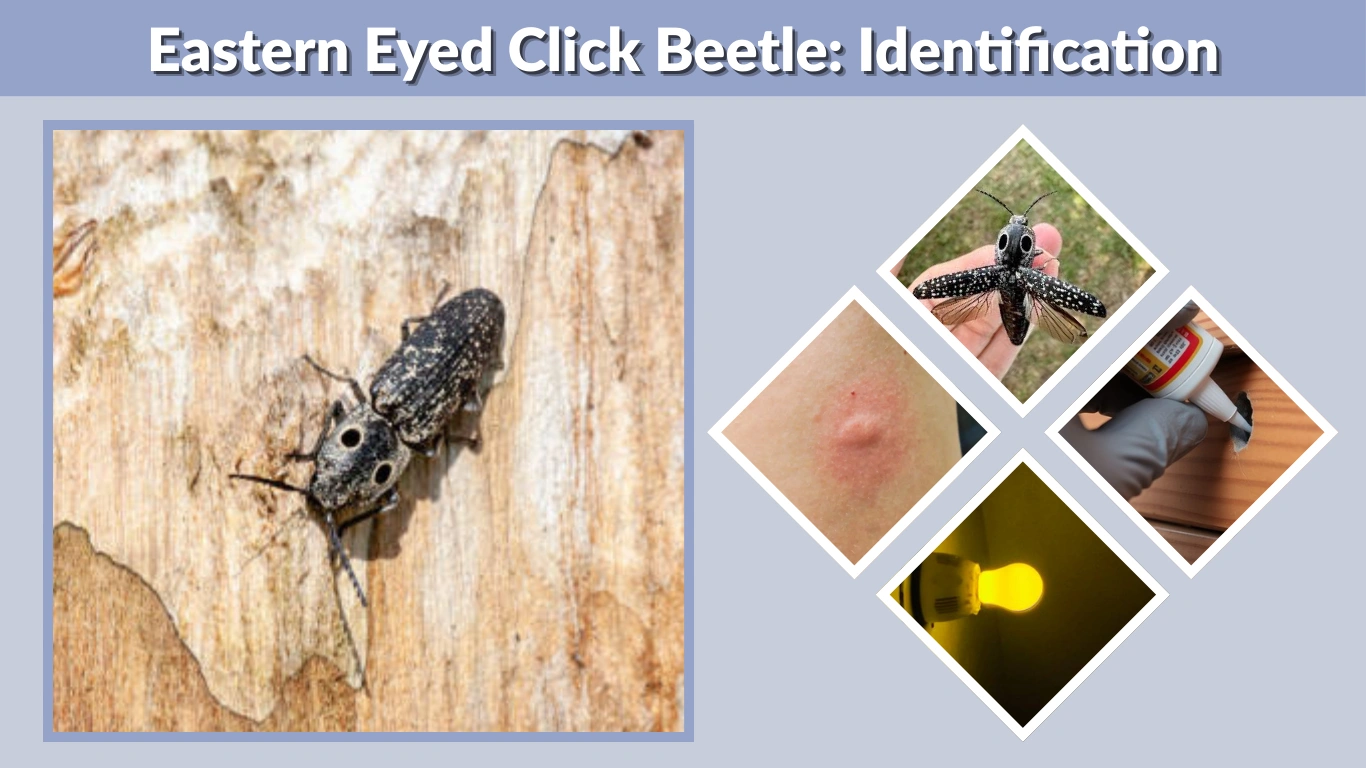
The eastern eyed click beetle is one of the most recognizable beetles in North America thanks to its large size and distinctive eye-like spots on its back. Although its appearance can seem intimidating, this beetle is mostly harmless and plays a small role in natural ecosystems. Many people encounter it near porch lights, gardens, or occasionally inside homes. Understanding how to identify the eastern eyed click beetle, how it behaves, and whether it poses any risk can help reduce unnecessary concern.
Eastern Eyed Click Beetle Identification
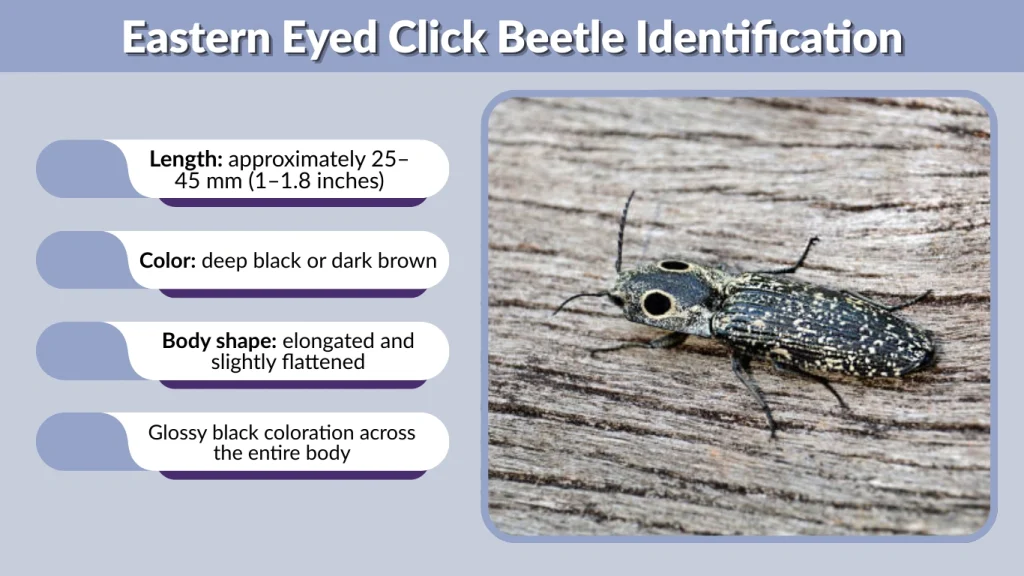
Correctly identifying the eastern eyed click beetle is relatively easy because of its unique markings and body structure. These beetles belong to the click beetle family (Elateridae) and are known for their ability to produce a loud clicking sound when threatened.
Key Physical Characteristics
The eastern eyed click beetle is larger than most click beetle species and has several distinctive features that make it stand out.
Important identification traits include:
- Large body size compared to many other beetles
- Glossy black coloration across the entire body
- Two large eye-like spots located on the pronotum (the section behind the head)
- Long, narrow body shape with tapered ends
- Hard wing covers (elytra) that protect the flying wings underneath
The most notable feature is the pair of circular markings that resemble eyes. These markings do not function as real eyes but serve as a defensive adaptation to deter predators.
Size and Color
Eastern eyed click beetles are among the largest click beetles in North America.
Typical measurements include:
- Length: approximately 25–45 mm (1–1.8 inches)
- Color: deep black or dark brown
- Body shape: elongated and slightly flattened
Because of their size and dark coloration, they are sometimes mistaken for other large beetles, but the eye spots and clicking ability help confirm their identity.
Where They Are Commonly Found
Eastern eyed click beetles are widespread in parts of eastern North America. Their range includes:
- The eastern United States
- Parts of southern Canada
- Forested and woodland regions
You are most likely to encounter them in areas such as:
- Forest edges
- Gardens and yards
- Decaying logs or tree stumps
- Around outdoor lights at night
Adults are particularly active during warm months and are commonly attracted to artificial lights.
Eyed Click Beetle Facts
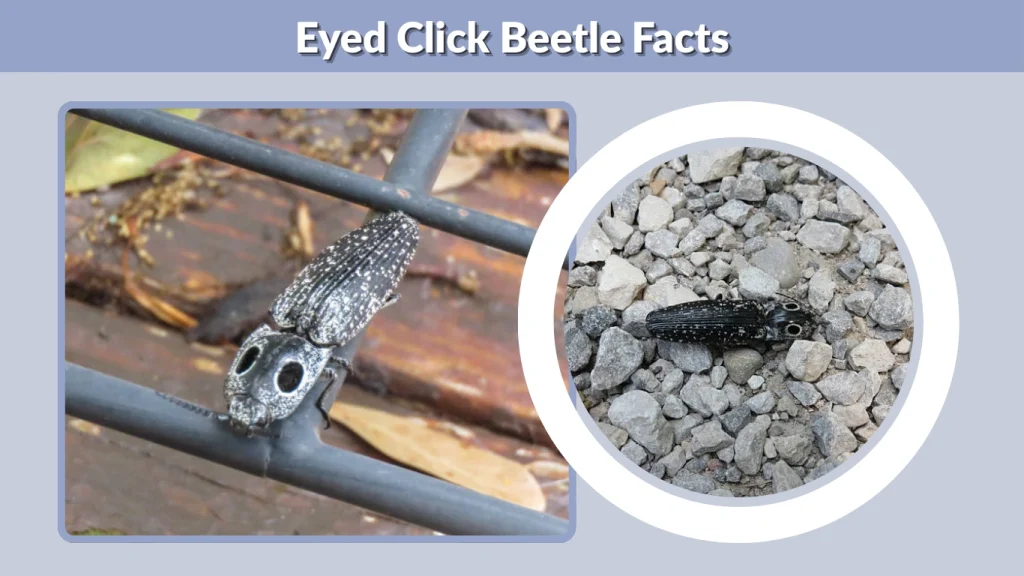
Despite their dramatic appearance, eastern eyed click beetles are relatively harmless insects. They have several fascinating characteristics that make them interesting from a biological perspective.
Why They Have Fake “Eyes”
The large spots on the beetle’s back are called false eye spots or eye markings. These markings serve as a defensive strategy known as mimicry or predator deterrence.
When a predator approaches, the spots can create the illusion that the beetle is facing the attacker or that it is a larger animal. This visual trick may cause birds or small mammals to hesitate long enough for the beetle to escape.
The Famous Clicking Mechanism
Click beetles get their name from their unique ability to produce a clicking sound. This sound comes from a specialized structure in the thorax.
Here’s how it works:
- The beetle bends its body to store tension.
- A spine on the underside locks into a groove.
- When released, the spine snaps into place, creating a sharp clicking noise.
This action can launch the beetle several inches into the air, helping it flip upright if it lands on its back.
Lifespan and Life Cycle
Like most beetles, eastern eyed click beetles go through complete metamorphosis, which includes four life stages.
- Egg stage – Eggs are laid in soil or near decaying wood.
- Larval stage – The larvae develop underground and are commonly called wireworms.
- Pupal stage – The insect transforms into an adult inside the soil.
- Adult stage – The beetle emerges and becomes active during warm seasons.
The larval stage often lasts much longer than the adult stage and can persist for several years depending on environmental conditions.
Diet and Feeding Habits
Adult eastern eyed click beetles are not aggressive feeders and rarely cause noticeable damage.
Typical diet includes:
- Plant nectar
- Soft plant materials
- Occasionally decaying organic matter
The larvae, however, have different feeding habits. Wireworms may feed on:
- Plant roots
- Underground stems
- Decaying wood and organic debris
In agricultural settings, some wireworm species can damage crops, though the eastern eyed click beetle is not usually considered a major pest.
Click Beetle vs Darkling Beetle Larvae
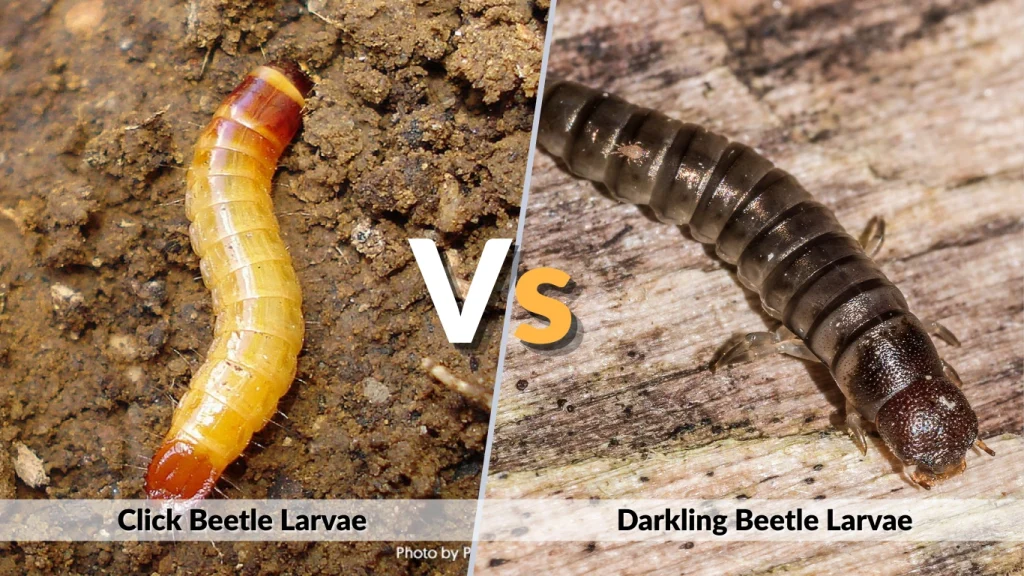
Many people confuse click beetle larvae with darkling beetle larvae because they can look somewhat similar at first glance. However, these insects belong to different beetle families and have noticeable differences in appearance and habitat.
What Click Beetle Larvae Look Like
The larvae of click beetles are commonly known as wireworms because of their long, thin, and rigid bodies.
Typical characteristics include:
- Cylindrical, worm-like shape
- Hard, shiny outer skin
- Yellowish-brown or copper color
- Segmented body with small legs near the head
Wireworms usually live underground where they feed on roots and organic matter.
What Darkling Beetle Larvae Look Like
Darkling beetle larvae are commonly known as mealworms, especially when raised as food for pets or reptiles.
Key features include:
- Softer bodies compared to wireworms
- Slightly curved shape
- Tan to golden-brown coloration
- Visible body segments
Mealworms are typically found in environments rich in organic materials, such as stored grain, compost, or decaying matter.
Key Differences Between the Larvae
Although both types of larvae resemble worms, there are clear differences between them.
Click beetle larvae (wireworms) generally have harder bodies and live in soil, while darkling beetle larvae (mealworms) are softer and commonly associated with stored food products or organic debris.
These differences help entomologists and gardeners identify which insect they are dealing with.
Do Click Beetles Fly?
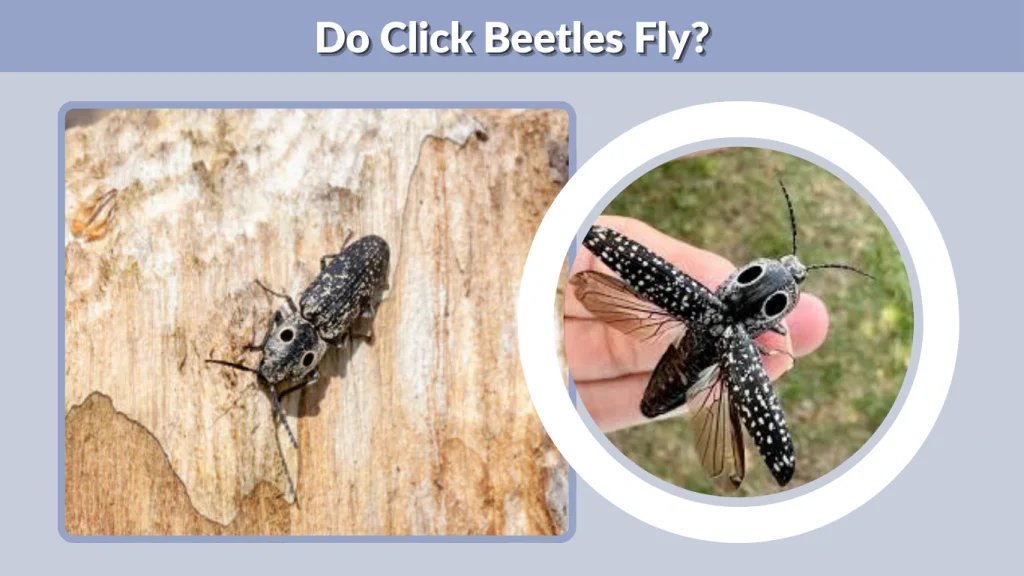
Yes, adult click beetles can fly. Although they are better known for their clicking and jumping ability, eastern eyed click beetles also have fully developed wings that allow them to travel short distances.
Flight Ability
Like many beetles, the eastern eyed click beetle has two sets of wings:
- Elytra (hard wing covers) that protect the body
- Membranous flying wings folded underneath
When the beetle prepares to fly, it lifts the hardened wing covers and extends the soft wings beneath them. These wings allow the beetle to move between habitats, search for food, and locate mates.
Despite their ability to fly, these beetles are not strong or long-distance fliers. Most flights are short and occur when the insect is disturbed or when it is moving toward light sources.
When They Fly
Eastern eyed click beetles are usually active during warm evenings and nights, especially in late spring and summer.
Common situations when they fly include:
- Searching for mates during breeding season
- Moving between wooded areas and gardens
- Being attracted to outdoor lights
Because of their nighttime activity, people often notice them near porch lights, street lamps, or illuminated windows.
Why They Sometimes Enter Homes
Click beetles occasionally end up indoors, but this usually happens by accident.
Common reasons include:
- Attraction to bright lights near doors or windows
- Open windows without screens
- Doors left open during warm evenings
Once inside, the beetle typically wanders around floors or walls looking for a way back outside.
Can Eastern Eyed Click Beetles Bite?
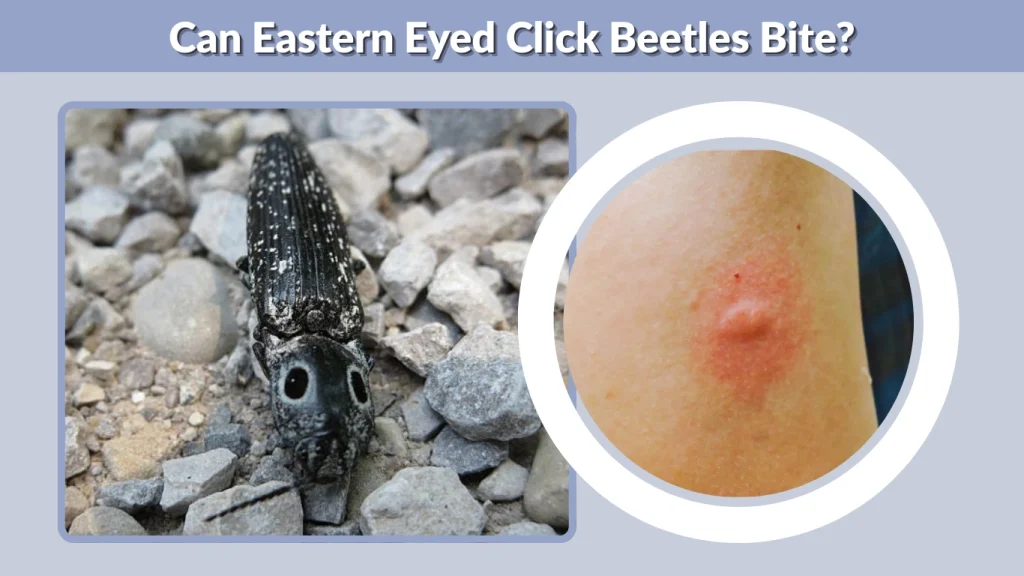
Many people become concerned when they see a large black beetle with eye-like markings. However, eastern eyed click beetles are not dangerous to humans.
Are They Harmful?
Eastern eyed click beetles do not sting and do not carry venom. They are not aggressive insects and rarely interact with humans unless they are picked up or handled.
Their large size may look intimidating, but they are generally harmless.
Do They Bite?
In rare situations, a click beetle may attempt a small defensive pinch with its mouthparts if handled roughly. However:
- The bite is usually mild
- It does not break the skin in most cases
- It is not medically significant
Most of the time, the beetle’s primary defense is not biting but jumping and clicking to escape.
What Happens if You Handle One
If you pick up an eastern eyed click beetle, it may:
- Suddenly snap its body to make a clicking sound
- Launch itself into the air
- Flip over and crawl away quickly
This behavior is simply a defense mechanism, not an attack.
Click Beetle in the Home
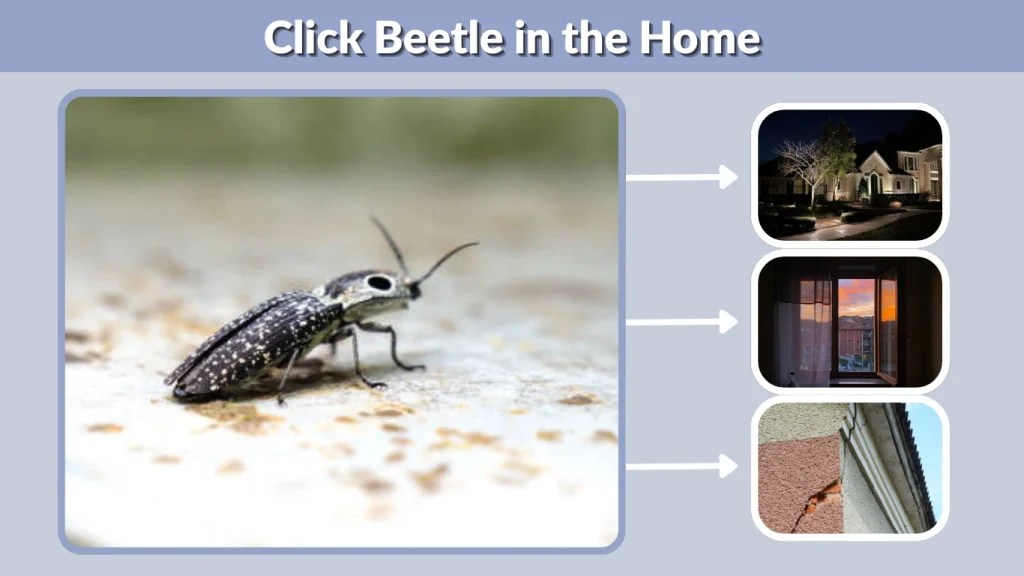
Finding a click beetle indoors can be surprising, but it is usually not a serious problem. These insects rarely infest houses and typically enter by accident.
Why Click Beetles Appear Indoors
Several factors can attract eastern eyed click beetles into homes.
The most common reasons include:
- Bright exterior lighting
- Open doors or windows at night
- Cracks or small entry points around the home
Because they are attracted to light, they may fly toward windows and accidentally slip inside.
Are They a Household Pest?
In most cases, click beetles are considered occasional invaders rather than true household pests.
They typically do not:
- Reproduce indoors
- Damage furniture or structures
- Infest stored food
Once inside, they often wander briefly and then die or attempt to escape outdoors.
How to Remove Them Safely
If you find a click beetle in your home, the easiest solution is simply to remove it.
A safe method includes:
- Place a cup or container over the beetle.
- Slide a piece of paper or cardboard underneath.
- Carry it outside and release it away from the house.
This approach avoids harming the insect and prevents chemical exposure inside the home.
Preventing Click Beetles from Entering Your Home
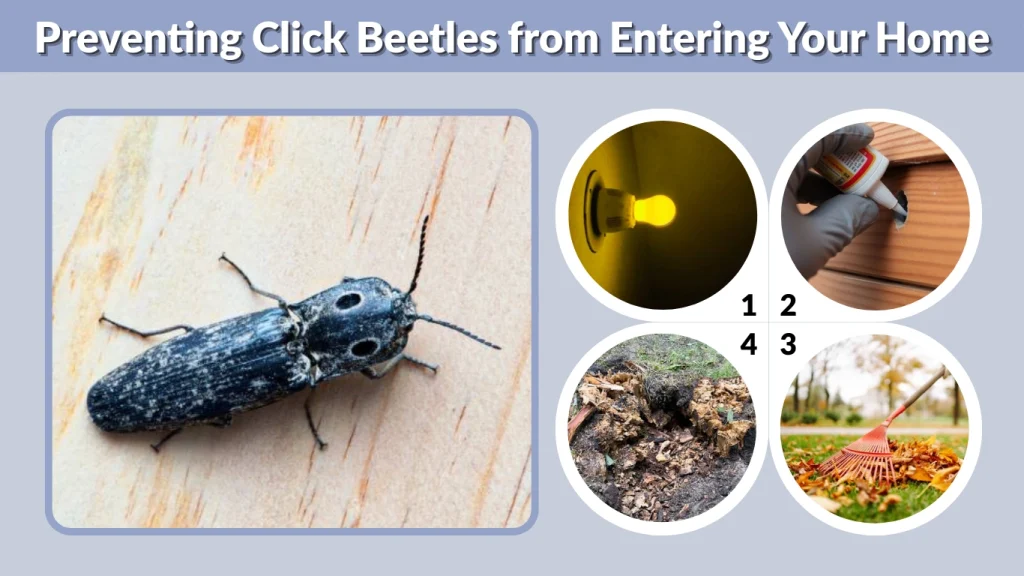
Although occasional entry is normal, simple prevention methods can reduce the chances of beetles entering your home.
Adjust Outdoor Lighting
Outdoor lighting can attract many night-active insects.
Helpful steps include:
- Using yellow bug lights instead of bright white bulbs
- Turning off unnecessary outdoor lights at night
- Positioning lights farther away from doors and windows
These changes can significantly reduce insect attraction.
Seal Entry Points
Small gaps around your home can allow insects to enter.
Check for:
- Torn window screens
- Gaps under doors
- Cracks around foundations or siding
Sealing these openings helps keep many insects out.
Maintain Your Yard
Click beetles are commonly found near decaying organic material.
Reducing these habitats can help limit their presence around your home.
Useful steps include:
- Removing rotting logs or stumps
- Clearing piles of leaves or debris
- Keeping grass and garden areas tidy
These measures reduce places where beetles and larvae may develop.
Are Click Beetles Beneficial or Harmful?
In natural ecosystems, click beetles play a small but important role.
Benefits in Nature
Eastern eyed click beetles contribute to the environment in several ways:
- Helping break down organic materials
- Serving as food for birds and other wildlife
- Supporting natural ecological balance
Because adults rarely cause damage, they are generally considered neutral or mildly beneficial insects.
Possible Agricultural Impact
The larval stage, known as wireworms, can sometimes feed on plant roots and young crops. In agricultural settings, certain wireworm species may become pests in fields.
However, most encounters with adult eastern eyed click beetles near homes or gardens do not indicate a serious infestation.
FAQs
Are eastern eyed click beetles rare?
They are not considered rare, but they are less commonly noticed because they are mostly active at night.
How big do eyed click beetles get?
Adults typically reach 1 to 1.8 inches (25–45 mm) in length, making them one of the largest click beetles in North America.
Do click beetles make noise?
Yes. When threatened, they produce a distinct clicking sound and can jump into the air.
Can click beetles infest homes?
No. They may occasionally enter houses, but they do not establish infestations indoors.
Are wireworms harmful to gardens?
Wireworms can sometimes damage roots of vegetables or crops, but small numbers usually do not cause serious problems in home gardens.
