
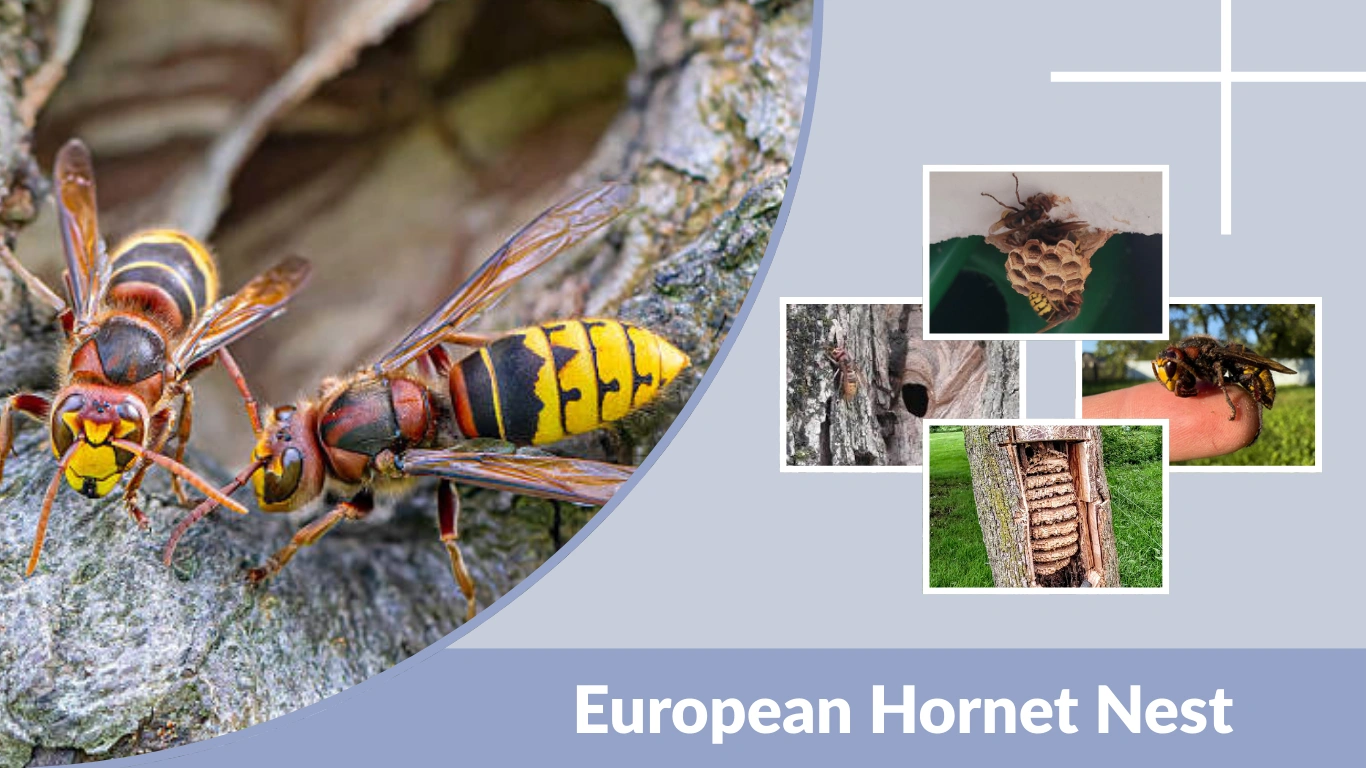
The European hornet nest is a fascinating yet often misunderstood structure built by one of the largest wasp species in Europe and North America. European hornets (Vespa crabro) construct large paper-like nests using chewed wood fibers and saliva, usually hidden in hollow trees, wall cavities, or attics. Understanding how these nests look, where they are located, and how hornets behave around them can help homeowners identify them safely and avoid unnecessary risks.
What Is a European Hornet Nest?
A European hornet nest is a colony structure built by the species Vespa crabro. Like other hornets and wasps, these insects create nests from a material that resembles paper. Workers gather small pieces of wood from tree bark, fences, or decaying timber and chew them into a pulp. When mixed with saliva, this pulp forms a lightweight but durable material used to construct the nest.
Unlike the open combs of some wasps, European hornet nests are typically enclosed within a protective outer shell known as an envelope. Inside this shell are multiple horizontal layers of hexagonal cells where the larvae develop. The entire nest functions as the central hub of the hornet colony, housing the queen, workers, and developing young.
These nests can vary in size depending on the season and colony strength. Early in the year, the nest may be small and barely noticeable, but by late summer it can grow significantly larger as hundreds of workers contribute to its expansion.
European Hornet Nest Structure
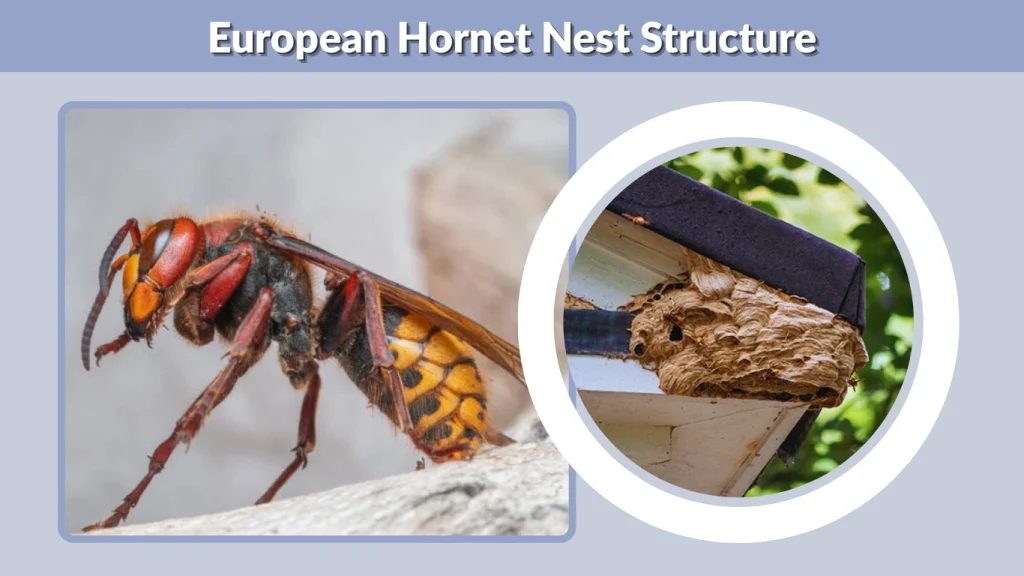
The structure of a European hornet nest is complex and carefully organized to support the needs of the colony. Although it may appear like a simple paper ball from the outside, the interior contains several specialized layers and chambers.
Outer Envelope
The outer envelope acts as the protective shell of the nest. It is made of thin layers of paper-like material and usually appears tan, gray, or light brown. This envelope protects the colony from weather, predators, and temperature changes.
The surface often has a layered or swirled texture due to the way workers add strips of pulp while building the nest.
Inner Comb Layers
Inside the envelope are several horizontal comb layers. Each comb contains hundreds of hexagonal cells, similar to honeycomb structures.
These cells serve different purposes:
- Egg chambers for the queen
- Larval development areas
- Pupal cells where young hornets mature
As the colony grows, workers build additional comb layers downward, expanding the nest vertically.
Nest Entrance
Most European hornet nests have one main entrance hole. Workers use this opening to enter and exit the colony while foraging for food and building materials.
Guard hornets often patrol this entrance to protect the colony. If the nest is disturbed, the workers may become defensive and attempt to drive away perceived threats.
Where Do European Hornets Build Their Nests?
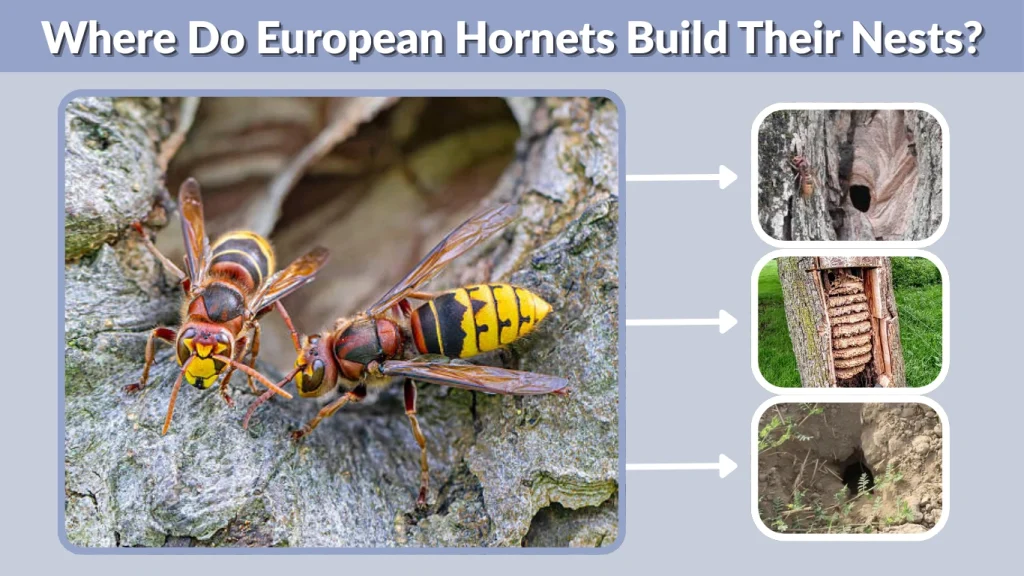
European hornets prefer dark, sheltered environments for their nests. These locations provide protection from weather and predators while maintaining a stable internal temperature for developing larvae.
Natural Nesting Sites
In the wild, hornets often build nests in natural cavities. Common locations include:
- Hollow tree trunks
- Tree cavities created by woodpeckers
- Underground cavities or abandoned burrows
Forested areas provide ideal nesting sites because they offer both shelter and an abundant supply of insects for food.
Human Structures
European hornets frequently nest in man-made structures as well. Buildings provide protected spaces similar to natural tree cavities.
Common nesting spots include:
- Attics
- Wall voids
- Barns or sheds
- Chimneys
- Roof overhangs
Because these nests are often hidden within walls or ceilings, homeowners may only notice them when hornet activity increases around the building.
Why Hornets Prefer Dark Locations
Dark nesting locations offer several advantages for the colony. These spaces help maintain consistent humidity and temperature, which are essential for larval development.
Additionally, enclosed spaces reduce exposure to predators and environmental disturbances, allowing the colony to grow undisturbed throughout the season.
European Hornet Nest Size and Colony Population
The size of a European hornet nest can vary greatly depending on the stage of the colony’s lifecycle. In early spring, the nest begins as a very small structure built by a single queen. Over time, as workers hatch and begin assisting with construction, the nest expands rapidly.
A mature European hornet nest often reaches the size of a basketball or larger by late summer.
Typical colonies may contain 200 to 400 hornets, although larger colonies can occasionally exceed this number under ideal conditions. The increasing population allows workers to expand the nest, gather food, and defend the colony effectively.
The nest continues to grow throughout the summer as new brood cells are constructed. By late summer or early autumn, the colony reaches its maximum size before beginning its seasonal decline.
European Hornet Nest Lifecycle
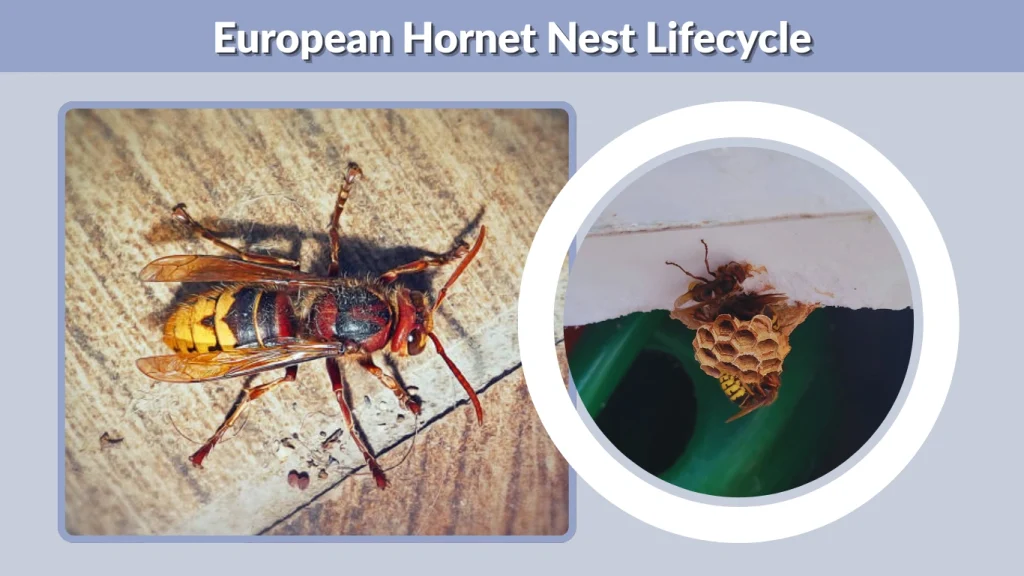
The European hornet nest lifecycle follows a seasonal pattern that begins in spring and ends in late autumn. Each stage of the year plays an important role in the development and survival of the colony.
Spring – Nest Founding
The cycle starts when a fertilized queen hornet emerges from winter hibernation in early spring. During winter, these queens hide in sheltered places such as tree bark, rotting logs, or building crevices.
Once temperatures rise, the queen begins searching for a suitable nesting location. After finding a cavity or sheltered space, she starts building the first small nest using chewed wood fibers.
The queen lays the first batch of eggs inside a small set of hexagonal cells. She then feeds and protects the larvae until they mature into the first group of worker hornets.
Summer – Colony Expansion
When the first workers emerge, the colony begins expanding rapidly. Worker hornets take over most of the nest duties, including:
- Collecting wood fibers for nest construction
- Gathering food for the larvae
- Defending the nest
- Caring for developing brood
During this stage, the queen focuses entirely on laying eggs. The number of workers increases steadily, allowing the nest to grow larger and more complex.
By mid to late summer, the colony reaches its peak population and the nest becomes much more active.
Autumn – Reproductive Stage
In early autumn, the colony shifts its focus toward reproduction. Instead of producing only worker hornets, the queen begins laying eggs that will develop into:
- Male hornets
- New queens
After emerging, these reproductive hornets leave the nest to mate. The newly fertilized queens then search for protected locations where they can hibernate during winter.
Winter – Colony Decline
As temperatures drop, the original colony begins to collapse. The old queen, workers, and males gradually die off.
Only the newly fertilized queens survive the winter. These queens will start entirely new colonies the following spring, while the old nest remains abandoned and is not reused.
How to Identify a European Hornet Nest
Identifying a European hornet nest can help homeowners distinguish it from other wasp or hornet nests. Several visual and behavioral signs make these nests recognizable.
Visual Signs
European hornet nests typically have several distinctive features:
- A paper-like outer shell made from wood pulp
- A round or oval shape
- A single entrance hole
- A layered surface with swirled patterns
These nests are often hidden in cavities, which means only the entrance or surrounding hornet activity may be visible.
Behavioral Signs
Even when the nest itself is hidden, hornet behavior can reveal its location. Common signs include:
- Frequent hornet activity around a specific area
- Loud buzzing near walls, trees, or attics
- Hornets entering and exiting a small opening
European hornets are also unusual among wasps because they can remain active at night, often flying toward outdoor lights.
Differences From Wasp Nests
European hornet nests differ from typical wasp nests in several ways.
- They are usually larger than most wasp nests.
- They are commonly built inside cavities rather than hanging in open spaces.
- The hornets themselves are larger and have reddish-brown and yellow coloring.
Understanding these differences can help prevent misidentification.
Are European Hornet Nests Dangerous?
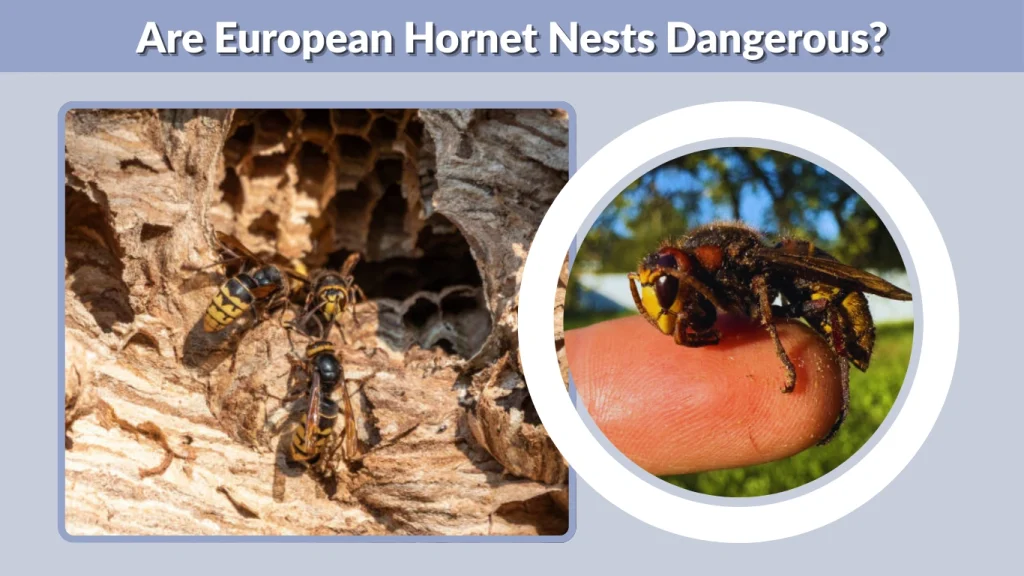
Many people worry about the danger posed by hornet nests. While European hornets can sting, they are generally less aggressive than some other wasp species.
Defensive Behavior
European hornets primarily become aggressive when their nest is threatened. If the colony feels disturbed, workers may attempt to defend it by flying toward the intruder.
However, when left alone, they usually focus on hunting insects and maintaining the nest.
Risk of Stings
A European hornet sting can be painful and may cause swelling, redness, and irritation. For most people, the effects are temporary.
The main risk occurs if:
- Someone disturbs the nest
- A person accidentally blocks the entrance
- The colony is provoked during removal attempts
People who are allergic to insect stings should be especially cautious around hornets.
Situations That Increase Risk
Certain situations can make hornet encounters more dangerous:
- Nest located near doorways or high-traffic areas
- Attempting to remove the nest without proper equipment
- Disturbing the nest during daylight when workers are active
Because of these risks, it is often best to avoid interfering with the nest directly.
What to Do If You Find a European Hornet Nest
Discovering a hornet nest near your home can be alarming, but it is important to respond carefully.
Observe From a Safe Distance
If you suspect a hornet nest, keep your distance and observe the activity from afar. Avoid sudden movements or attempts to get close to the entrance.
Avoid Disturbing the Nest
Disturbing the nest can trigger defensive behavior. Do not poke, spray, or attempt to knock down the nest yourself.
Hornets may swarm if they feel the colony is under attack.
Contact Pest Control Professionals
In many cases, the safest solution is to contact licensed pest control professionals. Experts have the proper equipment and protective gear needed to remove or treat hornet nests safely.
Professional removal is especially recommended if the nest is inside a building or near frequently used areas.
When Nest Removal Is Necessary
Not all hornet nests require removal. If the nest is located far from human activity, it may be safer to leave it undisturbed.
Since European hornet colonies naturally die off during winter, the abandoned nest will eventually become inactive.
Ecological Role of European Hornet Nests
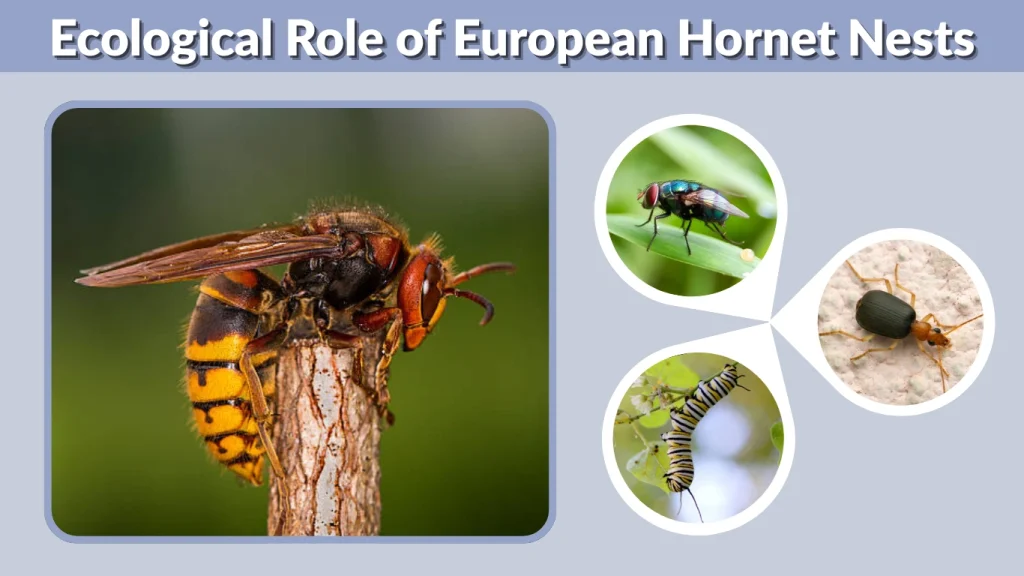
Although they are often feared, European hornets actually play an important role in ecosystems.
Natural Pest Control
European hornets are predatory insects that feed on a wide range of other insects. Their diet includes:
- Flies
- Beetles
- Caterpillars
- Other wasps
By hunting these insects, hornets help control pest populations.
Role in Ecosystems
Hornets contribute to ecological balance by acting as both predators and prey within food chains. Birds, mammals, and other animals may feed on hornets or their larvae.
Their nests also provide shelter for other insects once abandoned.
Misconceptions About Hornets
Despite their intimidating appearance, European hornets are often misunderstood. They are not naturally aggressive and rarely attack humans unless provoked.
Understanding their behavior can help reduce unnecessary fear and encourage safer coexistence with these insects.
FAQs
How big can a European hornet nest get?
A mature European hornet nest can grow to basketball size or larger by late summer, depending on colony size and environmental conditions.
Do European hornets reuse old nests?
No. European hornets do not reuse old nests. Each spring, a new queen builds a completely new nest.
How far do hornets travel from their nest?
European hornets typically forage several hundred meters from the nest while searching for food.
Are European hornets active at night?
Yes. Unlike many other wasps, European hornets can be active during nighttime, especially around lights.
Can you remove a hornet nest yourself?
It is not recommended. Removing a hornet nest without protective equipment can be dangerous. Professional pest control services are usually the safest option.
Conclusion
The European hornet nest is a remarkable structure that supports the complex life of a hornet colony. Built from wood pulp and saliva, these paper nests can grow large over the course of a single season and house hundreds of hornets. While their presence can sometimes cause concern, understanding how these nests form, where they are located, and how hornets behave can help people respond safely. In many cases, leaving the nest undisturbed or seeking professional assistance is the best solution.
