
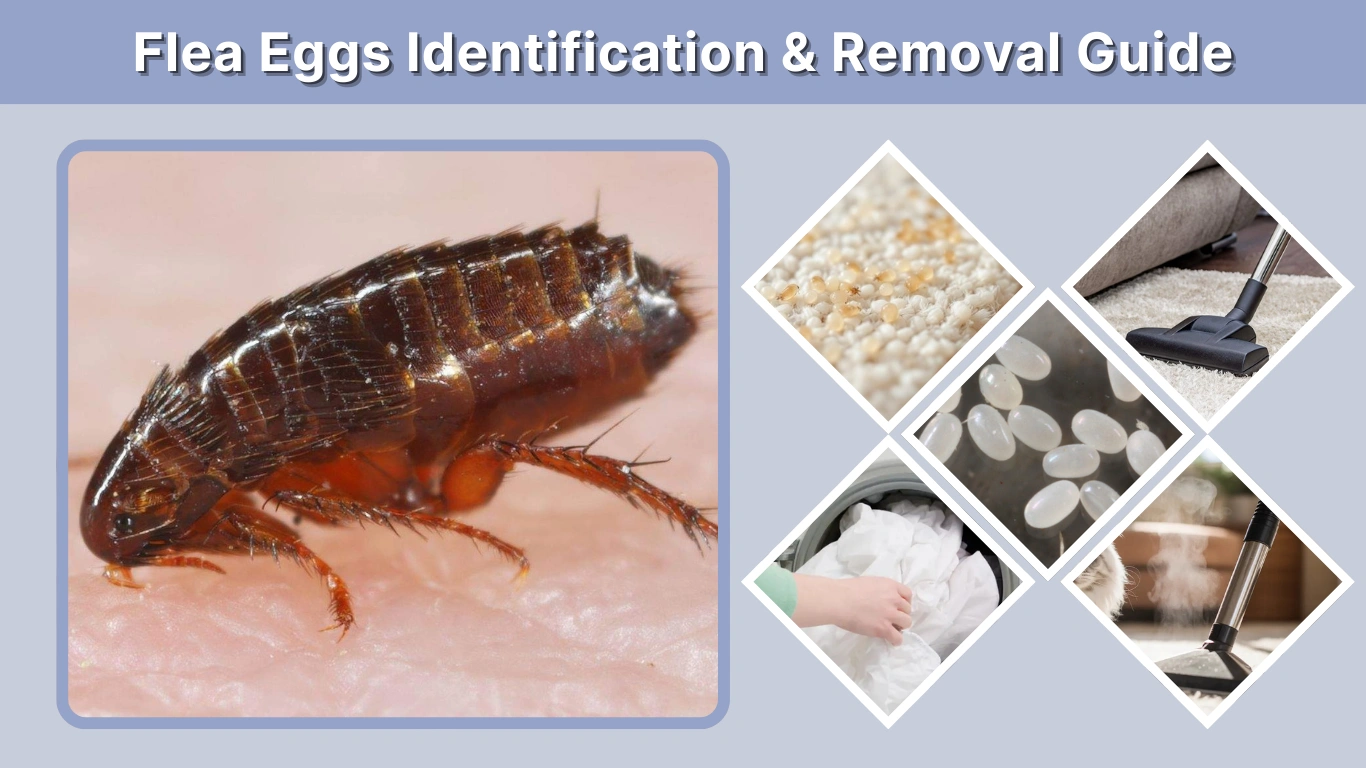
Flea eggs are one of the most overlooked parts of an infestation because they are tiny, scattered, and almost always hidden in fur, carpets, bedding, or furniture. Many people see the itching or the adult fleas but miss the eggs entirely, which allows the problem to continue. This guide explains exactly what flea eggs look like, where fleas lay eggs, how to identify them on dogs, cats, bedding, carpet, and clothing, and how flea eggs compare to dandruff or other debris.
What Flea Eggs Look Like

Color, Size & Shape
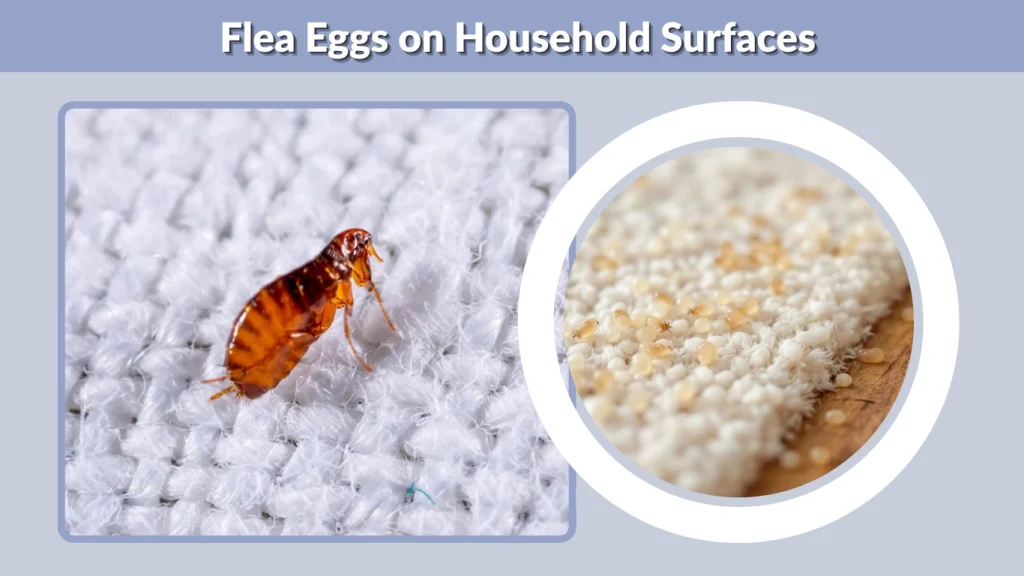
Flea eggs are extremely small—usually 0.3 to 0.5 millimeters long. Their color is white or off-white, never black. They are oval, smooth, and slightly shiny when fresh, giving them a resemblance to tiny grains of salt or miniature white rice seeds. Because they are so small and clean-looking, they blend into many surfaces, especially light fabrics or pale fur.
Are Flea Eggs Visible to the Human Eye?
Yes—flea eggs are visible without magnification, but they can be very difficult to spot. They stand out best on dark surfaces, pet beds, or combed hair placed on a piece of white paper. The white paper test is simple: comb a dog or cat, tap the hair onto paper, and look for tiny oval grains. Unlike dandruff, flea eggs are perfectly shaped and do not flake apart.
Dead Flea Eggs vs Live Eggs
Dead flea eggs look slightly different from live ones. Instead of appearing glossy and bright, they become dull, chalky, and opaque. Some collapse or flatten as they dry out. Despite this, dead flea eggs remain white—not brown or black. Because dead eggs can still be confused with debris or dust, close inspection is needed.
Where Fleas Lay Eggs
On Dogs & Cats
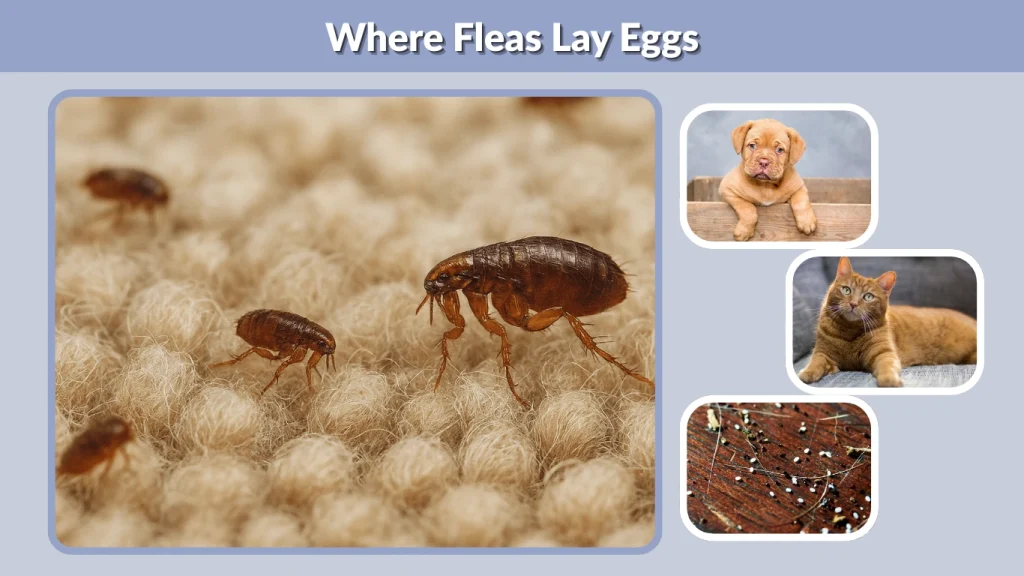
Adult fleas lay eggs directly on animals, especially along warm regions like the tail base, belly, neck, and inner thighs. However, flea eggs are not sticky. Their smooth coating causes them to slip off the fur easily, which means a pet may only appear to have a few eggs even though hundreds have fallen into the environment. Cats groom more frequently, so their eggs often end up in bedding rather than on the fur.
In Homes (Sheets, Carpet, Furniture)
Inside a home, flea eggs behave like grains of loose sand. They drop into:
- Bed sheets and blankets
- Carpet fibers
- Furniture cushions and seams
- Clothing piles
- Cracks along the floor and baseboards
On sheets, flea eggs appear as scattered white specks often mixed with flea dirt. In carpets, they settle deep between fibers where they are difficult to vacuum. Upholstered furniture traps eggs in folds and corners, especially if a pet sleeps on couches or chairs.
Outdoors
Flea eggs also accumulate in moist, shaded outdoor areas such as porches, decks, soil, and leaf litter. They survive best in warm, humid environments, so shaded soil can become a hidden breeding ground. Eggs do not survive long in direct sun or very dry conditions.
Flea Eggs on Dogs
What Flea Eggs Look Like on a Dog
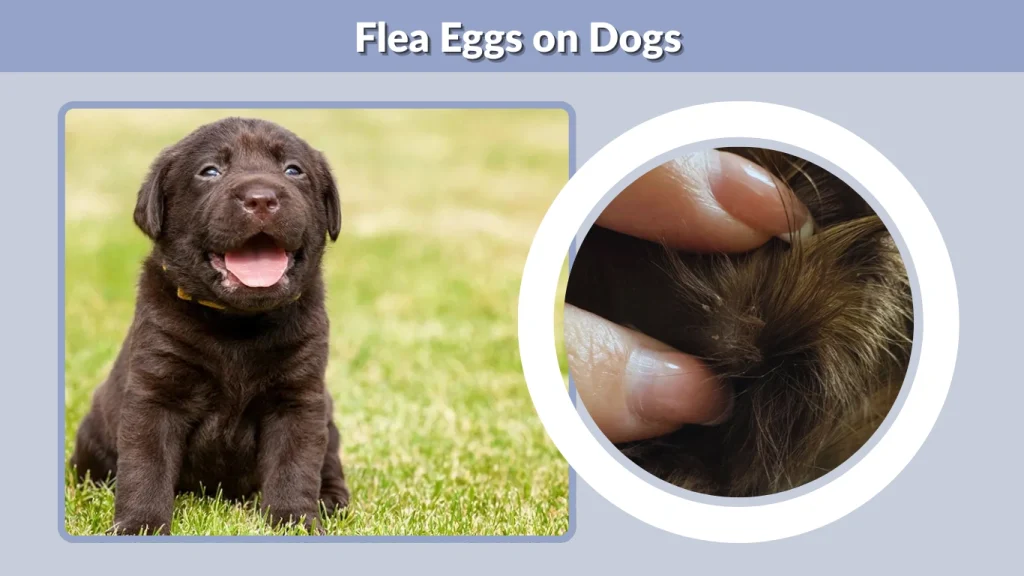
On dogs, flea eggs show up as tiny white grains against the skin or close to the roots of the fur. They may cluster in areas where fleas feed most often—tail base, groin, and lower back. In light-colored fur, eggs may be almost invisible unless you part the hair with a comb. In darker coats, they look like bright specks against the skin.
Dog Dandruff or Flea Eggs?
Dog dandruff is flaky and irregular. It breaks apart easily and clings to the fur because it is made of dead skin. Flea eggs, on the other hand, are:
- Oval, not irregular
- Smooth and solid
- Easy to roll between fingers
- Uniform in color
A simple test is to place particles onto a dark surface. If it flakes, it’s dandruff. If it stays oval and solid, it may be flea eggs.
Dog Fleas & Eggs Cycle Explanation
Female fleas lay 20 to 50 eggs per day, and they begin laying eggs within 24 hours of feeding. This means even a mild flea problem can turn into hundreds of eggs in days. Most eggs fall into the environment, so treating only the dog rarely eliminates the issue.
Flea Eggs on Cats
What Flea Eggs Look Like on Cats
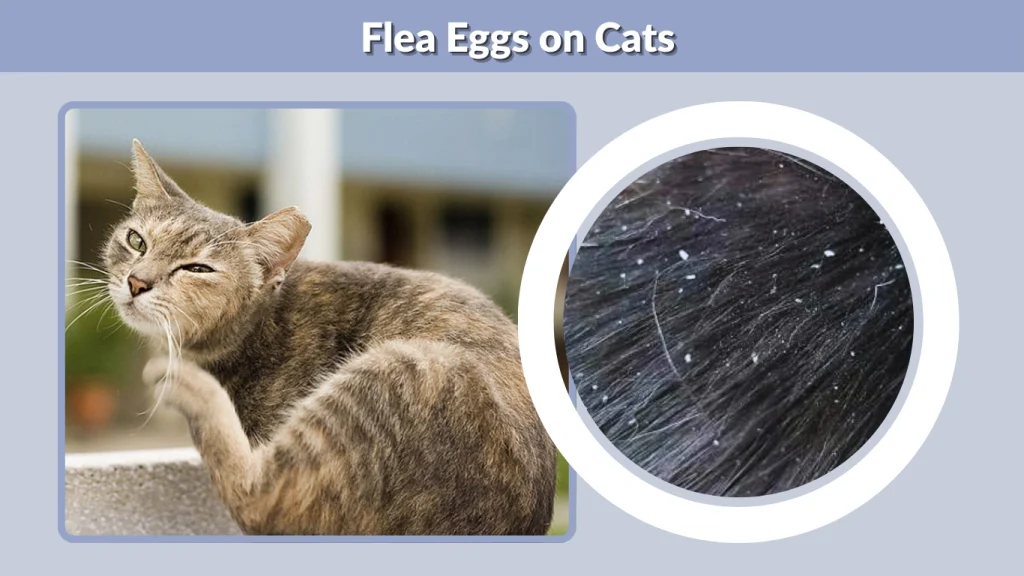
On cats, flea eggs are harder to see because cats groom constantly. Most eggs fall off during grooming or licking. When visible, they appear as tiny white oval specks caught near the skin. Areas to check include the neck, back, rump, and especially the bedding where the cat sleeps.
Cat Dandruff vs Flea Eggs
Cat dandruff is more common than many owners realize. To tell the difference:
- Dandruff is flat and flaky
- Flea eggs are oval and glossy
- Dandruff sticks to fur; flea eggs roll away
- Eggs often appear with flea dirt, dandruff does not
Using a flea comb over a white surface makes identification easier.
Flea Eggs on Household Surfaces
Flea Eggs on Bed Sheets & Blankets
Flea eggs on bed sheets usually appear as scattered, tiny white specks. They may be mixed with flea dirt, which looks like black pepper flakes. If your pet sleeps on your bed, eggs easily roll off their fur onto sheets, pillowcases, or blankets. Flea eggs do not smear or change color when rubbed; they remain firm, white, and oval. In contrast, flea dirt will smear reddish-brown due to the dried blood it contains. Sheets with many tiny white grains may indicate a heavy infestation.
Flea Eggs in Carpet
Carpets are one of the most common places where flea eggs collect. The fibers trap eggs deep inside, making them difficult to vacuum out completely. Flea eggs in carpet look like tiny white salt crystals lodged between strands. Because pets walk or sleep on carpets frequently, the eggs disperse widely. These eggs eventually hatch into larvae and then pupae, continuing the infestation cycle. Carpets with thicker or darker fibers make spotting eggs especially difficult without using a flashlight or magnifying glass.
Flea Eggs on Clothes & Furniture
Flea eggs can fall onto clothes, especially laundry piles, rugs, jackets, or pet bedding fabric. They are small enough to cling to stitching or folds in garments. On furniture, you may find eggs in:
- Cushion seams
- Sofa crevices
- Folds of blankets
- Pet beds
- Upholstery corners
Their appearance remains consistent—white, oval, and smooth—even on soft surfaces.
Flea Egg Life Cycle

How Long Flea Eggs Take to Hatch
Flea eggs typically hatch in 2 to 12 days, depending on temperature and humidity. Warm, humid environments encourage faster hatching, while dry or cold conditions delay the process. This variation explains why infestations sometimes seem to linger for weeks; eggs continue hatching even after adult fleas are removed.
How Long Flea Eggs Live Without a Host
Flea eggs do not need a host to survive. They remain dormant in carpets, furniture, and bedding for days or weeks. In ideal indoor conditions, flea eggs can survive up to several weeks, waiting for the right environment to hatch. Once hatched, larvae feed on organic debris and flea dirt until they pupate and emerge as new adults.
How Many Eggs a Flea Lays
A single female flea lays 20 to 50 eggs per day and up to 2,000 eggs during her lifetime. Because eggs fall off the host quickly, most of them end up in the environment rather than on the animal itself. This rapid reproductive rate is why even a few fleas can lead to a full home infestation in a short period.
Flea Eggs vs Other Things (Comparison)

Flea Eggs vs Dandruff
Dandruff is flaky, irregular, and usually attached to fur or skin. Flea eggs are oval, smooth, and fall away easily. Dandruff also varies in size, while flea eggs are consistently tiny and oblong. A quick test: place particles on dark paper. If they stick or flake apart, it’s dandruff. If they roll like grains of salt, it’s likely flea eggs.
Flea Eggs vs Flea Dirt
Flea dirt looks like small black or dark brown crumbs, similar to ground pepper. It turns red when sprinkled with a few drops of water because it is dried blood. Flea eggs, however, remain white and do not dissolve. If you see both around the same area, it’s a strong sign of an active flea population.
Flea Eggs vs Sand Flea Eggs
Sand fleas (also called chigoes) are different organisms. They lay eggs in the environment, not in fur. Some species burrow into skin—often causing confusion—but their eggs are not found on pets or carpets. Regular flea eggs are white and oval, while sand flea issues involve skin irritation rather than visible eggs.
How to Kill Flea Eggs
Immediate Home Methods
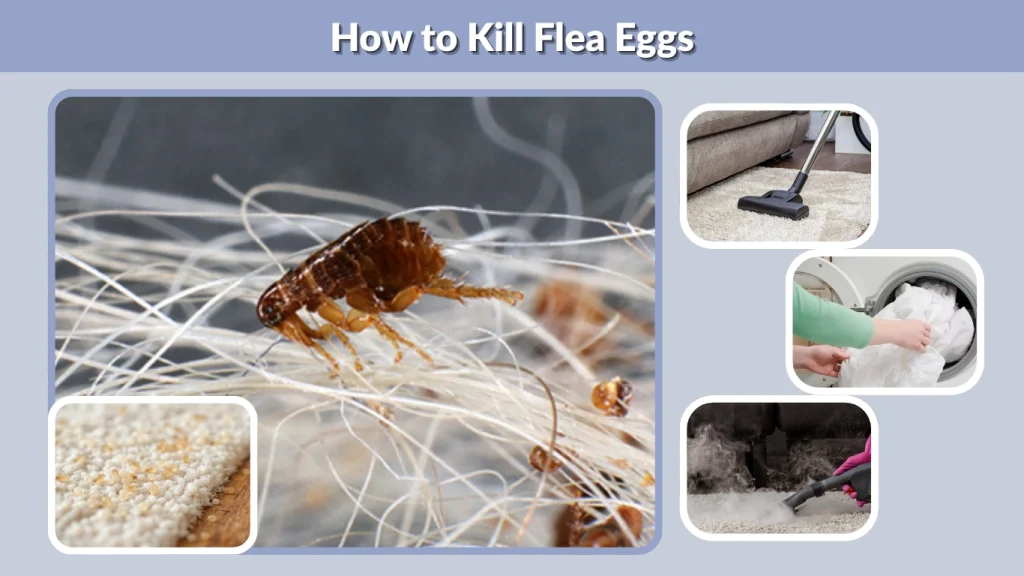
To eliminate flea eggs from the home, focus on cleaning methods that use heat and suction. Effective approaches include:
- Vacuuming carpets, rugs, and furniture daily
- Washing all bedding, blankets, and pet beds in hot water
- Drying fabrics on high heat for at least 30 minutes
- Steam cleaning carpets and upholstery
- Using diatomaceous earth (DE) on carpets to dry out eggs and larvae
Repeat these steps over several days to ensure multiple egg cycles are treated.
Flea Medications & Whether They Kill Eggs
Not all flea treatments kill eggs.
- Capstar kills adult fleas but does not kill eggs.
- Dawn dish soap kills adult fleas on contact but does not reliably kill eggs.
- NexGard primarily targets adult fleas, though it may reduce egg-laying.
- Flea bombs vary in effectiveness; many do not penetrate deep enough to reach eggs in carpet fibers.
For best results, use an IGR (insect growth regulator) product, which prevents eggs from hatching.
How to Kill Flea Eggs on Dogs & Cats
Pets should be treated with products that contain IGRs or vet-approved treatments. Effective methods include:
- Flea shampoos that break down egg shells
- Flea combing daily
- Spot-on treatments that disrupt egg development
- Oral medications that prevent fleas from laying viable eggs
Consistent, repeated grooming helps remove many eggs before they fall into the home.
How to Remove Flea Eggs
Removing Eggs From Pets
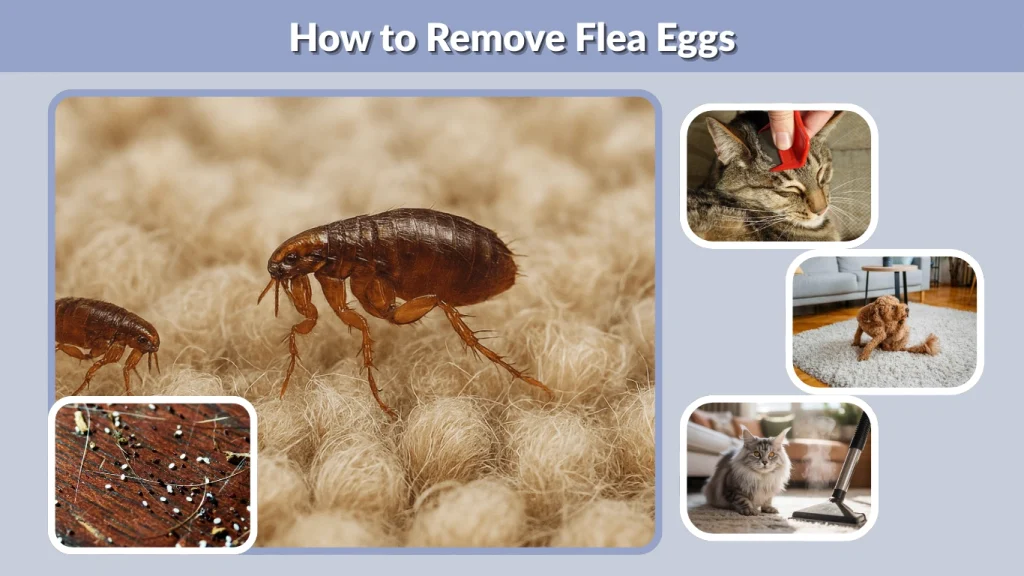
Use a flea comb to remove eggs near the skin, especially on the tail base and belly. Bathe the pet with warm water and flea shampoo, then rinse thoroughly. After drying, comb again to catch remaining eggs. Vacuum the area where grooming took place.
Removing Eggs From the Home
Wash all bedding, clothing, pet blankets, and fabric surfaces using hot cycles. Vacuum carpets, floors, and upholstery daily. Use steam cleaning or DE for carpets. Keep pets treated so new eggs are not introduced.
Pictures of Flea Eggs (Descriptive Section)
If you were viewing actual pictures, you would see:
- Tiny white oval grains against dark fur
- Salt-like specks in carpet fibers
- Small clusters on sheets or pet beds
- Eggs mixed with black flea dirt
- Eggs next to thread-like larvae
These visual cues help you spot eggs even if you don’t have magnified images.
Summary & Quick Identification Checklist
Identification Points
- Color: white/off-white
- Size: 0.3–0.5 mm
- Shape: oval and smooth
- Found in bedding, carpet, fur, clothing
- Roll like grains of salt
- Never black
- Appear alongside flea dirt
FAQs
What color are flea eggs?
Flea eggs are always white or off-white. They never appear black. If you see black specks, that is flea dirt, not eggs. Fresh eggs have a slightly shiny surface, while older eggs may appear dull or matte.
Can you see flea eggs?
Yes, flea eggs are visible to the naked eye, but they are very small. They stand out best on dark surfaces or when collected on a sheet of white paper using a flea comb. Their smooth, oval shape makes them distinguishable from flakes or dust.
What kills flea eggs instantly?
Heat is the most reliable method. Washing fabrics in hot water and drying them on high heat kills eggs instantly. Steam cleaning carpets can also eliminate eggs. Some insect growth regulators (IGRs) prevent eggs from hatching entirely.
How long do flea eggs live?
Flea eggs typically hatch in 2 to 12 days, but in cool or dry environments they can survive for weeks before hatching. They do not require a host to remain viable. Once hatched, larvae hide in dark places and feed on flea dirt.
What do flea eggs look like on dogs or cats?
Flea eggs on pets look like tiny white grains near the skin, especially around the tail base, back, or belly. They may be easier to spot on dark fur. Eggs fall off quickly, so seeing them on bedding often confirms an infestation.
