
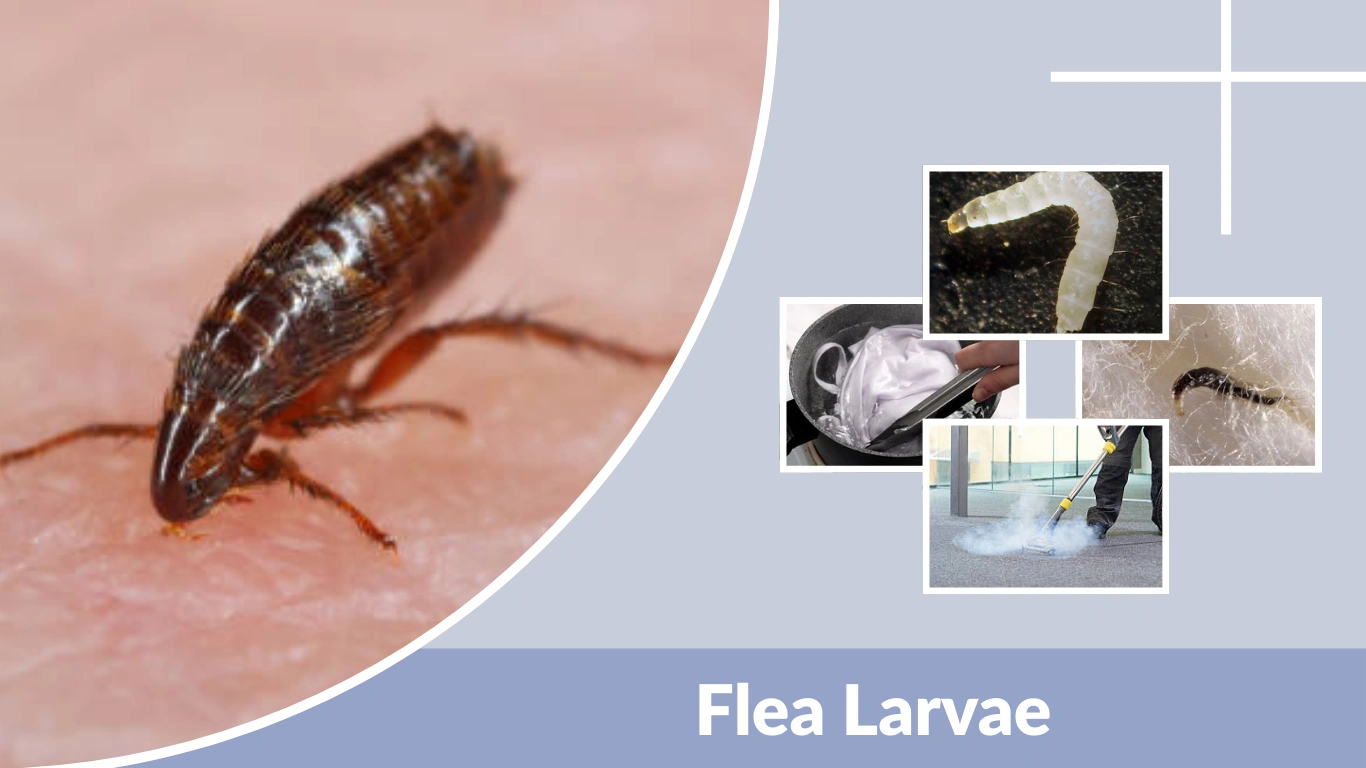
Flea larvae are one of the most misunderstood parts of a flea infestation. While adult fleas bite and jump on pets or humans, the larvae are small, worm-like creatures that hide deep in carpets, bedding, and dark corners of the home. Because they resemble tiny white worms or threads, they’re often mistaken for clothing fibers or harmless insects—leading many homeowners to overlook a developing infestation. Understanding what flea larvae look like, where they hide, and how to eliminate them is essential for breaking the flea life cycle.
Identification: What Flea Larvae Actually Look Like
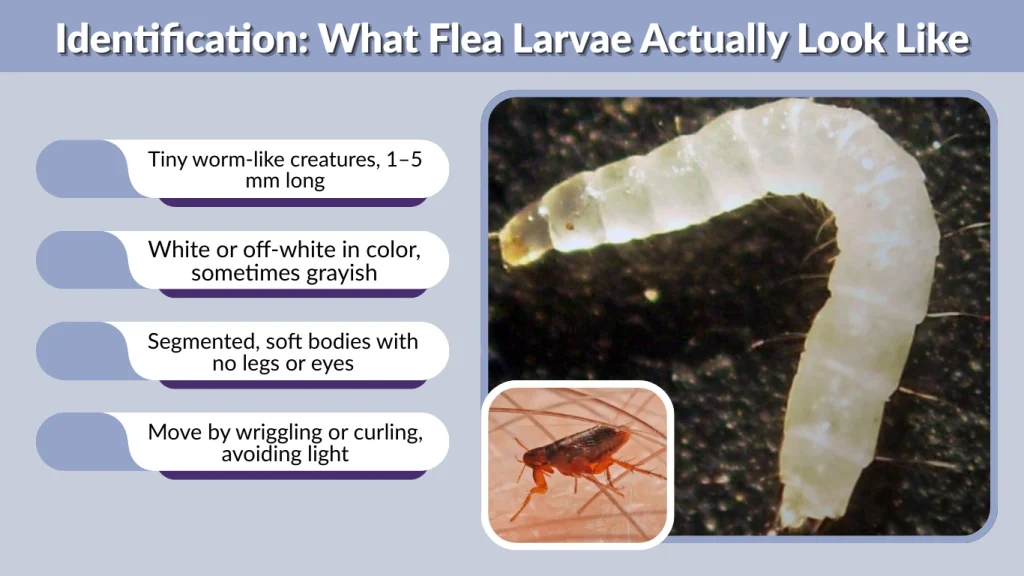
- Tiny worm-like creatures, 1–5 mm long
- White or off-white in color, sometimes grayish
- Segmented, soft bodies with no legs or eyes
- Move by wriggling or curling, avoiding light
- Often mistaken for dust, lint, or tiny threads
- Found in carpets, bedding, cracks, and pet areas
What Flea Larvae Look Like in Common Areas

Flea Larvae on Beds & Mattresses
Finding tiny white worms on your bed is a major cause of worry—but many times, these are flea larvae. They often appear on sheets, pillowcases, or mattress seams when pets sleep on the bed or when flea eggs fall from clothing or bedding. Larvae hide in folds, creases, and dark corners of a mattress where humidity helps them survive. They do not bite or feed on humans, but their presence indicates an active flea cycle somewhere in the home or on pets.
Flea Larvae in Carpets & Rugs
Carpets are where you’ll find the largest concentration of flea larvae. Adult fleas lay eggs on pets, but since eggs are not sticky, they fall off—landing where pets sleep, walk, or play. Once the eggs hatch, larvae burrow deep into carpet fibers to avoid sunlight. They move slowly through the carpet, feeding on flea dirt, dust, pet dander, and organic debris. Homeowners often mistake these larvae for dust worms or lint, especially when vacuuming.
Flea Larvae on Clothes
Clothing left on the floor can collect flea eggs and larvae, especially in infested homes or near pet bedding. Larvae do not cling to fabrics intentionally; rather, they end up on garments accidentally as they move in search of food. They may be found on socks, pajamas, or blankets—particularly if pets frequently rest on these items.
Flea Larvae on Dogs & Cats
A common misconception is that flea larvae live on pets. They do not. Flea larvae cannot survive on an animal’s skin, fur, or body warmth. However, they appear in areas connected to pets, such as:
- Pet beds
- Crates
- Favorite sleeping spots
- Under couches or chairs where pets rest
Sometimes, pet owners notice small worm-like larvae when cleaning a pet’s blanket—evidence of a breeding population nearby.
Flea Eggs vs Larvae vs Pupae (Comparison Table)
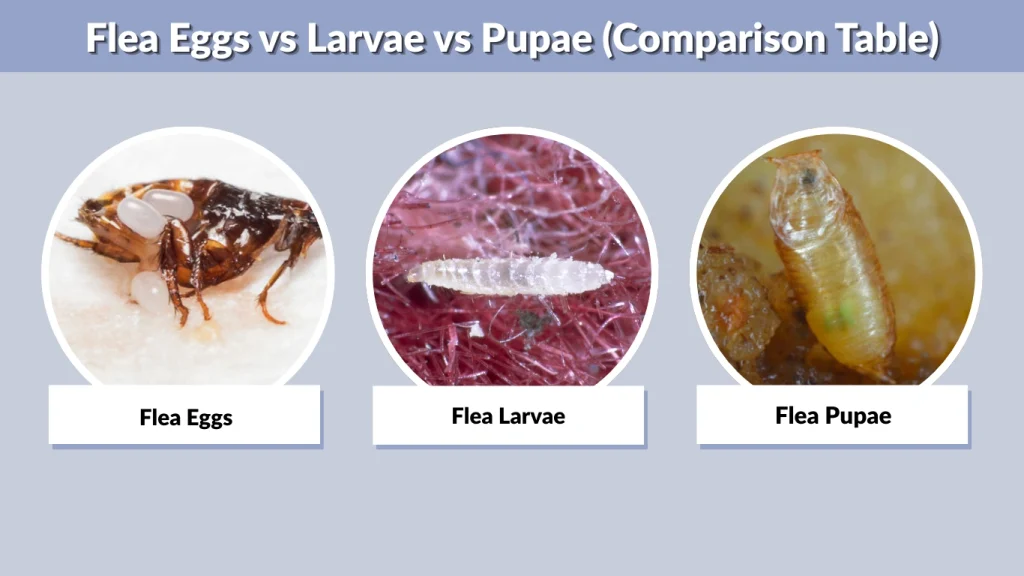
Understanding the differences between flea stages is crucial for identifying infestations correctly.
| Stage | Appearance | Size | Movement | Location |
| Flea Eggs | Pearl-like, white, oval | 0.5 mm | No | On pets, bedding, floors |
| Flea Larvae | Worm-like, white or gray | 1–5 mm | Yes | Carpets, cracks, bedding |
| Flea Pupae | Cocoon-like, sticky | Up to 5 mm | No | Deep in carpets & crevices |
Flea eggs are tiny and smooth; flea larvae resemble tiny worms; flea pupae are cocoon-like and extremely resistant to treatments. Identifying each stage helps target them effectively.
What Do Flea Larvae Eat?

Flea larvae are scavengers. They do not bite pets or humans—nor do they drink fresh blood. Instead, they feed on:
- Flea dirt (adult flea feces made of dried blood)
- Dead skin cells
- Dust
- Organic debris
- Pet dander
- Food crumbs
Their primary food source is flea dirt, which is why infestations thrive in areas where adult fleas frequently feed on pets. Without flea dirt, larvae struggle to develop into pupae and adult fleas.
Do Flea Larvae Bite Humans?
No. Flea larvae cannot bite, cannot pierce skin, and cannot live on humans. They lack the mouthparts required for biting. Any tiny worms found directly on skin are usually unrelated pests or lint fibers—not flea larvae.
Can You See Flea Larvae With the Human Eye?
Flea larvae are small, but they are absolutely visible to the naked eye. Because they measure 1–5 mm depending on their growth stage, you can usually spot them on smooth or light-colored surfaces. The biggest challenge is that flea larvae avoid bright light, quickly wriggling into deeper carpet layers, mattress seams, or dark floor cracks. Good lighting and gentle brushing of carpets or bedding often reveal their presence.
Do Flea Larvae Move?
Yes—flea larvae move by wriggling or curling their bodies, similar to tiny worms. Their movement is slow and subtle, but noticeable when watched closely. They use this motion to crawl deeper into carpets, under rugs, or inside bedding folds where they can feed and remain undisturbed. Their tendency to hide is one reason infestations grow rapidly before being noticed.
Why Flea Larvae Appear on Beds, Carpets & Clothing
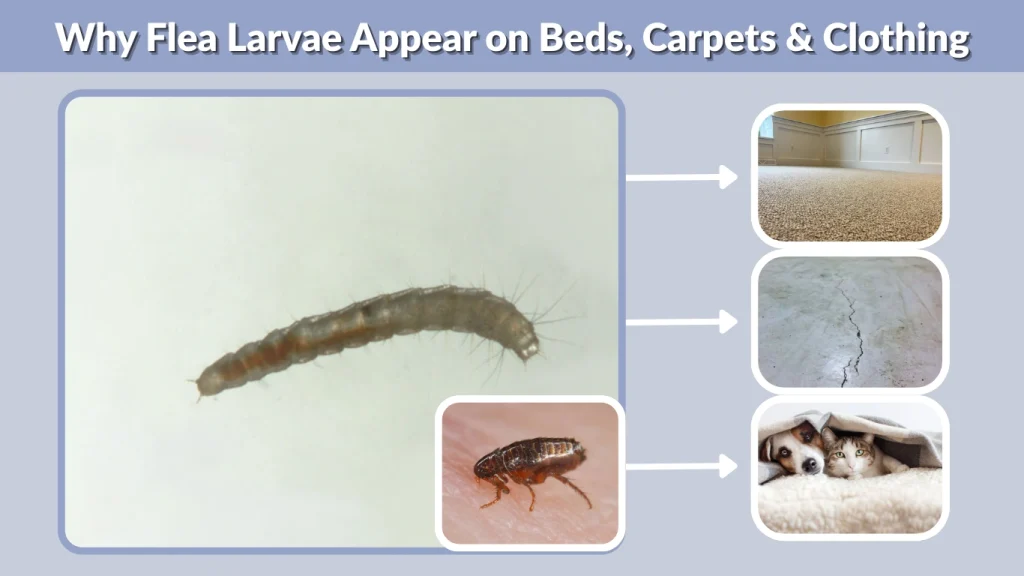
Flea larvae appear wherever flea eggs fall. Adult fleas lay eggs on pets, but the eggs easily drop off when the pet moves. Those eggs then scatter into:
- Carpets
- Cracks in the floor
- Pet bedding
- Under furniture
- Human beds and mattresses
Once eggs hatch, larvae emerge in the surrounding areas. Pets that sleep on human beds often introduce both eggs and larvae to blankets, sheets, and pillows. Larvae will then wriggle into dark, humid spaces like mattress seams where flea dirt may be present.
Clothes left on the floor also collect eggs and larvae, especially in homes with active infestations.
Flea Larvae Life Cycle

The flea life cycle explains why infestations can escalate quickly and why larvae are such an important stage to target.
Egg Stage
Adult fleas lay dozens of eggs per day on pets. These eggs fall into the environment and hatch in as little as 48 hours under warm, humid conditions.
Larvae Stage
This stage lasts 5–20 days. Larvae feed constantly on flea dirt and debris while avoiding light. Their goal is to grow large enough to enter the pupal phase.
Pupae Stage
Larvae spin a sticky cocoon that traps debris, making the pupae nearly invisible. In this stage, they can remain dormant for days or months, waiting for movement or heat to trigger emergence.
Adult Stage
Newly emerged adults search for a warm-blooded host immediately. Once they find one, they feed, reproduce, and restart the cycle.
This cycle shows why killing larvae is crucial—eliminating adults alone is not enough.
How to Get Rid of Flea Larvae (Step-by-Step)

Breaking the flea cycle means targeting larvae, eggs, pupae, and adults at the same time. Here are the most effective methods:
Step 1 — Vacuum Thoroughly
Vacuuming removes larvae, eggs, pupae, and flea dirt. Target:
- Carpets
- Rugs
- Mattresses
- Sofas and chairs
- Floor edges and cracks
- Under furniture
Empty the vacuum bag or canister outside immediately to prevent reinfestation.
Step 2 — Wash Fabrics in Hot Water
Wash bedding, blankets, pet beds, and clothing in hot water (at least 140°F/60°C). High heat kills larvae, eggs, and bacteria that support infestation.
Step 3 — Steam Cleaning
Steam cleaners use heat to kill larvae, eggs, and pupae on contact. This method works well on carpets, upholstery, and mattresses, reaching fibers that vacuuming can’t.
Step 4 — Use Flea Larvae Killers (IGRs)
Insect Growth Regulators (IGRs) prevent larvae from developing into pupae or adults. They are essential for long-term control. Many flea sprays combine:
- IGRs (to stop larvae)
- Adulticides (to kill adult fleas)
Apply sprays to carpets, baseboards, under furniture, and pet areas.
Natural Ways to Kill Flea Larvae
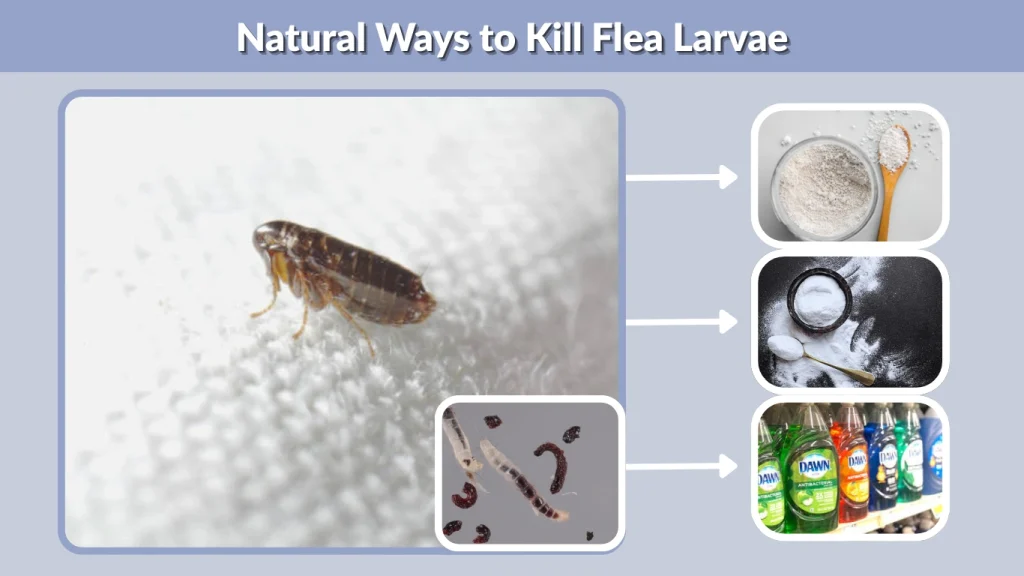
While chemical treatments work quickly, natural methods can help reduce infestations or maintain clean areas between treatments.
Diatomaceous Earth (DE)
DE is a natural powder that dehydrates flea larvae and adults. Sprinkle it lightly on carpets and floors, leave for several hours, then vacuum thoroughly. Use food-grade DE only.
Salt and Baking Soda
This combination dries out larvae and eggs. Apply evenly to carpets, leave overnight, and vacuum the next day.
Does Dawn Kill Flea Larvae?
Dawn dish soap kills adult fleas on pets during baths, but it is not a reliable method for killing larvae in carpets, bedding, or floors.
How to Kill Flea Eggs & Larvae on Dogs and Cats
Pets must be treated directly; otherwise, larvae will continue to appear in the environment.
Effective methods include:
- Vet-prescribed topical flea treatments
- Oral flea control pills
- Flea shampoos
- Flea combing
- Washing pet bedding weekly
Cat Flea Larvae vs Dog Flea Larvae
Both species behave similarly, but cat fleas (Ctenocephalides felis) are responsible for most flea infestations—even on dogs. Their larvae hide in the same places and require identical treatment steps.
Flea Larvae in Human Skin: Fact or Myth?
Flea larvae do not burrow into or live on human skin. This misconception often comes from confusion with:
- Sand fleas (chigoe fleas)
- Mite larvae
- Skin parasites
- Clothing fibers resembling worms
Flea larvae cannot survive on humans or animals; they require dirt and debris from the environment to live.
Tiny Worms in Bed: Are They Flea Larvae?
Finding tiny worms on a bed often leads to panic. While they can be flea larvae, other lookalikes include:
- Carpet beetle larvae
- Clothes moth larvae
- Maggots
- Booklice
- Fabric threads or lint
Flea larvae wriggle like soft worms and lack legs—key identifiers when comparing pests.
Flea Larvae Prevention Tips
Home Prevention
- Vacuum frequently
- Wash bedding weekly
- Use IGR sprays monthly during summer
- Reduce clutter and dust
- Keep humidity low
Pet Prevention
- Monthly flea treatments
- Regular grooming
- Clean pet beds and crates
- Limit outdoor exposure in high-flea seasons
Preventing infestation is easier than removing one.
FAQs
How long do flea larvae live?
Between 5 and 20 days depending on humidity, food availability, and temperature.
Can flea larvae live on humans?
No. They cannot climb, bite, or survive on human bodies.
What kills flea larvae instantly?
Heat, steam, vacuuming, and IGR sprays.
How big are flea larvae?
Fully grown larvae reach 4–5 mm in length.
What color are flea larvae?
They start white and may appear grayish as they consume flea dirt.
