
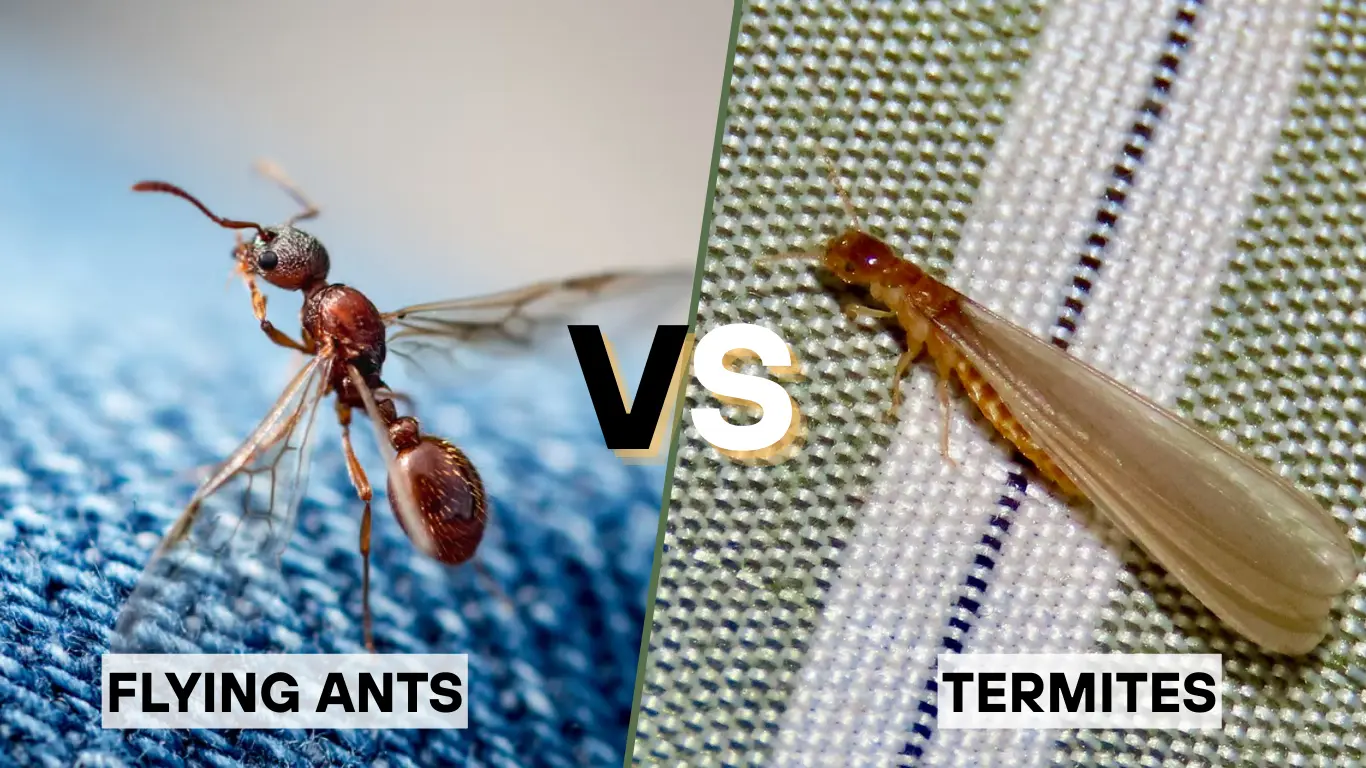
Spotting winged insects swarming in or around your home can be alarming—but are they flying ants or termites? While they may look similar at first glance, these two pests are very different in behavior, structure, and the damage they can cause. Misidentifying them could lead to costly mistakes, especially if termites are left untreated. This guide will help you compare flying ants vs termites through clear images, behavior patterns, and body features so you can take the right steps to protect your home.
Flying Ants vs Termites: Quick Comparison
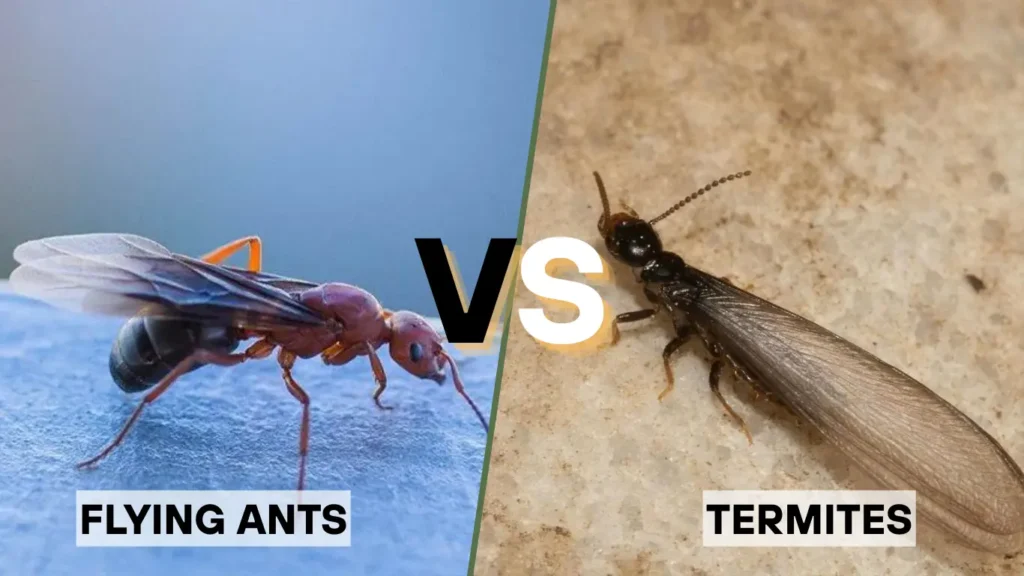
Before diving into detailed identification, here’s a side-by-side visual and structural comparison of flying ants and termites. This table highlights the most noticeable differences you can spot without needing professional help.
| Feature | Flying Ants | Flying Termites |
| Antennae | Bent or elbowed | Straight and beaded |
| Waist Shape | Narrow, pinched waist | Broad, uniform waist |
| Wing Size | Front wings longer than hind wings | All wings equal in length |
| Wing Appearance | Transparent with visible veins | Slightly milky and less veiny |
| Body Color | Dark brown to black | Pale, light brown to dark brown |
| Behavior | Swarm seasonally, not aggressive to homes | Swarm seasonally, indicate potential damage |
| Damage Risk | Minimal to none | Can cause serious structural damage |
| Lifespan | Short-lived during swarm | Longer, especially queens and colony members |
Identification Guide: Termites vs Flying Ants
Being able to identify whether you’re dealing with flying ants or termites is essential, especially if you find them inside your home. Below is a detailed breakdown of the physical characteristics of each insect to help you distinguish between them.
Termite Identification

Flying termites, also known as swarmers, are a sign of an active colony nearby. Here’s how you can identify them:
- Straight antennae with no bend
- Thick, uniform waist with no narrowing between body segments
- Wings are equal in length and extend beyond the body
- Wings appear pale or slightly milky
- Light brown to dark brown body color
Flying Ant Identification

Flying ants are usually reproductive ants that leave their colonies to mate and start new nests. Here’s how to recognize them:
- Elbowed (bent) antennae
- Distinct pinched waist, separating thorax and abdomen
- Front wings longer than hind wings
- Wings are clear with visible veins
- Body is shiny and dark brown or black
Pictures of Flying Ants vs Termites

Visual identification is one of the easiest ways to tell flying ants and termites apart. Below are common features you’ll see when comparing images of both insects side by side:
- Antennae:
Flying ants have bent, elbowed antennae, while termites have straight antennae that resemble tiny strings of beads. - Waist Shape:
Flying ants have a clearly pinched waist that gives their body a segmented look. Termites, on the other hand, have a broad, straight waist without narrowing. - Wings:
The wings of flying ants are two different sizes—front wings are noticeably longer than the hind wings. Termites have four wings of equal length that are longer than their body. - Wing Texture:
Flying ants have transparent wings with well-defined veins. Termite wings look smooth, pale, and more uniform in texture. - Body Appearance:
Ants appear shinier and darker, often black or deep brown. Termites usually look softer and range from pale cream to light brown.
Pictures showing these features side by side can help you quickly recognize the insect you’re dealing with—especially useful if you spot them indoors or near wooden structures.
Behavior and Swarming Patterns
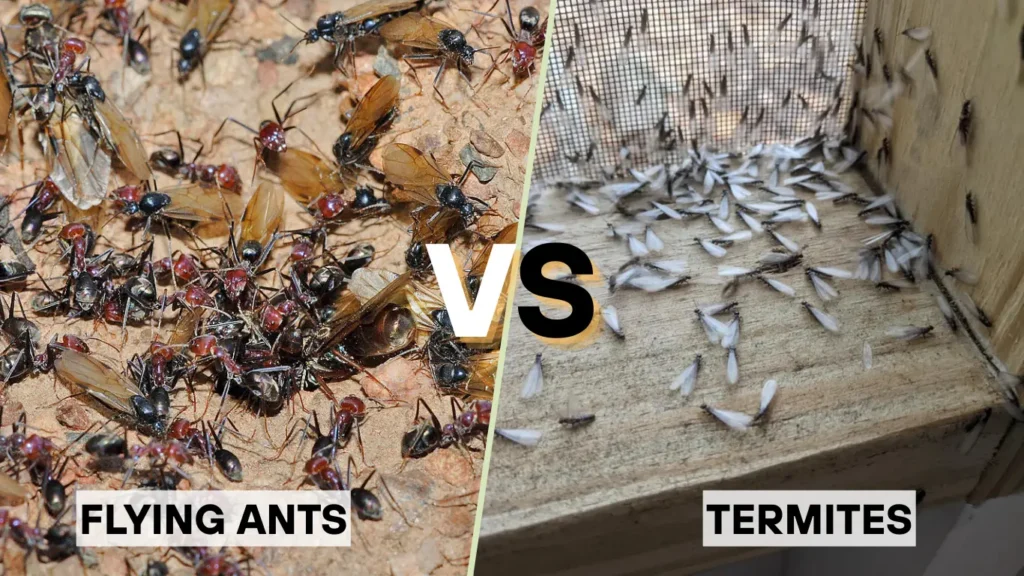
Understanding the behavior and swarming activity of flying ants and termites can help determine whether you’re dealing with a seasonal nuisance or a serious infestation.
Swarming Season and Triggers
Both flying ants and termites swarm during warm, humid weather—often after rain. This is part of their mating process, where winged males and females leave the nest to reproduce and establish new colonies.
- Flying Ants: Usually swarm in late spring to summer. They’re commonly seen near windows, doors, or lights.
- Termites: Swarm in spring or early summer, though in warmer regions they may swarm year-round.
Nesting Habits
- Flying Ants: Nest in soil, wall voids, or rotting wood but generally don’t cause structural damage unless carpenter ants are involved.
- Termites: Build nests underground or inside wood, often without external signs. Their presence indoors usually signals serious internal damage.
Aggression and Reproduction
- Flying Ants: Non-aggressive and usually die shortly after swarming. Only the queen survives to start a colony.
- Termites: Swarming termites (alates) don’t bite or sting, but if they succeed in forming a colony, they can begin feeding on structural wood.
Signs Around the Home
- Shed wings near window sills
- Sudden appearance of winged insects indoors
- Soft wood or hollow-sounding walls
- Mud tubes (for termites)
Flying Ants vs Termites in the House
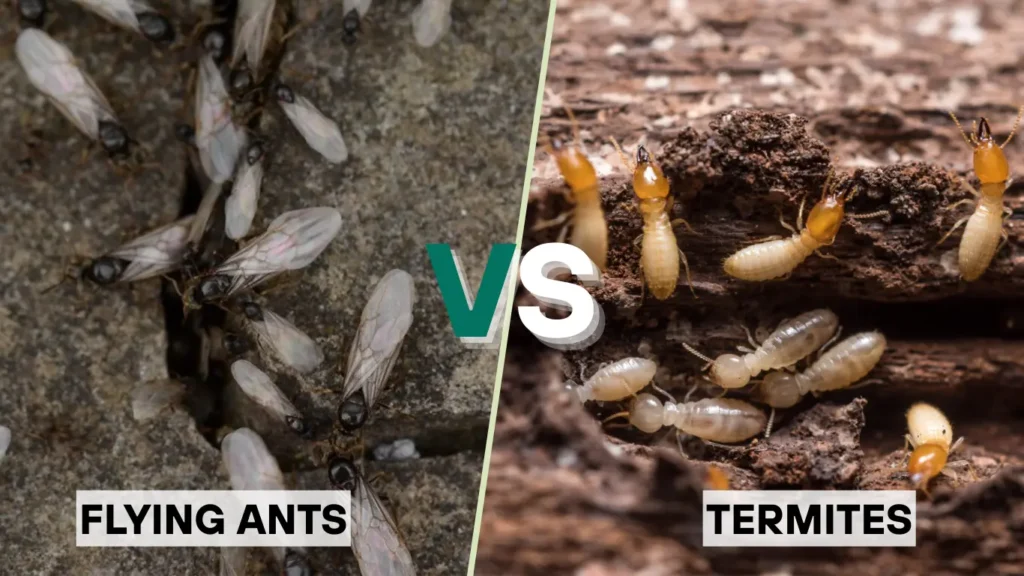
Finding winged insects inside your home can be alarming—but understanding what they are and what they’re doing can help you act quickly and appropriately.
Where They Are Found Indoors
- Flying Ants: Often appear near windows, doors, or lights, especially during their mating season. They may come in from outside or emerge from hidden nests within walls or ceilings.
- Termites: Typically found near baseboards, windowsills, wooden beams, or in moist, dark areas. Their presence indoors often signals an established infestation behind the walls or beneath the floor.
What Their Presence Means
- Flying Ants: Most of the time, they are not a structural threat. However, if they are carpenter ants, they can nest in wood and cause damage over time. Their appearance may just be seasonal.
- Termites: Indoor sightings usually indicate an active, hidden colony. Even a small number of swarmers can point to serious, ongoing wood damage. Prompt inspection is critical.
Visible Signs to Watch For
- Discarded wings near windows or vents
- Sawdust piles (more common with ants)
- Hollow-sounding wooden structures
- Bubbling or discolored paint (possible termite tunnels)
- Tight-fitting doors or sagging floors
If you find these signs, determining the correct insect type is essential for choosing the right treatment method.
Prevention and Control Methods
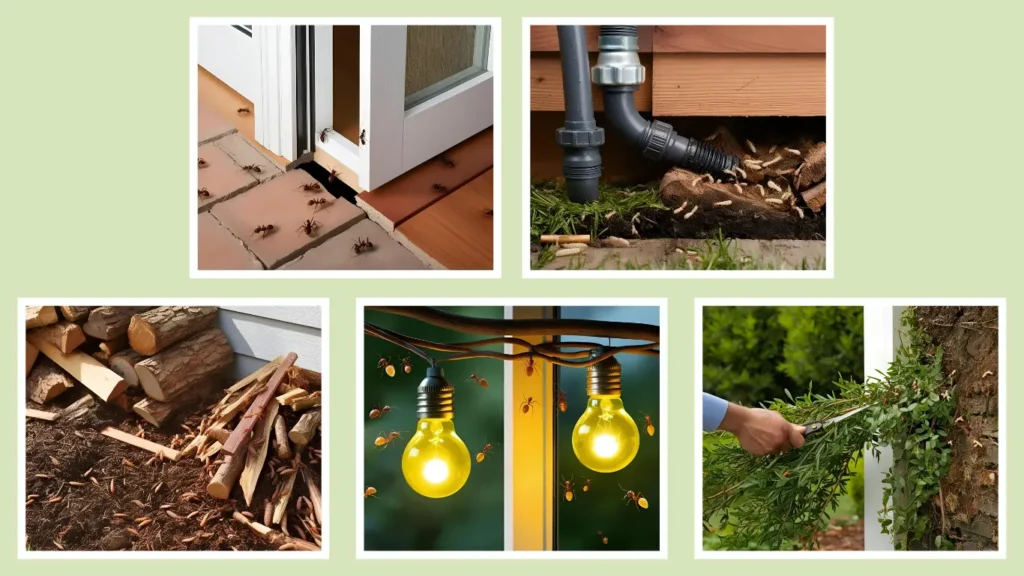
Both flying ants and termites can be managed effectively with early detection and proactive measures. Here’s how to prevent infestations and control their spread in and around your home.
Preventing Infestations
Seal Entry Points
Inspect and seal gaps around windows, doors, vents, and foundation cracks. These are common access points for both ants and termites.
Eliminate Moisture Sources
Fix leaky pipes, improve drainage around your foundation, and keep gutters clean. Termites are especially attracted to damp wood.
Remove Wood Contact with Soil
Keep firewood, mulch, and wooden debris away from the foundation. Termites can easily bridge from soil to structure.
Reduce Outdoor Lighting
Flying ants and termites are drawn to light. Use yellow outdoor bulbs and keep lights off near open windows and doors during swarming seasons.
Trim Vegetation
Cut back shrubs and tree branches that touch your home, as they can act as bridges for ants and termites.
Treatment Options
For Flying Ants
- Use ant baits and non-repellent sprays to target the colony.
- Vacuum visible ants and dispose of the bag outside.
- Identify and destroy carpenter ant nests if present inside wooden structures.
For Termites
- Install termite bait stations around your property.
- Consider chemical soil barriers applied by professionals.
- Schedule a termite inspection annually, especially if your area is high-risk.
When to Call a Professional
- If you spot multiple swarmers indoors more than once
- If you notice wood damage or hollow sounds when tapping
- If DIY treatments don’t stop the activity
Professional pest control can accurately identify the pest, locate the colony, and use effective, long-term treatments to protect your home.
Flying Ants vs Termites in Australia

In Australia, both flying ants and flying termites are common during the warmer months, particularly in coastal and humid regions. Their appearance often coincides with seasonal rains and increased humidity.
Common Australian Species
- Flying Ants: Coastal brown ants and carpenter ants are among the most commonly seen flying ants in Australia.
- Termites: Subterranean termites, particularly Coptotermes species, are widespread and responsible for most structural damage in Australian homes.
Seasonal Swarming
Flying termites in Australia usually swarm between October and March, especially after heavy rains. Flying ants often appear around the same time, which adds to the confusion for homeowners.
Identifying Local Threats
Given the significant termite risk in Australia, it’s essential to have annual inspections and maintain physical or chemical barriers in termite-prone zones.
Infographic: Flying Ant vs Termite
A quick-reference visual guide can make it easier to recognize the differences between flying ants and termites at a glance. Here’s what to include in an infographic layout:
Header: Flying Ants vs Termites – Spot the Difference
Body Comparison:
- Antennae:
- Ants: Bent
- Termites: Straight
- Ants: Bent
- Waist Shape:
- Ants: Pinched
- Termites: Uniform
- Ants: Pinched
- Wings:
- Ants: Unequal sizes
- Termites: Equal in size
- Ants: Unequal sizes
- Color:
- Ants: Dark brown or black
- Termites: Pale to light brown
- Ants: Dark brown or black
- Habitat:
- Ants: Nest in wood or soil
- Termites: Nest in or under wood structures
- Ants: Nest in wood or soil
This infographic can be placed near the top or within the identification section to improve readability and user engagement.
FAQ Section
How can you tell the difference between flying ants and termites?
Check the waist shape, antennae, and wings. Flying ants have a pinched waist, bent antennae, and uneven wings. Termites have a broad waist, straight antennae, and equal-sized wings.
Are flying ants dangerous like termites?
Flying ants are usually harmless and short-lived. Termites, however, can silently destroy wooden structures over time.
Can flying ants damage your house?
Only carpenter ants pose a threat. Most flying ants do not cause structural damage.
What does it mean when you see termites flying indoors?
It’s often a warning sign of a nearby colony or active infestation. Immediate inspection is recommended.
Do both ants and termites swarm at the same time?
Yes, both swarm during warm and humid weather, which is why they’re often confused.
Conclusion
While flying ants and termites may look similar, their impact on your home is very different. Termites are capable of causing extensive structural damage, while flying ants are mostly seasonal pests. By learning to spot the physical differences and behaviors of each, you can respond quickly and avoid serious damage. If you’re unsure which pest is swarming around your home, don’t wait—call a pest control expert for proper identification and treatment.
