
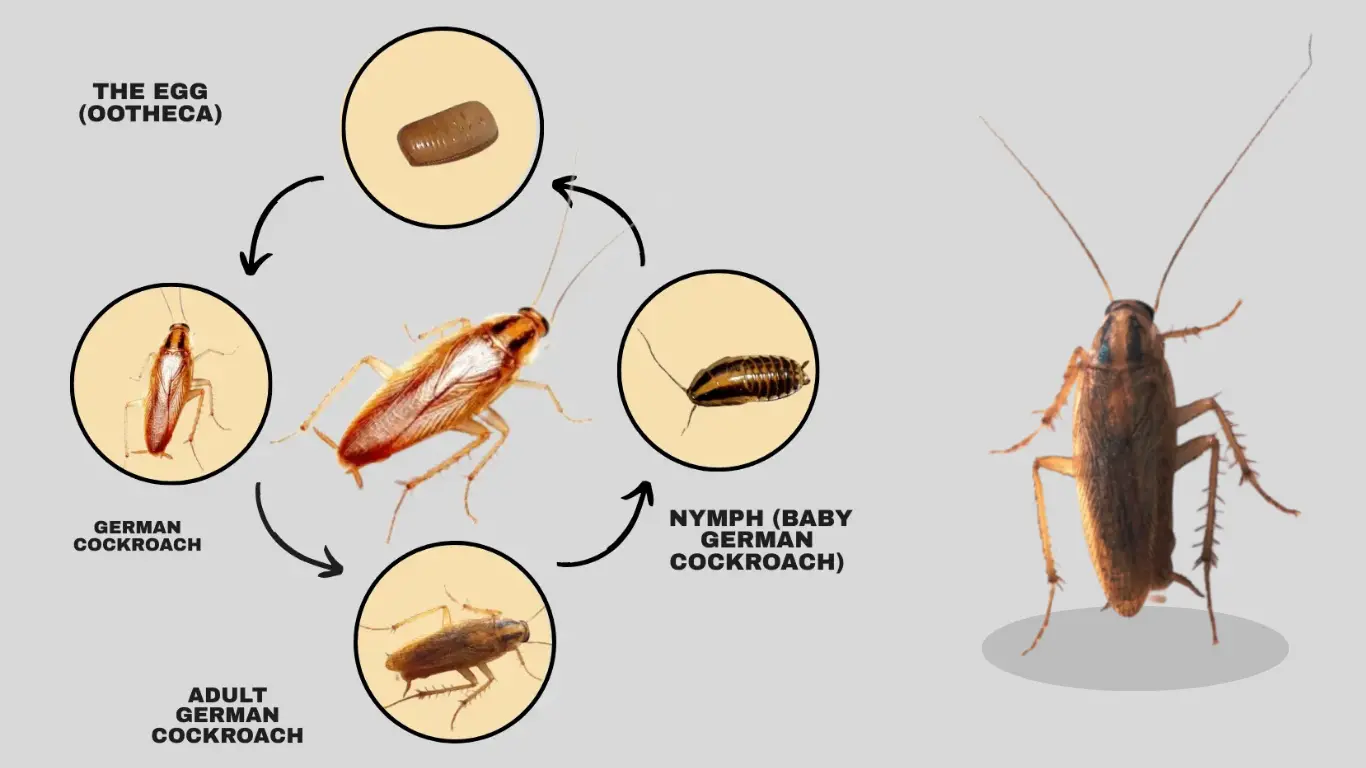
The German cockroach is one of the most common and stubborn household pests. What makes them especially hard to eliminate is their incredibly fast life cycle and ability to multiply rapidly. Understanding the different stages of their development—from tiny eggs to adult roaches—can help you detect, manage, and prevent a full-blown infestation.
In this article, I’ll walk you through each stage of the German cockroach life cycle and explain why early intervention matters.
Overview of the German Cockroach Life Cycle
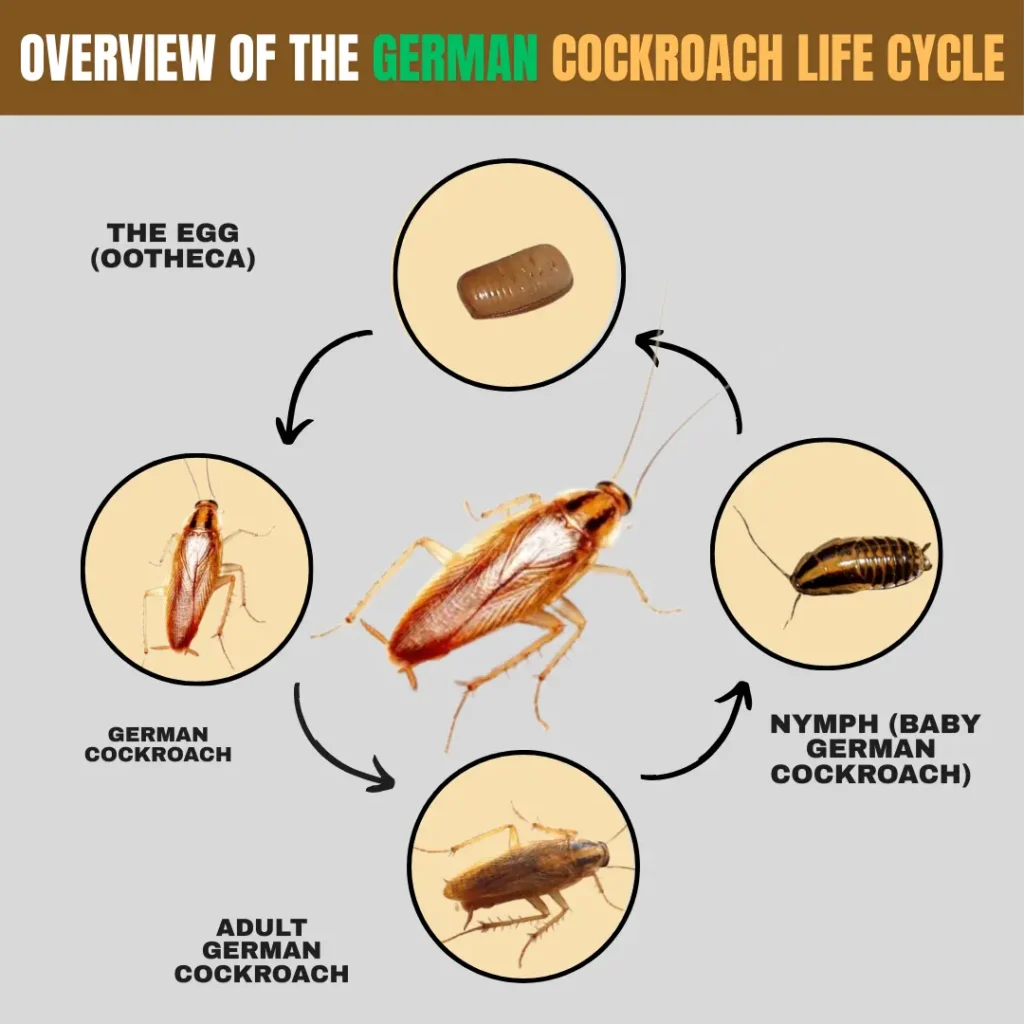
German cockroaches go through three main stages in their life: egg, nymph, and adult. This process is called their life cycle. It starts when a female lays eggs, which hatch into small baby roaches called nymphs. These nymphs grow bigger over time and turn into adult cockroaches.
The full life cycle can be very fast. In the right conditions, a baby roach can become an adult in just about 6 to 8 weeks. Once they are adults, they can start laying more eggs. That’s why an infestation can grow quickly if not controlled early.
Now, let’s look at each stage one by one.
Stage 1 – The Egg (Ootheca)
The life of a German cockroach begins as an egg. But it’s not just one egg—female cockroaches carry a small brown case called an ootheca. This egg case holds about 30 to 40 tiny eggs inside.
The female usually keeps the egg case attached to her body until the eggs are ready to hatch. This takes around 20 to 30 days. She hides in dark, warm places to protect the eggs. Once the eggs hatch, tiny baby cockroaches come out and begin the next stage of life.
Stage 2 – Nymph (Baby German Cockroach)
When the eggs hatch, small baby cockroaches called nymphs come out. These nymphs are light brown at first and don’t have wings. They are very small, about the size of a rice grain.
As they grow, they shed their skin several times. Each time they molt, they get bigger and start to look more like adult cockroaches. This stage can last 6 to 8 weeks, depending on food, warmth, and safety. You may see nymphs running around at night, especially in kitchens or bathrooms.
Stage 3 – Adult German Cockroach
Once the nymph finishes growing and shedding its skin, it becomes an adult. Adult German cockroaches are about 1/2 inch long and light brown with two dark stripes on their back. They have wings, but they rarely fly.
Adult females can start laying eggs after just a few days. Each one can lay many egg cases during her life, and each case can hold dozens of eggs. This is how a few roaches can quickly turn into hundreds if not controlled.
Timeline of the German Cockroach Life Cycle
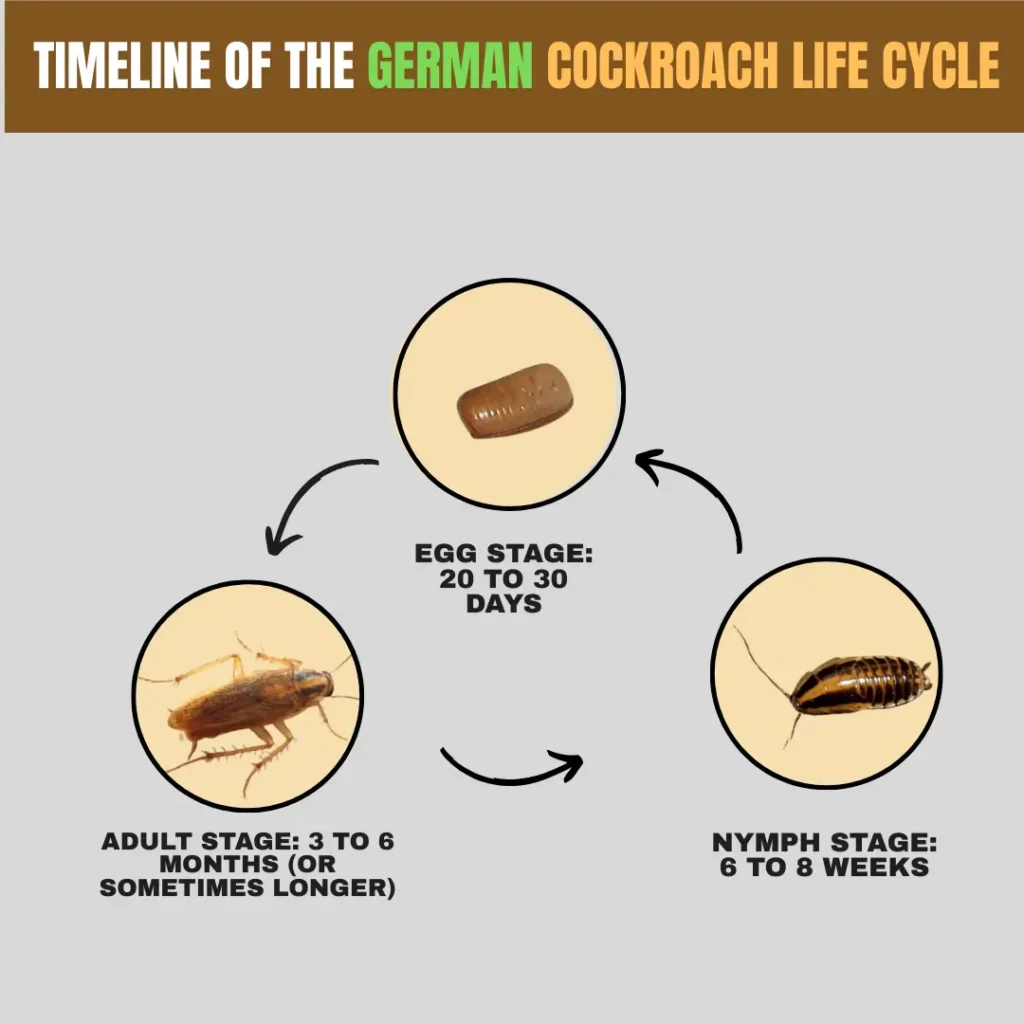
The full life cycle of a German cockroach can happen very fast. From egg to adult, it can take just a few weeks if the weather is warm and there is enough food.
Here’s a simple timeline to understand how long each stage takes:
- Egg stage: 20 to 30 days
- Nymph stage: 6 to 8 weeks
- Adult stage: 3 to 6 months (or sometimes longer)
In total, a cockroach can go from an egg to a full-grown adult in about 2 to 3 months. Since they reproduce fast, just a few roaches can turn into a big problem in a short time.
How Fast Can a German Cockroach Infestation Spread?

German cockroaches can spread very fast. This is because one female can carry many eggs, and each egg case can hold up to 40 baby roaches. After those babies grow up, they also start laying eggs. This cycle keeps going and makes the number of roaches grow quickly.
If the home is warm, dark, and has food crumbs or water drops, the roaches will feel safe. In just a few months, a small group can turn into a big infestation. That’s why it’s important to act fast if you see even one or two.
The more time you wait, the harder it becomes to get rid of them.
Life Cycle Disruption: Key to Control

To stop German cockroaches, you need to break their life cycle. This means stopping them from growing and laying more eggs. If you only kill the adult ones, the eggs and babies will still be there and grow again.
Here are some good ways to stop the full cycle:
- Use baits: Gel baits work well because roaches eat them and share them with others.
- Use IGRs (Insect Growth Regulators): These products stop baby roaches from growing into adults.
- Clean often: Don’t leave crumbs, water, or trash out. Clean under the fridge, stove, and sink.
- Seal entry points: Block cracks and holes where roaches can hide or enter.
- Throw out egg cases: If you find brown egg cases, remove and throw them away right away.
By targeting every stage—egg, baby, and adult—you can slowly stop the infestation and keep your home clean.
FAQs
1: How do I know if I have a German cockroach infestation?

If you see small, light brown cockroaches with two dark lines on their back—especially in the kitchen or bathroom—you might have an infestation. Other signs include droppings that look like coffee grounds, a bad smell, and finding egg cases or baby roaches.
2: What is the difference between German and American cockroaches?
German cockroaches are smaller (about 1/2 inch), light brown, and often found inside homes, especially in kitchens and bathrooms. American cockroaches are larger (about 1.5 inches), reddish-brown, and usually live in basements, drains, or outside. German cockroaches reproduce faster and are harder to get rid of indoors.
3: How long does a German cockroach live?
A German cockroach can live for about 3 to 6 months. During that time, a female can produce many egg cases, and each case can have 30 to 40 eggs. This short and fast life cycle helps them spread quickly.
4: What’s the best way to get rid of German cockroaches?
The best way is to use gel baits, insect growth regulators (IGRs), and regular cleaning. You also need to block hiding spots and remove food and water sources. If the infestation is large, you may need to call a pest control service.
Conclusion
The life cycle of a German cockroach is short but very active. It starts with tiny eggs, then baby roaches (nymphs), and finally becomes fast-moving adults. Since they grow and multiply quickly, even a few cockroaches can lead to a big problem if not handled early.
