
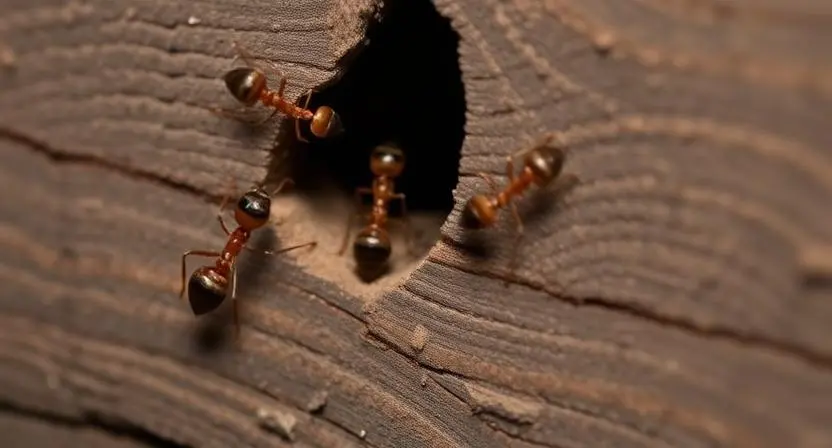
Carpenter ants are a common household pest that can cause significant damage if left untreated. Unlike termites, these ants do not eat wood but rather tunnel through it to build their nests. If you suspect a carpenter ant infestation in your home, taking immediate action is crucial. This guide will help you identify, eliminate, and prevent carpenter ants from invading your home.
Identifying Carpenter Ants and Their Infestation
What Do Carpenter Ants Look Like?
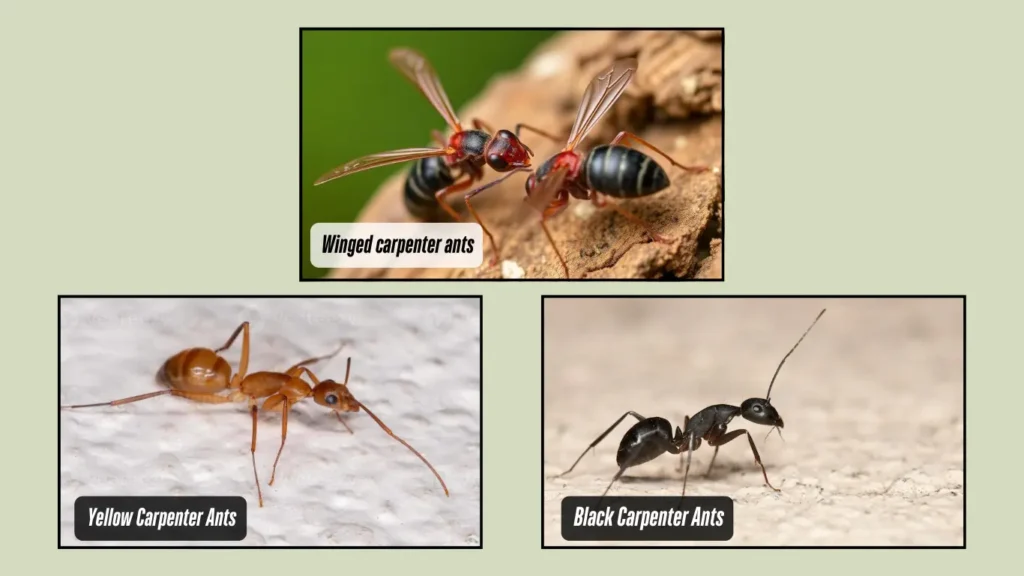
Carpenter ants are typically black, but some species may have reddish or yellowish hues. They are larger than common household ants, measuring between 6 to 12 mm in length. Winged carpenter ants resemble termites but have distinct elbowed antennae and a narrow waist.
Signs of a Carpenter Ant Infestation
- Wood Shavings (Frass): As carpenter ants excavate wood, they leave behind sawdust-like debris near baseboards, windowsills, and wooden structures.
- Rustling Noises: If you hear faint rustling sounds inside walls or wooden furniture, it could be carpenter ants at work.
- Winged Ants Indoors: The presence of winged ants indoors, especially in spring, indicates a mature colony nearby.
- Trails of Ants: Carpenter ants are nocturnal and can often be seen foraging for food at night.
How to Get Rid of Carpenter Ants
Once you’ve confirmed an infestation, you can use natural, chemical, or professional solutions to eliminate them.
1. Locate the Nest
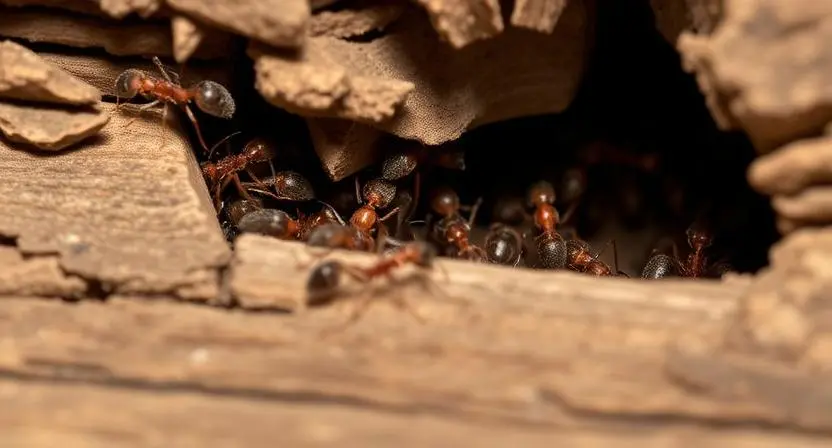
Before applying any treatment, you need to find the nest. Follow foraging ants to locate their entry points and trails. They usually nest in damp or rotting wood, such as in wall voids, wooden furniture, attics, or near sinks.
2. Natural Remedies to Eliminate Carpenter Ants

If you prefer eco-friendly and non-toxic methods, try these natural remedies:
- Diatomaceous Earth (DE): Sprinkle food-grade DE near entry points and along ant trails. It dehydrates and kills ants on contact.
- Vinegar and Water Spray: Mix equal parts vinegar and water and spray it on trails and suspected nesting areas to disrupt their scent trails.
- Essential Oils: Ants dislike strong scents such as tea tree, peppermint, and lemon oil. Mix a few drops with water and spray around affected areas.
- Boric Acid and Sugar Bait: Mix boric acid with sugar and water to create a bait. The sugar attracts ants, while boric acid kills them slowly, allowing them to carry it back to the colony.
3. Chemical Solutions for Effective Ant Control

For more stubborn infestations, chemical treatments may be necessary:
- Ant Baits: Commercial bait stations contain slow-acting insecticides that worker ants carry back to the colony, effectively eliminating it over time.
- Insecticide Sprays: Apply residual sprays around windows, door frames, and cracks where ants enter.
- Dust Insecticides: Use borate-based insecticide dust in wall voids, attics, and wooden structures where carpenter ants nest.
4. Preventing Future Infestations

Keeping carpenter ants out of your home starts with prevention. Eliminating moisture is essential since damp areas attract these pests. Fix leaks, improve ventilation, and remove rotting wood to reduce nesting spots.
Sealing entry points also helps. Use caulk to close gaps around windows, doors, and foundation cracks to block their access.
Proper food storage is another key factor. Keep food in airtight containers and clean up crumbs immediately to avoid attracting ants.
Regular inspections can prevent major issues. Check wooden structures, especially in damp areas, to catch early signs of infestation before they worsen.
5. When to Call a Professional Exterminator
If DIY methods don’t work or the infestation is severe, hiring a professional exterminator is the best solution.
Experts use advanced baiting systems that target the entire colony for long-term control. In extreme cases, fumigation and deep treatments may be needed to eliminate hidden nests.
Professional exterminators also help with moisture control. They can identify and fix damp areas that attract carpenter ants, reducing the risk of future infestations.
Getting expert help ensures thorough removal and lasting protection for your home.
Conclusion
Carpenter ants can cause serious damage to your home if left unchecked. By identifying the infestation early, using effective treatment methods, and taking preventive measures, you can eliminate carpenter ants and protect your home from future invasions. If the problem persists, consulting a professional exterminator is the best option. Stay proactive in home maintenance to keep these destructive pests away for good.
