

Giant stag beetles are among the most impressive insects in the natural world, known for their large body size and striking mandibles. Belonging to the beetle family Lucanidae, these insects attract attention due to their powerful appearance and unusual behavior. Giant stag beetles are primarily found in forested regions where old trees and decaying wood are abundant. Although they may look intimidating, they play an important ecological role and are generally harmless to humans. This article explores what defines a giant stag beetle, its classification, physical characteristics, and some of the largest species known.
What Is a Giant Stag Beetle?
The term “giant stag beetle” is not a single scientific classification but a common name used to describe the largest members of the stag beetle family, Lucanidae. These beetles are called “stag” beetles because the enlarged mandibles of males resemble the antlers of a deer. Species labeled as giant stag beetles typically stand out due to their exceptional size, often exceeding several centimeters in length.
Giant stag beetles share the same basic traits as other stag beetles, including hardened wing covers, strong legs, and a dependence on decaying wood during their life cycle. What sets them apart is their size and the exaggerated mandibles seen in many males. These beetles are especially admired by entomologists and nature enthusiasts for their impressive morphology and complex behavior.
Taxonomy and Scientific Classification
Scientific Classification
Giant stag beetles belong to the family Lucanidae within the order Coleoptera. Their scientific classification follows the standard hierarchy: Kingdom Animalia, Phylum Arthropoda, Class Insecta, Order Coleoptera, Family Lucanidae. Within this family, giant stag beetles are found across several genera, rather than belonging to a single species group.
Taxonomists classify stag beetles based on physical features such as mandible shape, antennal structure, body proportions, and wing formation. Antennae in Lucanidae are typically elbowed and end in a comb-like club, which helps distinguish them from other large beetle families.
Place Among Large Beetles
Giant stag beetles are often compared to other large beetles, such as rhinoceros beetles from the family Scarabaeidae. While both groups include large-bodied insects, they differ in appearance and behavior. Rhinoceros beetles are known for horn-like projections, whereas stag beetles are defined by their prominent mandibles. Additionally, their larval diets and ecological roles differ, reinforcing their classification into separate families.
Physical Characteristics of Giant Stag Beetles
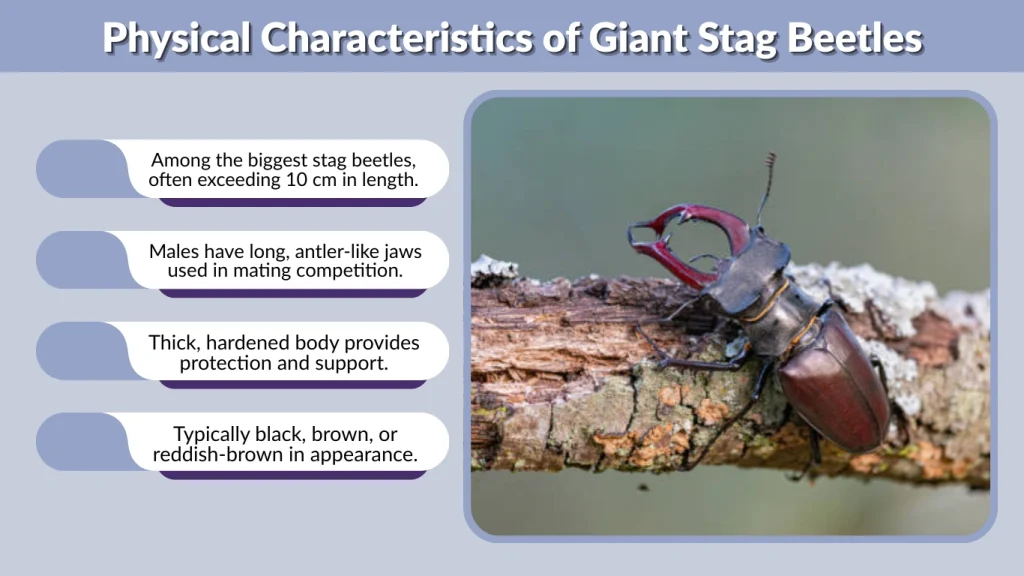
- Large body size: Among the biggest stag beetles, often exceeding 10 cm in length.
- Oversized mandibles: Males have long, antler-like jaws used in mating competition.
- Sexual dimorphism: Males are larger and more heavily armed than females.
- Strong exoskeleton: Thick, hardened body provides protection and support.
- Flattened body shape: Adapted for moving on tree trunks and fallen logs.
- Dark coloration: Typically black, brown, or reddish-brown in appearance.
- Hardened wing covers (elytra): Protect the delicate flight wings underneath.
- Powerful legs and claws: Help grip bark and rough wood surfaces securely.
Largest Species of Giant Stag Beetles

Prosopocoilus giraffa
Prosopocoilus giraffa is widely regarded as one of the largest stag beetle species in the world. Native to parts of Southeast Asia, this species is famous for its impressive length and long, curved mandibles. Males of this species can reach remarkable sizes, making them a popular subject of scientific study and insect photography.
This species inhabits tropical forests where decaying wood is plentiful, providing ideal conditions for larval development. Its size and distinctive appearance have made it one of the most well-known giant stag beetles globally.
Lucanus cervus and Related Species
Another well-known giant stag beetle is Lucanus cervus, commonly called the European stag beetle. Although slightly smaller than some Asian species, it is one of the largest beetles found in Europe. Males are easily identified by their broad, antler-like mandibles, which give the species its name.
Lucanus cervus inhabits mature deciduous forests, particularly those with oak trees. Its presence is often associated with long-established woodlands where fallen trees and underground roots provide suitable conditions for larval development. Due to population declines in some regions, this species is legally protected in several European countries.
Other Notable Giant Species
In addition to Prosopocoilus and Lucanus, several other genera include giant stag beetles, particularly in Asia and the Americas. Species in the genera Dorcus and Chiasognathus are notable for their size, strength, and distinctive mandible shapes. These beetles demonstrate the wide diversity within the Lucanidae family and highlight how environmental conditions influence body size and morphology.
Life Cycle of Giant Stag Beetles
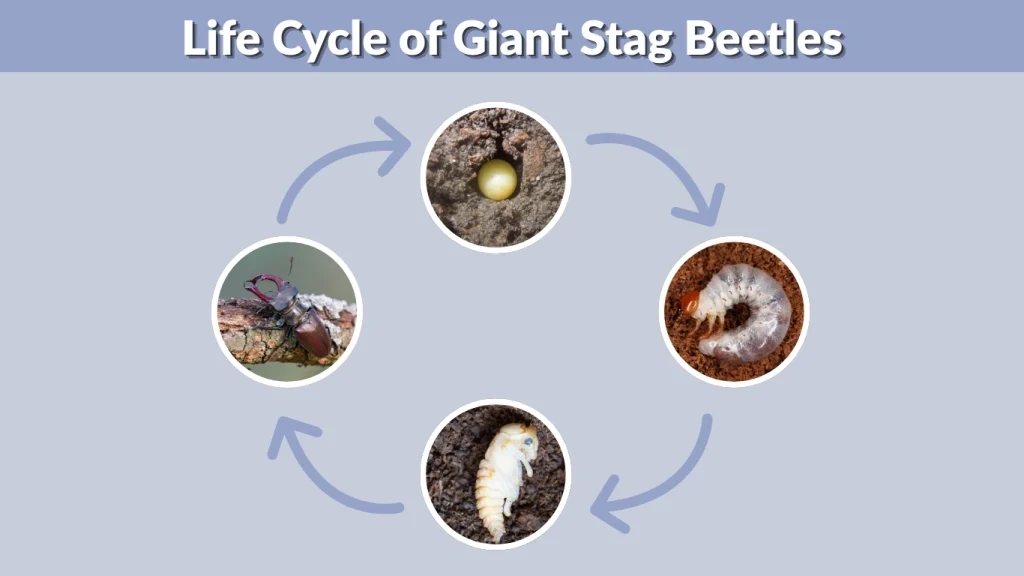
Egg and Larval Development
The life cycle of a giant stag beetle begins when a female lays her eggs in or near decaying wood, such as rotting logs, tree stumps, or underground roots. After hatching, the larvae burrow deeper into the wood, where they feed continuously for several years. This larval stage is the longest phase of the beetle’s life cycle and can last anywhere from three to seven years, depending on the species and environmental conditions.
During this period, larvae play an important ecological role by breaking down tough plant material. Their feeding activity helps accelerate wood decomposition and contributes to nutrient recycling within forest soils.
Pupal and Adult Stages
Once the larva reaches full size, it constructs a pupal chamber made of soil, wood fragments, and organic material. Inside this chamber, the larva undergoes metamorphosis and transforms into an adult beetle. After emerging, adult giant stag beetles typically live for only a few months.
Adult activity is usually seasonal, with most species appearing during warmer months. Their primary focus during this time is mating and reproduction, rather than feeding or long-distance movement.
Habitat and Geographic Distribution
Natural Habitat
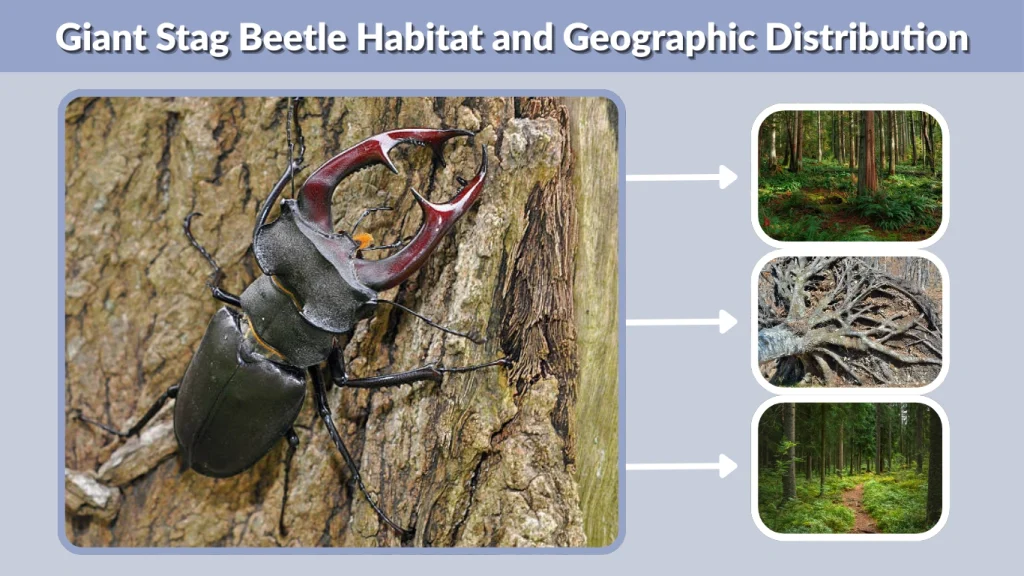
Giant stag beetles are strongly associated with forest ecosystems that contain large amounts of dead and decaying wood. They thrive in old-growth forests, woodlands, and areas with fallen trees or buried roots. These environments provide essential resources for both larvae and adults.
Because of their dependence on deadwood, giant stag beetles are sensitive to habitat disturbance. Forest management practices that remove old trees and fallen logs can significantly reduce suitable breeding sites.
Global Distribution
Giant stag beetles are found in many regions across the world, with the greatest diversity occurring in East and Southeast Asia. Europe and the Americas are also home to several large species. Climate plays a key role in their distribution, as most species prefer moderate to warm temperatures and humid conditions.
Diet and Feeding Habits
Larval giant stag beetles feed almost exclusively on rotting wood. They rely on microorganisms in their digestive systems to help break down cellulose and other tough plant fibers. This specialized diet supports their slow but steady growth over several years.
Adult giant stag beetles feed far less than larvae. Their diet mainly consists of tree sap, plant fluids, and occasionally overripe fruit. Adults consume just enough energy to support movement and reproduction during their short lifespan.
Behavior and Ecology
Giant stag beetles are primarily nocturnal and are most active during the evening and night. Males frequently engage in combat with rivals, using their mandibles to lift, push, or throw opponents away from breeding sites. These battles rarely cause serious injury and serve mainly to establish dominance.
Ecologically, giant stag beetles are considered saproxylic insects, meaning they depend on decaying wood. Their presence indicates a healthy forest ecosystem with stable ecological processes.
Are Giant Stag Beetles Dangerous to Humans?
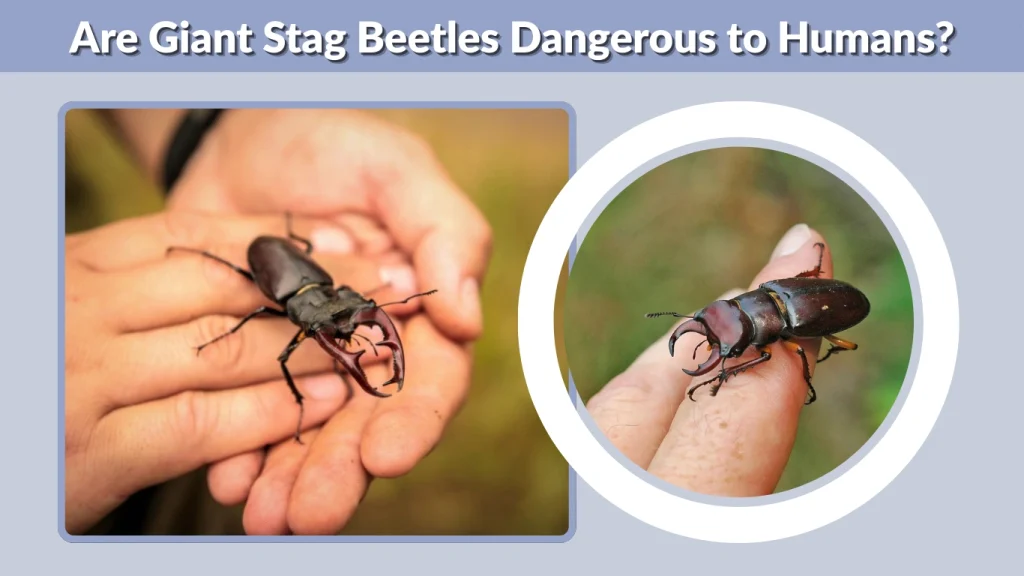
Despite their size and powerful appearance, giant stag beetles are not dangerous to humans. They are not venomous and rarely bite unless handled improperly. Even when they do bite, the injury is usually minor. These beetles are generally calm and should be observed rather than disturbed.
Conservation Status and Threats
Many giant stag beetle species face threats from deforestation, habitat fragmentation, and the removal of deadwood. Urban expansion and intensive forestry practices reduce the availability of suitable breeding sites. Conservation efforts focus on protecting mature forests, preserving deadwood, and raising awareness about the ecological value of these remarkable insects.
Conclusion
Giant stag beetles are among the most fascinating insects in the beetle world, combining impressive size with important ecological functions. From their long developmental stages hidden in decaying wood to their brief adult lives centered on reproduction, they play a vital role in forest ecosystems. Protecting giant stag beetles helps preserve biodiversity and maintain the natural balance of woodland environments.
FAQs
How big can a giant stag beetle get?
Giant stag beetles can reach lengths of more than 10–12 centimeters, depending on the species. Males are usually larger than females, mainly due to their long mandibles.
What is the largest giant stag beetle species?
One of the largest known species is Prosopocoilus giraffa, which is native to Southeast Asia. It is famous for its long body and extremely large mandibles.
Where are giant stag beetles found?
Giant stag beetles are mainly found in forested regions of Asia, Europe, and the Americas. They prefer areas with mature trees and plenty of decaying wood.
Are giant stag beetles dangerous to humans?
No, giant stag beetles are not dangerous to humans. They are not venomous and rarely bite unless handled roughly, and even then the bite is usually harmless.
What do giant stag beetle larvae eat?
Giant stag beetle larvae feed on decaying wood, which provides the nutrients they need during their long developmental stage. This feeding helps recycle nutrients in forest ecosystems.
