
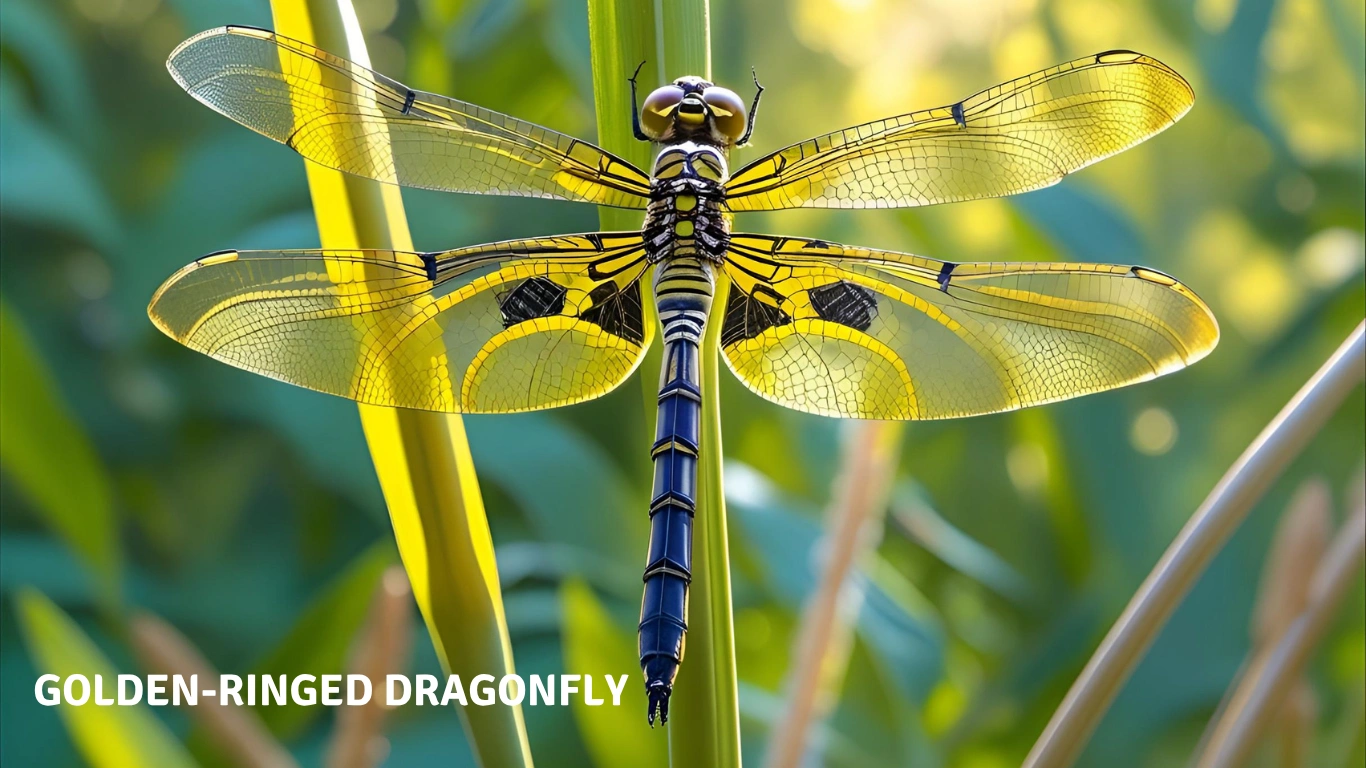
The golden-ringed dragonfly (Cordulegaster boltonii) is one of the UK’s most eye-catching and easily recognizable dragonflies. With its bold black body wrapped in vivid yellow rings and its impressive wingspan, this species is a favorite among nature watchers exploring moorlands, streams, and upland rivers. But there’s more to this dragonfly than just good looks. In this article, we’ll explore everything from its size and appearance to its habitat, fascinating life cycle, behaviors, and answers to common questions about this striking insect.
Golden-Ringed Dragonfly

The golden-ringed dragonfly is one of the largest and most distinctive dragonflies found in the UK and parts of Western Europe. Known for its slow, patrolling flight and bright yellow rings, it prefers wild, clean water habitats far from urban development. This species plays an important role in freshwater ecosystems, both as a predator and as a bioindicator of clean water.
Scientific Classification
- Scientific Name: Cordulegaster boltonii
- Family: Cordulegastridae
Notable Highlights
- Easily identified by its black-and-yellow striped abdomen
- Most often seen from June to September near fast-flowing acidic streams
Size, Color, and Appearance

The golden-ringed dragonfly stands out due to both its striking coloration and its impressive size. It’s often confused with wasps or hoverflies at a distance, but a closer look reveals the details that make this species unique.
Size
This dragonfly is considered one of the longest in the UK, with:
- Body length: 74–84 mm
- Wingspan: Up to 100 mm
Females tend to be slightly larger and bulkier than males.
Color and Markings
- The abdomen features bold yellow rings on a glossy black background, giving the species its name.
- It has large, greenish compound eyes that nearly touch at the top of the head.
Distinctive Traits
One of the easiest ways to recognize a golden-ringed dragonfly is by its slim, wasp-like body pattern and long, transparent wings with a slight yellow tint near the base. The females also possess a long ovipositor, visible at the tip of the abdomen.
Natural Habitat and Range
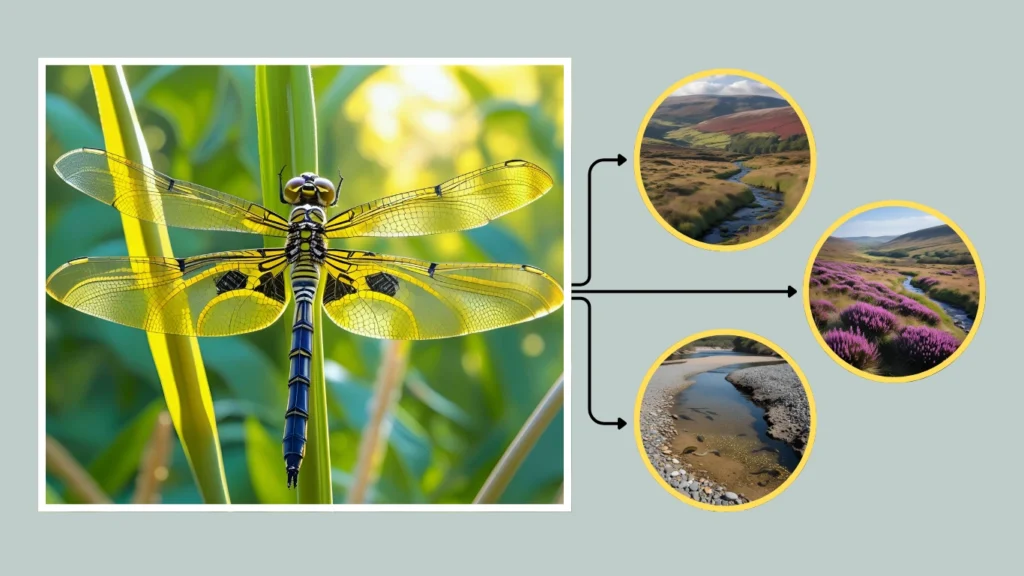
Golden-ringed dragonflies thrive in unspoiled, freshwater environments, preferring clean, fast-flowing streams and acidic rivers surrounded by wild vegetation. These habitats provide ideal conditions for their aquatic larvae and offer plenty of flying insects for adults to hunt.
They are most commonly found in:
- Upland heathlands, moorlands, and valley streams with low pollution
- Areas with gravel or sandy riverbeds where females can lay eggs
Geographic Distribution
This species is widely distributed across parts of Western Europe, especially in the UK.
- In the United Kingdom, it’s most common in Scotland, Wales, and southwest England
- Found in countries like Ireland, France, and occasionally in northern Spain
Though not globally rare, the golden-ringed dragonfly’s range is closely tied to the availability of clean freshwater sources, making it a useful indicator of environmental health.
Life Cycle of the Golden-Ringed Dragonfly

The golden-ringed dragonfly has a three-stage life cycle: egg, nymph, and adult. Unlike butterflies, it undergoes incomplete metamorphosis, meaning it doesn’t pass through a pupal stage.
Stage 1 – Egg
Females lay individual eggs directly into the gravel or sediment of shallow streams. The eggs hatch in a few weeks, depending on water temperature and environmental conditions.
Stage 2 – Nymph (Larval Stage)
This stage is the longest, lasting 2 to 5 years. During this time, the nymph lives underwater, where it ambushes prey such as aquatic insects, small fish, and tadpoles.
- Nymphs molt multiple times as they grow, developing legs, a strong jaw, and gills for breathing underwater
- When fully grown, the nymph crawls out of the water and begins its final molt
Stage 3 – Adult
The adult emerges from the final molt with wings and a hardened body. Adults live for a few weeks to a couple of months, during which they focus on feeding, mating, and continuing the cycle by laying eggs. Though their time in the air is short, it’s full of territorial patrols and fast aerial hunts.
Lifespan of the Golden-Ringed Dragonfly

The golden-ringed dragonfly has a surprisingly long life span, though most of it is spent out of sight, underwater.
- Total lifespan: Typically ranges from 2 to 5 years
- Nymph stage: Lasts the longest, often up to 4 or 5 years depending on climate and water conditions
- Adult stage: Lives for only a few weeks to about 2 months, focused on mating and feeding
Environmental factors like water quality, temperature, and food availability greatly influence how long each stage lasts. Their long larval period allows them to survive in colder regions where development takes more time.
Behavior and Flight Patterns
Golden-ringed dragonflies are known for their slow, steady patrols over streams and ditches, often flying back and forth in search of prey or intruders. They’re solitary and highly territorial, especially the males.
Key Behaviors
- Males patrol defined stretches of water, chasing away rivals to guard potential mates
- Females are more secretive, appearing only to lay eggs, then disappearing into nearby vegetation
- Both sexes are strong fliers, capable of hovering and making sharp turns mid-air
Flight Activity
- Most active on warm, sunny days, especially from late morning to afternoon
- Seen flying from June to September, with peak activity in mid-summer
Golden-Ringed Dragonfly vs Similar Species
Due to its bold colors and size, the golden-ringed dragonfly is occasionally mistaken for other large insects, especially wasp-like hoverflies or similar dragonfly species.
Here’s how it compares to two commonly confused species:
| Feature | Golden-Ringed Dragonfly | Southern Hawker | Hornet Hoverfly |
| Body Pattern | Black with bright yellow rings | Green/black with blue spots | Yellow/orange with black |
| Size | 74–84 mm (large) | Up to 74 mm | 15–20 mm (much smaller) |
| Eyes | Greenish, almost touching | Blue/green, also nearly touching | Large brown eyes, wide-set |
| Flight Style | Steady, slow patrols | Agile, with rapid darting | Hovering, mimics wasp |
These details make it easier to confidently identify the golden-ringed dragonfly in the wild.
FAQs
Is the golden-ringed dragonfly dangerous to humans?
No, the golden-ringed dragonfly is completely harmless. Despite its wasp-like appearance and large size, it does not sting or bite unless provoked. Even then, it cannot pierce human skin. It’s a peaceful insect that spends its time hunting small prey and avoiding people.
Where can I see golden-ringed dragonflies in the UK?
They are most often seen in upland and moorland regions with clean, acidic streams. Prime viewing areas include:
- Scotland: Highlands and forested river valleys
- Wales: Mountain streams and boglands
- Southwest England: Dartmoor, Exmoor, and surrounding areas
Look for them patrolling over small streams, ditches, and boggy areas, especially on sunny afternoons.
What do golden-ringed dragonflies eat?
As adults, they are skilled aerial hunters that catch:
- Flies, midges, wasps, and moths in mid-air
- They can even eat smaller dragonflies and butterflies
Nymphs feed on aquatic invertebrates, tadpoles, and even tiny fish, making them effective predators at every life stage.
How do I tell the difference between male and female?
- Females are usually larger and have a prominent ovipositor at the tip of the abdomen, used for laying eggs
- Males have a slimmer abdomen and are more commonly seen patrolling territory along streams
During flight, males may appear slightly more agile and defensive.
Do golden-ringed dragonflies migrate?
No, unlike species such as the green darner, golden-ringed dragonflies are non-migratory. They remain in their chosen habitats year-round, with the nymphs overwintering underwater for several years before emerging as adults.
