
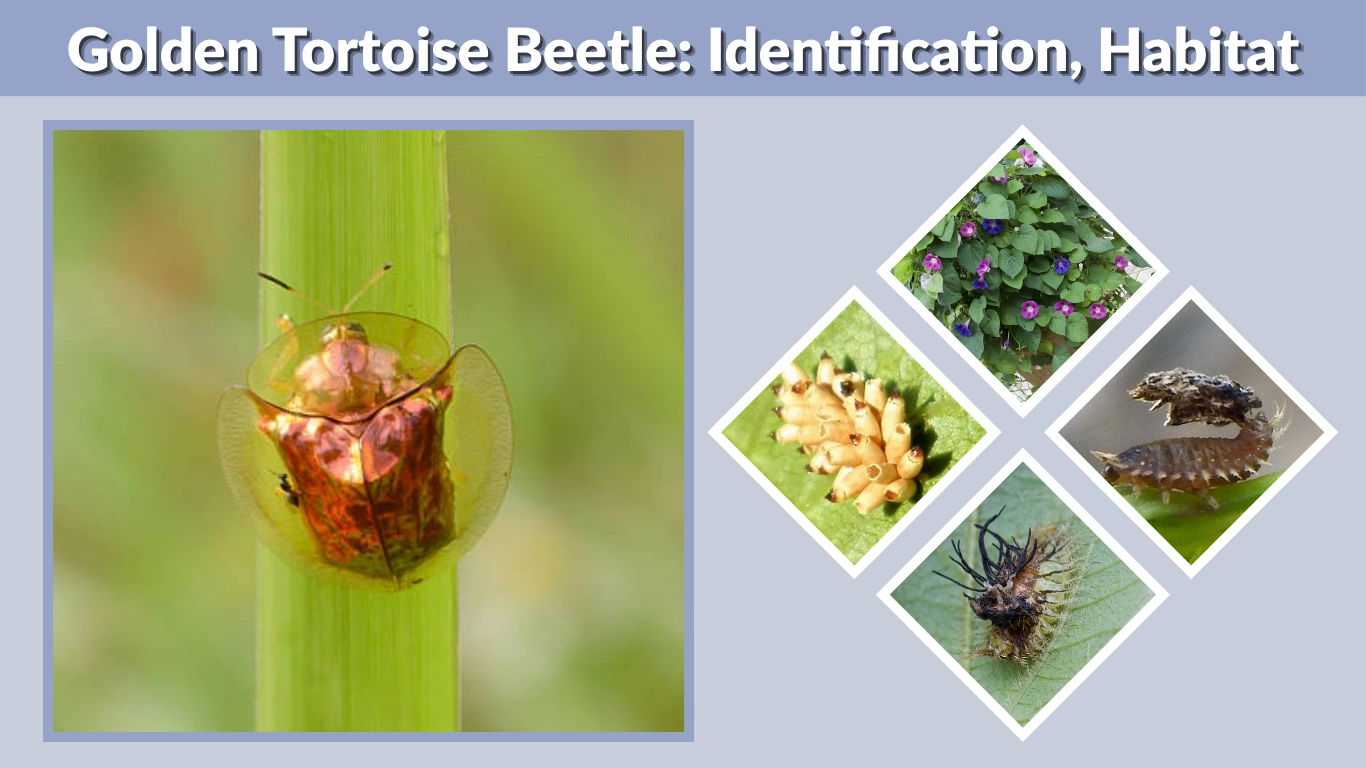
The golden tortoise beetle is a small but fascinating insect known for its brilliant metallic appearance and unusual ability to change color. Often called the “gold bug,” this beetle looks like a tiny drop of gold sitting on a leaf. It belongs to the leaf beetle family and is commonly found on plants such as morning glory and sweet potato vines. In this article, we will explore golden tortoise beetle identification, diet, habitat, interesting facts, and where these unique beetles live in the wild.
What Is a Golden Tortoise Beetle?
The golden tortoise beetle is a species of leaf beetle known for its shiny, reflective body that resembles polished gold. Its scientific name is Charidotella sexpunctata, and it belongs to the family Chrysomelidae, which includes many plant-feeding beetles.
This beetle gets its name from its tortoise-like shape. Its body is rounded and shield-like, with transparent edges that extend over its legs and head. These clear margins give the beetle extra protection and create the appearance of a tiny turtle shell.
Golden tortoise beetles are quite small, usually measuring about 5 to 7 millimeters in length. Despite their small size, their bright golden color makes them easy to notice when resting on plant leaves.
One of the most fascinating characteristics of this beetle is its ability to change color. When the beetle is disturbed, stressed, or preparing to mate, its bright gold color can shift to orange, brown, or reddish shades. This change occurs because the reflective liquid inside the beetle’s shell moves or drains away, altering how light reflects from its body.
These beetles are mostly active during warm seasons and can often be seen on the leaves of plants where they feed and lay eggs.
Golden Tortoise Beetle Identification
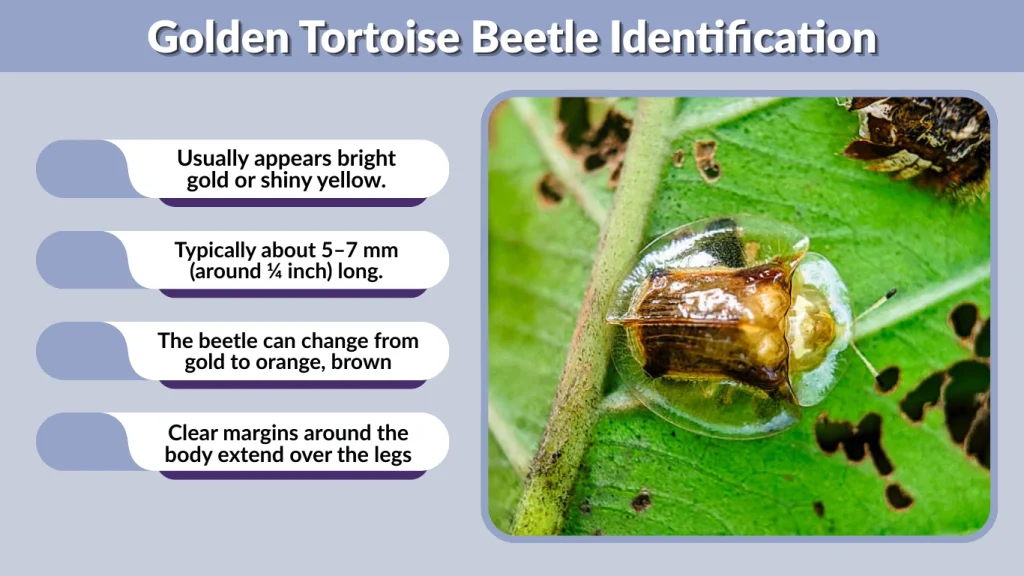
Identifying a golden tortoise beetle is relatively easy because of its unique appearance and shiny metallic color. This small beetle often looks like a tiny drop of gold resting on a leaf. Its rounded body and transparent shell-like edges make it stand out from many other leaf beetles. Gardeners and nature enthusiasts frequently notice it on plants such as morning glory or sweet potato vines.
Below are some key features that help identify a golden tortoise beetle:
- Metallic Golden Color – The beetle usually appears bright gold or shiny yellow, resembling polished metal.
- Rounded, Shield-Like Shape – Its body is oval and slightly flattened, similar to a tiny turtle shell.
- Transparent Edges – Clear margins around the body extend over the legs and head, creating a protective shield.
- Small Size – Adult beetles are typically about 5–7 mm (around ¼ inch) long.
- Color-Changing Ability – The beetle can change from gold to orange, brown, or reddish when disturbed or stressed.
- Short Antennae and Legs – These allow the beetle to move slowly across plant leaves while feeding.
Because of these distinctive traits, the golden tortoise beetle is one of the most recognizable leaf beetles found in gardens and natural habitats.
Golden Tortoise Beetle Diet
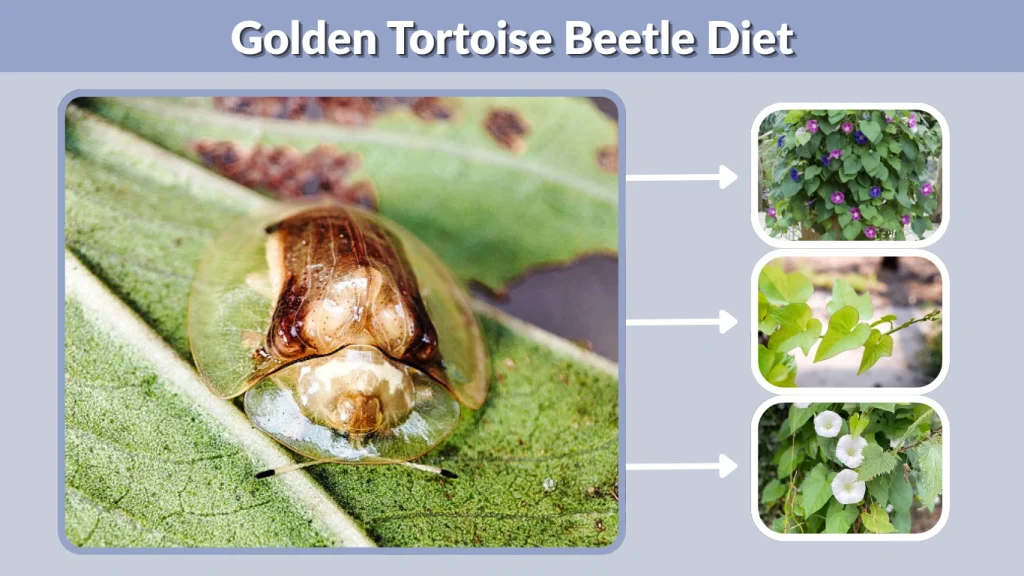
The golden tortoise beetle is a plant-eating insect, meaning its diet mainly consists of leaves from specific host plants. Unlike predatory beetles, these insects feed directly on plant tissue.
What Do Golden Tortoise Beetles Eat?
Golden tortoise beetles primarily feed on plants from the morning glory family (Convolvulaceae). These plants provide the nutrients the beetles need for growth and reproduction.
Some of their favorite food sources include:
- Morning glory plants
- Sweet potato vines
- Bindweed species
Both adult beetles and their larvae feed on the leaves of these plants.
Feeding Behavior
Golden tortoise beetles usually feed on the surface of leaves, chewing small holes in the plant tissue. Their feeding pattern often leaves tiny round or irregular holes scattered across the leaf.
Although they do feed on plants, golden tortoise beetles usually cause only minor damage. In most cases, the feeding damage is small and does not seriously harm healthy plants.
Because of this, they are generally not considered major agricultural pests.
Role in the Plant Ecosystem
Even though they feed on plant leaves, golden tortoise beetles are still part of the natural ecosystem. Their feeding provides food for predators such as birds and spiders, helping maintain balance in the food chain.
These beetles also contribute to biodiversity by interacting with the plants and organisms around them. In many gardens and natural areas, they are simply considered an interesting and harmless insect species.
Golden Tortoise Beetle Habitat
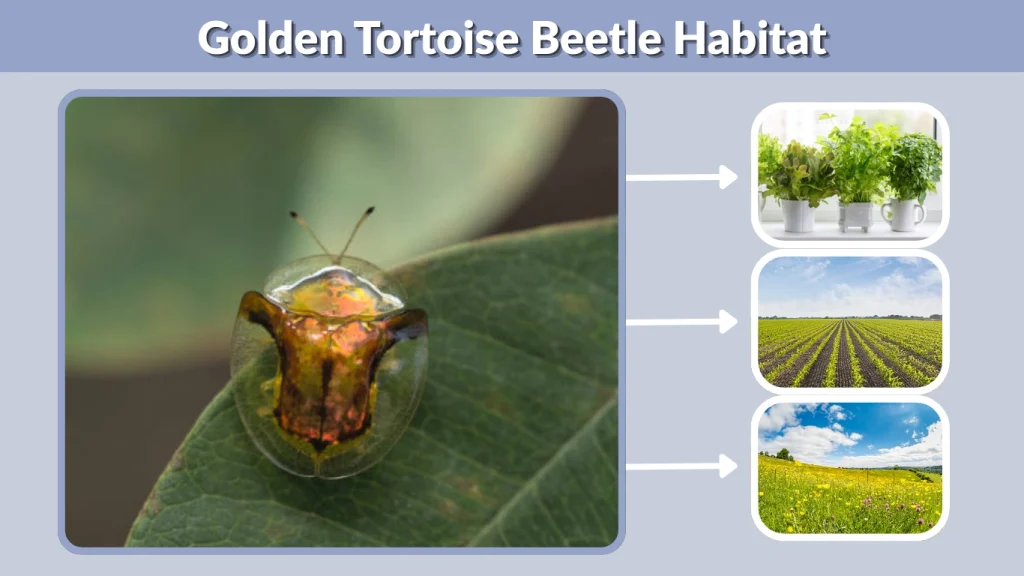
Golden tortoise beetles are commonly found in environments where their favorite host plants grow. Because they feed on plant leaves, they prefer areas with abundant vegetation, especially plants from the morning glory family.
Golden Tortoise Beetle Habitat Overview
These beetles typically live in warm, plant-rich environments where they can easily find food and shelter. They spend most of their lives on or near the leaves of host plants, where they feed, rest, and reproduce.
Golden tortoise beetles are often seen during the late spring and summer months, when their host plants are growing actively. During this time, they are most visible on plant leaves in gardens, fields, and natural habitats.
Typical Natural Environments
Golden tortoise beetles can live in several types of environments, including:
- Home gardens
- Agricultural fields
- Meadows and grasslands
- Forest edges
- Roadsides with wild plants
In these habitats, the beetles usually stay close to plants that provide food and protection. The broad leaves of morning glory and sweet potato vines are particularly suitable because they offer both nutrition and shelter from predators.
Plants They Are Commonly Found On
Golden tortoise beetles are strongly associated with plants in the Convolvulaceae family. These plants serve as both their food source and living space.
Common host plants include:
- Morning glory vines
- Sweet potato plants
- Field bindweed
The beetles often remain on the underside of leaves, where they are less visible to predators and protected from harsh sunlight.
Where Do Golden Tortoise Beetles Live?
Golden tortoise beetles are widely distributed across the Americas. They are especially common in regions where warm temperatures and host plants are abundant.
Geographic Distribution
Golden tortoise beetles are found in:
- North America
- Central America
- Parts of South America
Their ability to live in different climates allows them to spread across a large geographic range.
Regions Where They Are Most Common
In North America, golden tortoise beetles are particularly common in:
- The United States
- Mexico
- Parts of Canada
They are frequently observed in gardens and agricultural areas where sweet potatoes or morning glory plants grow.
Environmental Conditions They Prefer
Golden tortoise beetles prefer environments with:
- Warm temperatures
- Plenty of sunlight
- Host plants for feeding
- Dense vegetation for protection
Because they rely heavily on specific plants, their distribution often follows the growth patterns of those plants.
Life Cycle of the Golden Tortoise Beetle
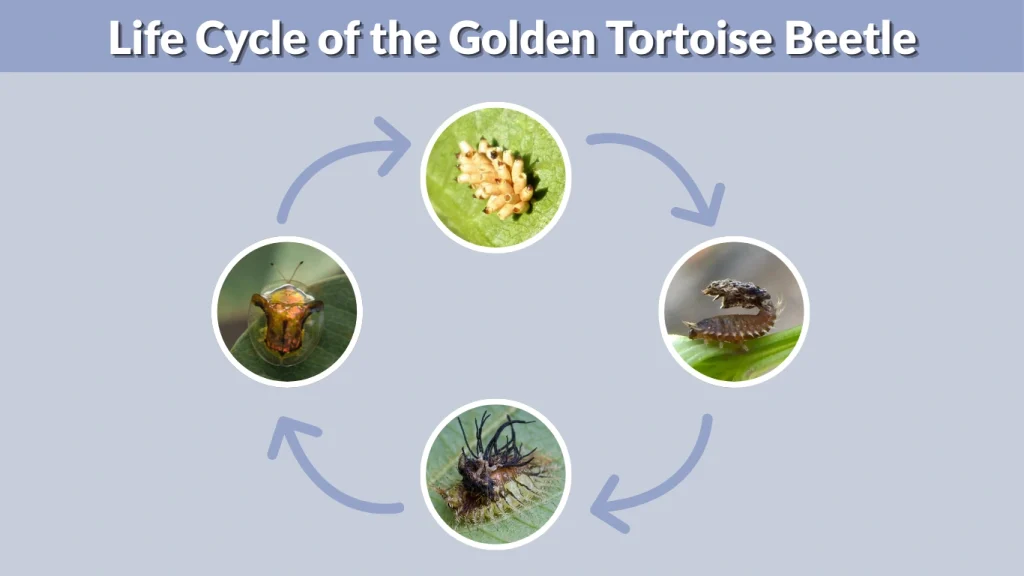
Like many beetles, golden tortoise beetles undergo complete metamorphosis, meaning they develop through four main stages: egg, larva, pupa, and adult.
Egg Stage
The life cycle begins when the female beetle lays small eggs on the underside of leaves of host plants. These eggs are usually placed in clusters and protected by the plant’s foliage.
After several days, the eggs hatch and the young larvae emerge.
Larval Stage
Golden tortoise beetle larvae are quite different in appearance from adults. They are flattened, spiny, and somewhat slug-like in shape.
One interesting feature of the larvae is their fecal shield, a structure made from waste and shed skin that they carry on their backs. This shield helps protect them from predators by disguising their scent and appearance.
During this stage, the larvae feed actively on plant leaves and grow quickly.
Pupal Stage
After completing the larval stage, the insect enters the pupal stage. During this phase, the larva attaches itself to a leaf and forms a protective covering.
Inside the pupa, the insect undergoes a major transformation, gradually developing the body structure of the adult beetle.
Adult Stage
Once the transformation is complete, the adult golden tortoise beetle emerges. At this stage, the beetle has its distinctive shiny shell and begins feeding on plant leaves.
Adult beetles then search for mates and continue the life cycle by laying eggs on suitable host plants.
Predators and Survival Strategies
Although golden tortoise beetles have protective body structures, they still face threats from various predators in nature.
Natural Predators
Some common predators of golden tortoise beetles include:
- Birds
- Spiders
- Predatory insects
- Small reptiles
These predators often hunt insects found on plant leaves, including beetles and their larvae.
Defense Mechanisms
Golden tortoise beetles use several strategies to protect themselves. Their shield-like body structure helps cover their legs and head, making it harder for predators to grab them.
Their metallic golden coloration may also help reflect light and blend with shiny plant surfaces, providing some camouflage.
Additionally, the larvae’s fecal shield acts as a protective barrier that discourages predators from attacking them.
Role of Golden Tortoise Beetles in the Ecosystem
Golden tortoise beetles play a small but meaningful role in the ecosystems where they live.
Interaction With Plants
By feeding on plant leaves, these beetles become part of the natural cycle of plant and insect interactions. Although they may create small holes in leaves, the damage is usually minimal.
Contribution to Biodiversity
Golden tortoise beetles contribute to biodiversity by forming part of the complex food web in natural habitats. They serve as prey for other animals and help maintain ecological balance.
Conclusion
The golden tortoise beetle is one of the most visually striking insects found on garden plants and wild vegetation. With its metallic golden shell, color-changing ability, and unique life cycle, it stands out among leaf beetles. These insects feed mainly on plants like morning glory and sweet potato vines and are commonly found in warm regions across the Americas. Although they may cause minor plant damage, golden tortoise beetles are generally harmless and play an interesting role in the natural ecosystem.
