
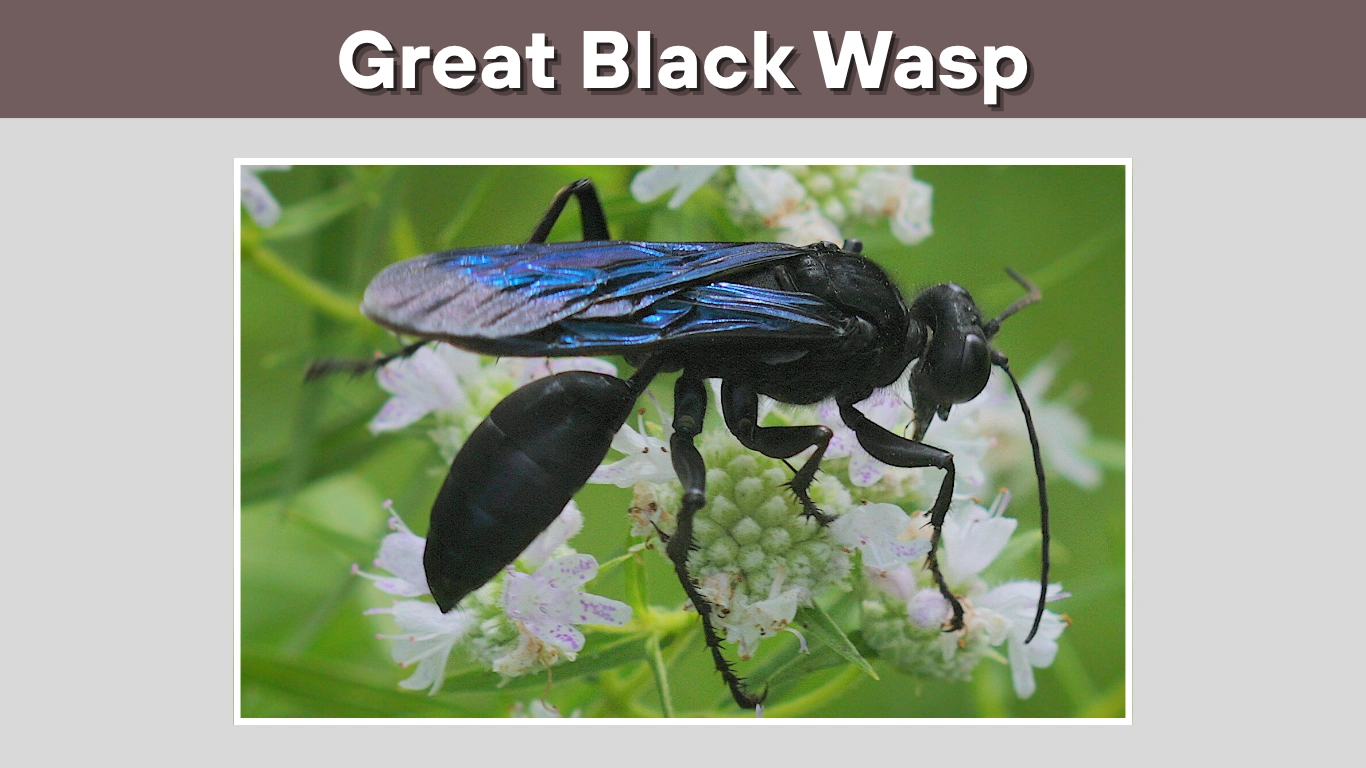
The great black wasp, scientifically known as Sphex pensylvanicus, is a large, solitary wasp often seen buzzing around gardens during summer. With its sleek black body and powerful sting, it might seem intimidating—but is it really dangerous? In this guide, we’ll uncover everything you need to know about the great black wasp—from where it lives, what it eats, and how it builds nests to its sting, size, lifespan, and how to handle a potential encounter.
What Is the Great Black Wasp?

The Great Black Wasp (Sphex pensylvanicus)
The great black wasp is a solitary digger wasp native to North America. Unlike social wasps such as hornets or yellowjackets, this species doesn’t live in colonies or build large paper nests. It belongs to the Sphecidae family, known for its hunting and nesting behaviors.
Basic Identification
- Large and slender body
- Shiny black appearance with no distinct color markings
- Wings often appear smoky or dark blue in sunlight
- Females are generally larger than males
Behavior and Temperament
This wasp might look fierce, but it’s not aggressive toward humans. Only the female has a stinger, and she will only sting if directly threatened or handled. Males are stingless and mostly seen patrolling flowers or mating territories.
Scientific Name & Classification
- Scientific name: Sphex pensylvanicus
- Family: Sphecidae (thread-waisted wasps)
- Common names: Great black wasp, black digger wasp
This species plays a vital role in pollination and natural pest control, making it an important part of the garden ecosystem despite its fearsome appearance.
Habitat and Geographic Range
Where the Great Black Wasp Lives
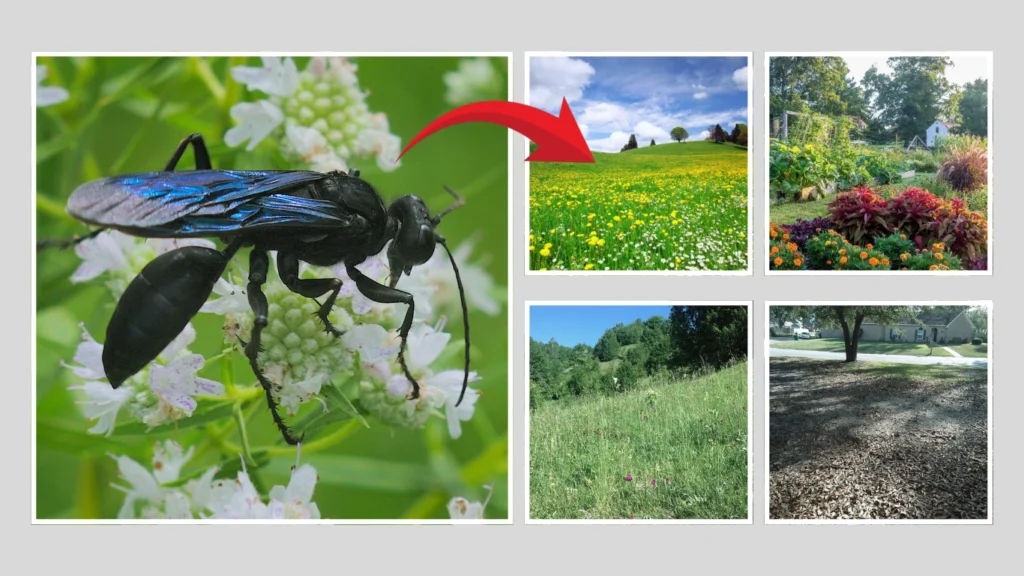
The great black wasp prefers warm, open environments where it can easily dig into soft soil. Common habitats include:
- Meadows and open fields
- Flower gardens and vegetable plots
- Forest edges and tall grass prairies
- Yards with exposed or sandy soil
These wasps are solitary nesters, meaning each female builds her own nest—usually a tunnel dug into bare soil or loose dirt with multiple chambers for her offspring.
Nesting Preferences
They do not build visible hanging nests like paper wasps or hornets. Instead, their nests are underground and often go unnoticed. You may only see a small hole in the ground and some soil piled nearby. Females stock each nest chamber with paralyzed insects (like katydids) for their larvae to feed on.
Geographic Range in the United States
The great black wasp is widespread across much of the U.S., especially in warmer regions. Sightings and nesting activity are common in:
Northeast: New York, New Jersey, Connecticut, Massachusetts, New Hampshire
Midwest: Michigan, Illinois, Minnesota, Iowa, Ohio, Wisconsin
South: Texas, Florida, Georgia, Virginia, North Carolina, Kentucky, Louisiana
West: Colorado, Arizona, California, Oregon, Oklahoma
Central Plains: Missouri, Kansas, Nebraska
These wasps are most active during the summer months when flowers bloom and insect prey is abundant.
Nesting Behavior and Nest Appearance
Great Black Wasp Nest Structure
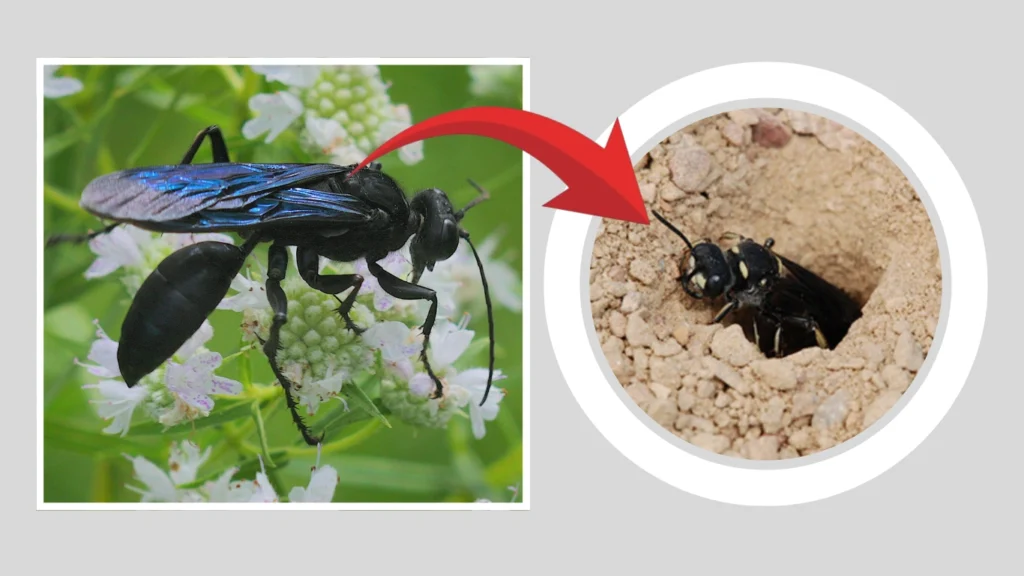
The great black wasp builds its nest underground, typically in dry, loose soil with plenty of sun exposure. A single female digs a narrow tunnel several inches deep with multiple side chambers—each chamber is reserved for one egg and a food supply of paralyzed prey (usually katydids or grasshoppers).
These wasps are solitary, so each nest belongs to one female. You won’t find large hives or colonies like those of social wasps.
What Does a Great Black Wasp Nest Look Like?
On the surface, the nest is often hard to notice. Here’s what to look for:
- A small round hole (similar in size to a pencil)
- A fresh pile of loose dirt or sand nearby (like an anthill)
- Sometimes, pieces of insect prey may be seen around the entrance
Unlike hornet or yellowjacket nests, there are no hanging structures or combs—everything happens below the ground.
Nesting in Unusual Places
Although they prefer gardens and bare ground, great black wasps may occasionally nest:
- In wall crevices with exposed soil
- Inside potted plants or cracks in patios
- Rarely, inside homes if soil or debris is accessible
This can lead to occasional encounters indoors, though it’s not typical behavior.
Size and Physical Comparison
How Big Is the Great Black Wasp?
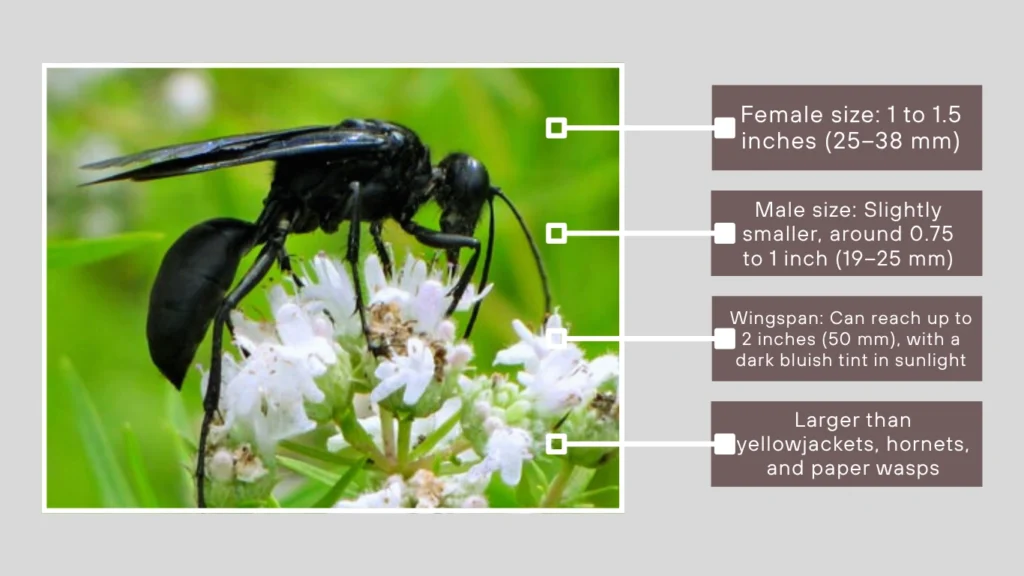
The great black wasp is one of the largest solitary wasps in North America. Their intimidating size often causes concern, but their behavior is mostly harmless.
- Female size: 1 to 1.5 inches (25–38 mm)
- Male size: Slightly smaller, around 0.75 to 1 inch (19–25 mm)
- Wingspan: Can reach up to 2 inches (50 mm), with a dark bluish tint in sunlight
They are often mistaken for blue mud daubers or even tarantula hawks due to their size and color, but they are a distinct species.
Size Comparison With Other Wasps
- Larger than yellowjackets, hornets, and paper wasps
- Smaller than the tarantula hawk but similar in body shape
- Much bulkier and longer than a typical honeybee
Despite their size, they are not aggressive and do not engage with humans unless provoked.
Male vs Female Great Black Wasp Comparison
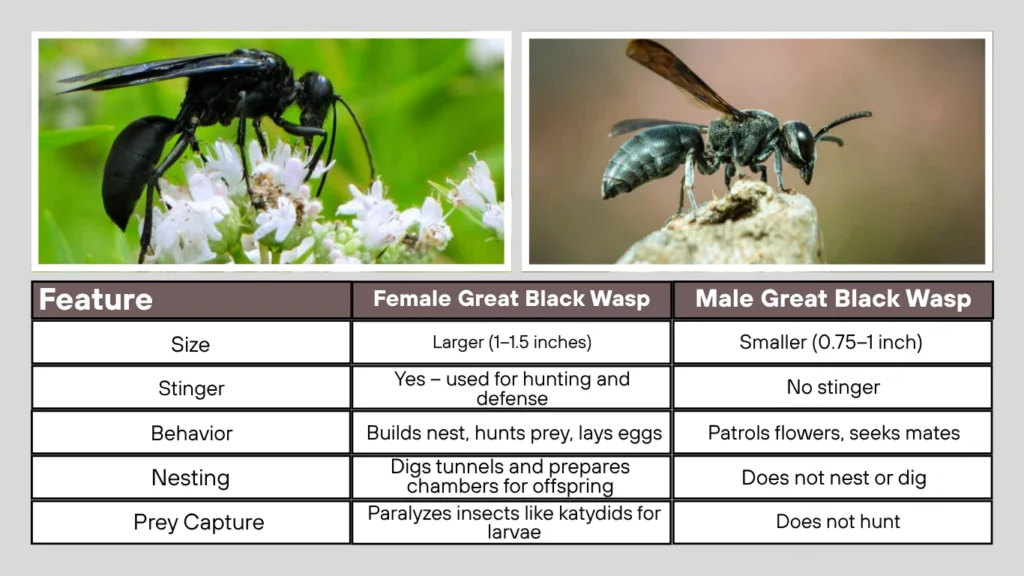
| Feature | Female Great Black Wasp | Male Great Black Wasp |
| Size | Larger (1–1.5 inches) | Smaller (0.75–1 inch) |
| Stinger | Yes – used for hunting and defense | No stinger |
| Behavior | Builds nest, hunts prey, lays eggs | Patrols flowers, seeks mates |
| Nesting | Digs tunnels and prepares chambers for offspring | Does not nest or dig |
| Prey Capture | Paralyzes insects like katydids for larvae | Does not hunt |
| Aggression | Not aggressive unless threatened | Very passive |
| Life Span | Slightly longer (entire nesting season) | Shorter, primarily for mating season |
| Pollination Role | Secondary (while collecting nectar for energy) | Active pollinator, visits more flowers |
| Emergence Timing | Later (after males) | First to emerge from nest |
Queen Great Black Wasp
Is There a True “Queen”?
Unlike bees or social wasps, great black wasps are solitary insects. That means there’s no centralized colony and no queen in the traditional sense. However, the female plays the dominant role—she builds the nest, hunts prey, and lays eggs—so many people mistakenly refer to her as the “queen.”
Tarantula Hawk Confusion
Some confuse the queen great black wasp with the tarantula hawk due to their similar size and solitary nature. However, they are separate species. The tarantula hawk belongs to the Pompilidae family and hunts spiders, while the great black wasp belongs to the Sphecidae family and targets katydids and grasshoppers.
Key Takeaway
There is no queen caste, but the adult female functions as the entire reproductive and caregiving force of her nest. She’s strong, independent, and fully responsible for raising her offspring without assistance from others.
What Do Great Black Wasps Eat?
Adult Diet
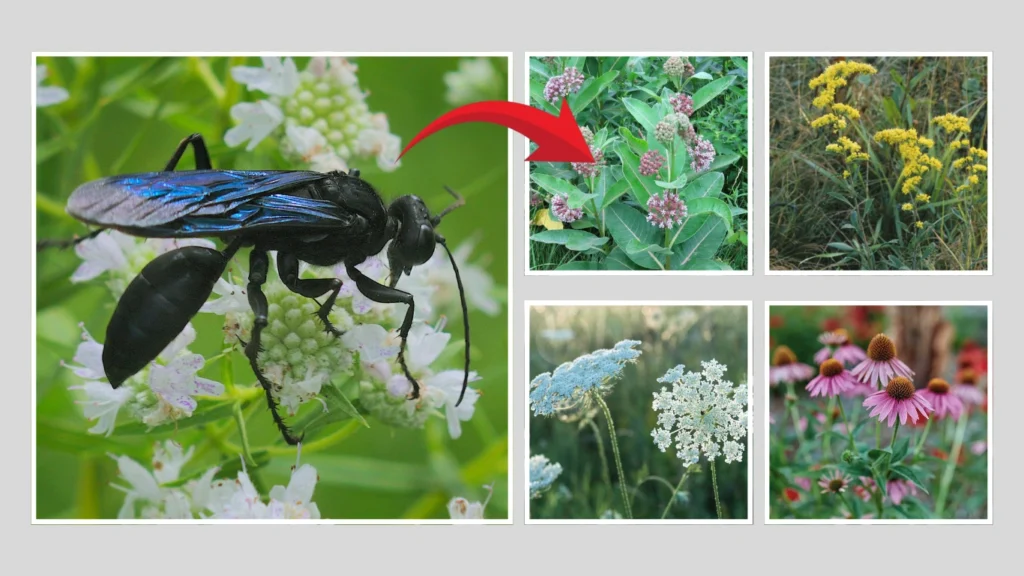
Adult great black wasps feed primarily on flower nectar. You’ll often find them visiting:
- Milkweed
- Goldenrod
- Queen Anne’s lace
- Echinacea
- Mountain mint
These flowers not only provide nourishment but also help with pollination, making the wasp a beneficial garden visitor.
What They Hunt for Their Young
The female wasp captures and paralyzes insects using her sting—mainly:
- Katydids
- Grasshoppers
- Occasionally crickets or locusts
She carries the prey back to her nest, places it in a chamber, and lays an egg on it. When the larva hatches, it feeds on the still-living but immobilized insect.
Do Males Hunt?
No. Males do not hunt or feed larvae. They rely solely on nectar and do not participate in nest building or care.
Life Cycle and Lifespan

Egg to Adult: The Full Life Cycle
The great black wasp follows a complete metamorphosis cycle, moving through four key stages:
- Egg – Laid by the female on a paralyzed insect inside a nest chamber.
- Larva – Hatches in a few days and begins feeding on the paralyzed prey.
- Pupa – After feeding is complete, the larva forms a cocoon and enters the pupal stage.
- Adult – Emerges from the ground after development is complete, usually the following summer.
Each nest chamber holds one egg and one paralyzed prey, ensuring a secure food supply for the developing larva.
Seasonal Behavior
Spring–Early Summer: Males emerge first, followed by females.
Summer: Females dig nests, hunt prey, and lay eggs.
Fall: Adults die off, but the developing wasps remain underground through winter.
Next Spring: New generation emerges.
Great Black Wasp Lifespan
Adult lifespan: Around 4 to 6 weeks during summer
Entire life cycle: About 1 year, most of which is spent in the larval or pupal stage underground
The short adult life is entirely focused on reproduction and nest-building, while the majority of the wasp’s life is spent developing below the surface.
Sting Facts: Pain, Reaction & Treatment
Does the Great Black Wasp Sting?
Yes—but only the female has a stinger and will sting only if provoked or handled. Male great black wasps cannot sting at all. Despite their large size and intimidating appearance, these wasps are not aggressive toward humans.
Bite vs Sting
- Sting: Delivered by the female’s stinger; used primarily for hunting and self-defense.
- Bite: They may use their mandibles to manipulate prey or defend themselves, but biting humans is extremely rare and not harmful.
Sting Pain Index
On the Schmidt Sting Pain Index, the great black wasp sting is described as:
- Pain Level: 2 out of 4
- Sensation: Sharp, immediate, but short-lived
- Less painful than a hornet or tarantula hawk sting
Most stings are localized and not medically significant unless the individual is allergic.
Sting Reaction
- Typical reaction: Redness, swelling, mild pain, and itching at the sting site
- Allergic reaction (rare): Hives, dizziness, swelling beyond the sting site, difficulty breathing
Sting Treatment
- Clean the sting site with soap and water
- Apply a cold pack to reduce swelling
- Use antihistamines or hydrocortisone cream to relieve itching
- Monitor for allergic reactions—seek emergency help if symptoms escalate
Sting Pictures
Images typically show a small puncture mark with localized swelling. Unlike bee stings, the stinger is not left behind.
Is the Great Black Wasp Dangerous or Aggressive?
Is It Dangerous?
Generally, no. The great black wasp is not considered dangerous to humans or pets. While the sting can be painful, it is rare and usually only occurs if the insect is:
- Stepped on
- Trapped in clothing
- Grabbed or disturbed at close range
It is not venomous in a way that poses a threat to healthy individuals.
Is It Aggressive?
Not at all. Great black wasps are known for being non-aggressive. They:
- Do not defend their nests like yellowjackets
- Avoid human interaction
- Focus on hunting prey and visiting flowers
Can a Great Black Wasp Kill You?
No, unless a person has a severe allergic reaction (anaphylaxis) to the sting, which is extremely rare. For most people, a sting is no more harmful than a bee sting.
Great Black Wasp in the House
Why Are They Inside?
While great black wasps prefer outdoor habitats, they may occasionally enter your house by mistake. Reasons include:
- Following light through open windows
- Nesting near or under the home’s foundation
- Gaps in walls, windows, or vents providing easy access
They’re not interested in food, garbage, or nesting indoors like some other wasps, so indoor encounters are usually accidental.
What Should You Do?
If you find a great black wasp indoors:
- Don’t panic—it’s not aggressive
- Gently trap it in a cup and release it outdoors
- Seal entry points like window screens, attic vents, or wall cracks
Repeated sightings indoors may indicate a nearby underground nest, especially around patios, basements, or gardens close to the home.
How to Get Rid of Great Black Wasps
Safe and Effective Removal Methods
Although they are beneficial pollinators, removal may be necessary if they’re too close to your home or pose a risk. Here’s how:
1. Manual Nest Removal
- Locate the nest entrance (usually a small hole in bare ground)
- Wait until night when the wasp is less active
- Pour boiling water or a mixture of water and dish soap into the hole (natural method)
Use caution—this will kill any active wasps inside.
2. Natural Deterrents
- Sprinkle diatomaceous earth around nesting areas
- Grow repellent plants like mint, eucalyptus, or citronella near high-traffic zones
- Avoid leaving bare soil—mulch or ground cover can discourage digging
3. Chemical Insecticides (if necessary)
- Use ground nest wasp sprays (follow label instructions carefully)
- Target the nest entrance directly
- Never spray wasps during the day—they are active and may sting
4. Call a Professional
If you’re unsure or allergic, it’s best to contact a pest control service to handle removal safely.
Comparisons, Predators & Extra Facts
Great Black Wasp vs Other Wasps
Blue Mud Dauber
- Appearance: Both are black, but the blue mud dauber has a metallic blue sheen and a thinner “waist.”
- Nesting: Mud daubers build mud tube nests on walls, while great black wasps dig underground.
- Diet: Both hunt insects, but blue mud daubers often target spiders.
- Aggression: Both are solitary and non-aggressive toward humans.
Mud Dauber (General)
- Great black wasps are larger and darker, with a more robust body
- Mud daubers build visible nests; black wasps are ground dwellers
- Both are beneficial for insect control and rarely sting humans
Predators of the Great Black Wasp
Although powerful, great black wasps do have natural enemies, including:
- Birds (especially insectivores like flycatchers and mockingbirds)
- Lizards and frogs in warmer regions
- Spiders (may trap young or emerging wasps)
- Parasitic flies that lay eggs inside the wasp nest
These predators help keep their population in balance within the ecosystem.
