

Green June bugs, also called June beetles or June bugs, are shiny, metallic beetles often seen buzzing around gardens during the warm summer months. Their striking emerald-green color makes them easy to spot, but they are often confused with other beetles like the Japanese beetle. While many people find their clumsy flight and sudden swarms alarming, green June bugs play an interesting role in ecosystems. To understand them fully, it’s important to look at their appearance, life cycle, habits, and even their cultural symbolism.
What is a Green June Bug?
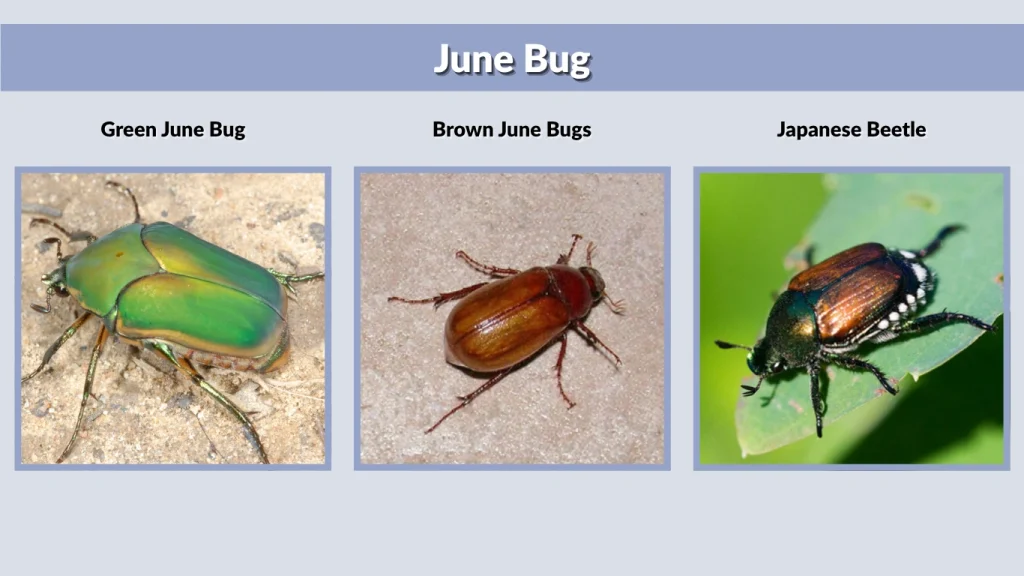
The green June bug (Cotinis nitida) is a beetle belonging to the scarab family. These insects are most common in the United States, particularly in the South and East, though they can also be found in parts of California and Texas. They thrive in warm, humid environments and are especially active in mid to late summer.
These beetles are known for their glossy, metallic green bodies, often with bronze or gold highlights. Unlike their brown relatives, which are dull in appearance, green June bugs stand out with their jewel-like coloration.
Green vs. Brown June Bugs
A common question is why some June bugs are green while others are brown. The answer lies in the fact that there are multiple species of June beetles. Green June bugs are specifically Cotinis nitida, while the brown types are usually Phyllophaga species.
- Green June Bugs: Metallic green or emerald in color, often larger.
- Brown June Bugs: Smaller, dull brown, with more leaf-eating tendencies.
- Do brown June bugs turn green? No, they are different species entirely.
Interestingly, some people assume that brown June bugs are “immature” forms of green ones, but that’s a myth. Each species remains the color it is throughout its life.
Green June Bug vs. Japanese Beetle
Green June bugs are often mistaken for Japanese beetles (Popillia japonica). While both are shiny and metallic, they are different in several ways:
- Size: Green June bugs are larger (up to 1.25 inches), while Japanese beetles are smaller (about 0.5 inches).
- Color: Japanese beetles are copper and green, whereas green June bugs are mostly bright emerald.
- Feeding habits: Japanese beetles chew leaves, leaving behind skeletonized foliage, while green June bugs prefer ripe fruit and nectar.
- Impact: Japanese beetles are highly invasive and destructive, while green June bugs are native and less aggressive.
Knowing the difference is important for gardeners since the methods of control differ depending on which beetle you’re dealing with.
Green June Bug Identification and Facts
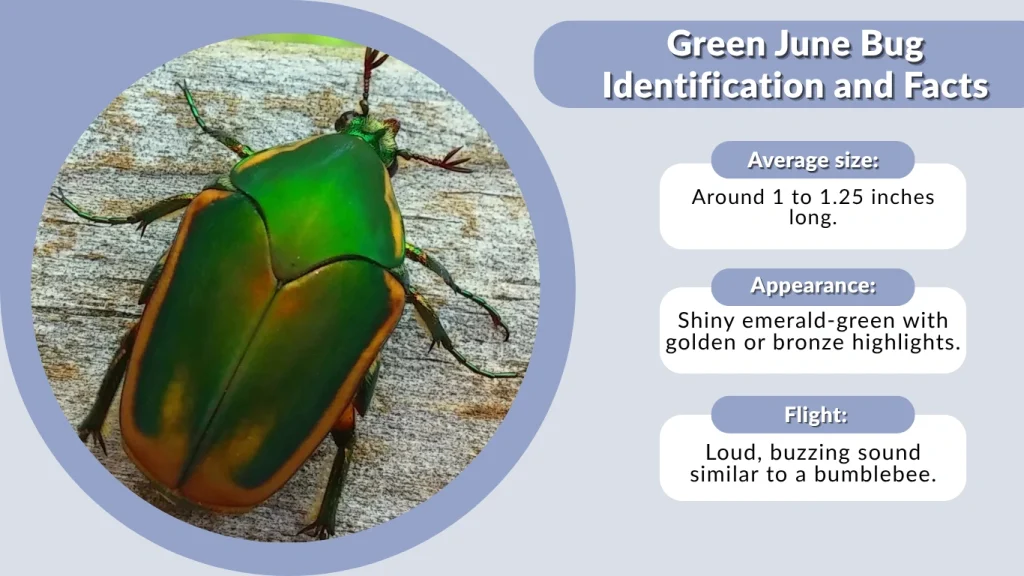
Green June bugs are among the largest beetles people encounter in backyards. Their size, color, and noisy flight make them hard to miss.
- Average size: Around 1 to 1.25 inches long.
- Appearance: Shiny emerald-green with golden or bronze highlights.
- Flight: Loud, buzzing sound similar to a bumblebee.
Unique Characteristics
Many myths surround these beetles, leading to interesting questions about their nature.
- Are green June bugs blind? No, despite their clumsy flight, they have functioning eyes. Their awkward movements are simply due to their heavy bodies.
- Do green June bugs bite? They do not bite or sting. They may land on people but are harmless.
- Are green June bugs harmful? To humans, not at all. To lawns and fruit crops, they can sometimes be pests.
Because of their buzzing and sudden flight, many people feel startled when one lands on them, but there’s no real danger involved.
Green June Bug Life Cycle

Like many beetles, the green June bug has a fascinating life cycle that moves through egg, larval, pupal, and adult stages.
Eggs and Larvae
Female green June bugs lay their eggs in soil, often in moist, organic-rich areas such as lawns, gardens, or fields. Once the eggs hatch, the larvae—commonly called grubs—emerge. These grubs are C-shaped, white, and grow up to 2 inches long.
The larvae feed on decaying plant matter and organic debris, sometimes nibbling at grassroots. When present in large numbers, they can cause lawn damage, leaving brown patches where the roots have been disturbed.
Pupae and Adults
After several months of feeding underground, the larvae pupate. This stage occurs within the soil, and after a short time, the adult beetles emerge.
- Emergence: Adults appear in late spring to early summer.
- Lifespan: The adult beetle lives only a few weeks to a couple of months.
- Swarming: Adults are most active in warm, humid evenings and may swarm in groups near lights or fruit sources.
This cycle ensures that every summer, new generations emerge to continue the pattern.
Diet and Feeding Habits
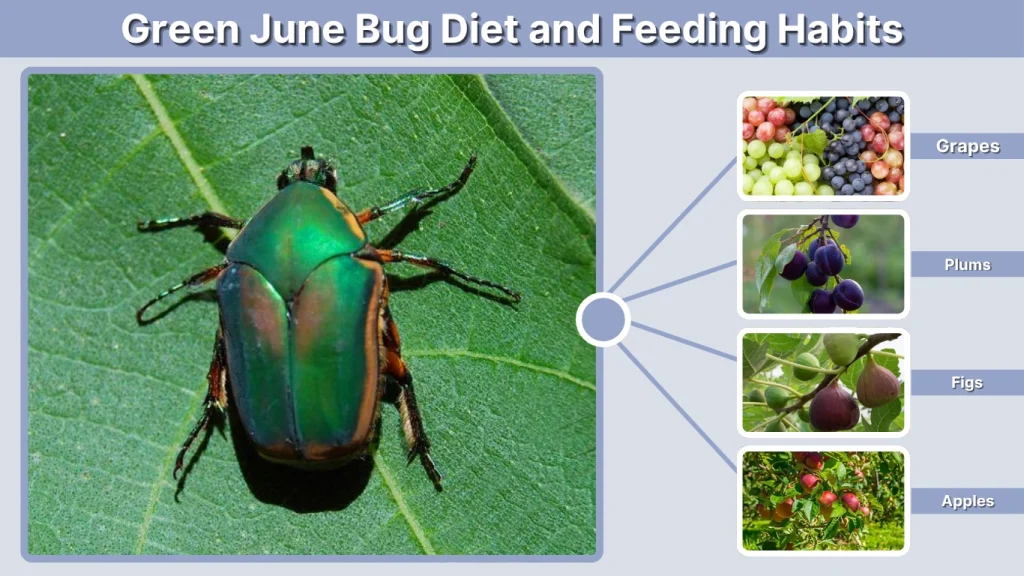
Understanding what green June bugs eat helps explain their behavior and their role in both nature and gardens.
What Do Green June Bugs Eat?
Adults have a preference for sweet, fermenting, or ripened fruits. Gardeners often spot them swarming around:
- Grapes
- Grapes
- Plums
- Figs
- Apples
They are also drawn to flower nectar and tree sap. Occasionally, they chew on leaves, though this is less common compared to Japanese beetles.
Larval Diet
The larvae, or grubs, have a different diet from adults. Living underground, they feed primarily on decaying organic matter such as:
- Rotting roots
- Grass thatch
- Compost materials
While they help decompose organic matter and aerate the soil, their feeding habits can also weaken lawns. In small numbers, they are beneficial recyclers, but large infestations can lead to visible lawn damage.
Behavior and Ecology

Green June bugs are most noticeable because of their behavior, especially during summer evenings when they fly in large numbers. Their flight is often compared to bumblebees, creating a deep buzzing sound.
Flying and Swarming
Green June bugs are strong fliers despite their heavy appearance. They often fly clumsily, bumping into windows, people, and objects in their path. At dusk or during humid afternoons, swarms of these beetles can appear over lawns, orchards, or gardens.
- Buzzing noise: Their loud buzzing sometimes scares people, but it is harmless.
- Swarm behavior: They gather in groups near ripe fruit or light sources.
- Summer evenings: Their activity peaks when temperatures are warm and the air is moist.
What Attracts Green June Bugs?
Several factors attract these beetles, including:
- Ripe and fermenting fruit: Their favorite food source.
- Artificial lights: They are drawn to porch lights and streetlights.
- Moist soil: Females search for suitable soil to lay eggs.
This explains why homeowners often notice them in backyards or gardens where fruit trees and moist lawns exist.
Green June Bugs and Humans

Are Green June Bugs Dangerous?
Despite their intimidating size and loud flight, green June bugs are not dangerous. They do not bite, sting, or carry diseases harmful to humans. At most, they are a nuisance if they land on someone or swarm in large numbers.
Their only real harm comes from damaging fruit crops or weakening lawns during heavy infestations.
Are They Invasive?
Unlike Japanese beetles, which are invasive species from Asia, green June bugs are native to North America. They have long been part of the ecosystem and are naturally kept in check by predators such as birds, mammals, and parasitic wasps.
However, localized infestations can still cause frustration for farmers and gardeners.
Are Green June Bugs Edible?
Yes, green June bugs are technically edible. In some cultures, beetles and other insects are eaten as a protein-rich food source. Green June bugs are not commonly consumed in the United States, but they are safe to eat if prepared properly. Their nutritional value includes protein, fat, and micronutrients.
Green June Bug Meaning and Symbolism
Beyond their biology, green June bugs hold symbolic meaning in folklore and spiritual traditions.
Spiritual and Cultural Symbolism
- Transformation: Their complete metamorphosis—from egg to grub to adult—symbolizes rebirth and change.
- Abundance: Their appearance in summer is often linked to growth, fertility, and prosperity.
- Energy and Renewal: The bright green color is associated with vitality, new beginnings, and healing.
Some people interpret a green June bug landing on them as a sign of luck or an upcoming positive change.
Symbolism of Green vs. Brown June Bugs
- Green June Bugs: Seen as more vibrant, positive, and connected with renewal.
- Brown June Bugs: Often symbolize grounding, stability, or persistence due to their earthy tones.
This distinction shows how color differences can shape human interpretation of nature.
Controlling and Managing Green June Bugs

Although they are fascinating insects, green June bugs can become pests when their populations grow too large. Effective control depends on understanding their habits.
Natural Control Methods
Encouraging natural predators is one of the best ways to manage beetle populations. Birds, skunks, moles, and parasitic insects help keep numbers in check. Gardeners can also:
- Keep compost piles managed, as they attract larvae.
- Maintain healthy lawns, which are less vulnerable to grub infestations.
- Use nematodes (microscopic worms) that target beetle larvae in the soil.
Green June Bug Traps
Simple traps can reduce adult numbers during peak season.
- Fermented fruit traps: A jar or bucket with overripe fruit attracts beetles.
- Commercial traps: Some are available in stores, though homemade ones often work just as well.
Traps help reduce swarming but may not eliminate the problem entirely.
Chemical and Lawn Care Approaches
For severe infestations, insecticides may be used. However, natural and preventive approaches are usually recommended. Proper lawn care is essential:
- Regular mowing and dethatching discourage egg laying.
- Adequate irrigation prevents soil from drying, but overwatering should be avoided.
- Overseeding lawns helps repair grub-damaged areas.
Combining prevention with occasional treatment ensures a healthy balance.
Regional Presence of Green June Bugs
Green June Bugs in California
In California, green June bugs are often found in orchards and vineyards. They are attracted to peaches, figs, and grapes, making them a minor pest for fruit growers. While not as destructive as Japanese beetles, they can still cause noticeable damage when present in large numbers.
Green June Bugs in Texas and the Southeast
These beetles are especially common in warm, humid areas like Texas, Florida, Georgia, and Alabama. In these states, sightings of large swarms are frequent during summer evenings. Their abundance is tied to the climate, which provides ideal conditions for breeding and feeding.
Fun and Interesting Facts
- Their iridescent exoskeleton makes them look jewel-like, leading to names like “emerald beetle.”
- They are often mistaken for bees because of their buzzing sound.
- They can live underground as larvae for several months before becoming adults.
- Large swarms sometimes gather around swimming pools, lights, or orchards, startling homeowners.
- Despite being considered pests, their grubs help recycle organic matter and enrich soil.
FAQs
Do green June bugs bite humans?
No, green June bugs do not bite. They may land on people, especially if attracted to light or scent, but they have no stingers or biting mouthparts harmful to humans. Their clumsy behavior often scares people, yet they are completely harmless in direct contact.
Why are some June bugs green and others brown?
Green June bugs and brown June bugs are different species. Green ones belong to Cotinis nitida, while brown ones usually come from the Phyllophaga group. They remain their respective colors for life and do not change. The difference is natural and not due to age or development.
How long do green June bugs live?
The adult lifespan of a green June bug is only a few weeks to two months. However, their entire life cycle—from egg to grub to adult—can last nearly a year. The majority of that time is spent underground as larvae before emerging as adults in summer.
What attracts green June bugs to my yard?
Green June bugs are drawn to ripe fruit, flower nectar, tree sap, and bright lights. Moist soil in well-maintained lawns also attracts females seeking to lay eggs. If you notice swarms around your home, fruit trees and outdoor lights are likely the main attractants.
Are green June bugs beneficial or just pests?
Green June bugs are both. As adults, they can be pests by damaging fruit crops. As larvae, they aerate soil and help decompose organic matter. In balanced populations, they provide ecological benefits, but when numbers surge, they can harm lawns and gardens significantly.
