

Ground-nesting bees are fascinating pollinators that prefer to make their homes in the soil rather than in hives or wooden structures. They play a vital role in the ecosystem, yet their presence often causes confusion for homeowners who mistake them for wasps or aggressive stingers. Understanding how to identify these bees, their nests, and their regional variations helps in protecting them while keeping outdoor spaces safe.
What Are Ground Nesting Bees?
Ground-nesting bees are a large group of solitary or semi-social bees that build nests in the soil. Unlike honeybees, they do not live in large colonies. Each female typically digs her own burrow to lay eggs. Common species include mining bees (Andrena), digger bees (Anthophora), and sweat bees (Halictidae). These bees prefer dry, sandy, or loose soil where digging is easier, and they often return to the same nesting areas each year.
Their importance to pollination cannot be overstated. Many species are early spring pollinators, helping plants bloom before honeybee colonies become active. Their peaceful nature makes them beneficial residents in gardens, meadows, and lawns.
How to Identify Ground Nesting Bees

Recognizing ground-nesting bees involves observing a few distinct traits. These bees are generally smaller and hairier than wasps, with muted colors such as brown, black, or metallic green. Their legs are often covered in pollen when returning to their nests.
- Body size: Most are between 0.5 and 1.5 cm long.
- Coloration: Dull black, grey, or golden tones.
- Behavior: Slow, low-level flight close to the ground.
- Habitat: Open, unshaded soil with minimal vegetation.
They are typically active during sunny hours, buzzing gently as they collect nectar. Unlike wasps, they rarely sting unless handled or trapped, which makes them harmless to humans and pets.
Identifying Ground Bee Nests

Ground bee nests are usually easy to spot if you know what to look for. They appear as small mounds of loose soil with a pencil-sized hole in the center. Each hole leads to an underground tunnel where eggs are laid in separate chambers lined with pollen.
A few indicators include:
- Small soil volcanoes appearing in lawns or garden beds.
- Multiple holes spread over a few square feet.
- Increased bee activity during early spring and mid-morning hours.
These nests are temporary. Once the new generation emerges, the adult bees die, and the tunnels collapse naturally, leaving no permanent damage to the soil.
Underground Bee Identification: Key Traits
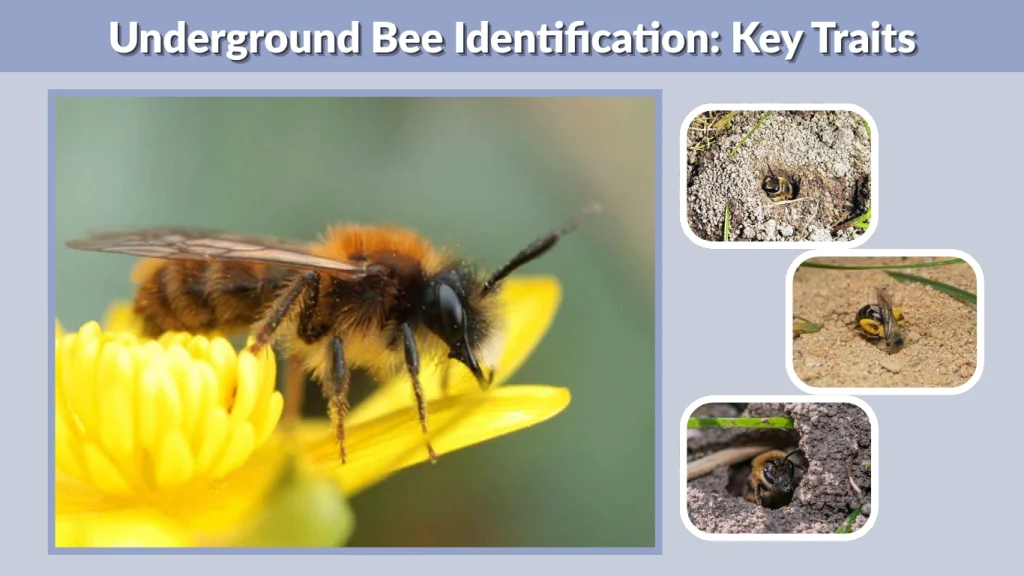
Underground nesting bees show unique patterns in both behavior and habitat choice. They typically avoid wet or compacted ground, preferring sandy soils for easy digging. The entry hole’s diameter ranges from 6 to 10 millimeters.
You can identify underground nests by observing:
- A dry, sunny area with multiple holes spaced evenly apart.
- Bees hovering low or disappearing quickly into the soil.
- Minimal aggression even when approached closely.
These are solitary creatures, meaning each female bee tends her own nest. However, they often nest in clusters, creating the impression of a colony when dozens of bees share the same patch of ground.
Regional Identification
Ground Nesting Bees in the UK
In the UK, common ground-nesting species include the tawny mining bee (Andrena fulva) and the ashy mining bee (Andrena cineraria). They favor loose, grassy soil and appear in early spring. Tawny females are covered in thick orange hair, while ashy females have striking black-and-grey stripes.
Ground Nesting Bees in Virginia Beach
Coastal regions like Virginia Beach are home to sweat bees and sand-loving mining bees. These species thrive in sandy yards, dunes, and open patches near the ocean. They are often metallic green or blue and can be seen collecting pollen from native flowers such as clover and goldenrod.
Ground Nesting Bees in Oregon
Oregon’s diverse climate supports a wide variety of ground-nesting bee species. The most common include digger bees (Anthophora) and metallic sweat bees (Agapostemon). These bees prefer loose, sandy soils often found in open fields and gardens. They emerge in spring and early summer, foraging among native wildflowers like lupines, asters, and daisies. Their bright metallic coloring makes them easy to spot as they move close to the soil surface.
Ground-nesting bees in Oregon are vital to local agriculture, pollinating fruits and seed crops. Gardeners are encouraged to leave a few patches of bare soil to help sustain their populations naturally.
Carpenter Ground Nesting Bees Identification
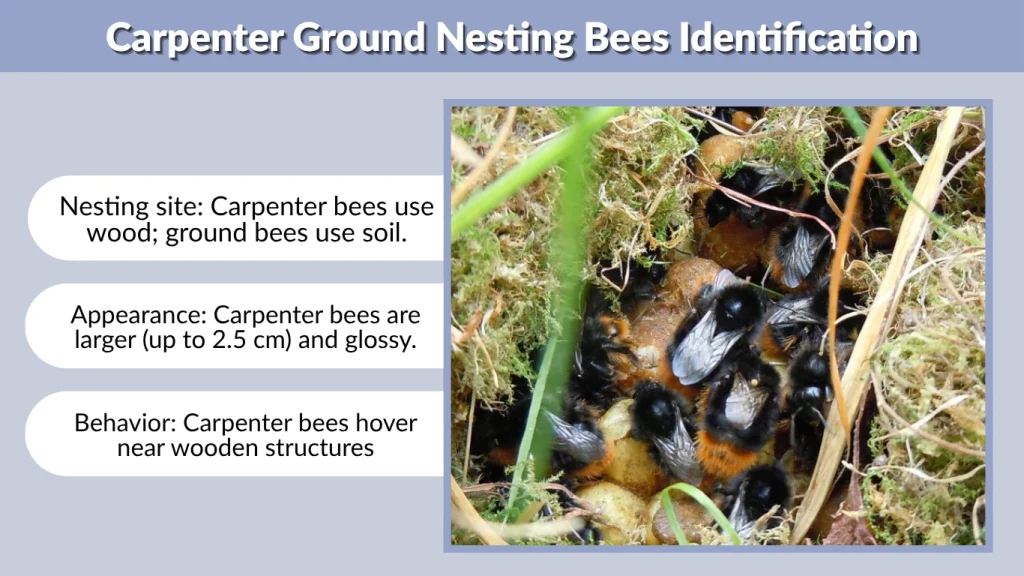
Carpenter bees are often mistaken for ground-nesting bees, but they differ in nesting behavior. Instead of burrowing into soil, they tunnel into untreated wood, creating perfectly round holes. Carpenter bees have shiny black abdomens, while most ground-nesting species appear fuzzy.
Here’s how to distinguish them easily:
- Nesting site: Carpenter bees use wood; ground bees use soil.
- Appearance: Carpenter bees are larger (up to 2.5 cm) and glossy.
- Behavior: Carpenter bees hover near wooden structures; ground bees stay close to the ground.
This distinction is important for homeowners, as carpenter bees can cause minor structural damage, while ground-nesting bees are harmless and essential for pollination.
Ground Nesting Bumble Bees Identification
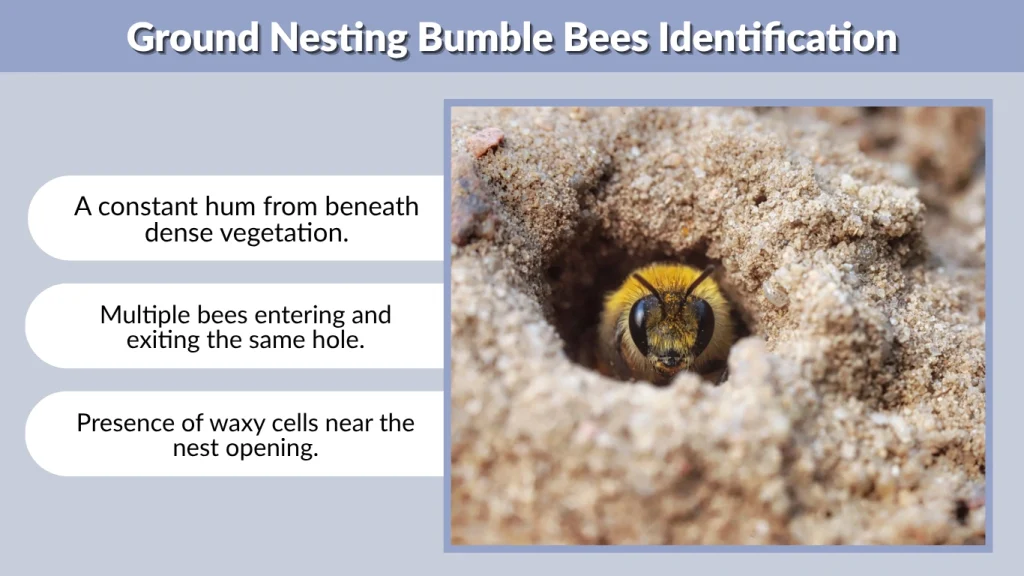
Unlike solitary mining bees, some bumble bees form small colonies underground. These ground-nesting bumble bees often occupy abandoned rodent burrows or grassy patches. The most recognizable species, such as the buff-tailed bumblebee (Bombus terrestris), are plump and covered in dense hair with distinct yellow and black bands.
Signs of a bumble bee nest include:
- A constant hum from beneath dense vegetation.
- Multiple bees entering and exiting the same hole.
- Presence of waxy cells near the nest opening.
Bumble bees are generally non-aggressive and should not be disturbed, as they die off in late summer and the nest disintegrates naturally.
Behavior and Seasonal Activity
Ground-nesting bees follow a predictable seasonal pattern. They emerge in early spring when temperatures rise, actively collecting nectar and pollen for several weeks. Males hover near the nest entrances to mate, while females dig tunnels and prepare brood chambers.
By midsummer, adult activity declines as larvae develop underground. These larvae overwinter safely until the following spring. Their life cycle ensures annual pollination continuity, benefiting flowering plants and crops alike.
Are Ground Nesting Bees Dangerous?

Ground-nesting bees are non-aggressive and rarely sting unless directly provoked. Because most species are solitary, they do not defend their nests collectively like wasps or hornets. Their stings are mild and typically harmless to humans. In fact, these bees are beneficial allies, supporting gardens and wild ecosystems through consistent pollination.
Educating homeowners about their harmless nature helps prevent unnecessary extermination, preserving biodiversity in local environments.
How to Coexist or Relocate Safely
Living peacefully with ground-nesting bees is simple when proper care is taken. Avoid disturbing active nesting areas during spring, and limit irrigation to prevent soil collapse. If bees nest near high-traffic zones, consider marking the area temporarily to keep children and pets away.
For safe relocation:
- Contact a local beekeeper or wildlife specialist.
- Refrain from using insecticides.
- Provide nearby sandy or unmulched soil to attract them elsewhere.
Encouraging coexistence ensures these pollinators continue their vital environmental role without posing risk to humans.
Summary Table: Identification by Region and Type
| Region / Type | Common Species | Distinct Features | Nesting Habitat |
| UK | Tawny & Ashy Mining Bees | Orange or grey-striped hair | Grassy, loose soil |
| Virginia Beach | Sweat & Mining Bees | Metallic green or blue sheen | Sandy coastal soil |
| Oregon | Digger & Sweat Bees | Metallic body, medium size | Fields, gardens |
| Bumble Bees | Buff-tailed Bumblebee | Large, fuzzy, striped | Underground burrows |
| Carpenter Bees | Xylocopa species | Shiny black abdomen | Wood tunnels |
FAQs
Why do bees nest in the ground?
Ground-nesting bees prefer dry, well-drained soil that offers easy digging and warmth for brood development. The underground environment protects their larvae from predators and temperature changes while allowing the female to store pollen safely.
How can you tell a bee nest from a wasp nest?
Bee nests are open holes in soil with loose dirt around the entrance, while wasp nests are enclosed and made of paper-like material above ground. Bees show slow, gentle flight near their burrows, unlike wasps, which are quick and aggressive.
Do ground bees return to the same place every year?
Yes, many species revisit or reuse the same area annually because it provides ideal soil conditions. However, the actual tunnels collapse each year, and new ones are built nearby by emerging offspring.
Can carpenter bees also nest underground?
No, carpenter bees exclusively bore into wood surfaces such as decks, fences, or eaves. Ground-nesting bees dig into the soil, so spotting a hole in dirt indicates a true ground-nesting species.
What should you do if ground bees are near your home?
Observe their activity without disturbing the nests. Since they are temporary and non-aggressive, it’s best to let them complete their life cycle. If necessary, consult a bee conservation group for safe relocation instead of extermination.
