

The Hercules beetle (Dynastes hercules) is one of the largest and most extraordinary insects on Earth. Known for its impressive horn, immense strength, and striking appearance, this beetle has fascinated scientists, collectors, and nature enthusiasts for centuries. Found in the tropical rainforests of the Americas, the Hercules beetle’s story combines beauty, power, and ecological importance — making it one of nature’s true giants.
Overview and Species Classification

Scientific Name and Family
The Hercules beetle belongs to the Scarabaeidae family and the genus Dynastes, which includes several rhinoceros beetle species. Its scientific name, Dynastes hercules, translates to “mighty ruler,” inspired by its incredible strength and size. Closely related to other large beetles like the Goliath and Rhinoceros beetles, it stands out for its elongated horn and remarkable endurance.
Common Species
There are several recognized subspecies and related types of Hercules beetles:
- Eastern Hercules Beetle (Dynastes tityus) – Found in the southeastern United States.
- Western Hercules Beetle – Lives in Central America’s forests.
- Giant and Japanese Hercules Beetles – Known for exceptional size and vibrant color patterns.
- Horned and Goliath Variants – Distinguished by horn shape and regional adaptations.
Each species differs slightly in size, horn length, and habitat preference, but all share the same general anatomy and life cycle.
Physical Description and Anatomy

Body Structure
- Length can reach up to 7 inches, making it one of the world’s largest beetles.
- The exoskeleton is smooth, shiny, and extremely durable, often changing color from olive-green to black depending on humidity.
- Two pairs of wings: the outer pair (elytra) acts as armor, while the inner membranous wings enable flight.
- Legs have sharp claws for gripping bark and climbing trees.
Male vs. Female
- Males: Feature long, curved horns used to battle rivals and attract mates.
- Females: Lack horns, with shorter, broader bodies.
- Males can be nearly twice the size of females.
- Horns are not weapons for biting — they’re used for pushing or flipping opponents.
Unique Features
- Hercules beetles can lift up to 850 times their body weight, earning their mythological name.
- Horns may grow as long as half the body length.
- Color changes occur due to moisture and microscopic surface structures.
- Their strength, despite slow movement, makes them one of nature’s true powerhouses.
Habitat and Distribution

Geographic Range
Hercules beetles inhabit the tropical and subtropical regions of Central and South America, stretching from Mexico through Venezuela and Brazil. The Eastern Hercules beetle (Dynastes tityus) also appears in the southeastern U.S., especially in states like Virginia, Florida, and Kentucky. They are common in rainforests, where decaying wood provides both food and shelter for larvae.
Environmental Preferences
These beetles prefer warm, humid environments rich in organic material.
- Temperature range: 20–30°C (68–86°F).
- They live under logs, leaf litter, and rotting trees during their larval stage.
- Adults are often found near fruiting trees, feeding on sap and fallen fruit.
- High humidity helps them maintain hydration and wing flexibility for flight.
Life Cycle of the Hercules Beetle

Egg Stage
Female Hercules beetles lay eggs in decaying wood or moist soil filled with nutrients. Each female may deposit 30–50 eggs, each about the size of a pea. The incubation lasts one to two months before hatching into larvae.
Larval Stage
This stage is the longest and most critical.
- Lasts 12 to 24 months, depending on species and temperature.
- Larvae (grubs) feed on decaying wood and organic debris.
- They can reach lengths of 4–5 inches and weigh over 100 grams.
- The larva molts several times as it grows, shedding its exoskeleton after each stage.
Pupal Stage
Once fully grown, the larva forms a pupal chamber from soil and wood fibers. Inside, it transforms into a pupa — a transitional stage where the adult beetle’s horns, wings, and legs develop. This process lasts about 2–3 months.
Adult Stage
When the adult emerges, it rests until its exoskeleton hardens and its colors deepen. Adults live for 3–6 months, focusing mainly on mating and feeding. During this period, males compete for females using their horns, engaging in pushing matches that can last several minutes.
Behavior and Diet

Feeding Habits
- Hercules beetles primarily eat decaying fruit, sap, and plant matter.
- Common foods include banana, mango, guava, and tree sap.
- Larvae feed exclusively on rotting wood and organic debris, recycling nutrients back into the ecosystem.
Daily Behavior
- Nocturnal — most active at night.
- Males use their horns in combat during mating season.
- They hide under bark or logs during the day to avoid predators and conserve moisture.
Predators and Defense
- Natural enemies include birds, bats, small mammals, and reptiles.
- Defense mechanisms: hard shell armor, strong legs, and flight.
- The horn serves both as a deterrent and a combat tool, though they rarely harm other animals.
Strength and Abilities
Incredible Lifting Power
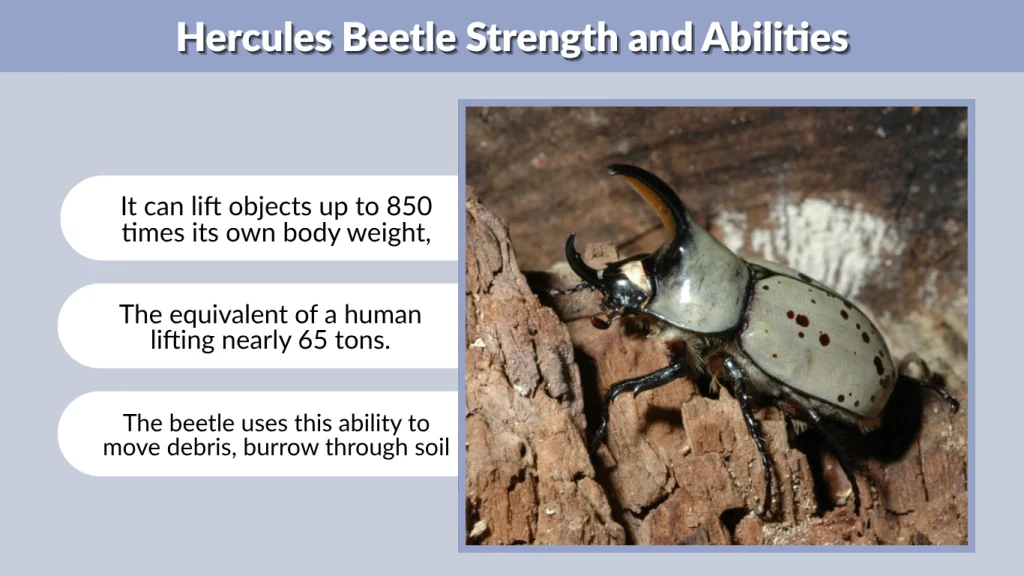
The Hercules beetle’s strength is legendary. It can lift objects up to 850 times its own body weight, the equivalent of a human lifting nearly 65 tons. This strength comes from its powerful muscles anchored to the exoskeleton, giving it exceptional leverage. The beetle uses this ability to move debris, burrow through soil, and engage in combat with other males during mating season.
Flight Ability
Despite their bulky appearance, Hercules beetles can fly. Their large inner wings unfold from beneath the hard elytra when airborne. They create a deep, buzzing sound as they fly in search of mates or food sources. However, they are not long-distance fliers and prefer climbing on tree trunks and branches. Their wings allow them to navigate humid forests efficiently, especially at night when they are most active.
Hercules Beetles as Pets
Pet Care Basics
Keeping a Hercules beetle as a pet has become increasingly popular, particularly in Japan and the United States. They thrive in humid terrariums with soil, bark, and decaying wood to simulate their natural habitat. The ideal humidity is around 70–80%, and temperatures between 22–28°C (72–82°F). A well-ventilated container with moisture-retaining substrate is essential for their health.
Feeding and Maintenance
Adult beetles feed on ripe fruits like bananas, melons, and apples. In captivity, many owners use beetle jelly, a nutritious gel commonly sold in insect shops. Water should not be offered directly, as beetles absorb moisture from their food. Regular cleaning of the enclosure prevents mold growth and keeps the beetle healthy.
Lifespan and Challenges
While the larval stage can last up to two years, adult Hercules beetles only live for about 3 to 6 months. Owners often find the short lifespan challenging, but their calm nature and impressive size make them rewarding display pets. They rarely bite or show aggression, making them safe for handling under supervision.
Buying and Cost
Hercules beetles are available through licensed breeders and insect suppliers. Prices range from $50 to $300 depending on species, size, and rarity. The Eastern Hercules beetle (Dynastes tityus) is common in the U.S., while the Dynastes hercules hercules from Central America is prized for its horn length. Responsible purchasing ensures conservation and prevents illegal collection from wild populations.
Comparisons with Other Beetles
Hercules Beetle vs. Rhinoceros Beetle
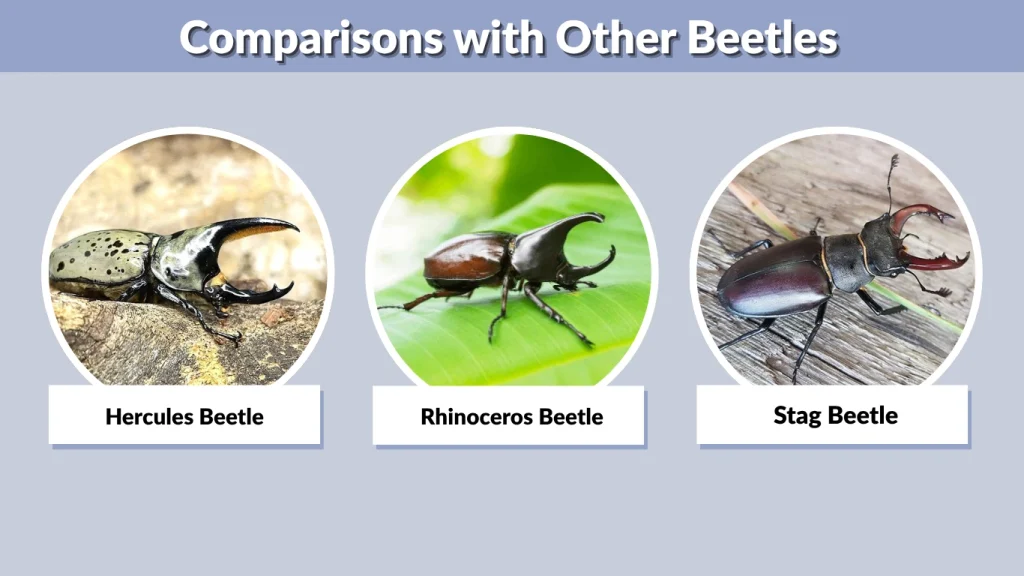
Both belong to the same subfamily and share similar horn structures. However, Hercules beetles are generally larger and stronger, with longer horns used for pushing rivals. Rhinoceros beetles have shorter, more compact bodies, better suited for forest canopies. The Hercules beetle’s strength-to-weight ratio makes it one of the most powerful insects on Earth.
Hercules Beetle vs. Stag Beetle
Stag beetles are known for their antler-like jaws, while Hercules beetles use their horn for dueling. Stag beetles are more widespread across Europe and Asia, whereas Hercules beetles inhabit the Americas. Both species are harmless to humans and play essential roles in decomposition and soil enrichment.
Cultural Symbolism and Popularity
Myth and Symbolism
The Hercules beetle’s name originates from the Greek hero Hercules, symbolizing immense strength and endurance. Across cultures, the beetle represents power, perseverance, and transformation. In Central and South American folklore, it is seen as a guardian of the forest, turning decay into new life.
In Art and Media
The Hercules beetle frequently appears in tattoos, sculptures, and educational exhibits. Its elegant horn shape and vibrant shell make it a symbol of resilience. In popular culture, it features in video games like Terraria and collectible toy lines like LEGO, captivating both entomologists and casual fans.
Conservation and Ecological Role
Ecological Importance
Hercules beetles are vital to forest ecosystems. Their larvae break down decaying wood, returning nutrients to the soil. Adults feed on rotting fruit, aiding decomposition and seed dispersal. Their presence helps maintain healthy forest floor biodiversity.
Threats and Conservation
Deforestation and habitat loss pose serious threats to Hercules beetles. The pet trade and pesticide use further impact their populations. Fortunately, breeding programs and habitat conservation efforts have helped protect them in some regions. Maintaining tropical forest ecosystems is crucial to preserving their natural populations and ecological role.
Interesting Facts
- Adult males can reach up to 7 inches (17 cm) in length, including their horn.
- The horn alone can measure more than half the body length.
- Color changes are due to light scattering and moisture absorption in the shell.
- Despite their intimidating appearance, they are completely harmless to humans.
- Their strength is proportional to the legend they’re named after — Hercules.
FAQs
Where do Hercules beetles live?
They are native to the rainforests of Central and South America, with related species found in the southeastern United States. They prefer warm, humid habitats rich in decaying wood and fruit.
What do Hercules beetles eat?
Adults eat overripe fruit, tree sap, and plant juices. Their larvae feed on decaying wood, helping recycle nutrients in the ecosystem.
How long do Hercules beetles live?
Their full life cycle lasts about two years—most of it spent as larvae. The adult stage typically lasts 3–6 months.
Can Hercules beetles fly?
Yes, they have strong membranous wings that allow them to fly short distances, although they prefer climbing and crawling.
Are Hercules beetles dangerous?
No. They do not bite, sting, or carry venom. Their horns are used solely for fighting other males, not for defense against humans.
