
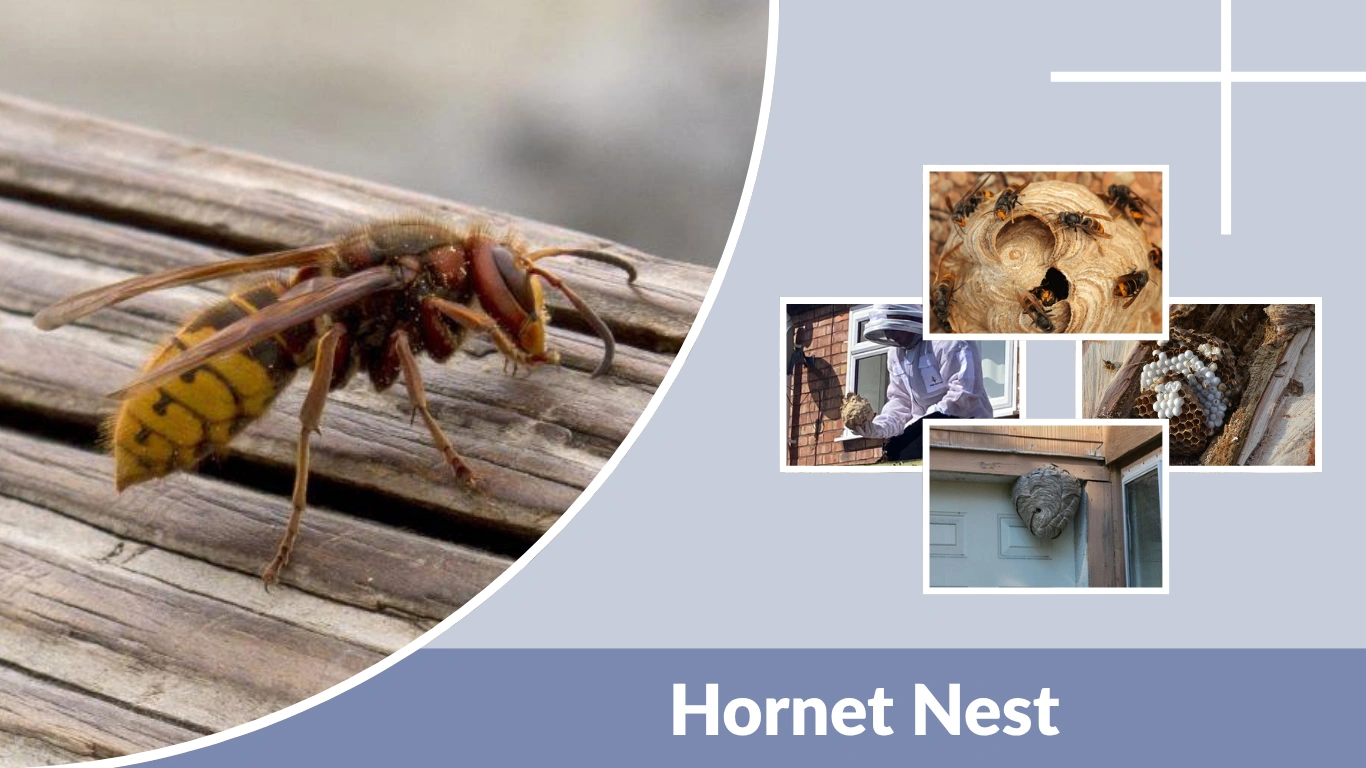
Hornet nests are some of nature’s most remarkable architectural creations — strong, lightweight, and perfectly organized. Built from chewed wood fibers mixed with saliva, these paper-like homes shelter entire colonies of hornets. While fascinating from a distance, a hornet nest near your home can quickly become a serious problem. Understanding how these nests form, what they look like, and how to remove them safely is essential for both safety and coexistence.
Understanding Hornet Nests
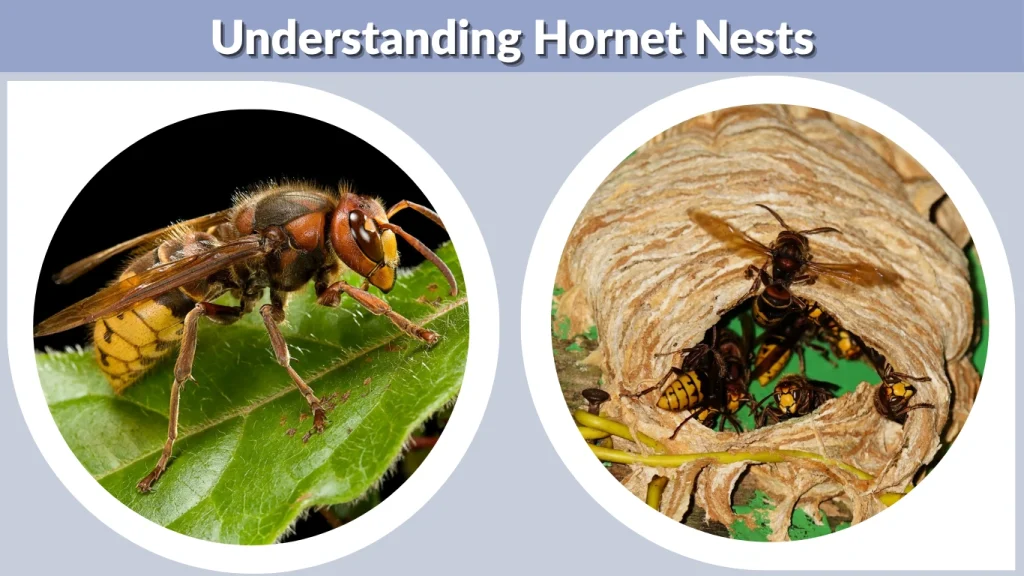
What Is a Hornet Nest?
A hornet nest is a papery structure constructed by social hornets to house their queen, eggs, larvae, and workers. The nest acts as both a nursery and fortress, protecting the colony from predators and harsh weather. Each nest begins with a single queen who emerges from hibernation in spring to start building. Using chewed wood mixed with saliva, she creates a sturdy, layered material that hardens into a weather-resistant shell.
Hornets’ nests can vary in size — from a small golf-ball cluster in early spring to a massive structure as large as a basketball by late summer. Inside, the nest is filled with multiple layers of combs containing hexagonal cells where eggs are laid and larvae develop.
How Hornets Build Their Nests
The building process begins with the queen selecting a protected location such as a tree branch, attic corner, or wall cavity. She forms a small, papery stem and the first few cells of the nest. Once the first batch of workers matures, they take over construction duties, rapidly expanding the nest by adding layer upon layer of paper pulp.
By mid-summer, the nest can host hundreds of hornets. Each layer is carefully ventilated, maintaining a stable temperature and protecting the developing brood. When autumn arrives, new queens and males are produced, and the old nest is abandoned as winter approaches.
Types of Hornet Nests
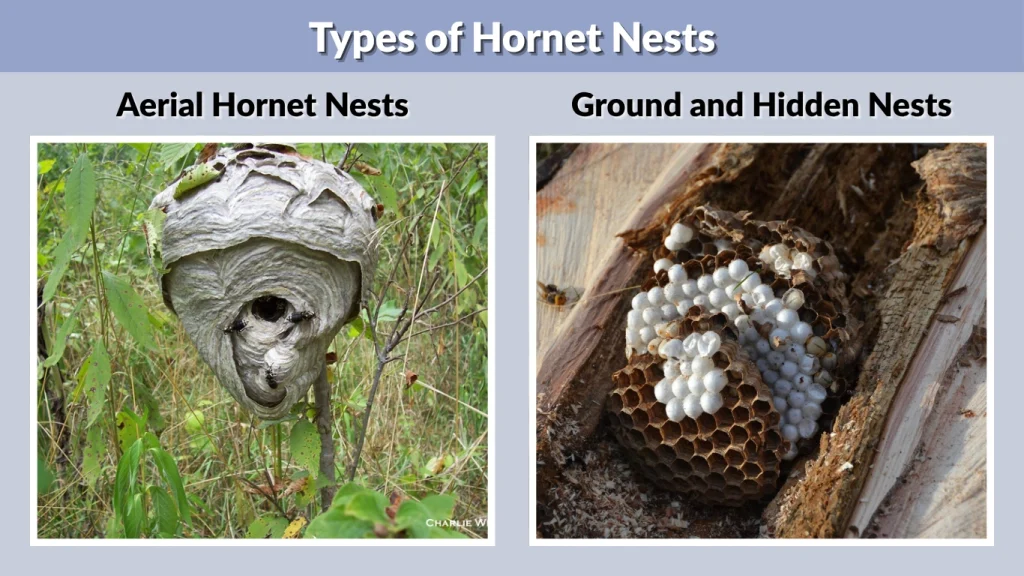
Aerial Hornet Nests
Most hornet species, including the bald-faced hornet and European hornet, build aerial nests that hang from trees, shrubs, or eaves. These nests are fully enclosed and shaped like inverted teardrops or footballs. They’re made from a tough, papery material that can withstand rain and wind.
Aerial nests can grow impressively large — often over a foot wide — with a single entrance hole near the bottom. Hornets continuously add to these layers, creating a strong, weatherproof structure. The bald-faced hornet’s nest, in particular, is one of the most recognizable, with its smooth gray surface and swirling texture.
Ground and Hidden Nests
Some hornets, such as the Asian giant hornet or certain European species, prefer to build nests underground or inside hollow logs. Ground nests can be difficult to detect, posing a greater risk to unsuspecting people or pets who come too close. You might notice small holes in the soil with regular hornet traffic going in and out.
These subterranean nests are protected from the weather but are easily disturbed by lawn mowing or digging. Because ground hornets defend their colonies aggressively, approaching or attempting to remove such nests without proper protection is dangerous.
Physical Characteristics and Identification
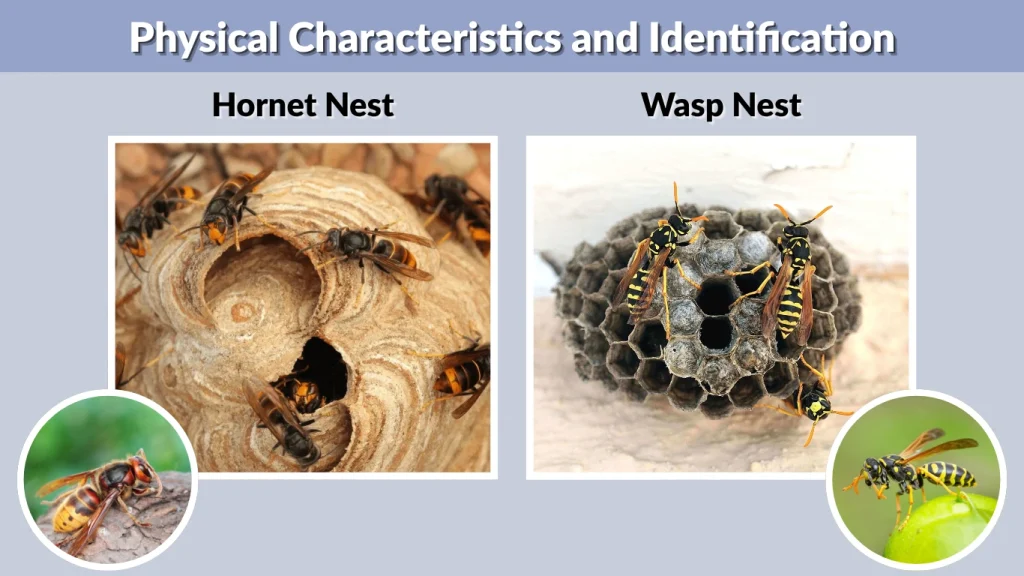
What Does a Hornet Nest Look Like?
The appearance of a hornet nest depends on the species and environment, but most share similar features. The outer layer resembles gray paper with a coarse, fibrous pattern made from wood pulp. The structure is enclosed, with a single round entrance hole near the base.
Hornet nests are typically found in high, sheltered locations such as trees, roofs, porches, or sheds. They’re often mistaken for wasp nests, but hornet nests are larger, thicker, and fully enclosed — while wasp nests are smaller and open-faced.
Here’s a simple visual comparison:
| Feature | Hornet Nest | Wasp Nest |
| Shape | Enclosed, oval, or football-shaped | Open, umbrella-shaped |
| Material | Paper-like, made from chewed wood fibers | Thin paper combs |
| Color | Gray to light brown | Light tan or yellowish |
| Location | Trees, attics, eaves, or ground | Under ledges, roofs, or in walls |
| Colony Size | 300–700 hornets | 20–100 wasps |
Signs of an Active Nest
Recognizing whether a nest is active is vital before attempting removal. Active nests will have steady hornet activity, with workers flying in and out throughout the day. You may hear a faint buzzing sound coming from inside, especially in warm weather. If hornets begin circling or reacting to your movement nearby, it’s a clear sign the nest is occupied and being defended.
Avoid sudden movement or loud vibrations near an active nest — hornets respond aggressively when they sense threats.
Hornet Nest Lifecycle
Seasonal Activity
Hornet nests follow a predictable yearly cycle. In spring, the queen emerges from hibernation and starts a small nest on her own. By summer, workers take over nest expansion, feeding larvae, and protecting the colony. During autumn, new queens and males hatch, preparing to mate and hibernate. When winter arrives, the rest of the colony dies off, leaving the nest empty.
Hornet nests are not reused the following year. Each spring, new queens start fresh nests, often in different locations. The old nests gradually weaken, crumble, and may be recycled by birds or small mammals for shelter.
Dangers of a Hornet Nest
When Does a Nest Become a Threat?
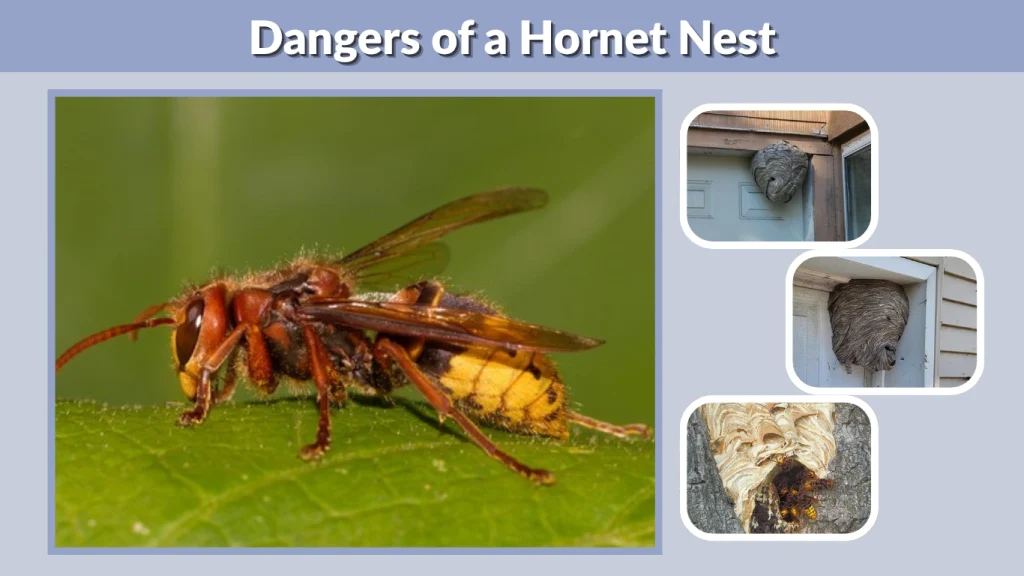
Hornet nests are vital to nature, but when they appear near doorways, attics, or playgrounds, they can quickly turn hazardous. Hornets are territorial insects that defend their colony with surprising aggression. Vibrations, sudden movement, or loud noise can trigger an attack response.
If the nest is positioned within a few yards of daily human activity—such as gardens, mailboxes, or patio roofs—it should be addressed immediately. A single sting is painful; multiple stings can be dangerous, especially for children, pets, or those allergic to insect venom.
Hornet Aggression and Defense
When threatened, hornets release a pheromone alarm signal that alerts every worker in the nest. Within seconds, dozens may swarm toward the perceived danger. Unlike bees, hornets can sting repeatedly and have longer stingers capable of piercing thick clothing.
This behavior isn’t random cruelty—it’s instinctive protection. Understanding it helps reduce risk: never strike, spray, or shake an active nest during the daytime, when hornets are most alert.
Safe Removal Methods
Professional Hornet Nest Removal
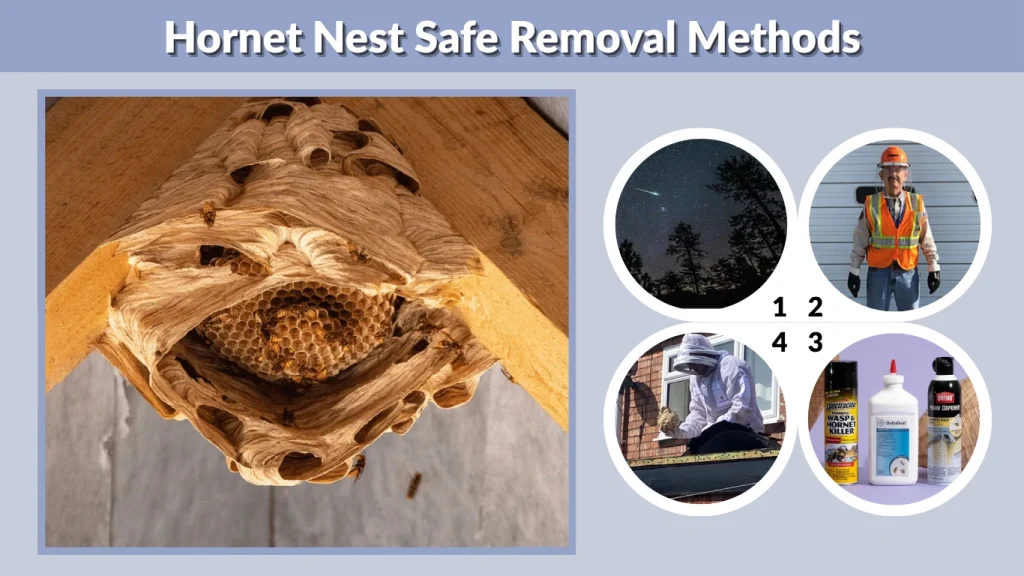
Calling a professional pest-control expert is the safest and most effective way to handle an active hornet nest. Trained technicians wear thick protective suits, use long-range sprayers, and have the right insecticides to neutralize colonies without provoking swarms.
Professionals typically charge between $100 – $400 depending on nest size and location. The service usually includes identification, chemical treatment, removal, and prevention advice.
For large aerial nests or underground colonies, expert removal is strongly recommended—especially if the nest is inside walls or hard-to-reach areas.
DIY Hornet Nest Removal (Use Caution)
Home removal is only safe for small, inactive nests discovered early in spring.
Follow these essential steps:
- Wait until night. Hornets are less active after dark.
- Wear protective clothing—long sleeves, gloves, boots, and a face shield.
- Use a hornet spray labeled for aerial or ground nests. Spray from at least 10 – 15 feet away, aiming directly at the entrance hole.
- Seal and dispose of the nest the next day once activity stops.
Never burn, knock down, or soak a live nest. Aggressive swarming can occur instantly and lead to multiple stings.
Preventing Future Nests
- Inspect eaves, attics, and trees in early spring for the first signs of new nests.
- Seal cracks, holes, and crevices around roofs and walls.
- Keep outdoor trash sealed and remove fallen fruit that attracts insects.
- Hang a fake hornet nest—hornets rarely build near another colony.
- Use natural deterrents like peppermint or citronella oils around entry points.
Simple preventive care in spring can spare you a full-grown hornet colony by midsummer.
Hornet Nest Symbolism and Cultural References
Meaning and Mythology
The expression “kicking the hornet’s nest” has ancient roots, symbolizing provocation or stirring up danger. In Greek mythology, hornets represented war, courage, and divine retribution, admired for their fearless defense of home and kin.
In many cultures, the hornet’s nest embodies a warning: that reckless actions can unleash powerful consequences. The phrase remains popular today to describe chaotic or risky situations.
In Popular Culture
Hornet nests have long captured public imagination.
- The Girl Who Kicked the Hornets’ Nest — the third novel in Stieg Larsson’s Millennium series — uses the nest as a metaphor for revenge and resistance.
- The Hornet’s Nest (2014) documentary depicts journalists embedded with U.S. troops in Afghanistan, symbolizing danger and perseverance.
- Numerous local landmarks and restaurants bear the name “Hornets Nest,” linking the term with boldness and energy.
Across the media, the nest serves as both a literal marvel and a potent metaphor for courage under threat.
Interesting Facts About Hornet Nests
- A large bald-faced hornet nest can house more than 700 workers by late summer.
- The nest’s papery material is completely biodegradable and made from natural wood pulp.
- Old nests are never reused; each spring, new queens start from scratch.
- Artists and nature collectors often preserve abandoned nests for display.
- Fake hornet nests are widely sold as eco-friendly repellents to deter new colonies.
FAQs
What does a hornet nest look like?
Hornet nests are enclosed, grayish structures resembling paper footballs. They’re made from chewed wood fibers and have a single round entrance hole near the bottom. Most hang in trees, attics, or under eaves.
Are hornet nests dangerous to humans?
Yes. While hornets are defensive, not aggressive, their stings are painful and can trigger allergic reactions. Nests near doorways or paths pose significant risk and should be handled by professionals.
Can I remove a hornet nest by myself?
Only if it’s small and inactive. Always remove nests at night, wear full protection, and use long-range hornet spray. Large or active nests should be handled by licensed pest-control experts.
Do hornets reuse their old nests?
No. Hornets abandon nests in winter and never return. Each new queen builds a fresh nest every spring, leaving the old one to decay naturally.
What does “don’t poke the hornet’s nest” mean?
It’s an idiom meaning don’t provoke trouble or stir up conflict. The phrase originates from the real danger of disturbing a hornet colony, symbolizing chaotic retaliation when provoked.
