

Hornets and wasps are common insects across the UK, especially during the warmer months. While hornets are larger and often more intimidating, most wasps are smaller but equally active around gardens, woodlands, and urban areas. Many people confuse the two, but understanding their differences is important for safety and awareness.
In this guide, we’ll explore 2 hornet species and 5 commonly found wasps in the UK, along with tips to identify them and recognize their behaviors.
Hornets in the UK
1. European Hornet (Vespa crabro)
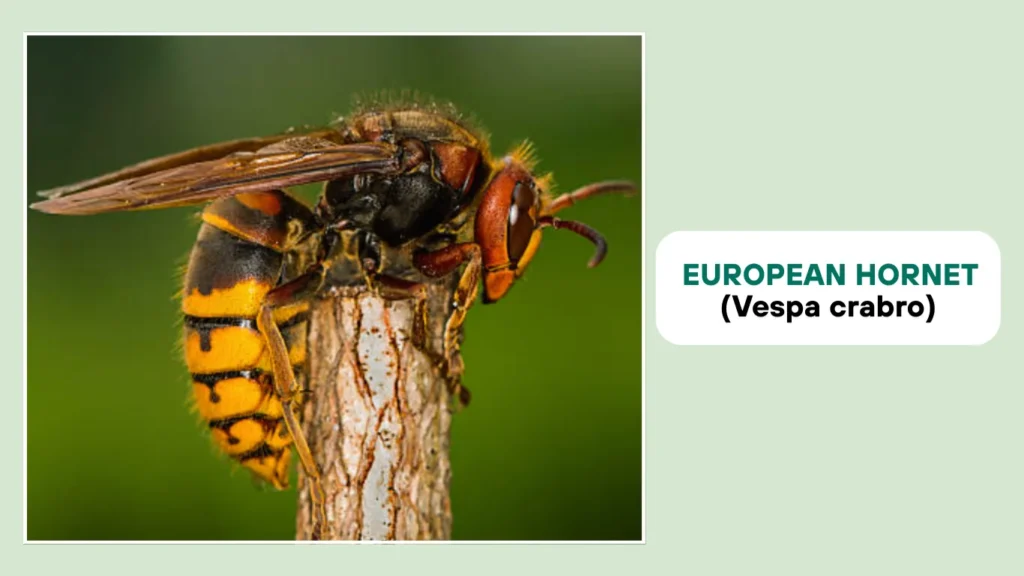
The European hornet is the largest native social wasp species in the UK and the only true hornet naturally found in the region. Though intimidating in appearance, it is often misunderstood. These hornets are less aggressive than common wasps and usually avoid human activity unless disturbed. Their presence is more common in southern parts of the UK, especially in wooded and rural areas where suitable nesting spots are abundant.
Identification
- Size: 25–35 mm (queens are larger)
- Color: Reddish-brown head and thorax with a yellow and black striped abdomen
- Wings: Long, brownish and slightly translucent
- Antennae: Slightly curved, brown with orange tint
- Eyes: Large, kidney-shaped
- Legs: Yellow with reddish tinge
- Sound: Loud, low buzzing when flying
Habitat and Nesting
European hornets prefer quiet, shaded environments. They often build their nests in hollow trees, barns, sheds, or even inside wall cavities and chimneys. The nest is constructed from chewed wood pulp, giving it a distinctive grey-brown paper-like texture. Unlike wasps that often nest underground, European hornets seek elevated or protected enclosures.
Nesting season begins in spring, with the queen emerging from hibernation to establish a new colony. By late summer, the nest can house several hundred hornets, but it is usually smaller than wasp colonies.
Are They Dangerous?
Despite their size and powerful appearance, European hornets are not particularly aggressive toward humans. They will only sting when provoked or if their nest is threatened. Their sting is more painful than that of a common wasp due to the volume of venom, but they rarely attack unprovoked.
These hornets play a beneficial role in nature by preying on flies, caterpillars, and other pest insects. They also pollinate plants while foraging for nectar. In general, if left undisturbed, European hornets will avoid conflict and continue their role as important ecosystem regulators.
2. Asian Hornet (Vespa velutina)
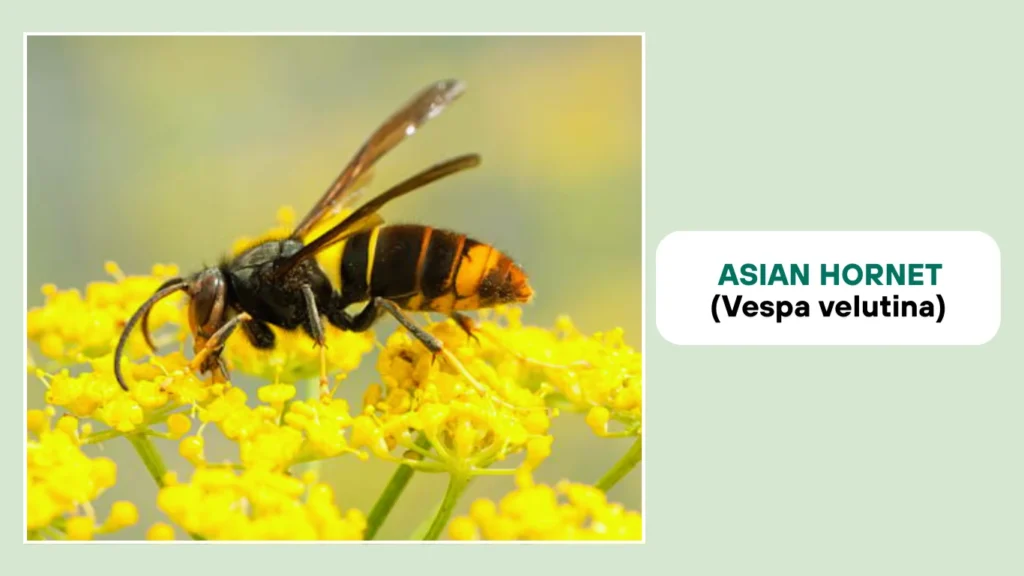
The Asian hornet is a non-native, invasive species first confirmed in the UK in 2016. Native to Southeast Asia, it has rapidly spread across parts of Europe, posing a serious risk to biodiversity—especially to honeybee populations. Unlike the larger European hornet, the Asian hornet is slightly smaller and darker, but more aggressive toward other insects. Ongoing monitoring and rapid reporting are critical to preventing its establishment in the UK.
Identification
- Size: 20–30 mm
- Color: Mostly dark brown to black body with a distinctive yellow band near the abdomen tip
- Legs: Black at the top with bright yellow tips
- Face: Orange or orangish-yellow
- Wings: Dark brown and slightly opaque
- Body Shape: More slender and sleek than the European hornet
Habitat and Nesting
Asian hornets prefer elevated, sheltered locations for nesting. They often build large, round nests high in trees, under roofs, or in building cavities. Their nests can reach the size of a football or larger by late summer and are made of chewed plant material, forming a papery outer shell.
A single colony can contain several thousand individuals, and queens can establish new colonies quickly in warm conditions. Early detection and removal are crucial to controlling their spread.
Why It’s a Threat
Asian hornets are voracious predators of pollinators, especially honeybees. A single hornet can kill dozens of bees in a short time, often decapitating them and feeding their thoraxes to larvae. This behavior puts significant pressure on local bee populations, which are already in decline due to habitat loss and disease.
Due to their rapid spread and ecological threat, the UK government urges the public to report sightings immediately through official channels such as the Asian Hornet Watch app or local authorities. Early detection is key to protecting native pollinators and maintaining ecological balance.
Wasps Commonly Found in the UK
3. Common Wasp (Vespula vulgaris)

The common wasp is one of the most familiar and widespread wasps in the UK. Often seen buzzing around food during summer picnics, they are known for their bright yellow and black striped bodies.
Identification:
- Size: 10–20 mm
- Color: Bright yellow with black stripes
- Face: Anchor-shaped black mark on the face
- Wings: Transparent, folded along the body when at rest
Habitat and Nesting:
Common wasps build nests underground, in lofts, tree hollows, or wall cavities. The nests are made from chewed wood pulp and grow in size as the colony expands through summer.
Behavior and Sting:
These wasps can be aggressive, especially in late summer when their food sources decline. Their sting is painful and can cause allergic reactions in some individuals. However, they also help control garden pests by feeding on insects.
4. German Wasp (Vespula germanica)

The German wasp looks very similar to the common wasp but has some key differences. It is also widespread across the UK and can be seen in both urban and rural areas.
Identification:
- Size: 12–20 mm
- Color: Yellow and black stripes
- Face: Usually has three small black dots
- Body: Sleek and smooth, similar to the common wasp
Habitat and Nesting:
German wasps build large nests in roof spaces, wall cavities, and underground. Their nests are grey and paper-like, made from chewed wood and saliva.
Behavior and Sting:
Slightly more aggressive than the common wasp, they will defend their nest if disturbed. Their sting is painful and can be used repeatedly.
5. Red Wasp (Vespula rufa)
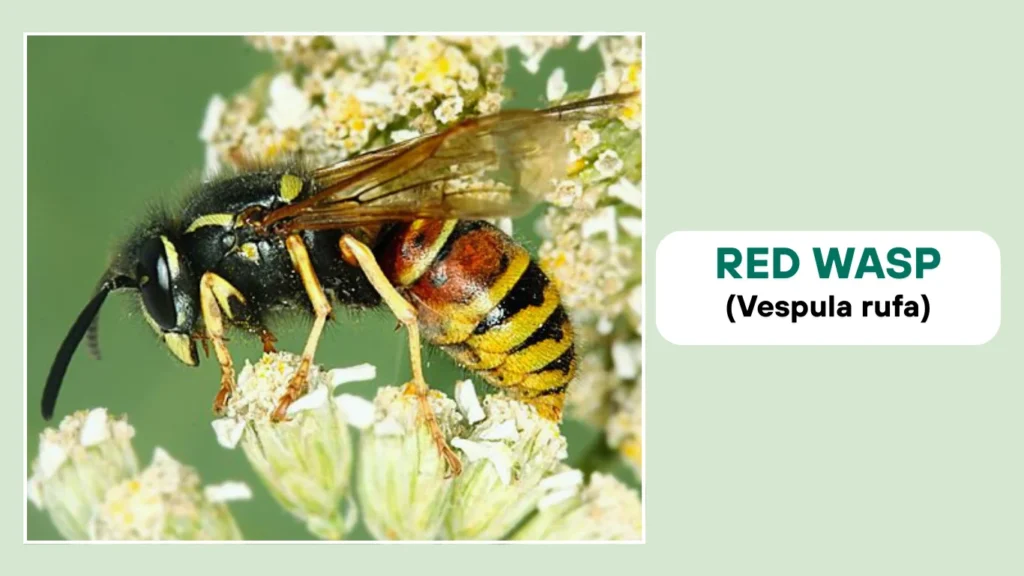
The red wasp is less commonly encountered and is usually found in woodland areas. It is less aggressive and plays an important role in controlling insect populations.
Identification:
- Size: 10–18 mm
- Color: Reddish-brown with yellow markings
- Face: Pale yellow with less defined black marks
- Thorax: More reddish than other wasps
Habitat and Nesting:
Red wasps prefer wooded and rural areas, building smaller nests in soil banks, tree stumps, or sheltered ground-level spots.
Behavior and Sting:
Known for being less aggressive, red wasps are not likely to sting unless threatened. They are beneficial in ecosystems due to their predatory habits.
6. Tree Wasp (Dolichovespula sylvestris)

The tree wasp is commonly found in gardens, meadows, and woodland edges. Unlike many other wasps, it prefers to build its nest above ground.
Identification:
- Size: 10–18 mm
- Color: Black and yellow stripes
- Face: A single black dot in the center
- Wings: Clear and narrow
Habitat and Nesting:
Tree wasps typically build hanging nests in trees, bushes, or even on buildings. Their nests are usually exposed and round, made from papery material.
Behavior and Sting:
They can be quite aggressive if their nest is disturbed and will sting in defense. However, they’re not generally a nuisance unless approached.
7. Median Wasp (Dolichovespula media)

The median wasp is a relatively new species to the UK, first recorded in the 1980s. It resembles a hornet in appearance but is smaller and less aggressive.
Identification:
- Size: 15–20 mm
- Color: Yellow and black with orange markings on the thorax
- Face: Pale yellow with small dark marks
- Body Shape: Slimmer than hornets but bulkier than common wasps
Habitat and Nesting:
Median wasps prefer warm, sunny areas and build hanging nests in trees, shrubs, and under eaves. Their nests are grey and made from chewed plant material.
Behavior and Sting:
They are generally calm and less aggressive than other wasps. Median wasps are unlikely to sting unless directly provoked.
Wasp vs Hornet: Key Differences
Size Comparison
Hornets are generally larger than wasps. A European hornet can reach up to 35 mm, while most common wasps range from 10 to 20 mm. Hornets have broader heads and more robust bodies, making them appear bulkier.
Nest Differences
Wasps often build nests underground, in wall cavities, lofts, or tree hollows. These nests are papery and grey, shaped like a ball or teardrop. Hornet nests are similar in material but usually larger and more enclosed, often found in hollow trees, attics, or sheltered outdoor areas. Asian hornet nests are often high up in trees and have a round, basketball-like shape.
Aggression and Sting
Wasps can be aggressive, especially late in the season when food is scarce. They are known to sting multiple times. Hornets, while larger and capable of delivering a more painful sting, are typically less aggressive unless their nest is threatened. Both insects can sting multiple times, but hornet venom contains more acetylcholine, which causes more pain.
Role in the Ecosystem
Both wasps and hornets are important predators of other insects, helping to control pests like flies, caterpillars, and aphids. They also pollinate flowers while searching for nectar. Despite their bad reputation, these insects are vital for maintaining a balanced ecosystem.
Summary
Hornets and wasps are both common in the UK, but they differ in size, behavior, and nesting habits. The European and Asian hornets are the primary hornet species, with the former being native and the latter invasive. Wasps like the common, German, red, tree, and median wasps are frequently seen across gardens, woodlands, and urban spaces. While wasps tend to be more aggressive, hornets are larger and typically sting only when threatened. Both play crucial roles in pest control and pollination, making them important parts of the ecosystem.
