
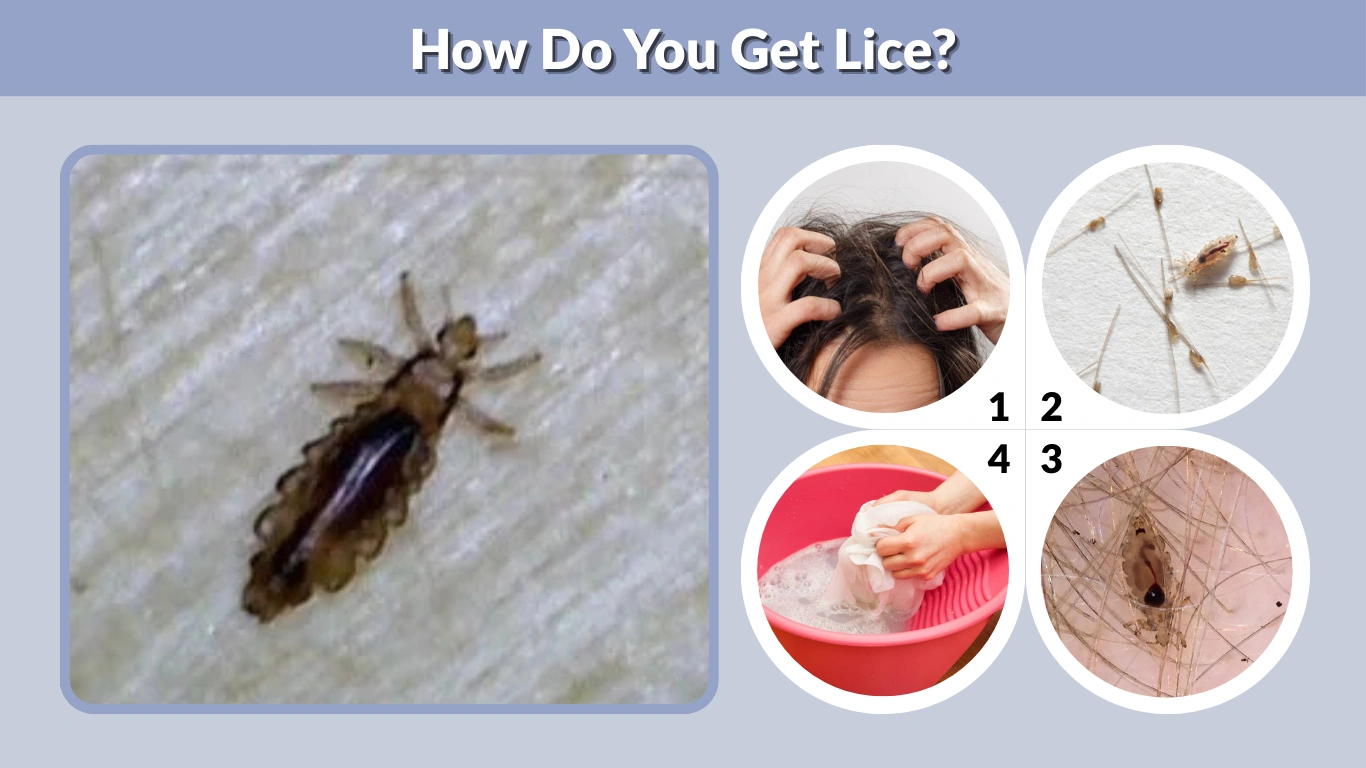
Lice are a common but frustrating problem that affects people of all ages. Many assume lice are linked to poor hygiene, but that belief is one of the biggest myths surrounding infestation. In reality, lice spread through close contact and can affect anyone, regardless of cleanliness or lifestyle. When itching starts or nits are spotted in the hair, the first questions are usually how did this happen and what should I do next? This article explains how lice spread, the different types of human lice, and how infestations begin, helping you understand the problem before moving on to treatment and prevention.
What Are Lice?
Lice are tiny parasitic insects that live on humans and survive by feeding on blood. They cannot live long away from the human body and are specially adapted to cling to hair or clothing fibers. Lice do not jump or fly; instead, they crawl from one host to another.
They are species-specific, meaning human lice live only on humans. You cannot get human lice from pets, and animals cannot get lice from people.
Types of Human Lice
There are three main types of lice that affect humans:
- Head lice – live on the scalp and hair
- Body lice – live in clothing and move to the skin to feed
- Pubic (crab) lice – live in coarse hair, usually in the pubic area
Each type spreads in slightly different ways, but all rely on close human contact.
How Do You Get Lice?
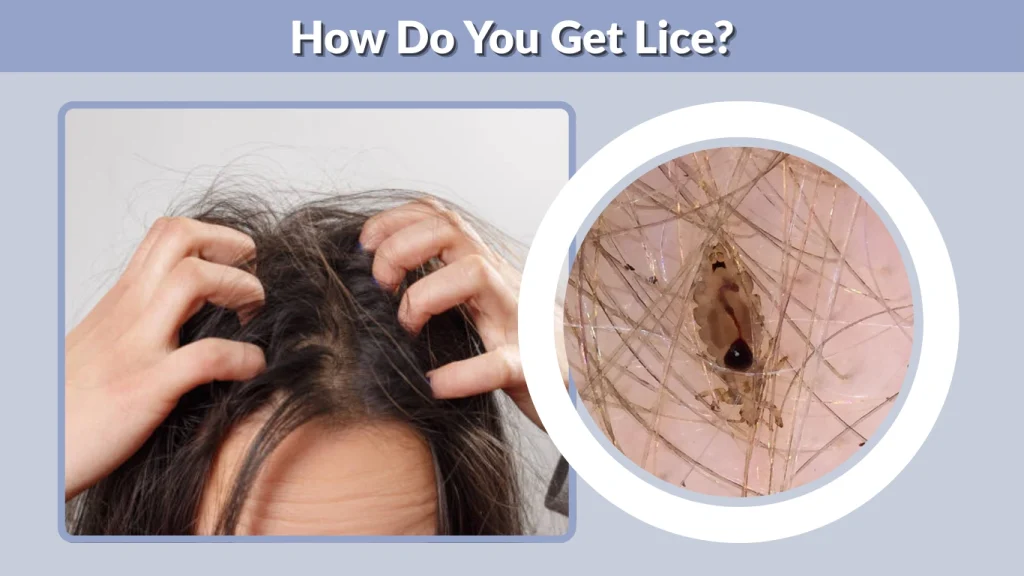
Lice spread most commonly through direct contact with someone who already has an infestation. Because they crawl rather than jump, transmission usually requires heads or bodies to be close together for a period of time.
Lice are especially common in environments where people are in close contact, such as schools, households, sleepovers, and shared living spaces.
How Do You Get Lice in the First Place?
The most common way to get lice is through head-to-head contact. This allows lice to crawl directly from one person’s hair to another’s. Children are more likely to get lice because they often play closely together, but adults can get lice as well.
Lice do not appear spontaneously. If someone has lice, they acquired them from another person at some point, even if that contact was brief or unnoticed.
Can You Get Lice Without Direct Contact?
While direct contact is the primary method of spread, lice can sometimes transfer through shared personal items, such as:
- Hats or helmets
- Hairbrushes or combs
- Bedding or pillows
However, this type of transmission is much less common. Lice survive for only a short time away from the human scalp, which limits their ability to spread through objects.
How Close Do You Have to Be to Get Lice?
You generally need to be very close—close enough for hair or bodies to touch. Sitting next to someone without contact, sharing the same room, or being in the same classroom does not usually cause lice to spread. Casual contact poses little risk unless it involves direct hair or body contact.
How Long After Exposure Do You Get Lice?
After exposure, lice can begin laying eggs within a day or two. Symptoms such as itching may not appear for 1 to 4 weeks, especially during a first infestation. This delay often makes it difficult to determine exactly when or from whom lice were acquired.
How Do You Get Head Lice?
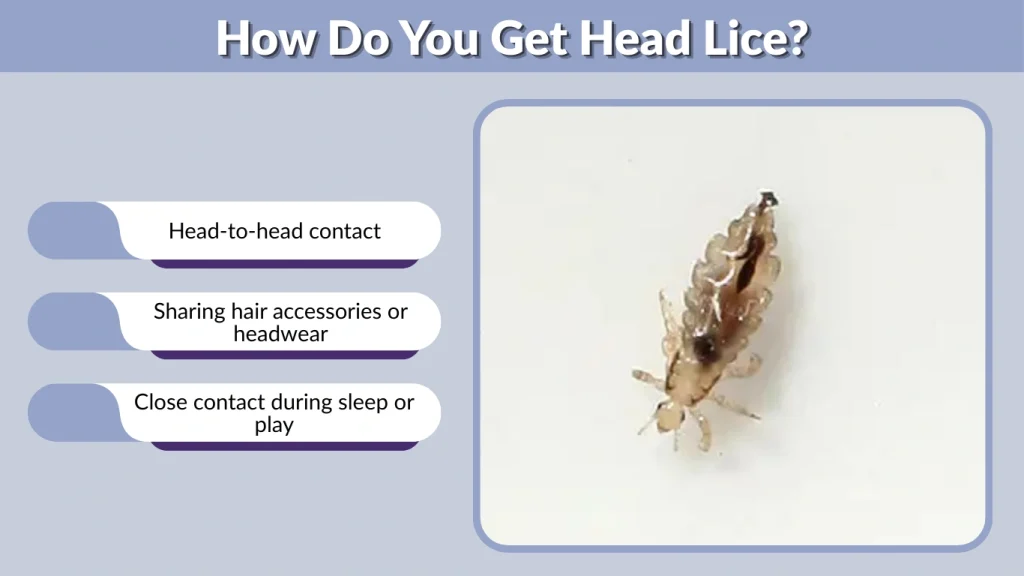
Head lice are the most common form of lice infestation. They live on the scalp, especially behind the ears and near the neckline, where it is warm and protected.
Head lice spread through:
- Head-to-head contact
- Sharing hair accessories or headwear
- Close contact during sleep or play
Can Adults Get Head Lice?
Yes, adults can get head lice. While children are more frequently affected, adults often get lice from close contact with an infested child or partner. Long hair, shared bedding, and close family contact can increase risk.
How Do You Get Pubic (Crab) Lice?
Pubic lice are usually spread through sexual contact. They live in coarse hair, most commonly in the pubic region, but can also spread to underarm hair, chest hair, or facial hair.
In rare cases, pubic lice can spread through shared towels or bedding, but this is uncommon because lice do not survive long away from the body.
How Do You Get Eyelash or Eyebrow Lice?
Eyelash or eyebrow lice usually result from pubic lice spreading to the face. This type of infestation requires medical attention, especially in children, to prevent eye irritation or infection.
How Do You Get Body Lice?
Body lice live in clothing rather than directly on the skin. They are associated with crowded living conditions and limited access to clean clothing. Body lice spread through shared or infrequently washed clothing, towels, or bedding.
How Do Lice Eggs (Nits) Spread?
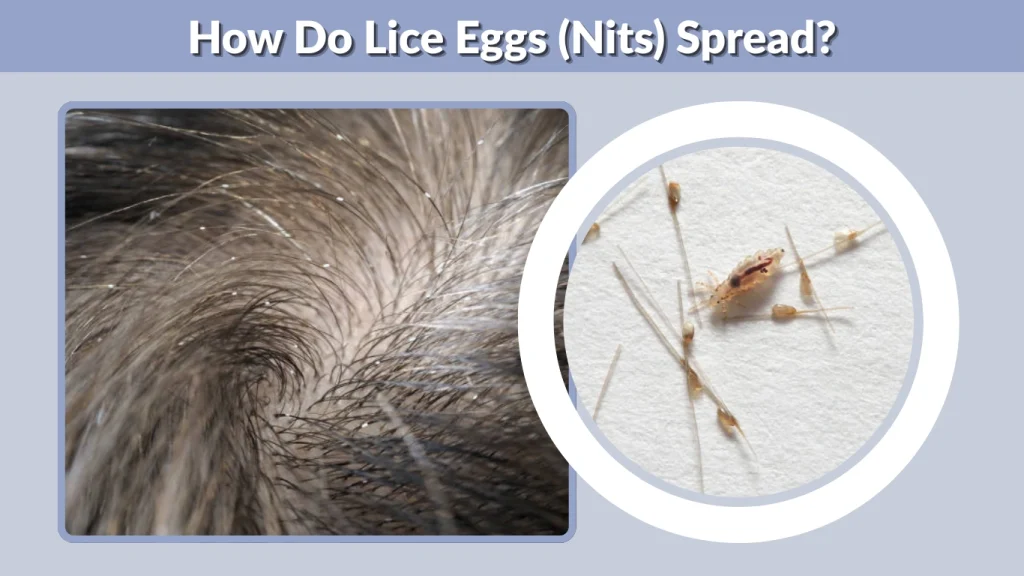
Lice eggs, known as nits, are laid by adult lice and firmly attached to hair shafts close to the scalp. They do not spread on their own and cannot jump from person to person. Nits are evidence of an infestation but are not contagious unless they hatch and crawl onto another person.
Dead vs Live Nits
Live nits are usually found close to the scalp and appear tan or brown. Dead nits are often white or clear and may remain stuck to hair even after treatment. Their presence does not always mean there is an active infestation.
How Do You Get Rid of Lice?
Getting rid of lice requires treating both live lice and their eggs (nits). Killing adult lice alone is not enough, because unremoved eggs can hatch and restart the infestation. Successful treatment usually involves a combination of medicated products, careful combing, and follow-up checks.
How to Get Rid of Head Lice at Home
Most head lice infestations can be treated at home using over-the-counter or prescription treatments.
Common steps include:
- Using a medicated lice shampoo or lotion as directed
- Leaving the product on the hair for the recommended time
- Rinsing and thoroughly combing the hair with a fine-toothed nit comb
Wet combing every few days for two weeks helps remove newly hatched lice and reduces the chance of reinfestation.
How Do You Get Rid of Lice Fast?
Many people look for instant or overnight solutions, but there is no guaranteed one-day cure. Products that claim to eliminate lice instantly often fail to kill eggs.
The fastest reliable approach is:
- A proven lice treatment
- Careful nit removal
- A second treatment 7–10 days later
Skipping follow-up treatment is one of the main reasons lice return.
Home Remedies for Lice: Do They Work?
Home remedies such as mayonnaise, vinegar, olive oil, or essential oils are popular but unreliable. Some may suffocate lice temporarily, but most do not kill eggs and have little scientific support.
Vinegar may help loosen the glue holding nits to hair, but it does not kill lice. These methods can be used as supplements to proper treatment, but they should not replace proven products.
How Do You Get Rid of Lice in Your House?

Lice do not survive long away from the human body, so deep cleaning the entire house is unnecessary. However, basic cleaning helps prevent reinfestation.
Recommended steps include:
- Washing bedding, hats, and clothing used in the last 48 hours in hot water
- Drying items on high heat
- Sealing non-washable items in a bag for 48 hours
Can Lice Live on Furniture?
Lice can crawl onto furniture briefly, but they usually die within 24–48 hours without a human host. Vacuuming couches, chairs, and carpets is usually sufficient. Sprays and foggers are not recommended and can be harmful.
How Do You Prevent Getting Lice?
Prevention focuses on reducing close contact and avoiding shared personal items.
Helpful prevention tips:
- Avoid head-to-head contact when possible
- Do not share hats, brushes, or hair accessories
- Tie back long hair in schools or group settings
- Check hair regularly if someone nearby has lice
Early detection is one of the best ways to prevent a larger outbreak.
Common Lice Myths and Misconceptions
There are many myths that cause unnecessary panic or shame.
- Lice are not caused by poor hygiene
- Lice do not jump or fly
- Pets do not spread human lice
- You cannot “catch” lice from the air or casual contact
Understanding the facts helps reduce stigma and ensures infestations are treated correctly.
Conclusion
Lice infestations are common, manageable, and not a reflection of cleanliness or lifestyle. They spread primarily through close human contact and can affect anyone at any age. With proper treatment, careful nit removal, and simple household cleaning, lice can be eliminated successfully. Knowing how lice spread and how to prevent reinfestation makes dealing with them far less stressful and far more effective.
FAQs
Can you get lice from someone without touching them?
In most cases, no. Lice spread mainly through direct head-to-head or body contact. While it is possible to get lice from shared items like hats or brushes, this is much less common because lice do not survive long away from the human body.
How long does it take to know you have lice after exposure?
It can take 1 to 4 weeks to notice symptoms such as itching, especially during a first infestation. Lice can be present and laying eggs before any itching begins.
Can adults get lice, or is it only a childhood problem?
Adults can absolutely get lice. Although children are more commonly affected, adults often get lice from close contact with children or other family members.
Do home remedies like vinegar or mayonnaise really kill lice?
Home remedies may temporarily affect live lice, but they usually do not kill eggs and are not as reliable as proven treatments. They should not replace medicated lice treatments and proper nit combing.
Can lice live in your house or furniture long-term?
No. Lice need a human host to survive and typically die within 24–48 hours off the body. Normal washing, drying, and vacuuming are usually enough to prevent reinfestation.
