
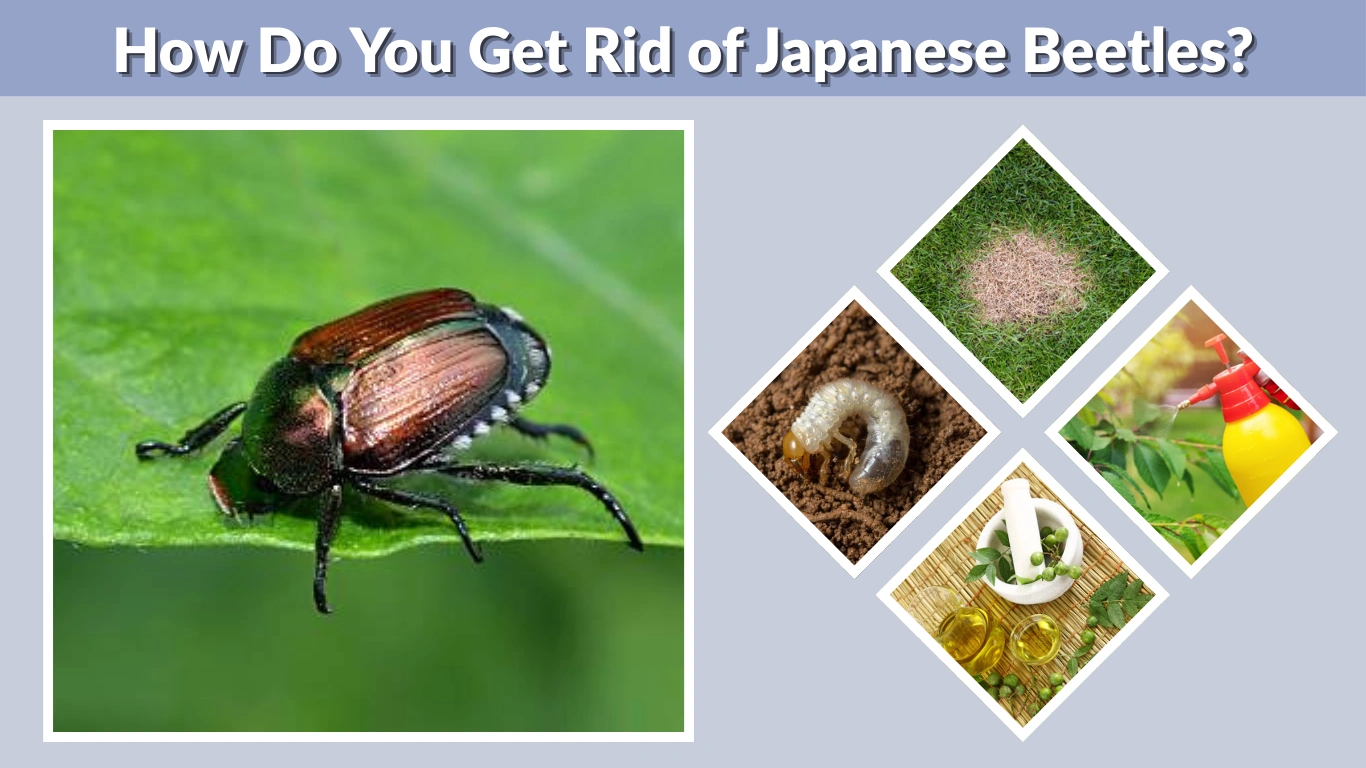
Japanese beetles are one of the most frustrating garden pests, capable of damaging flowers, shrubs, vegetables, and trees in just a few weeks. If you’ve noticed shiny green beetles chewing holes in leaves or skeletonizing plants, you may be wondering how do you get rid of Japanese beetles—and can you get rid of them permanently?
While Japanese beetles are difficult to eliminate entirely, their numbers can be significantly reduced with the right combination of natural control, plant protection, and long-term prevention. This guide explains how to get rid of Japanese beetles naturally, how to protect your plants, and what steps are required for lasting control.
Understanding Japanese Beetles
Before choosing a control method, it’s important to understand why Japanese beetles are so persistent.
What Are Japanese Beetles?
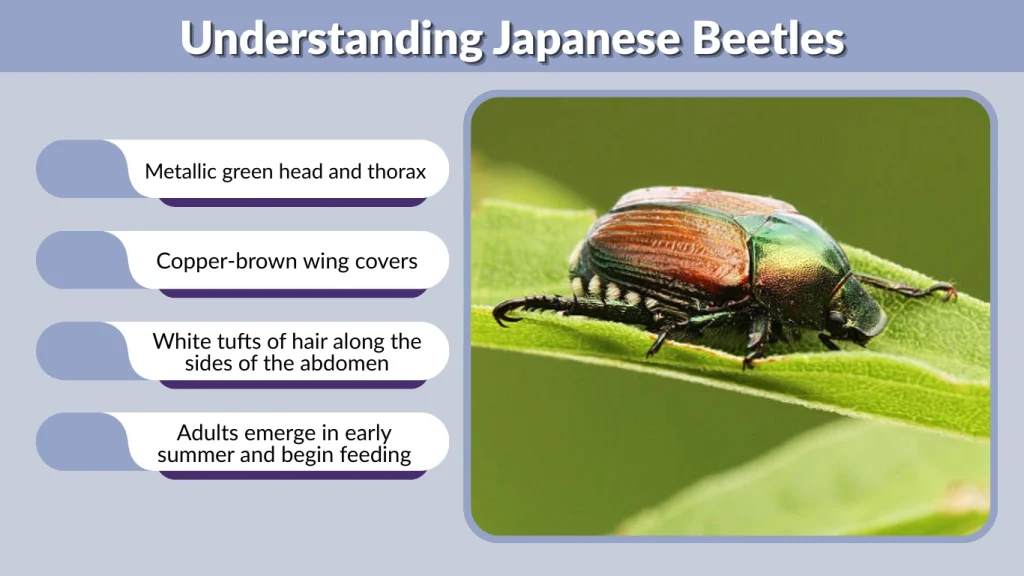
Japanese beetles (Popillia japonica) are invasive insects that feed on more than 300 types of plants. As adults, they attack leaves, flowers, and fruit. As larvae, known as grubs, they live underground and feed on grass roots.
Adult Japanese beetles are easy to recognize by their:
- Metallic green head and thorax
- Copper-brown wing covers
- White tufts of hair along the sides of the abdomen
Why Japanese Beetles Keep Coming Back
Japanese beetles return year after year because of their lifecycle:
- Eggs are laid in soil during summer
- Grubs overwinter underground and feed in spring
- Adults emerge in early summer and begin feeding
If grubs in the soil are not controlled, new beetles will continue to emerge each season—even if adult beetles are removed.
How Do You Get Rid of Japanese Beetles Naturally?
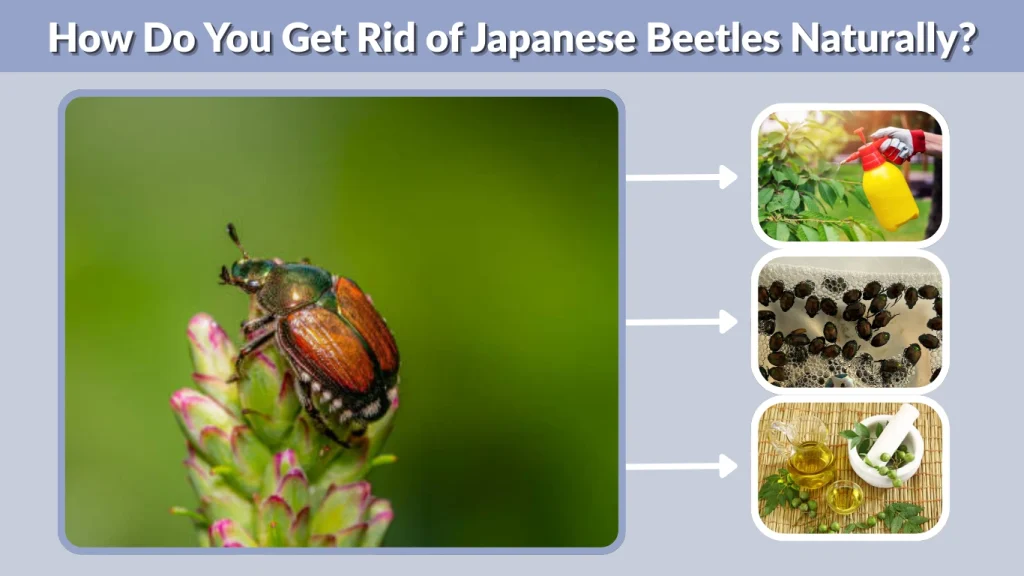
Natural methods are often the first choice for home gardeners and are most effective when infestations are small or caught early.
Hand Removal and Soapy Water Method
One of the simplest and most effective ways to get rid of Japanese beetles naturally is manual removal.
How to do it:
- Inspect plants early in the morning when beetles are sluggish
- Knock beetles into a bucket of water mixed with dish soap
The soap breaks down the beetles’ outer shell, killing them quickly. Regular hand removal prevents beetles from releasing pheromones that attract more beetles.
Natural Sprays and Repellents
Several natural sprays can help reduce feeding damage and discourage beetles from returning.
Common options include:
- Neem oil sprays
- Mild soap and water solutions
- Garlic-based or plant-derived repellents
Neem oil is especially effective because it disrupts feeding and reproduction rather than killing beetles instantly. For best results, spray leaves thoroughly, including the undersides, and reapply as needed.
How Do You Get Rid of Japanese Beetles on Plants?
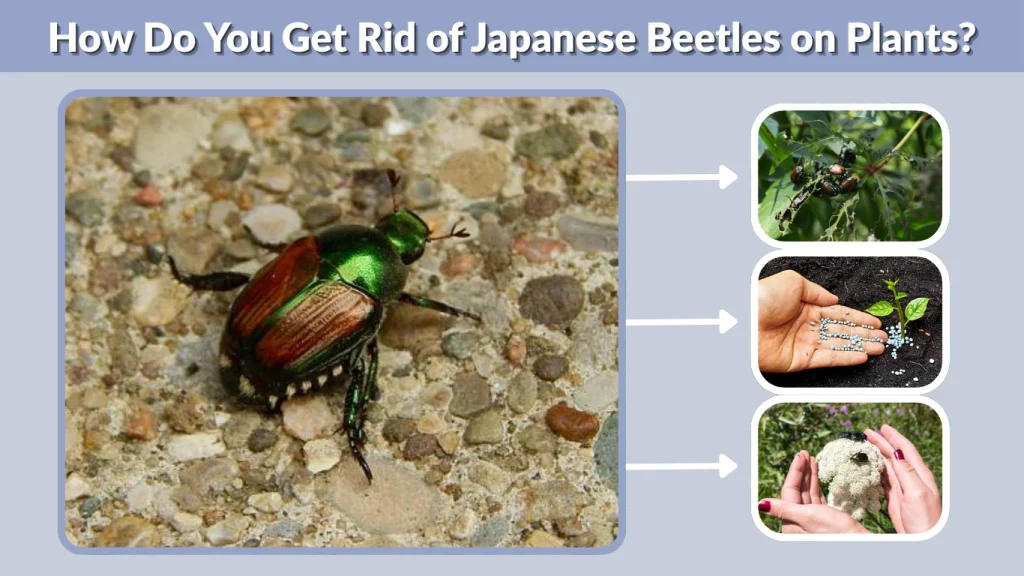
Targeted treatment is essential because Japanese beetles tend to gather on favorite plants.
General plant-safe tips:
- Remove beetles as soon as they appear
- Treat the most heavily damaged plants first
- Avoid over-fertilizing, which attracts beetles
How Do You Get Rid of Japanese Beetles on Roses?
Roses are one of the most attractive plants to Japanese beetles. Without quick action, damage can spread rapidly.
Effective methods include:
- Daily hand-picking and soapy water removal
- Neem oil applications in the early morning or evening
- Temporary plant covers or netting during peak beetle season
Consistent removal reduces beetle numbers and prevents additional beetles from being drawn to your roses.
How Do You Get Rid of Japanese Beetles Permanently?
Permanent control requires more than just removing adult beetles.
Japanese beetles can only be reduced long-term by addressing both:
- Adult beetles feeding on plants
- Grubs developing in lawns and soil
Killing adults limits immediate damage, but stopping the lifecycle is essential for lasting results.
How Do You Permanently Get Rid of Japanese Beetles?
To permanently reduce Japanese beetle populations, you must stop new beetles from emerging each year. This means targeting beetle grubs before they become adults.
Grubs live in the soil, feeding on grass roots and developing into adult beetles the following summer. Ignoring grub control allows infestations to return no matter how many adult beetles are removed.
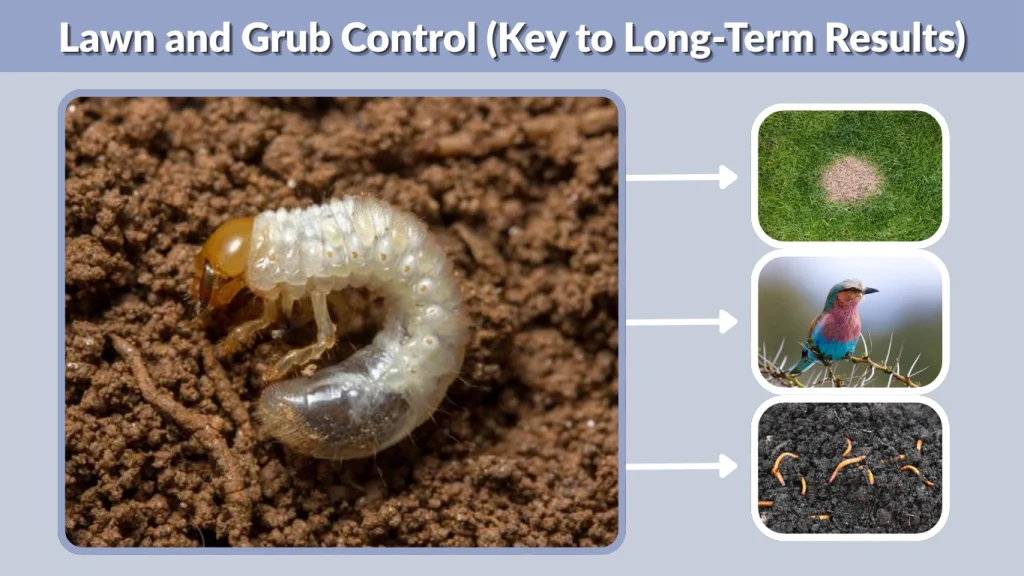
Lawn and Grub Control (Key to Long-Term Results)
Why Grubs Matter
Japanese beetle grubs are the foundation of future infestations. A single untreated lawn can produce hundreds of adult beetles the next season.
Signs of grub problems include:
- Brown or thinning patches of grass
- Turf that lifts easily from the soil
- Increased bird or raccoon activity
Controlling grubs is the most important step toward long-term beetle reduction.
Natural Grub Control Methods
Natural options work best when applied at the correct time of year, typically late summer or early fall.
Effective natural solutions include:
- Beneficial nematodes, which infect and kill grubs in the soil
- Milky spore, a bacteria that targets Japanese beetle grubs specifically
These methods are safe for pets, pollinators, and beneficial insects and provide lasting results when applied consistently.
Chemical Grub Treatments (When Necessary)
For severe infestations, chemical grub treatments may be required.
Key considerations:
- Apply treatments when grubs are young
- Water the lawn after application
- Follow label instructions carefully
Chemical treatments should be used selectively and only when natural methods are not sufficient.
Preventing Japanese Beetles From Returning
Once beetle populations are under control, prevention helps keep them from coming back.
Garden and Plant Management Tips
Certain plants attract Japanese beetles more than others, including roses, grapes, and linden trees. Reducing or relocating these plants can help limit beetle activity.
Helpful strategies include:
- Mixing in beetle-resistant plants
- Removing severely damaged plants
- Rotating crops in vegetable gardens
Lawn Care Practices That Reduce Beetles
Proper lawn care discourages beetles from laying eggs.
Best practices:
- Avoid overwatering lawns in summer
- Do not over-fertilize with nitrogen
- Maintain healthy but not overly lush grass
Drier soil during egg-laying season reduces grub survival.
Common Mistakes That Make Japanese Beetles Worse
Many well-meaning gardeners accidentally increase beetle problems.
Common mistakes include:
- Placing beetle traps too close to gardens
- Treating adult beetles but ignoring grubs
- Applying treatments at the wrong time of day
Understanding beetle behavior helps avoid these pitfalls.
FAQs
How Do You Get Rid of Japanese Beetles Fast?
Hand removal and soapy water provide the quickest results for small infestations.
Can You Get Rid of Japanese Beetles Naturally?
Yes. Natural methods such as neem oil, hand-picking, and biological grub control can be very effective.
Is It Possible to Get Rid of Japanese Beetles Permanently?
While complete elimination is unlikely, combining adult control with grub management can significantly reduce beetle populations long-term.
