
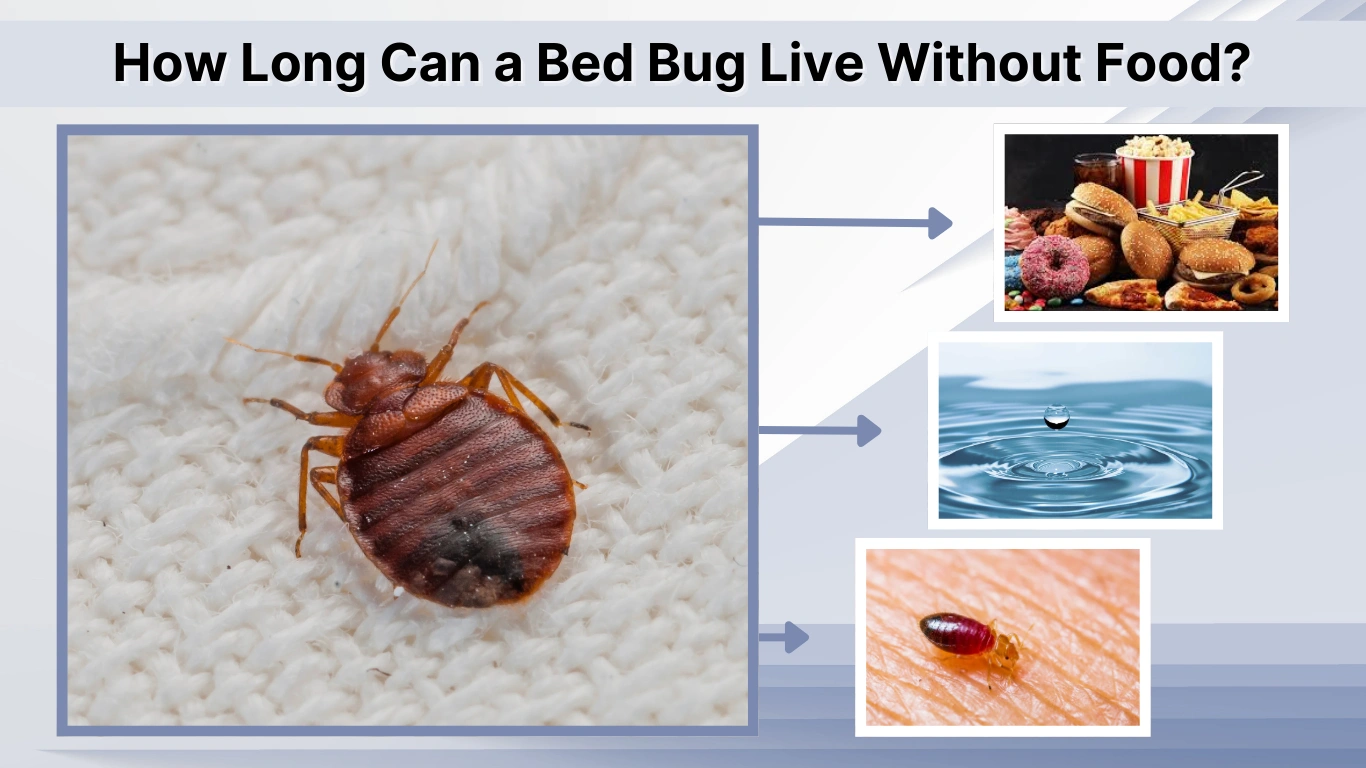
Bed bugs are resilient parasites that can survive surprisingly long without feeding. This adaptability makes them hard to control and one of the most persistent household pests. Understanding how long they can live without food—and under different conditions—helps in planning effective pest management strategies. Their survival varies depending on age, environment, and access to hosts.
Bed Bug Survival Without Food
Bed bugs rely exclusively on blood to survive and reproduce. Adult bed bugs are capable of enduring extended starvation periods. In optimal conditions, some can live for several months to a year without feeding. However, their activity slows down, and reproduction halts when deprived of a host.
Nymphs, on the other hand, are more vulnerable. Since they need blood meals to molt and reach the next stage, their survival without food is significantly shorter compared to adults.
Bed Bugs Without Food or Water
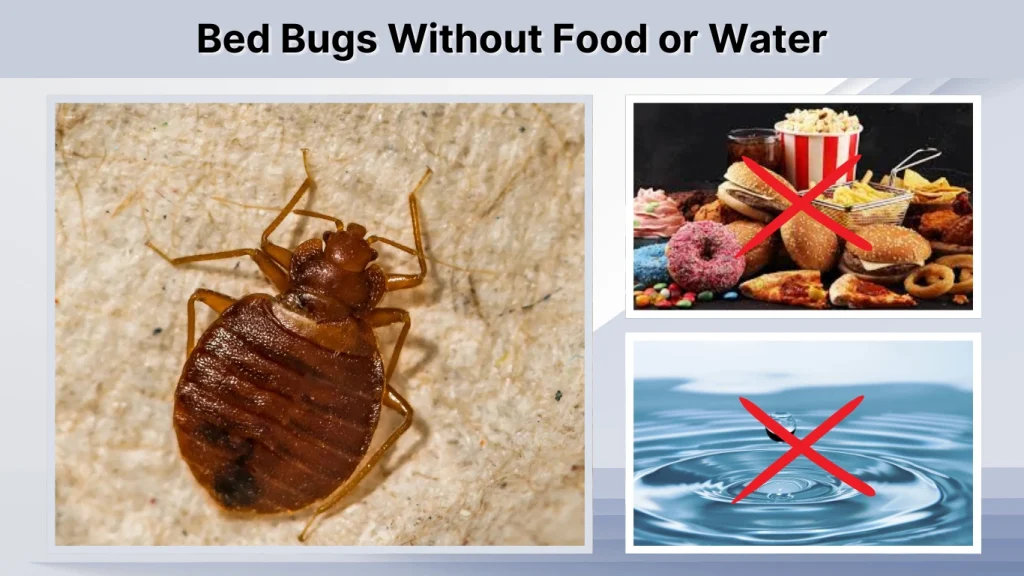
Unlike many insects, bed bugs do not need separate water sources. They obtain hydration exclusively from blood meals. This means that if food is unavailable, water is also absent, and survival depends entirely on their stored reserves.
Without feeding, they gradually dehydrate, which can eventually cause death. Environmental humidity plays a role too—bed bugs last longer in humid areas than in dry climates.
Feeding and Starvation Periods
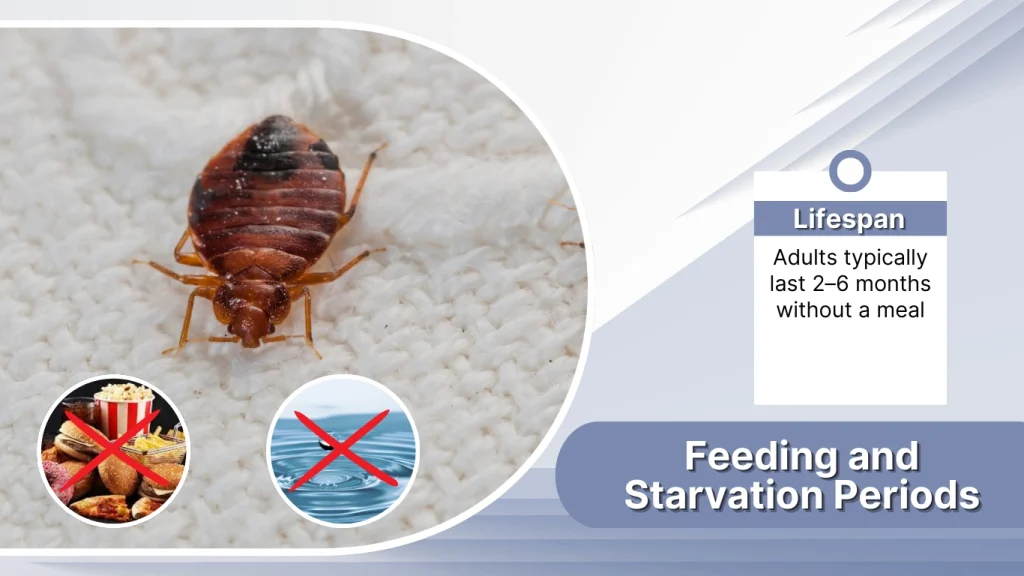
The exact time bed bugs can survive without food depends on multiple conditions. In moderate environments, adults typically last 2–6 months without a meal, though in cooler temperatures, survival may extend to nearly a year.
Sealed environments affect their survival rate as well. For example:
- Sealed plastic bags: Bed bugs may survive for months, but limited airflow and fluctuating temperatures reduce their chances.
- Hot weather: High heat accelerates dehydration, causing faster death.
This explains why bed bugs are often able to persist in hidden places like furniture, walls, or luggage long after human hosts have left.
Bed Bug Life Stages and Survival

Survival times differ across life stages:
- Nymphs: Require frequent blood meals to molt. Without food, they usually last only a few weeks.
- Baby bed bugs: Newly hatched nymphs cannot live long without feeding, often perishing within days to weeks.
- Adults: Can endure months of starvation, especially in cooler, protected environments.
- Eggs: Do not require food to survive, but their viability depends on temperature and humidity. Typically, they hatch within 6–10 days.
This lifecycle difference is why infestations can persist even after hosts move away—the eggs and surviving adults can restart the colony when conditions improve.
Environmental Factors
Bed bug survival without food is closely linked to environmental conditions. Temperature and humidity directly influence how long they can endure starvation.
- Hot weather: Increases metabolism and dehydration, shortening survival time.
- Cold weather: Slows down their activity and allows them to conserve energy, potentially extending life for up to a year.
- On clothes and surfaces: Bed bugs can cling to fabric or furniture and remain dormant until they sense a nearby host.
These factors explain why bed bugs are so difficult to eliminate—they can hide in tiny crevices and wait until favorable conditions return.
Natural Death Cycle of Bed Bugs
Bed bugs do not simply die quickly when deprived of food. Instead, they enter a low-energy state, conserving energy for survival. In the absence of a host, their bodies slow down basic processes, allowing them to extend life.
However, death eventually occurs due to dehydration and energy depletion. In nature, most unfed bed bugs will die within a few months, though in cool and stable conditions, some can stretch survival to almost a year.
Bed Bug Diet and Feeding Habits
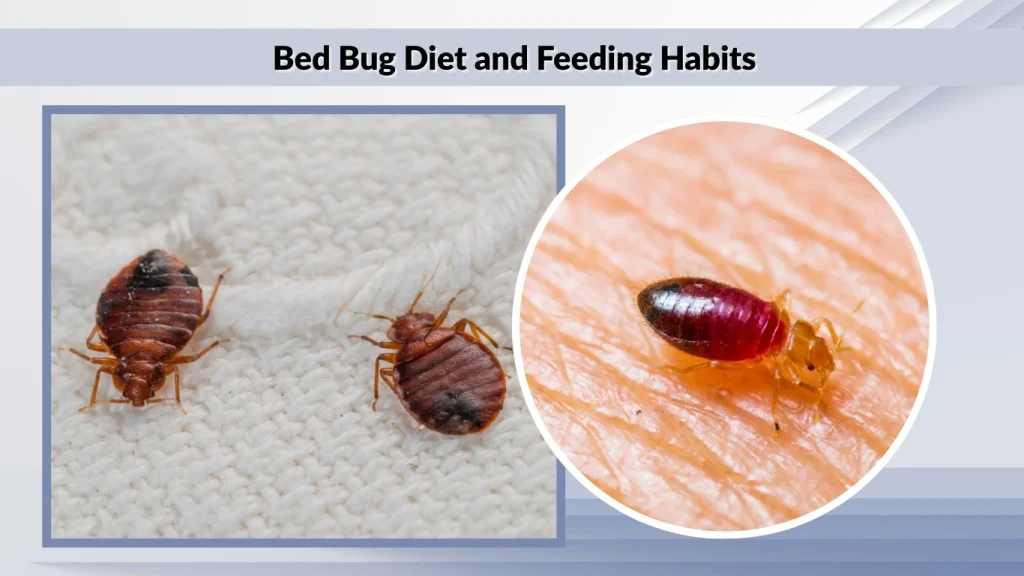
Unlike many insects that adapt to multiple food sources, bed bugs are obligate blood feeders. They cannot survive on crumbs, dead skin, or food debris. Their piercing mouthparts are designed exclusively for drawing blood, typically from humans but also from animals if necessary.
Bed bugs usually feed at night, emerging from hiding spots in beds, furniture, or cracks. A single blood meal can sustain them for days or weeks, depending on conditions. This reliance on blood makes pest eradication especially difficult because they can go dormant until a new opportunity arises.
Conclusion
Bed bugs are remarkably resilient, able to live months without feeding depending on their stage of life and environment. Adults can survive the longest, while nymphs and babies perish much more quickly. Factors like temperature, humidity, and hiding conditions also influence survival.
This endurance highlights why infestations are notoriously hard to eliminate. Even if a home seems empty, bed bugs may remain hidden, waiting for a chance to feed again. Consistent cleaning, monitoring, and professional pest control are essential to break their life cycle.
FAQs
How long does it take for a bed bug to starve?
Bed bugs can starve in as little as a few weeks to several months, depending on their age and environment. Adults last the longest, while younger nymphs die faster.
Can bed bugs live on clothes without feeding?
Yes, bed bugs can hide on clothes and survive for weeks or months without feeding. However, they cannot reproduce or thrive long-term without regular blood meals.
Do bed bug eggs need food to survive?
No, eggs do not need food. They remain viable until hatching, usually within 6–10 days under normal conditions. Once hatched, the nymph must feed quickly to survive.
Can bed bugs survive without feeding on blood?
No, bed bugs are obligate blood feeders. They cannot live on other food sources such as crumbs, dead skin, or household waste.
How do environmental conditions affect bed bug survival?
Temperature and humidity play a major role. Warm, dry conditions shorten survival, while cooler and more humid environments extend it. This explains why infestations can last longer in certain climates.
