
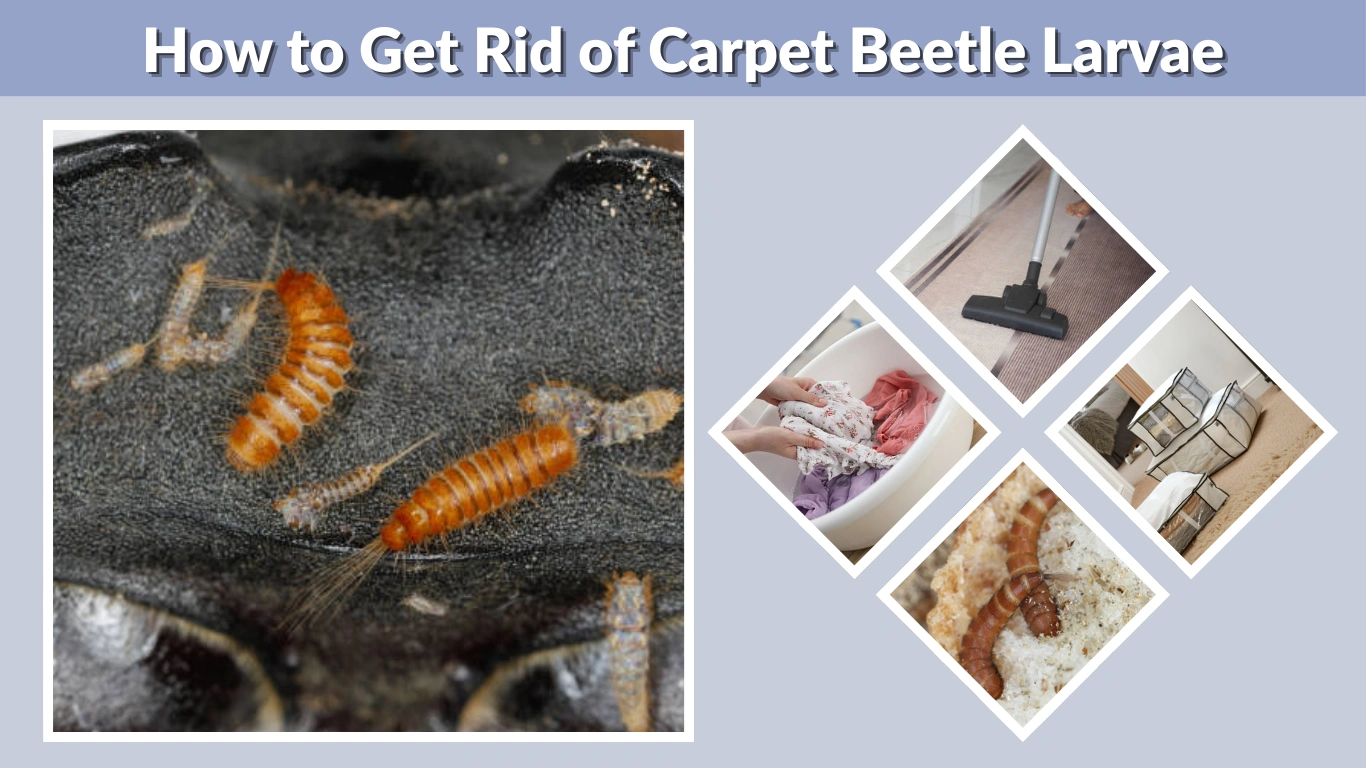
Carpet beetle larvae are among the most common hidden household pests, yet many people do not recognize them until clothing, carpets, or bedding become damaged. These tiny, fuzzy, worm-like insects often appear near baseboards, closets, and beds, causing confusion and concern. Understanding what carpet beetle larvae are, what they look like, and where they come from is the first step toward eliminating them. This guide explains their identification, behavior, and early control methods to help stop infestations before serious damage occurs.
What Are Carpet Beetle Larvae?
Carpet beetle larvae are the immature stage of carpet beetles, insects belonging to the Dermestidae family. While adult carpet beetles mainly feed on pollen and nectar outdoors, their larvae are the destructive indoor stage responsible for most household infestations.
These larvae feed on natural fibers and animal-based materials commonly found inside homes. Because they prefer dark, quiet, and undisturbed spaces, they often remain hidden under carpets, inside closets, beneath furniture, and within stored fabrics. As a result, many infestations go unnoticed for months.
The larval stage lasts much longer than the adult stage. Depending on temperature and food availability, carpet beetle larvae can live for several months to more than a year before turning into adult beetles. During this time, they shed their skins multiple times and continuously feed, causing progressive damage to household items.
What Do Carpet Beetle Larvae Look Like?

Physical Appearance
Carpet beetle larvae are small, elongated, and often described as fuzzy or hairy worms. Most are brown, tan, or dark reddish in color, sometimes with lighter and darker bands across the body. They are usually between 3 and 7 millimeters long, depending on species and age.
Their bodies are clearly segmented and covered with fine hairs or bristles. They have six tiny legs near the head and a tapered rear end, which may have longer hair tufts. When moving, they crawl slowly and tend to curl slightly when disturbed.
Common Species Found Indoors
The most common indoor species include varied carpet beetle larvae, furniture carpet beetle larvae, and black carpet beetle larvae. Varied carpet beetle larvae are short, oval, and heavily bristled. Furniture carpet beetle larvae are longer and often show distinct banding. Black carpet beetle larvae are more carrot-shaped and slightly smoother than other types.
Although they differ slightly in appearance, all carpet beetle larvae feed on similar materials and cause similar types of damage.
Signs of Infestation
One of the first signs of carpet beetle larvae is unexplained holes in clothing, carpets, blankets, or upholstery. Shed larval skins, which look like tiny, fuzzy shells, may collect near feeding sites. Live larvae are often seen crawling slowly near baseboards, under beds, inside closets, or along carpet edges.
Identification Features

Short overview: Correct identification helps separate carpet beetle larvae from clothes moth larvae, maggots, and other household insects.
- Oval or carrot-shaped segmented body
- Brown, tan, or striped coloring
- Covered with fine hairs or bristles
- Six small legs near the head
- Slow crawling movement
- Found in dark, undisturbed places
- Presence of shed skins and fabric damage
Where Do Carpet Beetle Larvae Come From?

Carpet beetle larvae originate from eggs laid by adult carpet beetles. Adult beetles usually enter homes through open windows, doors, vents, and wall gaps, or they arrive on flowers, furniture, and second-hand fabrics.
Once indoors, adult females lay eggs in hidden locations where food is available. Common egg-laying sites include closets, carpet edges, under furniture, air ducts, stored clothing, pet bedding, and boxes of old fabrics. After hatching, larvae remain concealed and begin feeding immediately.
Infestations are often linked to stored organic materials, old wool or fur items, lint buildup, dead insects inside light fixtures, and even abandoned bird or rodent nests in walls or attics. Because larvae avoid light and disturbance, they may spread through several rooms before being noticed.
What Do Carpet Beetle Larvae Eat?
Natural Fiber and Animal-Based Foods
Carpet beetle larvae feed on materials rich in keratin and animal protein. Their preferred foods include wool, silk, fur, feathers, leather, pet hair, human hair, dead insects, and lint made of natural fibers.
Household Materials They Damage
Inside homes, larvae often damage carpets, rugs, blankets, bedding, clothing, upholstered furniture, pillows, taxidermy, stored fabrics, and even book bindings. They may also infest stored pet food or dry organic products.
Why Homes Attract Them
Homes provide steady warmth, darkness, and undisturbed food sources. Closets, storage areas, and under-furniture spaces allow larvae to feed and grow without disruption, making residential buildings ideal environments for long-term infestations.
How to Get Rid of Carpet Beetle Larvae (Step-by-Step)

Short overview: Effective control requires both killing the larvae and removing their food sources.
- Deep vacuum carpets, rugs, closets, baseboards, and furniture seams
- Dispose of vacuum bags immediately after cleaning
- Wash infested fabrics in hot water and use high-heat drying
- Steam clean carpets, upholstery, and mattress seams
- Steam clean carpets, upholstery, and mattress seams
- Discard items that are heavily damaged or beyond cleaning
- Begin treating cracks, crevices, and hidden areas where larvae hide
What Kills Carpet Beetle Larvae?
Heat and Cold Treatments
Heat is one of the most reliable ways to kill carpet beetle larvae and their eggs. Washing infested clothing, bedding, and fabrics in hot water, followed by high-heat drying, destroys all life stages. Steam cleaning is also highly effective because it penetrates deep into carpets, upholstery, and mattress seams where larvae hide.
For delicate items that cannot be washed, freezing is a practical alternative. Placing objects in sealed bags and freezing them for at least 72 hours kills larvae and eggs by disrupting their internal systems.
Chemical Control Options
Residual insecticides labeled for carpet beetles can be applied along baseboards, cracks, closet corners, and carpet edges. These products kill larvae on contact and leave a protective barrier that continues working for weeks.
Boric acid and diatomaceous earth are commonly used dust treatments. They work by dehydrating larvae and damaging their protective outer layers. These powders are especially useful inside wall voids, behind appliances, and under furniture where sprays may not reach.
Natural and Non-Chemical Methods
Non-chemical control focuses on sanitation and habitat removal. Removing lint, hair, and natural fiber debris reduces food sources. Vinegar or alcohol solutions can be used to wipe storage shelves and drawers, killing exposed larvae. While essential oils may repel adults, they are not reliable standalone solutions.
Are Carpet Beetle Larvae Dangerous?

Carpet beetle larvae are not dangerous in the sense of spreading disease or attacking humans. They do not bite, sting, or burrow into skin. However, their tiny hairs can cause allergic skin reactions in some people.
These reactions, often called carpet beetle dermatitis, may appear as red, itchy bumps similar to insect bites. The irritation comes from contact with the larval hairs or shed skins, not from bites.
The primary danger of carpet beetle larvae is economic rather than medical. Over time, they can severely damage carpets, clothing, bedding, and stored textiles if infestations are left untreated.
Do Carpet Beetle Larvae Bite or Get on Beds?
Do They Bite Humans?
Carpet beetle larvae do not bite. They lack the mouthparts needed to pierce skin. Skin irritation associated with them is caused by allergic reactions to their bristles, not feeding behavior.
Can They Live in Beds and Clothing?
Yes, larvae are often found in beds, blankets, pillows, and clothing because these areas provide warmth, darkness, and natural fibers. Mattresses, box springs, and closet shelves are especially common hiding places.
Can You See Carpet Beetle Larvae?
They are visible to the naked eye, but their small size and hidden lifestyle make them easy to overlook. People usually notice them only after seeing fabric damage or finding larvae crawling along walls or baseboards.
Lifecycle, Size, and Movement
The carpet beetle lifecycle includes egg, larva, pupa, and adult stages. Eggs hatch within one to three weeks. The larval stage is the longest and most destructive phase, lasting several months to more than a year.
Larvae grow gradually, molting many times as they increase in size. Full-grown larvae may reach up to 7 millimeters long. They move slowly but can travel surprisingly far in search of food, often following carpet edges and wall lines.
Because they avoid light, larvae spend most of their time hidden. Pupation occurs in concealed spaces, after which adult beetles emerge and may fly to windows or light sources, starting the cycle again.
How to Prevent Carpet Beetle Larvae

Short overview: Long-term prevention depends on cleanliness, storage control, and home maintenance.
- Vacuum carpets, rugs, closets, and baseboards regularly
- Store clothing in sealed plastic containers or garment bags
- Wash seasonal clothes before storage
- Clean pet bedding and furniture frequently
- Seal cracks around windows, doors, and vents
- Inspect flowers, second-hand furniture, and rugs before bringing them indoors
- Remove old bird or rodent nests near the home
- Monitor dark, undisturbed areas routinely
Carpet Beetle Larvae vs Similar Household Pests
Carpet Beetle Larvae vs Clothes Moth Larvae
Carpet beetle larvae are shorter, oval, and hairy, while clothes moth larvae are smooth, pale, and often found inside silken tubes. Carpet beetles feed on a wider range of materials and leave scattered damage instead of webbed fabric tunnels.
Carpet Beetle Larvae vs Maggots
Maggots are smooth, legless fly larvae found near decaying organic matter or trash. Carpet beetle larvae have legs, visible hairs, and are associated with dry household fabrics rather than rotting waste.
FAQs
What do carpet beetle larvae look like?
Carpet beetle larvae look like tiny, brown or striped, fuzzy worms with segmented bodies and fine hairs. They are usually 3–7 mm long and crawl slowly. Shed skins and small holes in fabrics are common signs of their presence.
Do carpet beetle larvae bite humans?
No, carpet beetle larvae do not bite. Skin irritation linked to them comes from allergic reactions to their hairs. These reactions may resemble bites but are not caused by feeding or puncturing the skin.
How do you kill carpet beetle larvae fast?
The fastest methods include hot washing and drying, steam cleaning, and freezing infested items. Residual insecticides and boric acid dusts are effective for cracks, carpets, and hidden areas.
Where do carpet beetle larvae come from?
They come from eggs laid by adult carpet beetles that enter homes through windows, doors, vents, or on plants, furniture, and fabrics. Eggs are laid near food sources, where larvae hatch and begin feeding.
Are carpet beetle larvae harmful?
They are not medically dangerous and do not spread disease. However, they can cause allergic skin reactions and serious damage to carpets, clothes, bedding, and stored fabrics if infestations are ignored.
