
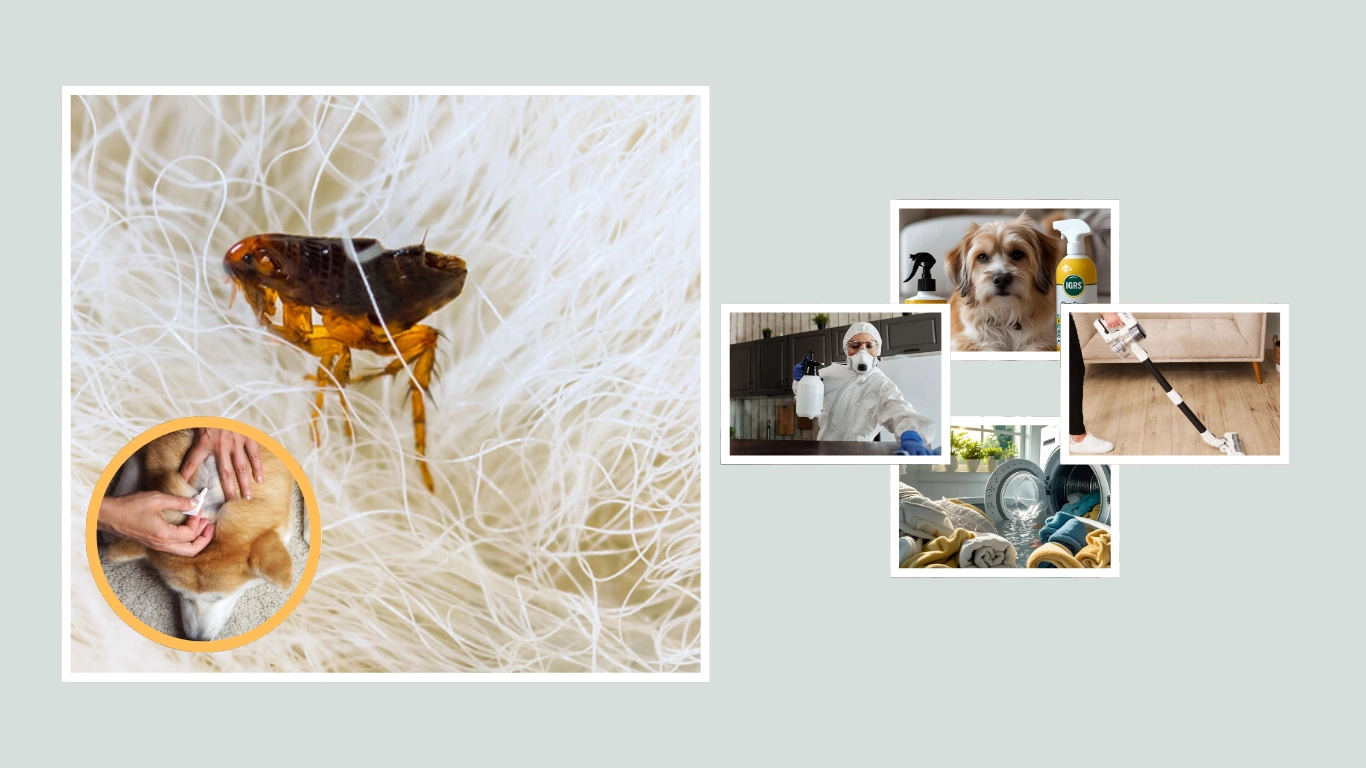
Fleas are more than just a nuisance—they bite, spread quickly, and can infest your pets, home, and even your yard if left untreated. Getting rid of them takes more than just a flea collar or spray. You need a strategic, layered approach that breaks the flea life cycle at every stage. In this guide, we’ll walk you through 7 powerful and proven methods to eliminate fleas completely and keep them from coming back. Whether you’re dealing with an active infestation or trying to prevent one, these tips actually work.
1. Treat Your Pets First
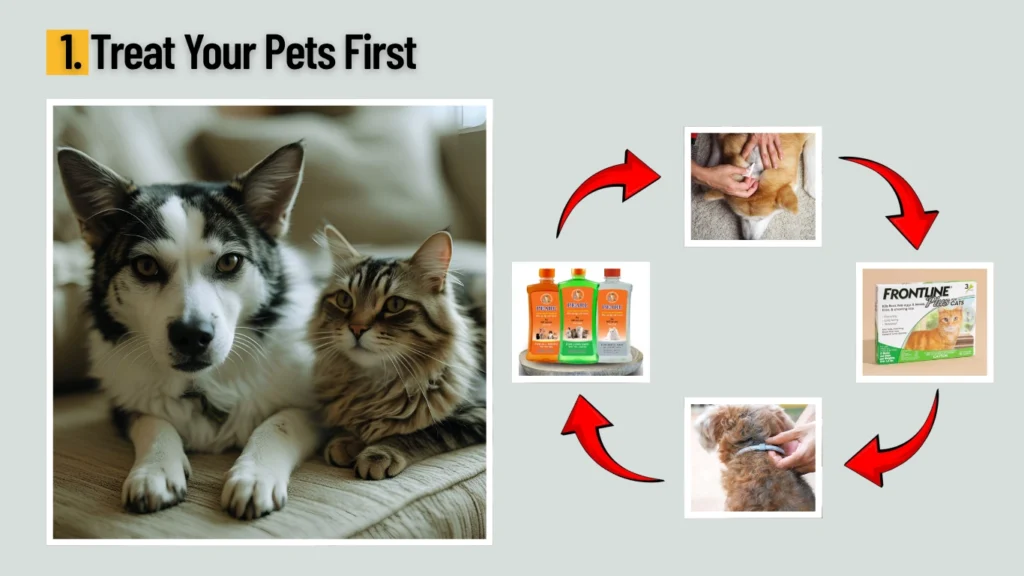
If your pets have fleas, your home does too—whether you see them or not. Fleas live, feed, and breed on animals, which means your pet is the starting point of any infestation. That’s why the first and most important step is treating your pets thoroughly and consistently. Without doing this, any efforts to clean your home will be short-lived, as fleas will quickly return from your pet’s body or bedding.
Why It Works
Fleas spend most of their life cycle on animals, feeding on their blood and laying eggs. A single flea can lay up to 50 eggs per day, many of which fall off into your carpet, furniture, or pet bedding. Treating your pet with the right product kills adult fleas and, in many cases, prevents future generations from hatching.
Best Flea Treatments for Dogs and Cats
There are several types of vet-approved flea treatments that actually work. The most reliable options include:
- Topical treatments (e.g., Frontline, Advantage): Applied directly to your pet’s skin, usually once a month.
- Oral medications (e.g., NexGard, Capstar, Bravecto): Fast-acting pills that kill fleas quickly—sometimes within hours.
- Flea collars (e.g., Seresto): Long-lasting and ideal for preventing reinfestation.
- Flea shampoos: Useful for killing fleas on contact but should be combined with ongoing protection.
Always choose products based on your pet’s weight, species, and age. Never use dog treatments on cats—they can be toxic.
How to Apply and Maintain Consistency
For best results:
- Bathe your pet with a flea-killing shampoo first if you notice a heavy infestation.
- After drying, apply the topical or give the oral flea treatment as directed.
- Comb your pet’s fur daily with a fine-toothed flea comb, especially around the neck, tail, and belly.
- Reapply treatments monthly or as recommended by your vet.
Also, wash your pet’s bedding in hot water weekly and keep them away from infested areas (like untreated yards or pet parks) during the elimination process.
By starting with your pets, you cut off the flea life cycle at its source—and give every other method in this guide a better chance of success.
2. Vacuum Thoroughly and Often
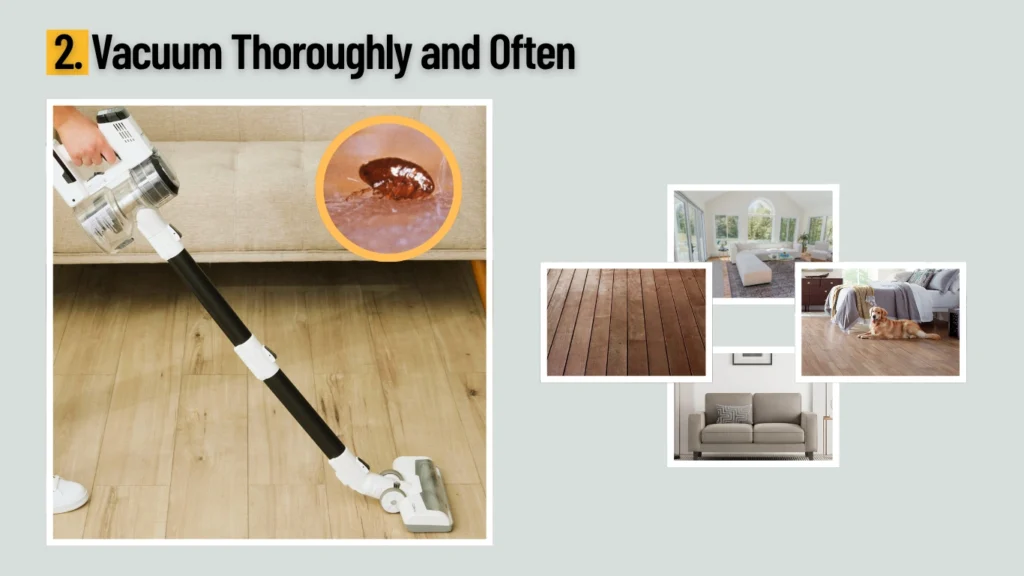
Once your pets are treated, your next target should be the fleas hiding in your home—especially in carpets, rugs, furniture, and floor cracks. Vacuuming is one of the most effective and underrated methods for removing adult fleas, eggs, larvae, and even flea dirt (the feces larvae feed on). It doesn’t just clean—it disrupts the flea life cycle.
Why It Works
Flea eggs and larvae don’t stay on pets for long. They fall off and collect in dark, soft areas like carpet fibers, upholstery, and under furniture. Vacuuming agitates the fibers and sucks up eggs, larvae, pupae, and adult fleas, reducing their population significantly. It also removes food sources like skin flakes and flea dirt, making your home less hospitable for fleas to develop.
High-Risk Areas to Target
Fleas prefer warm, humid, and low-traffic areas where they can develop undisturbed. When vacuuming, pay extra attention to:
- Carpets and rugs, especially along baseboards and under furniture
- Pet bedding and nearby floors
- Couches, chairs, and soft furniture
- Cracks between floorboards or tiles
- Car seats and mats, if your pet travels with you
Vacuuming Tips for Best Results
- Use a vacuum with strong suction and a HEPA filter to trap small flea debris.
- Go slow and use attachments to reach crevices and corners.
- Vacuum daily during active infestations, then 2–3 times a week as the problem improves.
- Immediately dispose of vacuum bags or empty canisters into a sealed plastic bag and take it outside. Fleas can crawl back out if left inside.
For best results, combine this method with flea sprays or insect growth regulators (IGRs), which we’ll cover next. Vacuuming gives you a clean base and helps any chemical or natural treatment penetrate more effectively.
3. Wash Bedding, Rugs, and Soft Fabrics in Hot Water
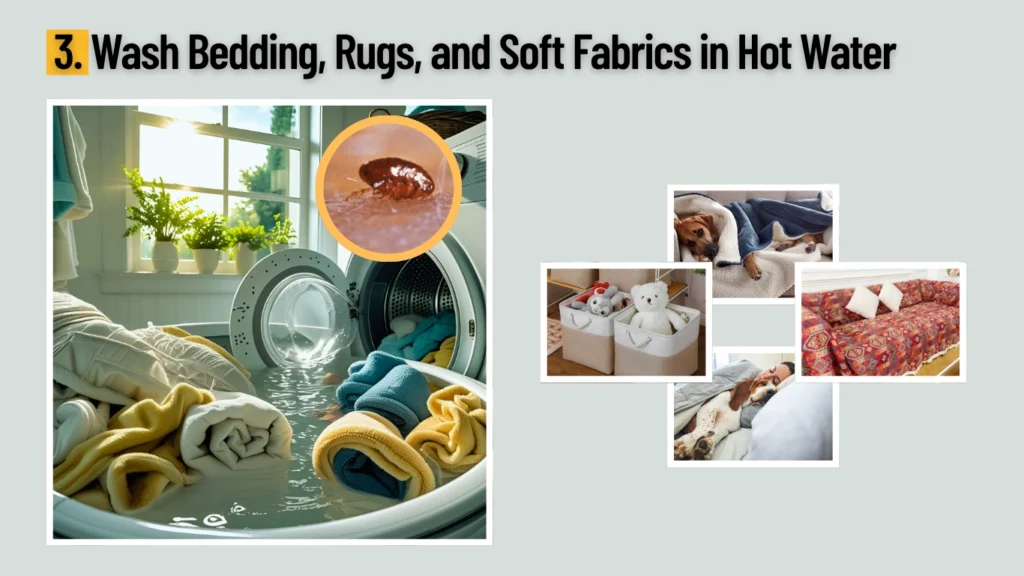
Fleas and their eggs love soft, cozy materials—especially those that stay close to your pets. That’s why washing your pet’s bedding, blankets, rugs, and even your own linens is a crucial part of breaking the infestation cycle. Heat kills fleas at every life stage, including the more resilient eggs and larvae.
Why It Works
Flea eggs and larvae can’t survive high temperatures. Washing infested fabrics in hot water (at least 60°C or 140°F) followed by high-heat drying is one of the most effective ways to kill them. Since many eggs fall off your pet into their bedding, laundry becomes a breeding ground if ignored.
What to Wash and How Often
Focus on items that your pet uses daily and any fabric they’ve had contact with:
- Pet bedding and blankets
- Couch covers, rugs, and towels
- Pillow covers and bedsheets (if your pet sleeps with you)
- Soft toys and cloth storage bins near the floor
Wash these items at least once a week during an infestation. If possible, dry them on the highest heat setting for at least 30 minutes.
Detergents and Temperature Guidelines
You don’t need special detergents—regular laundry soap works well, as long as you use hot water. Adding a cup of white vinegar or borax to the wash cycle may increase effectiveness. Always read fabric care labels to avoid shrinking or damage.
4. Use Flea Sprays and IGRs (Insect Growth Regulators)
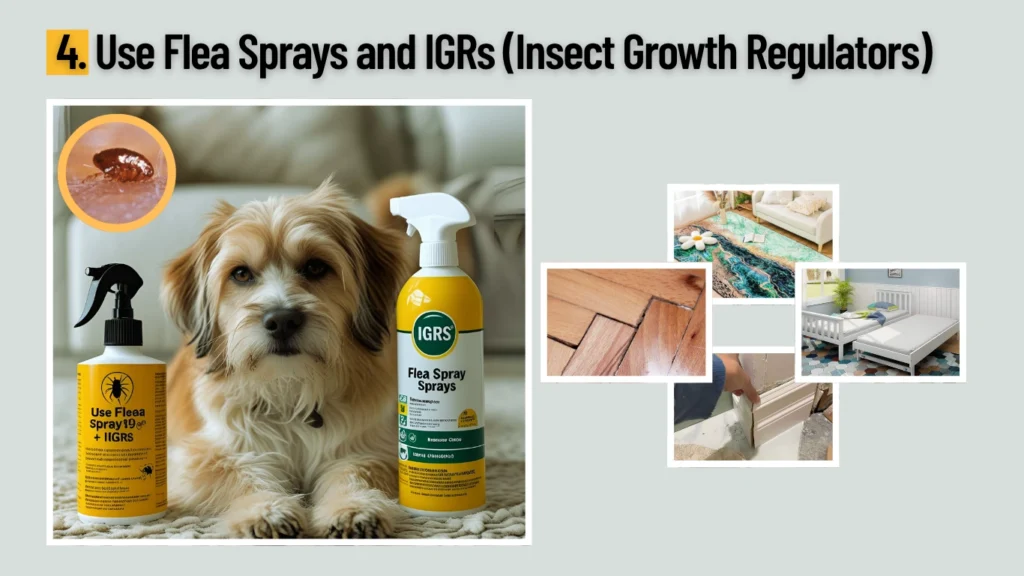
Even after vacuuming and washing, fleas can hide deep in carpets, floorboards, and upholstery. This is where targeted chemical treatments come into play—especially flea sprays and IGRs. These products don’t just kill adult fleas, they prevent new ones from developing.
Why It Works
Adult fleas make up only about 5% of the flea population. The rest are eggs, larvae, and pupae—hidden in your home. IGRs disrupt the flea life cycle by preventing larvae from turning into adults, which stops future generations from forming. When combined with adulticides (flea-killing sprays), they’re highly effective.
How IGRs Break the Life Cycle
IGRs like methoprene or pyriproxyfen mimic flea hormones. They interfere with flea development and sterilize adult fleas, rendering them unable to lay viable eggs. This reduces flea populations long-term, especially when used alongside other cleaning methods.
Best Indoor Sprays and Where to Use Them
Choose a product labeled for indoor use that includes both an IGR and an adulticide. Apply to:
- Carpets and rugs
- Under beds and furniture
- Baseboards, corners, and entry points
- Cracks in hardwood floors and between tiles
Always follow label directions, ventilate the area well, and keep pets and children away until surfaces are dry. You may need to reapply after two weeks to catch any newly hatched fleas.
5. Call a Professional Pest Control Service (If Needed)
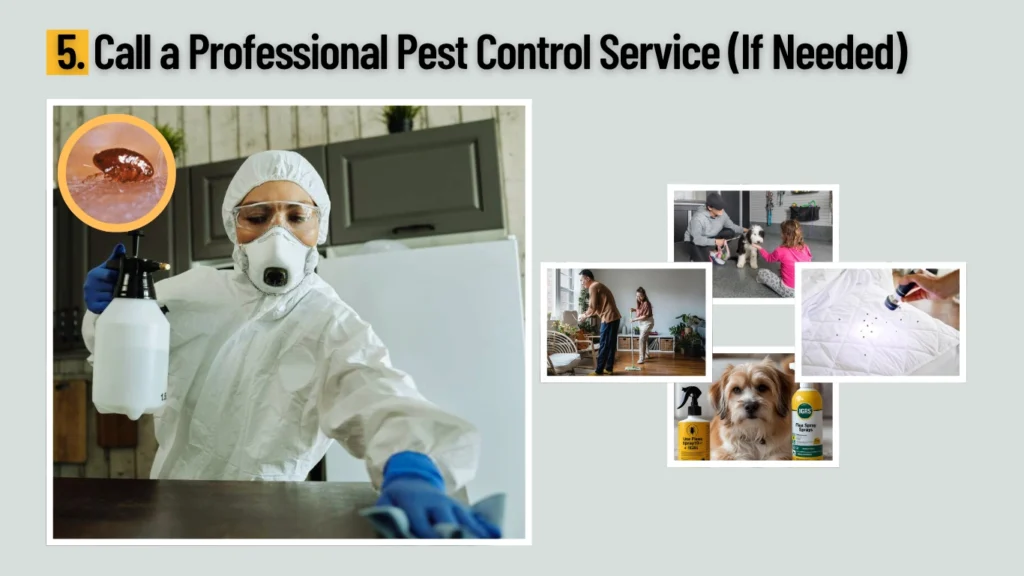
If you’ve tried everything—pet treatments, vacuuming, sprays, and yard control—but fleas keep coming back, it’s time to consider professional pest control. In severe or large-scale infestations, DIY methods may not be enough to fully eliminate fleas from every hidden corner of your home. A licensed exterminator has the tools and expertise to handle stubborn infestations effectively and safely.
Why It Works When DIY Fails
Fleas are incredibly resilient, especially in the pupal stage, which is resistant to most treatments. Professionals use commercial-grade insecticides and integrated pest management strategies that target all life stages, including eggs, larvae, and pupae. They also apply treatments with high precision in areas most people overlook, such as wall voids, crawl spaces, attic insulation, or deep within carpet padding.
Professional services may also use heat treatments, fumigation, or follow-up visits that ensure all fleas are gone—not just the visible ones.
What to Expect from a Flea Treatment Service
When hiring a pest control company, the process typically includes:
- Initial inspection of your home, yard, and pet areas
- Customized treatment plan based on the severity of the infestation
- Use of residual sprays, IGRs, and pet-safe insecticides
- Instructions for preparing your home beforehand and post-treatment cleaning
- One or more follow-up visits to ensure complete flea removal
Many services also offer guarantees or warranties if fleas return within a specific time frame.
How to Prepare Your Home for Professional Help
Before the appointment:
- Vacuum all carpets and dispose of the vacuum bag outside
- Wash all pet bedding and soft fabrics in hot water
- Cover or store food, dishes, and personal items
- Arrange for pets and children to be out of the house during and after treatment (for safety)
Working with professionals doesn’t mean giving up on DIY methods—it means reinforcing them with expert support when the infestation goes beyond your control. It’s often the most efficient way to ensure a flea-free home for good.
Final Tips to Keep Fleas Away for Good
Keeping fleas out for good requires a consistent routine. Follow this streamlined step-by-step approach to stay protected long-term.
Step 1: Continue Monthly Pet Treatments
Use vet-approved flea prevention every month for all pets. Choose spot-on treatments, oral meds, or collars and stick to a regular schedule.
Step 2: Vacuum Your Home Weekly
Vacuum carpets, rugs, furniture, and cracks regularly. Dispose of vacuum contents immediately to prevent fleas from escaping.
Step 3: Wash Pet Bedding Regularly
Wash all pet bedding, blankets, and soft items in hot water and dry on high heat weekly to eliminate eggs and larvae.
Step 4: Maintain Yard and Outdoor Areas
Mow the lawn, clear leaf piles, and use outdoor flea treatments where your pets roam. This stops fleas from re-entering your home.
Step 5: Declutter and Seal Entry Points
Fleas love dark, undisturbed spaces. Reduce clutter near floors and seal cracks where fleas or rodents might get in.
FAQs
1. How long does it take to fully eliminate fleas?
With a consistent approach, light infestations can be cleared within 2 to 3 weeks, while heavier infestations may take up to 2 months, especially if flea eggs are spread throughout the home.
2. Can fleas survive winter indoors?
Yes. While cold kills fleas outside, indoor heating allows them to thrive year-round, especially in carpets and pet bedding. This makes winter infestations more common than many expect.
3. Are natural methods as effective as chemical treatments?
Natural remedies like diatomaceous earth and vinegar can help, but they work best when combined with other methods. For severe infestations, chemical treatments are usually more reliable.
4. Do fleas die without a host?
Adult fleas can live up to a week or two without feeding, but pupae can stay dormant for months. That’s why infestations often return suddenly, even when pets are away.
5. Can I use vinegar or baking soda for flea control?
Yes, but only as part of a broader plan. Vinegar may repel fleas temporarily, and baking soda can help clean carpets, but neither kills fleas completely on its own. Always combine with proper pet and home treatments.
