
Household mites are tiny pests that thrive in warm, humid places like beds, carpets, and furniture. Though invisible to the naked eye, they can cause big problems—especially for people with allergies or asthma. Constant sneezing, itching, or watery eyes may all be signs they’re lurking nearby. The good news? You can fight back. In this guide, we’ll share 7 proven methods to eliminate household mites and keep them from coming back.
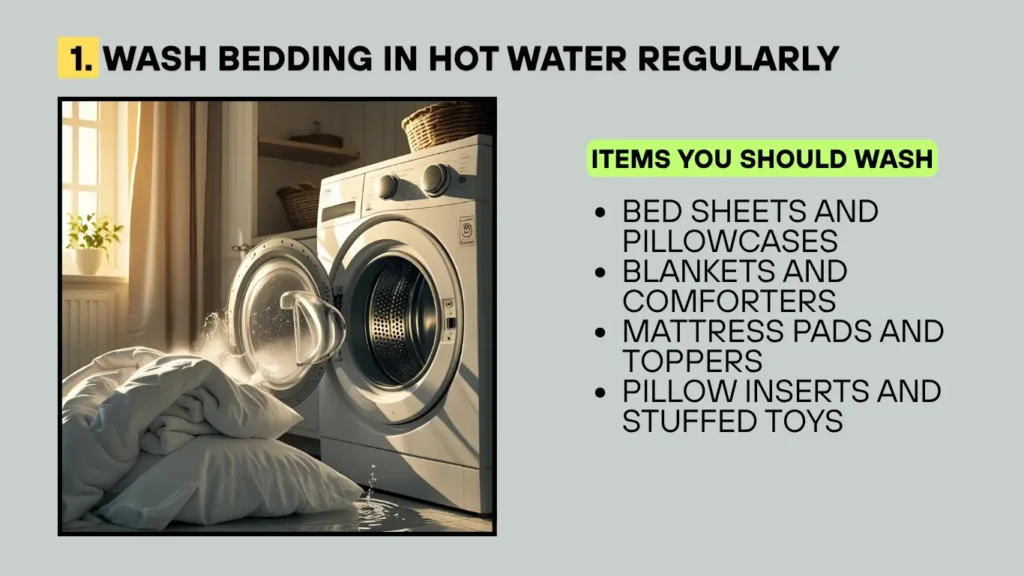
1. Wash Bedding in Hot Water Regularly
Why Hot Water Works
Dust mites can’t survive high temperatures. Washing your bedding in hot water (at least 130°F or 54°C) helps kill mites, their eggs, and allergens they leave behind.
Ideal Washing Temperature
For effective mite elimination, always aim for 130°F (54°C) or higher. Cooler water may clean visible dirt but won’t destroy mites or allergens.
How Often to Wash
Wash sheets, pillowcases, and blankets at least once a week. For added protection, wash comforters and mattress pads every two weeks.
Items You Should Wash
Focus on all fabric items where mites thrive:
- Bed sheets and pillowcases
- Blankets and comforters
- Mattress pads and toppers
- Pillow inserts and stuffed toys
2. Use Allergen-Proof Mattress and Pillow Covers

What Are Dust Mite Covers?
These are tightly woven, zippered covers that encase your mattress and pillows. They act as a barrier, trapping mites inside and preventing new ones from getting in.
Benefits of Encasing Bedding
Encasements help reduce exposure to mite allergens while you sleep—when you’re most vulnerable. They also make cleaning easier and prolong mattress life.
How to Choose the Right Covers
Look for:
- Certified allergen-proof or dust mite-proof labels
- Breathable, waterproof materials
- Zippered enclosures with fine stitching
Maintenance Tips
Wipe down covers weekly and wash them monthly in hot water. Avoid bleach or harsh detergents that may damage the protective fabric.
3. Maintain Low Indoor Humidity

Why Mites Thrive in Humidity
Household mites absorb moisture from the air. When humidity levels rise above 50%, it creates an ideal environment for them to breed and survive.
Ideal Humidity Range
Keep your indoor humidity between 30% and 50%. This range discourages mite growth without making the air uncomfortably dry.
Use of Dehumidifiers
Place dehumidifiers in bedrooms, basements, or other damp areas. Choose models with automatic humidity controls for easier maintenance.
Other Moisture-Reducing Tips
- Use exhaust fans in bathrooms and kitchens
- Repair any water leaks
- Avoid drying clothes indoors
4. Vacuum With a HEPA Filter
Importance of HEPA Filtration
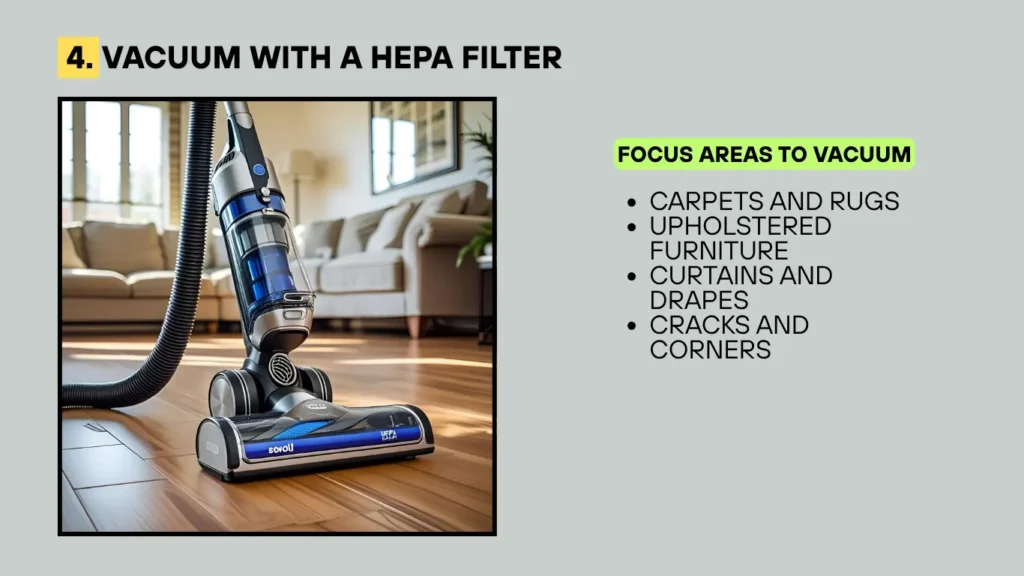
Regular vacuums may blow mite allergens back into the air. HEPA-filter vacuums trap even the tiniest particles, including mites and their droppings.
Focus Areas to Vacuum
- Carpets and rugs
- Upholstered furniture
- Curtains and drapes
- Cracks and corners
Frequency Recommendations
Vacuum at least twice a week in high-traffic areas. For allergy sufferers, daily vacuuming may be necessary.
Can Steam Cleaning Help?
Yes. Steam cleaners use high heat to kill mites deep within carpets and furniture—especially effective when combined with HEPA vacuuming.
5. Freeze or Heat-Treat Infested Items

Items You Can Treat
Some items—like stuffed toys, small pillows, or decorative cushions—can’t be washed easily. For these, freezing or heating can kill mites.
Recommended Freezing Duration
Place items in a sealed plastic bag and freeze them for at least 24–48 hours. This temperature shock kills mites and their eggs.
Heat Exposure Guidelines
Alternatively, place items in a dryer on high heat (130°F or 54°C) for 15–20 minutes. Make sure the item can tolerate heat without damage.
Safety Precautions
Avoid overheating delicate fabrics. Always use protective bags and check care labels to prevent shrinkage or melting.
6. Use Dust Mite Sprays or Natural Repellents
Chemical vs. Natural Sprays
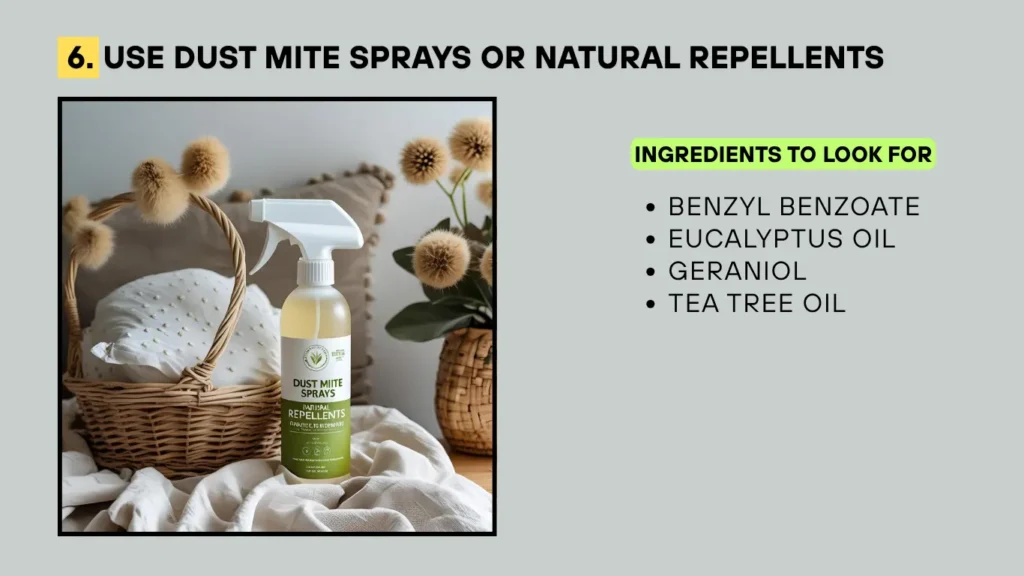
Dust mite sprays come in both synthetic and natural formulas. Chemical options often contain benzyl benzoate, while natural versions use essential oils like eucalyptus or tea tree.
Ingredients to Look For
Effective sprays may contain:
- Benzyl benzoate
- Eucalyptus oil
- Geraniol
- Tea tree oil
How to Apply Safely
Spray mattresses, carpets, and upholstery lightly. Let the surface dry completely before use. Avoid inhaling spray or letting it touch skin directly.
Do They Really Work?
They don’t eliminate mites completely but can reduce allergen buildup and act as a helpful part of a broader mite-control plan.
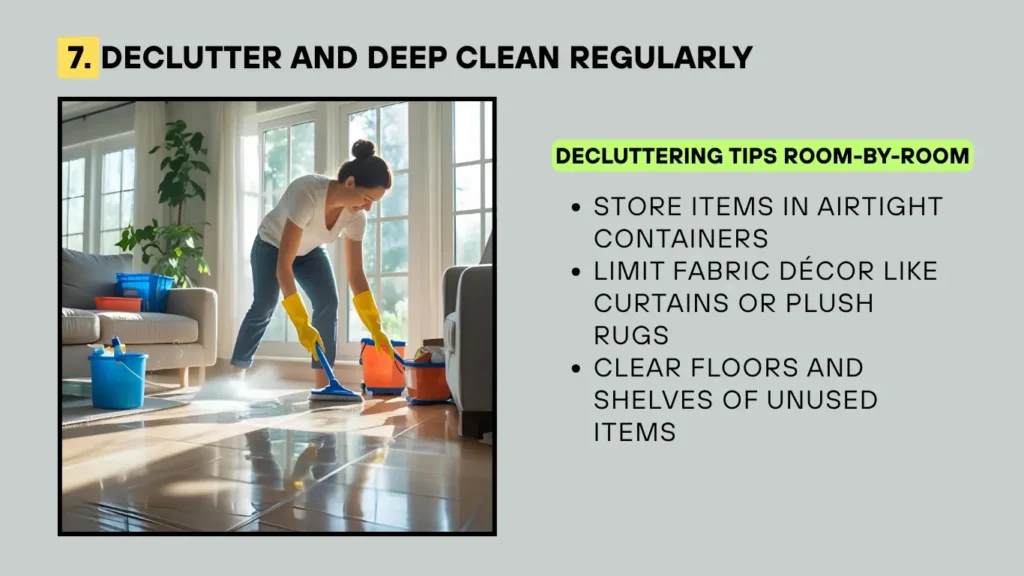
7. Declutter and Deep Clean Regularly
Why Clutter Attracts Mites
Clutter traps dust and gives mites more surfaces to live on. Books, stuffed animals, and unused fabrics are common mite hideouts.
Decluttering Tips Room-by-Room
- Store items in airtight containers
- Limit fabric décor like curtains or plush rugs
- Clear floors and shelves of unused items
How Often to Deep Clean
Aim to deep clean at least once a month. Focus on under beds, behind furniture, and corners where dust accumulates.
Include Upholstery and Curtains
Use a steam cleaner or HEPA vacuum on sofas, cushions, and curtains. If washable, clean them in hot water as well.
Bonus Tips for Long-Term Prevention
Choosing Mite-Resistant Materials
Opt for synthetic bedding like polyester or memory foam instead of down or wool, which tend to trap dust and moisture. Smooth surfaces are also easier to keep clean.
Avoiding Wall-to-Wall Carpeting
Wall-to-wall carpet holds dust and mites deep in the fibers. If possible, use hardwood, tile, or vinyl flooring with small, washable rugs.
Keeping Pets Clean
Pets can carry mites and allergens in their fur. Bathe them regularly and keep them off beds and upholstered furniture if you have dust mite sensitivities.
FAQs
Can you completely get rid of mites from your home?
Not entirely, but you can drastically reduce their population and allergen levels by following consistent cleaning and prevention routines.
Are household mites the same as bed bugs?
No. Dust mites feed on dead skin and are invisible to the naked eye. Bed bugs are visible, bite humans, and feed on blood.
How do I know if mites are causing my allergies?
Common symptoms include sneezing, coughing, runny nose, itchy eyes, and asthma flare-ups—especially when lying in bed or cleaning.
Is vinegar effective against mites?
Vinegar may help clean surfaces but isn’t proven to kill dust mites. It’s better used alongside other targeted methods like hot washing or sprays.
Can mites live in human hair?
No. Household dust mites don’t live on humans or in hair. They prefer warm, dusty environments like bedding and carpets.
