
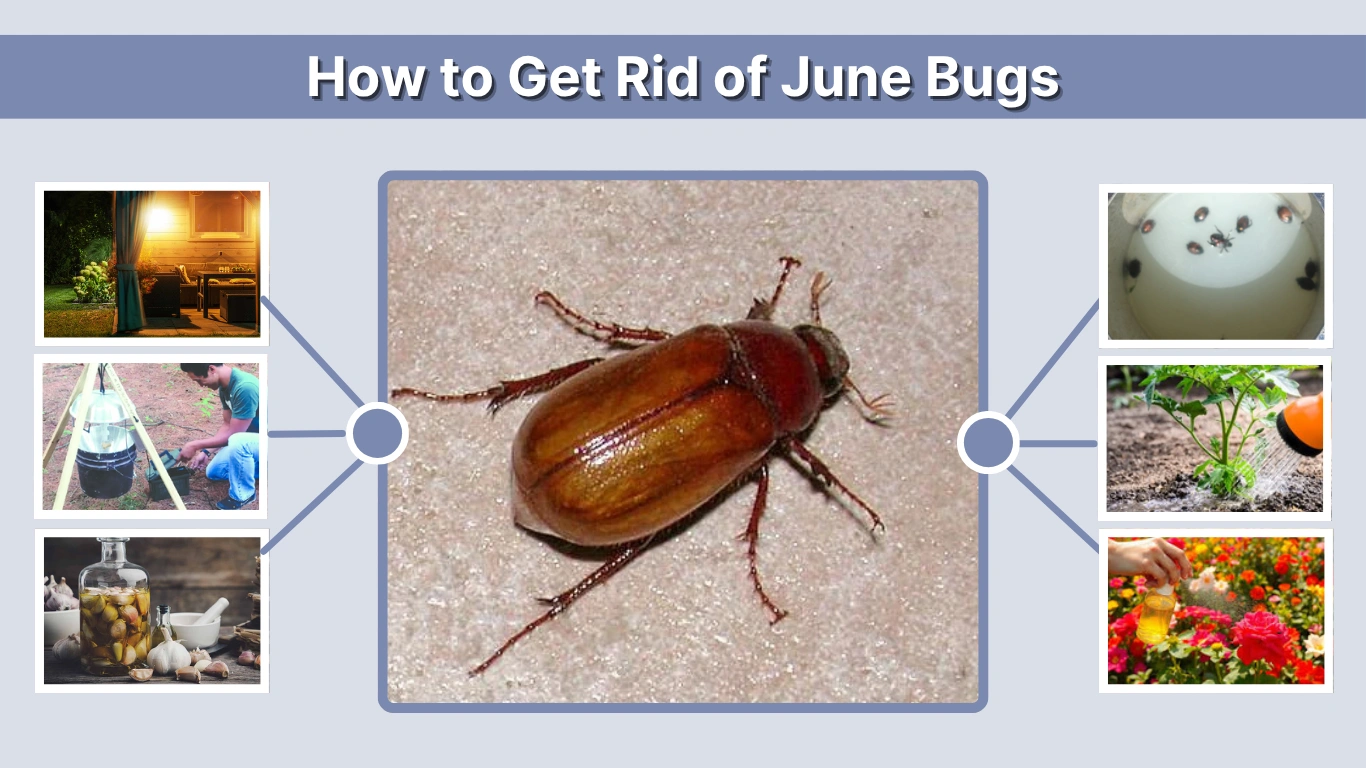
June bugs are among the most frustrating seasonal pests for homeowners and gardeners. These beetles, often green or brown, appear in large numbers during summer evenings and are especially active at night. They buzz around lights, gather on porches, and in their larval stage (grubs), they damage lawns by feeding on grass. Many people struggle with infestations in their houses, gardens, or yards, particularly in warmer states like Texas. The good news is that you can get rid of June bugs using both natural and DIY methods without harsh chemicals.
Understanding June Bugs
June bugs, also known as June beetles, are members of the scarab beetle family. They are typically one inch long and come in shades of brown or metallic green. These beetles are most active at night, which is why they are often seen flying clumsily around porch lights or garden lamps.
Their life cycle is a major reason for infestations. Adult beetles live only a few weeks, but their larvae, called grubs, spend months in the soil feeding on grasses. This hidden damage often leads to brown patches in lawns, making grub control just as important as managing adult beetles.
How to Get Rid of June Bugs at Night

June bugs are strongly attracted to light, which explains why they gather on porches, windows, and outdoor spaces after sunset. Here are effective steps to reduce their nighttime presence:
- Turn off unnecessary lights: Limit porch or garden lighting, or switch to bug-repelling yellow bulbs.
- Set up light traps: Place a light over a bucket of soapy water; beetles are drawn to the light and fall into the water.
- Use bug bags: These traps use light and scent to lure beetles away from living spaces.
- Try natural deterrents: Essential oil sprays like lavender or eucalyptus near entry points can help keep them away.
By managing light sources, you can significantly reduce the number of June bugs buzzing around your home at night.
Natural and Organic Ways to Control June Bugs

If you prefer to avoid chemical insecticides, there are several safe and natural ways to control June bug populations.
- Neem oil spray: Effective against both adult beetles and larvae on plants. Spray directly on leaves and soil.
- Beneficial nematodes: These microscopic organisms attack and kill grubs in the soil, providing long-term control.
- Diatomaceous earth: Spread this natural powder around lawns and garden beds. It dehydrates and kills beetles when they crawl across it.
- Soapy water traps: A simple homemade solution where beetles drown in soapy water after being attracted to light.
- Companion planting: Some plants, like garlic or marigolds, repel beetles naturally and protect your garden.
These organic options not only get rid of June bugs but also help maintain a healthy ecosystem in your yard or garden.
How to Get Rid of June Bug Larvae (Grubs)

While adult June bugs are a nuisance, their larvae cause the most serious damage. Grubs feed on grasses and create brown, dying patches in lawns. Eliminating them early prevents bigger infestations.
- Beneficial nematodes: Release them into moist soil to attack grubs naturally.
- Milky spore disease: A natural bacterium that infects and kills grubs, spreading long-term protection across your lawn.
- Aerating the lawn: Helps reduce compacted soil, making it less attractive for egg-laying beetles.
- Watering correctly: Overwatering creates ideal grub conditions. Water deeply but less often to discourage them.
By targeting larvae, you cut the June bug cycle at its root, preventing future infestations in lawns and gardens.
Indoor and Porch Control

June bugs often fly inside through open windows and doors at night. While they are harmless indoors, they can be annoying and difficult to catch. Here’s how to stop them from invading your home:
- Seal entry points: Use fine mesh screens on windows and doors.
- Switch lights: Replace bright porch bulbs with yellow bug lights to reduce attraction.
- Essential oil repellents: Spray diluted peppermint, lavender, or eucalyptus oils near windows, doors, and porches.
- Remove manually: If they do enter, June bugs can be caught with a cup and safely released outside.
For porches, focus on light management and deterrents, since most beetles are drawn by illumination.
Outdoor and Yard Solutions
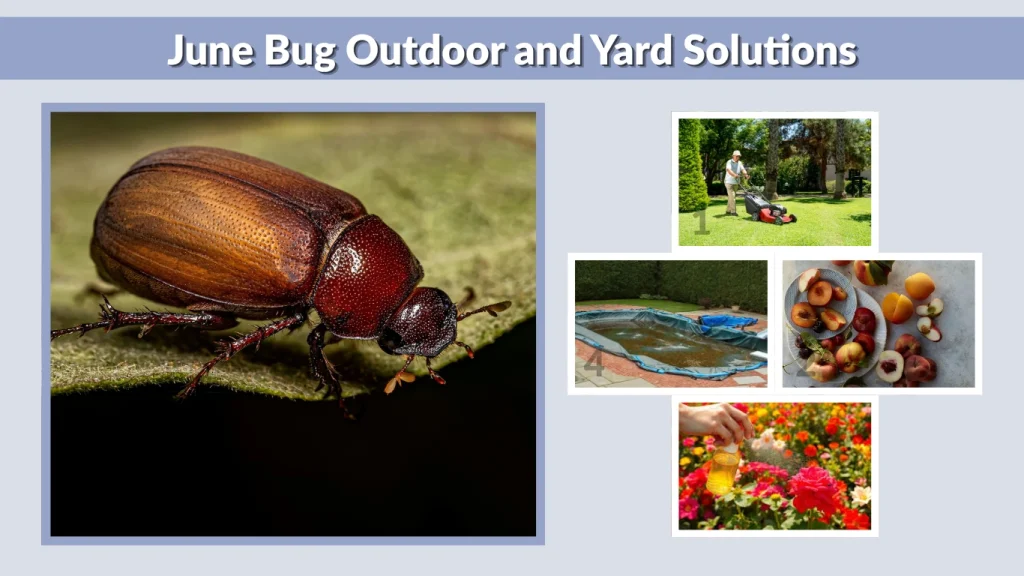
Managing June bugs outside is essential because this is where they live, feed, and reproduce. Focusing on lawns, gardens, and trees will reduce their numbers significantly.
- Lawn care practices: Keep your grass healthy with proper mowing, aeration, and watering. Strong lawns resist grub damage better.
- Remove attractants: Overripe fruits under peach, fig, or grape trees should be cleaned up immediately since they attract beetles.
- Protecting flowers: Roses, ferns, and flowering plants are highly vulnerable. Apply neem oil or diatomaceous earth around their base for protection.
- Pools and water features: Skim pools daily to remove beetles that fall in overnight. Using a pool cover reduces attraction.
- Texas lawn strategies: Warm regions like Texas face heavier infestations. Beneficial nematodes and milky spore disease are excellent long-term soil treatments for these climates.
By combining good maintenance with targeted treatments, you can create an outdoor environment that is less attractive to June bugs.
Quick and DIY Home Remedies
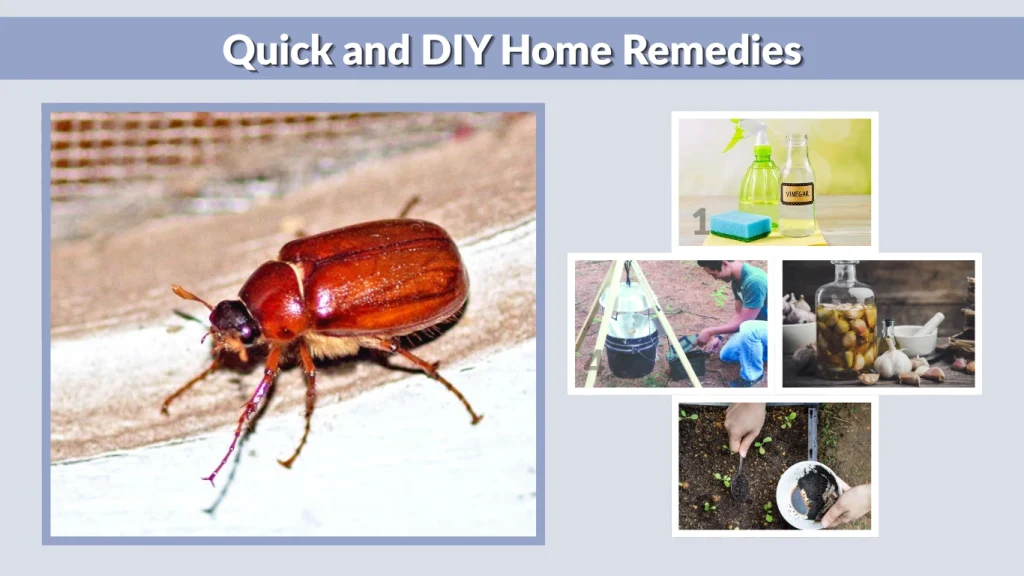
If you want fast solutions without buying commercial products, several household remedies can help control June bugs effectively.
- Vinegar spray: Mix vinegar with water to spray directly on beetles and plants. This repels them quickly.
- Garlic spray: A natural deterrent that can be applied to leaves, flowers, and soil.
- Coffee grounds: Spread used coffee grounds around plants and lawns. They repel pests and enrich the soil.
- DIY light trap: Place a lamp over a bucket of soapy water. Beetles fly toward the light, fall into the bucket, and cannot escape.
- Essential oils: Peppermint, lavender, and eucalyptus oils act as natural repellents when sprayed around porches and garden beds.
These methods are inexpensive, safe, and eco-friendly while offering quick relief from infestations.
How to Prevent a June Bug Infestation
The best way to handle June bugs is to stop them from reproducing and returning each year. Prevention strategies ensure long-term protection for your home and garden.
- Regular lawn maintenance: Healthy, well-aerated lawns are less attractive to egg-laying beetles.
- Introduce natural predators: Birds, frogs, and toads eat June bugs and their larvae, helping control populations.
- Seasonal soil treatments: Apply beneficial nematodes or milky spores in spring and fall to disrupt their breeding cycle.
- Avoid overwatering: Damp soil encourages grubs to thrive. Deep watering once a week is enough.
- Use organic repellents: Regularly spray neem oil, garlic water, or essential oils on plants and soil during peak beetle season.
With consistent care and seasonal treatments, you can minimize the risk of a large-scale infestation.
FAQs
How do I get rid of June bugs naturally?
Natural solutions include neem oil sprays, diatomaceous earth, and beneficial nematodes. These methods target both adult beetles and larvae without using harmful chemicals. Additionally, reducing outdoor lighting at night helps keep June bugs away from porches and gardens.
What kills June bug larvae in the yard?
Beneficial nematodes and milky spore disease are the most effective natural treatments. They attack grubs directly in the soil, stopping them before they damage lawns. Healthy lawn practices, like aeration and balanced watering, also discourage grub growth.
How do I stop June bugs from coming inside?
Seal gaps around windows and doors, install fine mesh screens, and switch porch bulbs to yellow bug lights. Essential oil sprays around entry points also act as natural repellents. By limiting indoor light exposure at night, you can prevent beetles from entering your home.
Are June bugs harmful to plants?
Yes, June bugs feed on leaves, flowers, and fruits. Roses, fruit trees, and garden vegetables are especially vulnerable. Meanwhile, their larvae (grubs) attack grassroots, leading to brown patches in lawns. Both adults and larvae should be managed to protect plants.
How do you get rid of June bugs fast?
The fastest method is using light-and-soapy-water traps to capture adults at night. For long-term control, apply nematodes or milky spores to kill larvae in soil. Combining these approaches ensures quick relief while preventing future infestations.
