
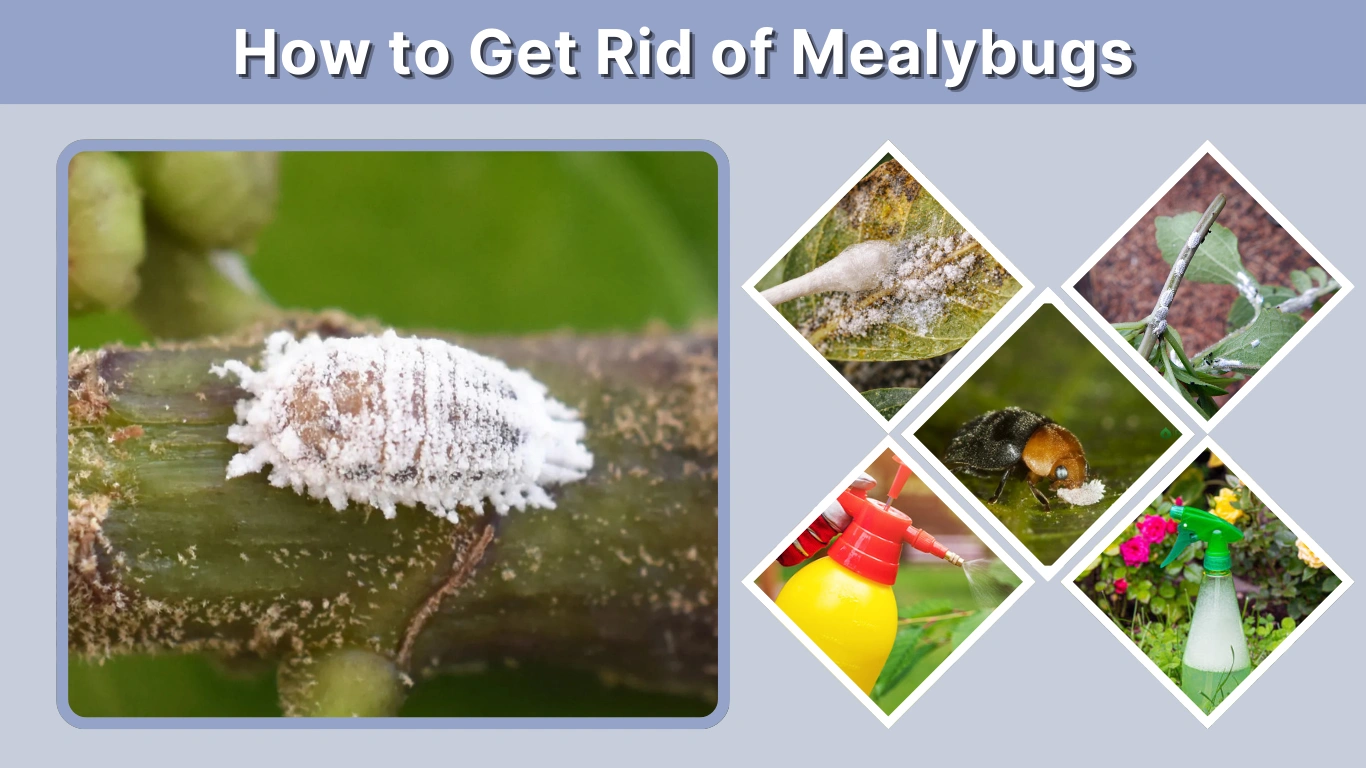
Mealybugs are small, soft-bodied insects that can quickly damage indoor and outdoor plants. These pests feed on plant sap, weakening the plant and slowing its growth. They are often recognized by their white, cotton-like appearance and their ability to spread rapidly from one plant to another. If left untreated, a mealybug infestation can become difficult to control. Fortunately, there are several effective ways to remove them. This guide explains how to get rid of mealybugs using natural, biological, and chemical methods.
What Are Mealybugs?
Mealybugs are common plant pests that belong to the Pseudococcidae family. They are closely related to scale insects and are known for their white waxy coating that protects their bodies. These insects typically gather in clusters and feed on plant sap, which weakens the plant and causes visible damage over time.
Characteristics of Mealybugs
Mealybugs are small insects that usually measure 1–4 millimeters in length. Their bodies are soft and oval-shaped, and they are covered with a white, powdery wax that gives them a cotton-like appearance.
These pests move slowly and often hide in plant crevices, making them difficult to notice at first. Because they reproduce quickly, a small infestation can grow into a major problem in a short period of time.
Where Mealybugs Commonly Appear
Mealybugs prefer warm and sheltered areas of plants. They are often found in places where they can easily access plant sap.
Common locations include:
- Undersides of leaves
- Along plant stems
- Leaf joints and nodes
- Around buds and flowers
- Near plant roots in severe infestations
Because they hide in these protected areas, infestations can go unnoticed until the population becomes large.
Plants Most Affected by Mealybugs
Mealybugs can attack a wide range of plants, both indoors and outdoors. However, some plants are more susceptible to infestations than others.
Commonly affected plants include:
- Houseplants such as pothos, snake plants, and ficus
- Succulents and cacti
- Orchids
- Citrus trees
- Hibiscus and other ornamental plants
Indoor plants are particularly vulnerable because the warm environment allows mealybugs to reproduce throughout the year.
Signs of a Mealybug Infestation
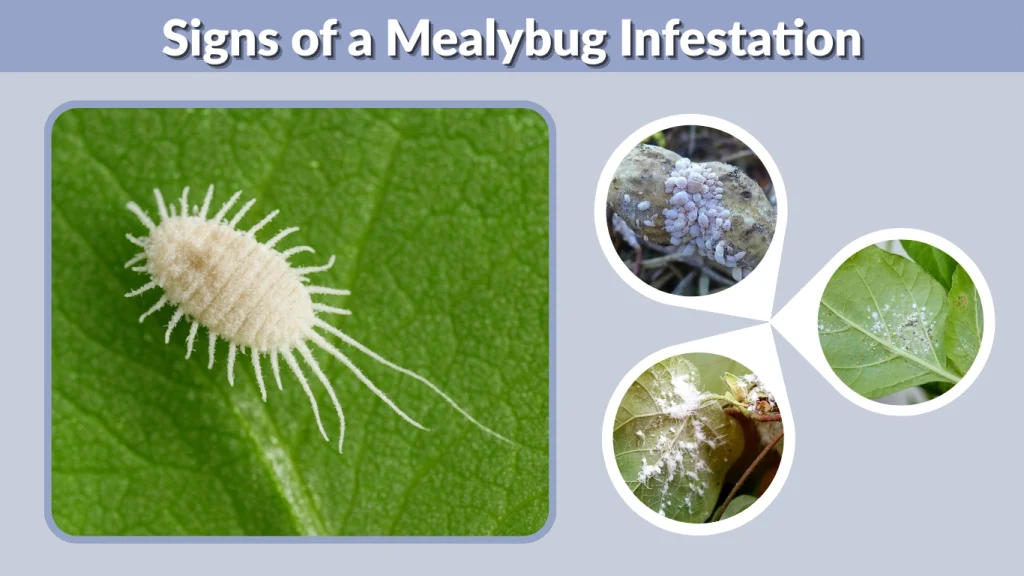
Early detection is important for controlling mealybugs. Recognizing the warning signs can help you take action before the infestation spreads to other plants.
White Cottony Clusters on Plants
The most obvious sign of mealybugs is the presence of white cotton-like clusters on plant surfaces. These clusters are usually found along stems, leaf joints, or the undersides of leaves.
These waxy masses protect the insects and their eggs, allowing the population to grow quickly.
Sticky Honeydew on Leaves
Mealybugs produce a sugary substance known as honeydew while feeding on plant sap. This sticky liquid often coats leaves, stems, and nearby surfaces.
Honeydew can attract ants and may lead to the growth of black sooty mold on plant leaves.
Yellowing or Wilting Leaves
As mealybugs continue feeding, they remove nutrients from the plant. This can cause leaves to turn yellow, curl, or drop prematurely.
Over time, the plant may appear weak, unhealthy, or stunted in growth.
Presence of Ants Around Plants
Ants are often attracted to honeydew produced by mealybugs. If you notice ants crawling on your plants, it may indicate a hidden mealybug infestation.
Ants sometimes protect mealybugs from predators in order to collect the honeydew they produce.
Why Mealybugs Are Harmful to Plants
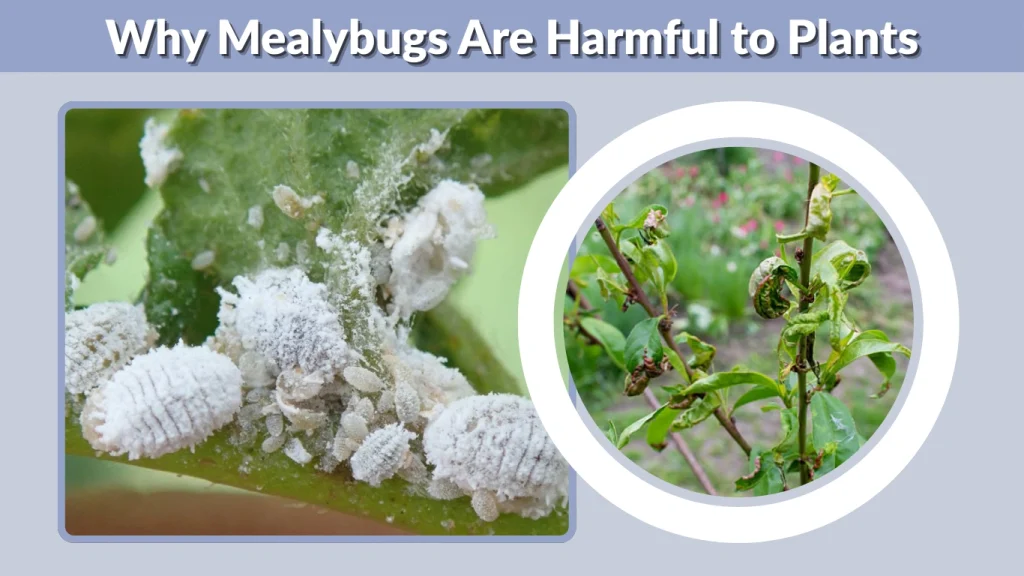
Although they are small insects, mealybugs can cause serious damage to plants when their population increases.
Sap Extraction Weakens Plants
Mealybugs feed by piercing plant tissues and sucking out sap. This process removes essential nutrients and water that plants need to grow.
As a result, affected plants may become weak, lose leaves, and produce fewer flowers or fruits.
Spread of Plant Diseases
Some plant pests can transmit diseases while feeding. Mealybugs can contribute to the spread of certain plant pathogens, which can further weaken plants.
Once a plant becomes stressed from feeding damage, it becomes more vulnerable to other pests and diseases.
Mold Growth Caused by Honeydew
The honeydew secreted by mealybugs creates a sticky layer on plant surfaces. This sugary residue encourages the growth of sooty mold, a black fungus that covers leaves.
Although sooty mold does not directly infect plants, it blocks sunlight from reaching the leaves, reducing photosynthesis and slowing plant growth.
How to Get Rid of Mealybugs Naturally
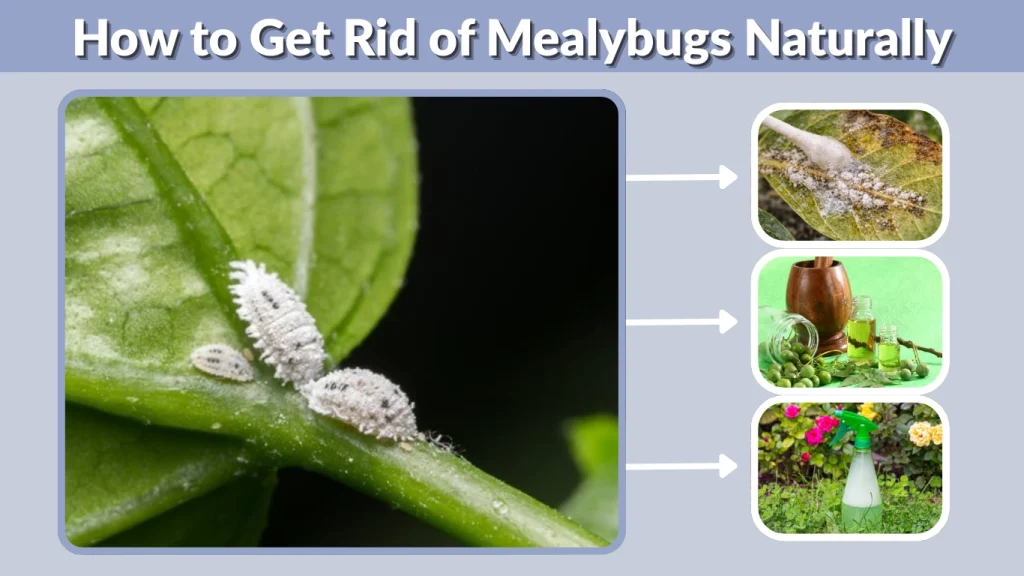
Natural pest control methods are often the safest and most effective way to remove mealybugs, especially for indoor plants and home gardens. These methods focus on physically removing the insects or using plant-safe treatments that disrupt their life cycle.
Removing Mealybugs by Hand
One of the simplest ways to eliminate mealybugs is by removing them manually. This method works best when the infestation is still small.
A cotton swab or soft cloth can be used to wipe away visible insects from leaves and stems. Regular inspection and removal can prevent the pests from multiplying.
Using Rubbing Alcohol
Rubbing alcohol is one of the most effective home remedies for mealybugs. When applied directly to the insects, it dissolves their protective wax coating and kills them on contact.
To use this method, dip a cotton swab in 70% isopropyl alcohol and gently apply it to the affected areas of the plant. This treatment should be repeated every few days until the infestation is under control.
Neem Oil Treatment
Neem oil is a natural pesticide derived from the seeds of the neem tree. It is widely used in organic gardening because it disrupts insect growth and reproduction.
When sprayed on plants, neem oil coats the insects and interferes with their feeding and development. Regular applications can help reduce mealybug populations over time.
Insecticidal Soap
Insecticidal soap is another effective solution for controlling mealybugs. These soaps break down the outer layer of soft-bodied insects, causing them to dehydrate and die.
They are generally safe for plants when used according to instructions and are commonly used in organic pest control.
Water Spray Method
A strong stream of water can also help remove mealybugs from plants. Spraying affected plants with water can wash away many insects and reduce their numbers.
This method works best for outdoor plants or sturdy houseplants that can tolerate a thorough rinse.
Using Biological Control for Mealybugs
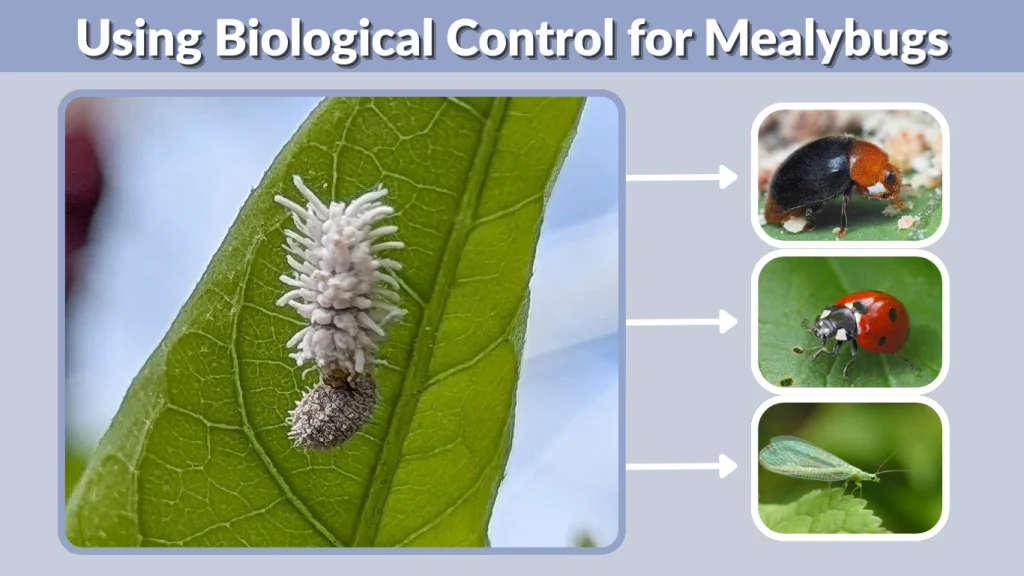
Biological control involves using natural predators to reduce pest populations. Several beneficial insects feed on mealybugs and can help manage infestations without the use of chemicals. These predators are commonly used in gardens, orchards, and greenhouses.
Mealybug Destroyer Beetles
The mealybug destroyer beetle (Cryptolaemus montrouzieri) is one of the most effective predators of mealybugs. Both the larvae and adult beetles feed on these pests.
The larvae resemble mealybugs because they are covered with white waxy filaments. This disguise allows them to move easily within mealybug colonies and feed on eggs and young insects. Because of their strong appetite, mealybug destroyers are often used as a natural biological control agent.
Ladybugs
Ladybugs are well-known beneficial insects that feed on a variety of plant pests. While they primarily consume aphids, some species will also eat mealybugs and other soft-bodied insects.
Introducing ladybugs into a garden can help control multiple pests at once. However, they may not focus specifically on mealybugs the way mealybug destroyers do.
Lacewings
Green lacewing larvae are also helpful predators in pest management. They feed on many soft-bodied insects, including mealybugs, aphids, and thrips.
These larvae are sometimes called “aphid lions” because of their aggressive feeding habits. Their presence can help reduce pest populations in both indoor and outdoor gardens.
Benefits of Beneficial Insects
Using beneficial insects offers several advantages. They provide natural pest control, reduce the need for chemical pesticides, and support a healthy garden ecosystem. Over time, these predators can help maintain a balanced environment where pests are less likely to reach damaging levels.
Chemical Methods for Severe Mealybug Infestations
In cases where infestations are severe, chemical treatments may be necessary. These products should be used carefully to avoid harming plants and beneficial insects.
Systemic Insecticides
Systemic insecticides are absorbed by the plant and circulate through its tissues. When mealybugs feed on the plant sap, they ingest the insecticide and are killed.
These treatments are often used when infestations are widespread or difficult to control using other methods.
Contact Pesticides
Contact pesticides work by directly killing insects when sprayed on them. These products can quickly reduce visible populations of mealybugs.
However, they may require repeated applications because they do not always affect eggs hidden in plant crevices.
Safety Considerations When Using Chemicals
When using chemical treatments, it is important to follow product instructions carefully. Protective gloves and proper ventilation may be necessary. Gardeners should also avoid spraying chemicals during times when beneficial insects are active.
How to Get Rid of Mealybugs on Indoor Plants
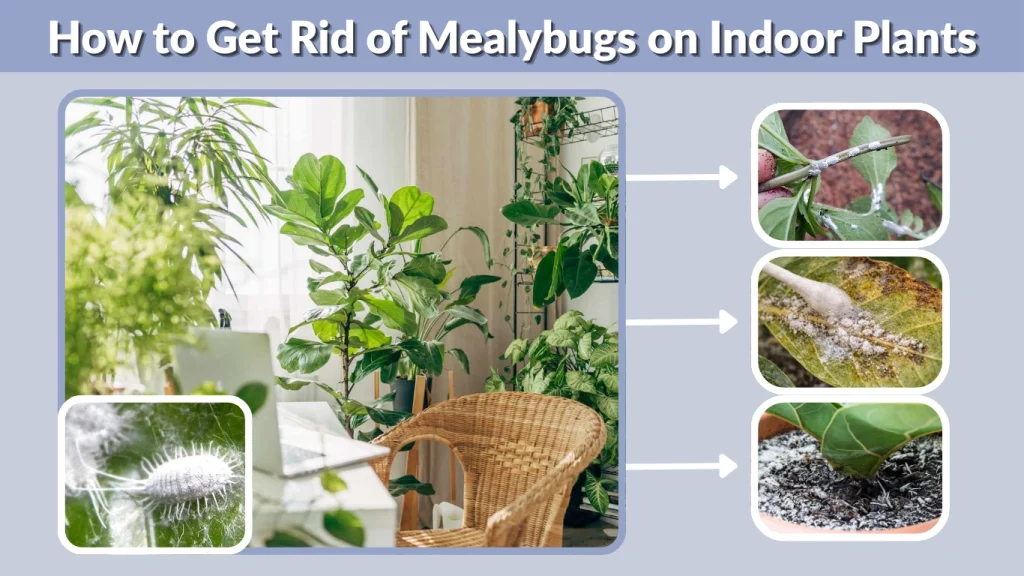
Indoor plants are particularly vulnerable to mealybug infestations because they grow in warm environments where pests can reproduce year-round.
Isolating Infected Plants
The first step in controlling an infestation is to isolate the affected plant. Moving it away from other plants prevents the pests from spreading.
Cleaning Leaves and Stems
Gently wiping leaves and stems with a cloth, cotton swab, or alcohol solution can remove many visible insects. Regular cleaning helps reduce the population and prevents the infestation from worsening.
Replacing Infested Soil
In some cases, mealybugs may hide in the soil around plant roots. If this happens, replacing the soil and cleaning the pot can help eliminate hidden pests.
How to Get Rid of Mealybugs on Outdoor Plants
Outdoor plants may also suffer from mealybug infestations, especially in warm climates or crowded gardens.
Pruning Infested Plant Parts
Removing heavily infested leaves or stems can help stop the spread of mealybugs. Pruning also improves air circulation and allows plants to recover more quickly.
Using Natural Sprays
Natural sprays such as neem oil, insecticidal soap, or diluted alcohol solutions can help control mealybugs on outdoor plants. Repeated treatments are often necessary to eliminate all life stages of the pest.
Encouraging Beneficial Insects
Outdoor gardens often attract natural predators that feed on mealybugs. Encouraging beneficial insects by planting flowers and avoiding harsh pesticides can help maintain natural pest control.
Preventing Future Mealybug Infestations
Prevention is the best way to protect plants from mealybugs. Regular plant care and monitoring can reduce the risk of future infestations.
Regular Plant Inspection
Checking plants frequently for signs of pests allows gardeners to catch infestations early. Early treatment is much easier and more effective.
Maintaining Healthy Plants
Healthy plants are more resistant to pests and diseases. Providing proper watering, sunlight, and nutrients helps plants stay strong and resilient.
Avoiding Overfertilization
Excess fertilizer, especially nitrogen, can encourage soft plant growth that attracts pests like mealybugs. Balanced fertilization helps prevent this problem.
Quarantining New Plants
New plants should be kept separate from existing plants for a short period before introducing them into the garden or home. This helps prevent hidden pests from spreading.
Common Mistakes When Treating Mealybugs
Some common mistakes can make mealybug infestations harder to control.
Ignoring Early Signs
Small infestations may seem harmless, but they can quickly grow larger. Treating the problem early is essential.
Using Too Much Pesticide
Excessive pesticide use can harm plants and beneficial insects. It is important to use treatments carefully and only when necessary.
Not Repeating Treatments
Mealybugs reproduce quickly, and eggs may survive the first treatment. Repeating treatments ensures that newly hatched insects are also eliminated.
FAQs
What kills mealybugs instantly?
Rubbing alcohol is one of the fastest ways to kill mealybugs. It dissolves their protective coating and eliminates them on contact.
Can mealybugs spread to other plants?
Yes, mealybugs can easily spread from one plant to another. They can move between plants or be transferred through contaminated tools and pots.
Are mealybugs harmful to humans?
No, mealybugs are not harmful to humans. They only feed on plant sap and do not bite or transmit diseases to people.
Do mealybugs live in soil?
Some species of mealybugs can hide in soil and feed on plant roots. This is why severe infestations may require soil replacement.
Conclusion
Mealybugs may be small pests, but they can cause significant damage to plants if left untreated. By recognizing the early signs of infestation and using effective control methods, gardeners can protect their plants and prevent serious damage. Natural solutions such as rubbing alcohol, neem oil, and beneficial insects are often the safest and most sustainable options. With regular monitoring and proper plant care, it is possible to eliminate mealybugs and keep plants healthy and thriving.
