
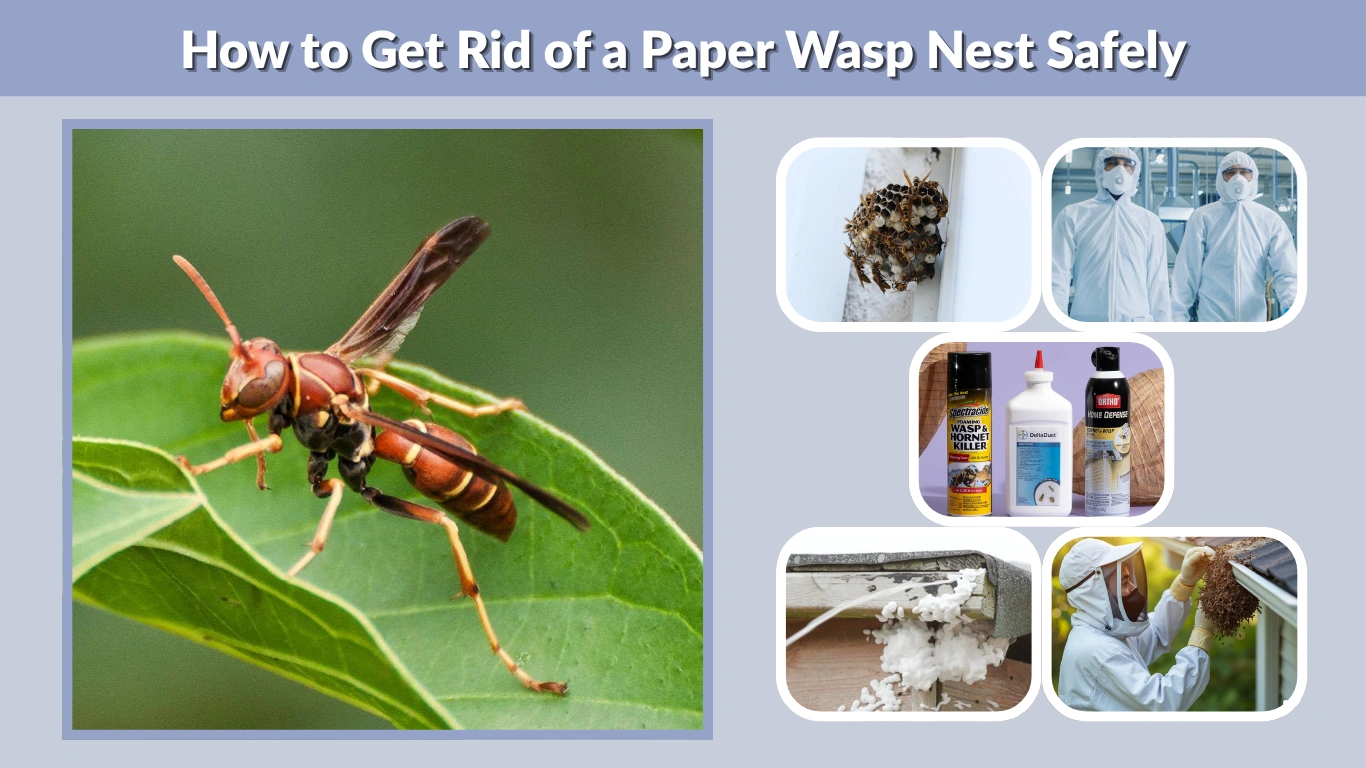
Paper wasps are beneficial insects that help control garden pests and assist in pollination. However, when they build nests near homes, patios, or attics, they can pose a risk of painful stings. Knowing how to get rid of paper wasps the right way ensures your safety while keeping your property free from infestations. Whether you prefer natural removal or need a more permanent solution, the key is to act carefully and at the right time.
Understanding Paper Wasps
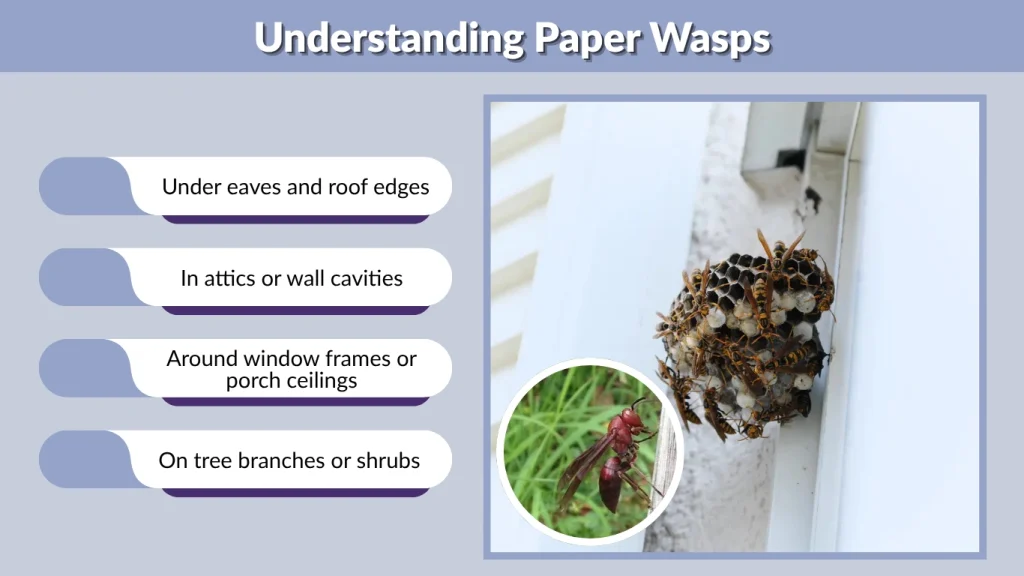
Paper wasps are social insects from the Polistes genus, known for their distinctive umbrella-shaped nests. They chew wood fibers and mix them with saliva to create the papery material used in nest construction. Each colony starts with a single queen who lays eggs that develop into workers responsible for building, foraging, and protecting the nest.
Although paper wasps are not as aggressive as hornets or yellow jackets, they will defend their nests if threatened. Their stings are painful and can trigger allergic reactions in some people, making safe removal essential. Common types include red, yellow, brown, and European paper wasps, each with slightly different nesting preferences.
You’ll often find nests in sheltered areas such as:
- Under eaves and roof edges
- In attics or wall cavities
- Around window frames or porch ceilings
- On tree branches or shrubs
Understanding their nesting habits helps determine the best approach for removal and prevention.
When to Remove a Paper Wasp Nest
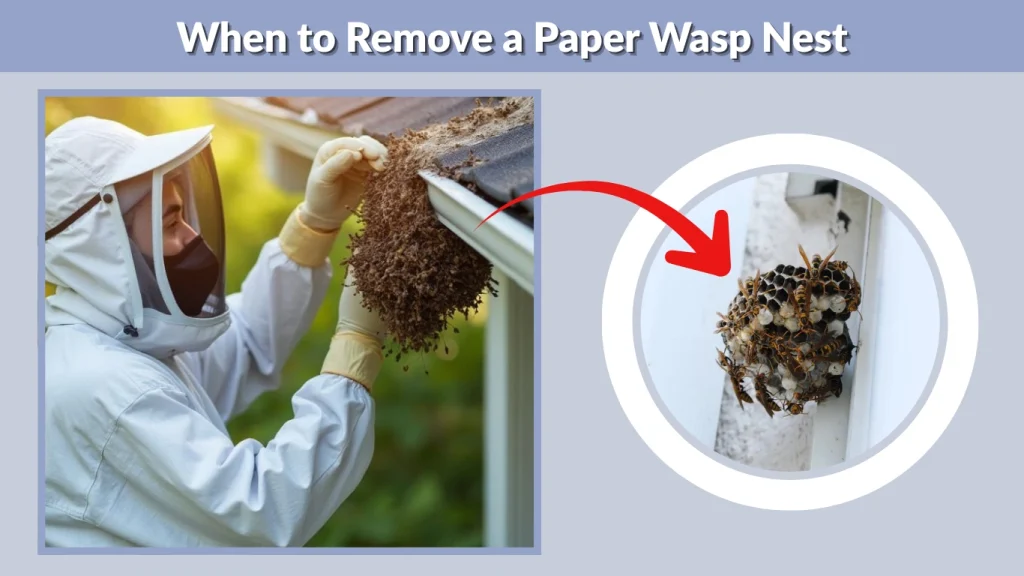
Timing plays a major role in safely removing paper wasps. Acting at the wrong time of day or season can increase your risk of being stung.
- Early Spring: The ideal time for removal. The nest is small, and only the queen is present. Eliminating it now prevents a larger colony from forming.
- Mid-Summer: Exercise caution. Colonies are at their peak size, with many workers actively guarding the nest. Professional help is recommended for large infestations.
- Late Fall or Winter: Safest period for physical nest removal, as colonies die out and nests are abandoned.
Paper wasp nests are not reused the following year, but removing them in winter reduces the chance of attracting new queens in spring.
How to Get Rid of a Paper Wasp Nest Safely
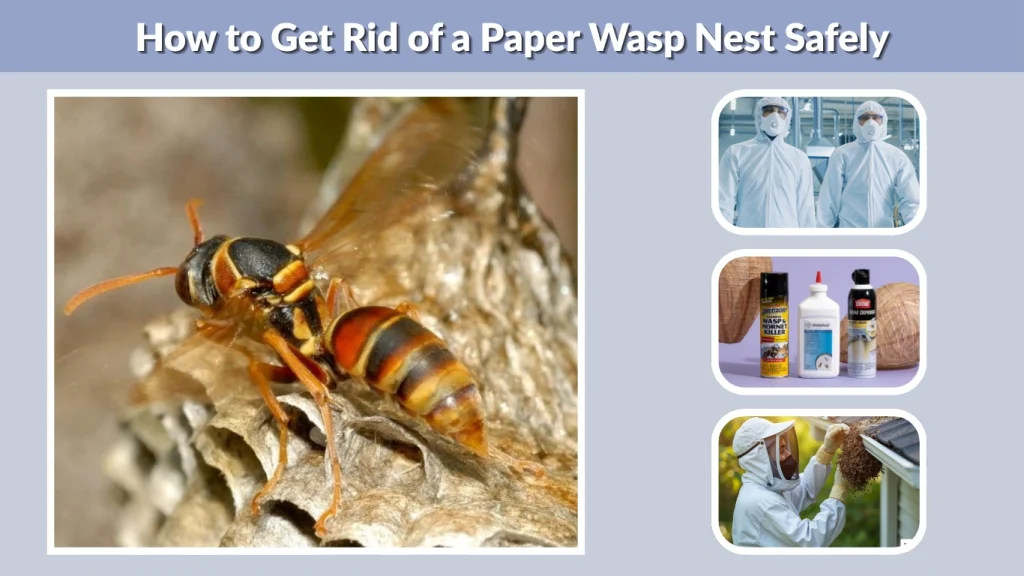
Removing a nest requires patience, protection, and proper planning. Follow these step-by-step instructions for safe removal:
- Wear protective clothing: Cover all exposed skin with long sleeves, gloves, and closed shoes. A hat and face shield provide extra protection.
- Choose the right time: Remove the nest at night or early morning when wasps are less active and sluggish due to cooler temperatures.
- Use a long-range wasp spray: Stand 10–15 feet away and spray directly at the nest entrance. Commercial wasp sprays quickly kill wasps on contact and paralyze others inside.
- Wait 24 hours: Allow time for all activity to stop before attempting removal.
- Knock down the nest: Use a long broomstick or pole to dislodge it, then seal it in a plastic bag and dispose of it in an outdoor trash bin.
Safety Tip: Never attempt to burn or drown a wasp nest. Both methods are dangerous and can provoke aggressive behavior from surviving wasps.
If the nest is large, located in a hard-to-reach area, or inside walls, contact a licensed pest control professional to avoid injury or repeated stings.
How to Get Rid of Paper Wasps Naturally
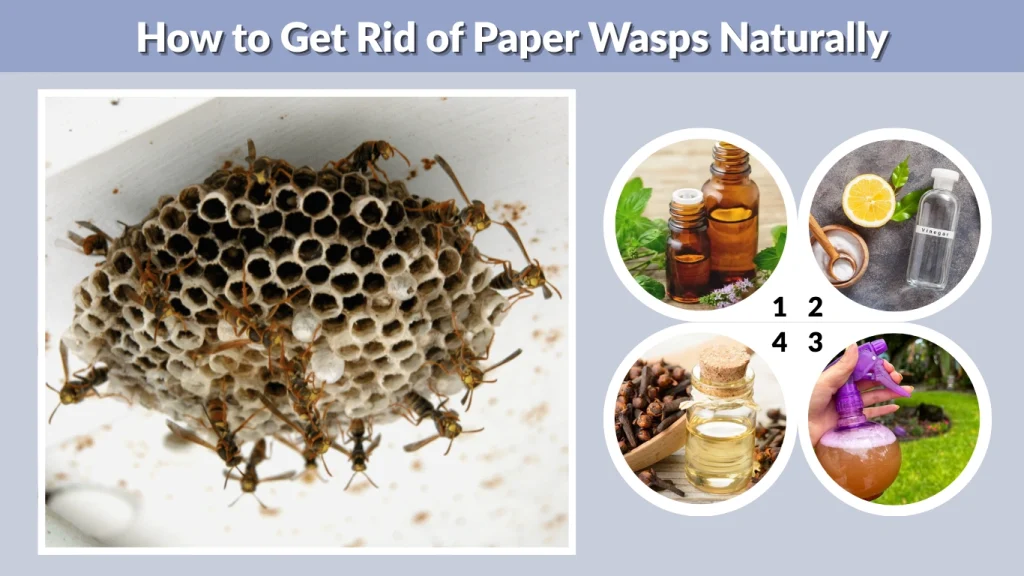
For homeowners who prefer eco-friendly or non-lethal approaches, several natural remedies can deter or remove paper wasps without using harsh chemicals.
Peppermint Oil Spray
Peppermint oil is one of the most effective natural wasp repellents. Mix 2 cups of water, 10 drops of peppermint oil, and a few drops of dish soap in a spray bottle. Apply it around eaves, porch ceilings, and known nesting areas. Wasps dislike the strong scent and will avoid the area.
Vinegar Solution
Combine equal parts white vinegar and water, then spray directly on small nests or high-activity areas. Vinegar disrupts their scent trails and discourages nesting.
Soap and Water Spray
A simple mix of two tablespoons of dish soap per liter of water suffocates wasps by clogging their breathing pores. Spray it directly onto the nest for small infestations.
Citrus or Clove Oil
Wasps are sensitive to strong natural fragrances. Boil lemon or orange peels in water, cool the mixture, and spray it near entrances or nesting sites. Adding clove oil enhances its repellent effect.
These methods work best for early-stage or small nests and can also be used preventively throughout spring and summer to discourage nest building.
How to Get Rid of Paper Wasps in Specific Areas
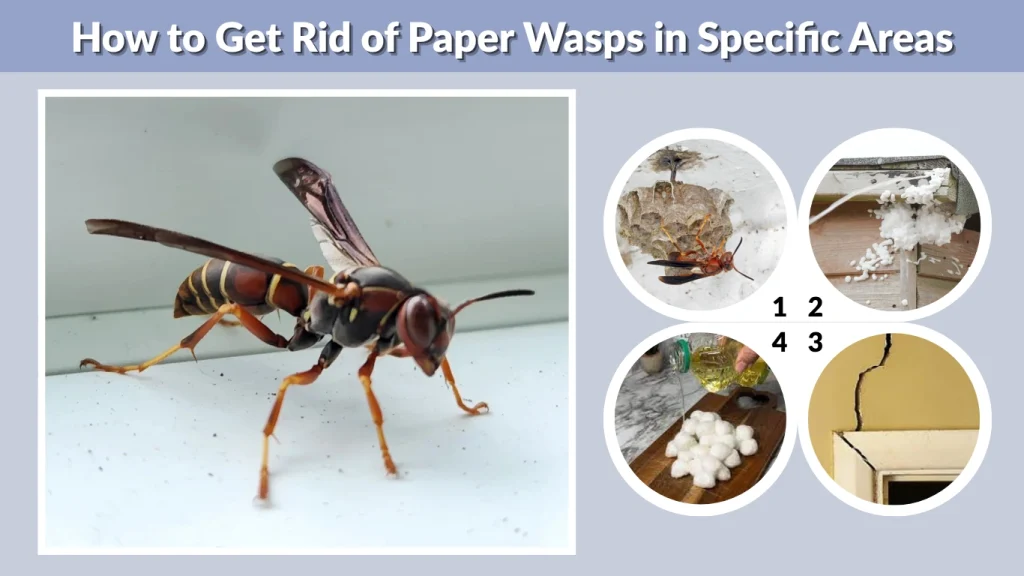
Paper wasp nests appear in many different places — from attics and eaves to trees and sheds. Each location requires a slightly different removal approach to stay safe and avoid re-infestation.
In the House or Attic
Wasps often enter attics through vents, loose siding, or roof gaps.
- Locate the nest by observing wasp flight patterns during the day.
- Spray the nest with a wasp-specific aerosol at night when activity is low.
- Seal cracks, holes, and vents once the nest is removed to prevent re-entry.
- Place peppermint oil–soaked cotton balls in corners as a natural deterrent.
Under Eaves or Roofs
These are common nesting spots for red and yellow paper wasps.
- Approach cautiously after sunset when wasps are dormant.
- Use a long-range spray to target the nest from a safe distance.
- Wait until morning to remove the structure with a broom handle or stick.
- Clean the surface with vinegar or soapy water to remove pheromone residue that could attract future colonies.
In Trees or Bushes
Outdoor nests in trees or shrubs are harder to remove manually.
- Use a garden sprayer filled with soapy water or a natural wasp solution.
- Avoid spraying on windy days to prevent blowback.
- For large or high nests, hire pest control professionals to handle the removal safely.
Inside Walls or Siding
Wasps can sometimes enter wall cavities or siding gaps. In such cases:
- Avoid sealing holes immediately; this can trap wasps indoors.
- Instead, use expanding foam insecticide that penetrates gaps and kills wasps inside.
- Once inactive, seal all openings with caulk or weatherproof material.
How to Get Rid of Red and European Paper Wasps

Different paper wasp species may require slightly adjusted approaches based on their behavior and nesting preferences.
Red Paper Wasps (Polistes carolina)
Common across the southern U.S., red paper wasps are territorial but manageable.
- Use a strong aerosol insecticide directly on the nest at dusk.
- Reapply peppermint oil around eaves every few weeks to prevent new nests.
- Avoid swatting — red paper wasps release alarm pheromones that alert others.
European Paper Wasps (Polistes dominula)
European species are more aggressive and often nest in sheltered or urban areas such as mailboxes or roof vents.
- Apply an expanding foam insecticide to reach hidden nests.
- Remove old nesting materials afterward, as these wasps often rebuild nearby.
- Inspect wall cracks, pipes, and window frames to seal potential entry points.
Both species respond to peppermint, clove, and citronella oils, which serve as natural repellents when sprayed regularly around possible nesting areas.
Preventing Paper Wasps from Returning
Once you’ve removed the nest, preventing future infestations is crucial. Wasps leave pheromone trails that attract others to the same location, so proper cleaning and deterrent strategies are key.
Practical Prevention Tips
- Inspect regularly: Check eaves, sheds, and decks weekly during spring.
- Seal entry points: Close any gaps, holes, or cracks in walls and rooflines.
- Hang decoy nests: Wasps avoid building near other colonies. A simple brown paper bag shaped like a nest can work as a deterrent.
- Keep food sealed: Sweet drinks and open food attract foraging wasps.
- Trim vegetation: Cut back tree branches and overgrown shrubs near buildings.
- Use natural repellents: Peppermint or clove oil sprays can keep wasps away for weeks when applied regularly.
Maintaining a wasp-free environment is easier when you act early each spring before nests become large and established.
When to Call a Professional
Sometimes a paper wasp infestation is too risky to handle alone. Call a licensed pest control expert if:
- The nest is large or high up (such as under a roof peak or in a tree).
- You have a known allergy to wasp stings.
- Nests return repeatedly in the same area despite preventive efforts.
- Wasps are entering living spaces through vents or wall gaps.
Professionals use protective gear and specialized insecticides to ensure complete and safe nest removal. They can also provide ongoing treatments to keep wasps from returning.
FAQs
How do you get rid of paper wasps permanently?
Seal all entry points, remove old nests, and use peppermint oil or vinegar sprays regularly. Check frequently in spring when queens start new colonies.
Can you remove a wasp nest during the day?
It’s unsafe to do so. Wasps are highly active during daylight hours and may attack in defense. Always attempt removal at night or early morning when they’re sluggish.
Do paper wasps reuse nests?
No, paper wasps abandon old nests each winter. However, new queens may build new ones nearby if the site remains undisturbed.
What kills paper wasps instantly?
A strong wasp spray or a mixture of dish soap and water suffocates them on contact.
How do I get rid of paper wasps without getting hurt?
Wear protective clothing, avoid sudden movements, and spray from a distance. Always plan an escape route before attempting removal.
