

Red wasps are one of the most common stinging insects around homes, especially in warm regions like Texas, Alabama, and Oklahoma. Known for their reddish-brown color and aggressive defense behavior, these wasps often build paper-like nests in attics, under decks, or along roof eaves. This guide explains effective ways to eliminate red wasps safely and naturally, while ensuring they don’t return.
Identifying Red Wasps

Appearance and Behavior
Red wasps are easily recognizable by their long, narrow bodies and distinct reddish-brown color. Their thin waists and dangling legs make them look similar to yellow jackets, but they tend to be slightly larger. They are social insects that build open, umbrella-shaped nests made from chewed wood fibers mixed with saliva, giving them a papery texture.
Common Species
The most common type in the United States is the Red Paper Wasp (Polistes carolina). It is especially widespread across southern states like Texas, Louisiana, and Alabama. Other variations, such as the Oklahoma Red Wasp, prefer wooden structures, while the Alabama Red Wasp is known for its larger size and intense territorial nature.
Signs of a Red Wasp Infestation

Red wasps are most active from spring through late summer. You may notice them hovering near window frames, attic vents, or porch roofs. Some common infestation signs include:
- Constant buzzing sounds near eaves or roof edges
- Visible nests in shaded outdoor areas
- Red wasps flying around trash bins, sheds, or wood piles
- Increased wasp activity around the garden or attic
Early detection is crucial. Spotting a small nest allows you to remove it before the colony grows, reducing the risk of stings or structural damage.
How to Get Rid of Red Wasps Naturally

Natural methods are safer for families, pets, and the environment. They are especially effective when dealing with early infestations or outdoor nests.
Essential Oils
Red wasps dislike strong scents such as peppermint, clove, and geranium. To make a natural repellent, mix:
- 2 teaspoons of peppermint oil
- 1 teaspoon each of clove oil and geranium oil
- 2 cups of water
Spray this mixture around door frames, attic vents, and roof edges weekly. Over time, the scent drives wasps away and prevents new nests.
Homemade Wasp Traps
A simple trap can be made using a plastic bottle:
- Cut the top off and invert it into the bottom section.
- Pour in sugar water, fruit juice, or vinegar.
- Place it at least 20 feet from your home.
Wasps enter for the sweet scent but cannot escape, helping reduce their numbers naturally.
Smoke Method
If the nest is in an outdoor area, creating controlled smoke can force the wasps to leave. Light a small smoky fire beneath the nest (at a safe distance). The smoke interferes with their breathing and drives them away. Always perform this at dusk or night when they are less active.
Chemical and Professional Methods
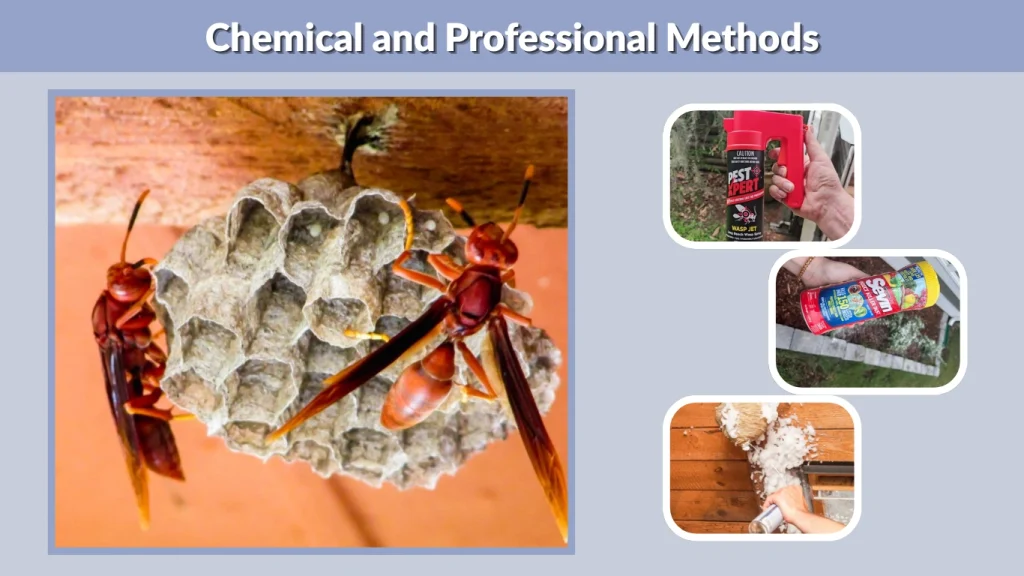
For larger infestations or indoor nests, natural methods may not be enough. Chemical sprays and pest control services offer more permanent results.
Wasp Sprays
Commercial wasp sprays can kill on contact and reach nests from up to 20 feet away. Use them after sunset, when most wasps are inside the nest. Spray thoroughly, wait overnight, then remove the nest the next morning.
Dust Insecticides
If red wasps are nesting inside walls, attics, or vents, use insecticidal dust labeled for wasps. This dust spreads within hidden spaces and kills the colony gradually. Always wear gloves, goggles, and long sleeves to avoid stings.
Removing a Red Wasp Nest
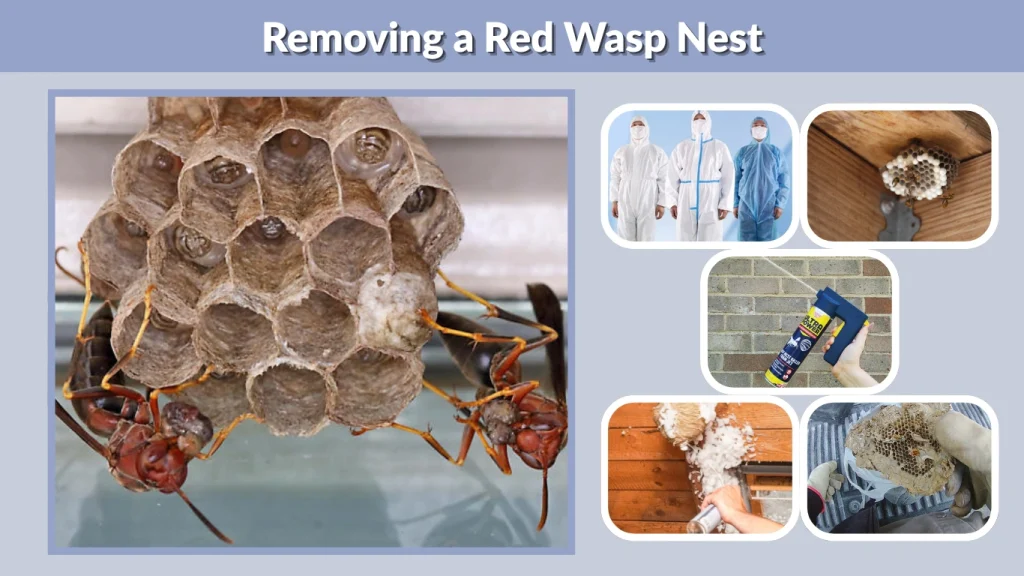
When dealing with a red wasp nest, safety must always come first. These insects are highly defensive and will attack anyone who gets too close. Removing the nest at the right time and with the right tools ensures the job is done safely and effectively.
Safety Precautions
Before attempting removal:
- Wear protective clothing that covers your entire body, including gloves and goggles.
- Avoid bright colors and strong scents that may attract wasps.
- Make sure pets and children are kept indoors.
- Always perform removal at night, when wasps are least active and remain inside the nest.
Step-by-Step Removal Process
- Use a long-range wasp spray and saturate the nest completely.
- Wait overnight to ensure all wasps are dead or have fled.
- The next morning, gently knock the nest down using a broom handle or pole.
- Place it in a sealed plastic bag and dispose of it in an outdoor trash bin.
- Clean the area with soap and water to remove scent trails that attract new wasps.
If the nest is located high up, deep inside an attic, or near electrical wiring, call a licensed pest control expert for safe removal.
Preventing Red Wasps Around the House
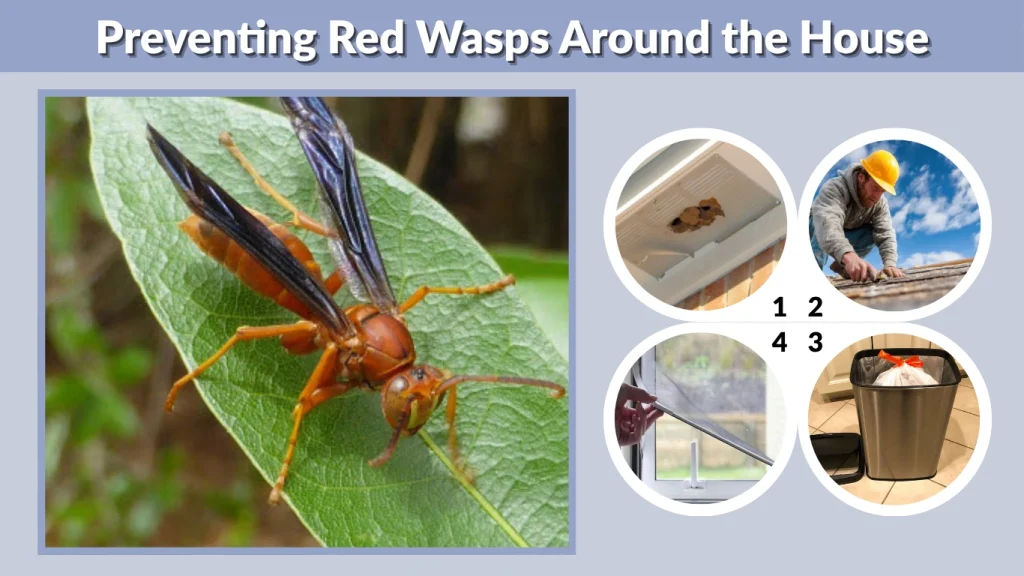
After removing a nest, it’s essential to take preventive measures to stop new colonies from forming. Red wasps are seasonal nesters and often return to the same spots each year if conditions remain favorable.
Home Maintenance Tips
- Seal openings: Close cracks in walls, soffits, and attic vents.
- Inspect regularly: Check under eaves, decks, and sheds every few weeks.
- Secure garbage bins: Keep lids tight and clean food residue.
- Repair screens: Fix damaged window or vent screens that may let wasps enter.
Natural Repellents and Deterrents
Peppermint oil spray is one of the best natural deterrents. Reapply every few weeks, especially during spring and summer. Hanging fake wasp nests can also discourage real wasps, as they tend to avoid areas already claimed by another colony.
Outdoor Yard Care
Trim tall grass and clear away fallen branches or wood piles, since these areas attract insects that serve as food sources for wasps. Keeping your yard tidy limits nesting opportunities.
Treating a Red Wasp Sting
Despite all precautions, stings may still happen. Red wasp stings can cause sharp pain, swelling, and redness but are rarely dangerous unless you’re allergic.
Immediate Care
- Wash the sting area with soap and cool water.
- Apply ice for 10–15 minutes to reduce pain and swelling.
- Use a baking soda paste or calamine lotion for itch relief.
- Take an antihistamine if mild swelling occurs.
Seek emergency care immediately if you experience shortness of breath, dizziness, or facial swelling — these may be signs of a severe allergic reaction.
FAQs
What keeps red wasps away naturally?
Essential oils such as peppermint, clove, and geranium are natural repellents. Regularly spraying a mixture of these oils around doors, attics, and outdoor areas helps prevent red wasps from nesting. Clean surfaces to remove sugary residues that attract them.
How do I get rid of red wasps in the attic?
Apply wasp dust or spray directly into attic vents at night when wasps are inside. Seal any entry points afterward. For large nests or recurring infestations, hire a professional pest control service to remove them safely.
Can peppermint oil kill red wasps?
Peppermint oil doesn’t kill red wasps instantly but acts as a strong repellent. It drives them away and prevents them from nesting again. Spraying the oil mixture regularly builds a long-lasting natural barrier against wasp activity.
How do I permanently eliminate red wasps around my house?
Permanent control requires a combination of methods: remove all visible nests, seal potential nesting areas, use deterrent sprays, and maintain regular inspections. Consistency is key to keeping red wasps away for good.
Are red wasps more aggressive than yellow jackets?
Yes. Red paper wasps tend to be more aggressive near their nests, though they rarely attack unprovoked. Yellow jackets, on the other hand, are more likely to chase intruders over longer distances, making them even harder to control.
