
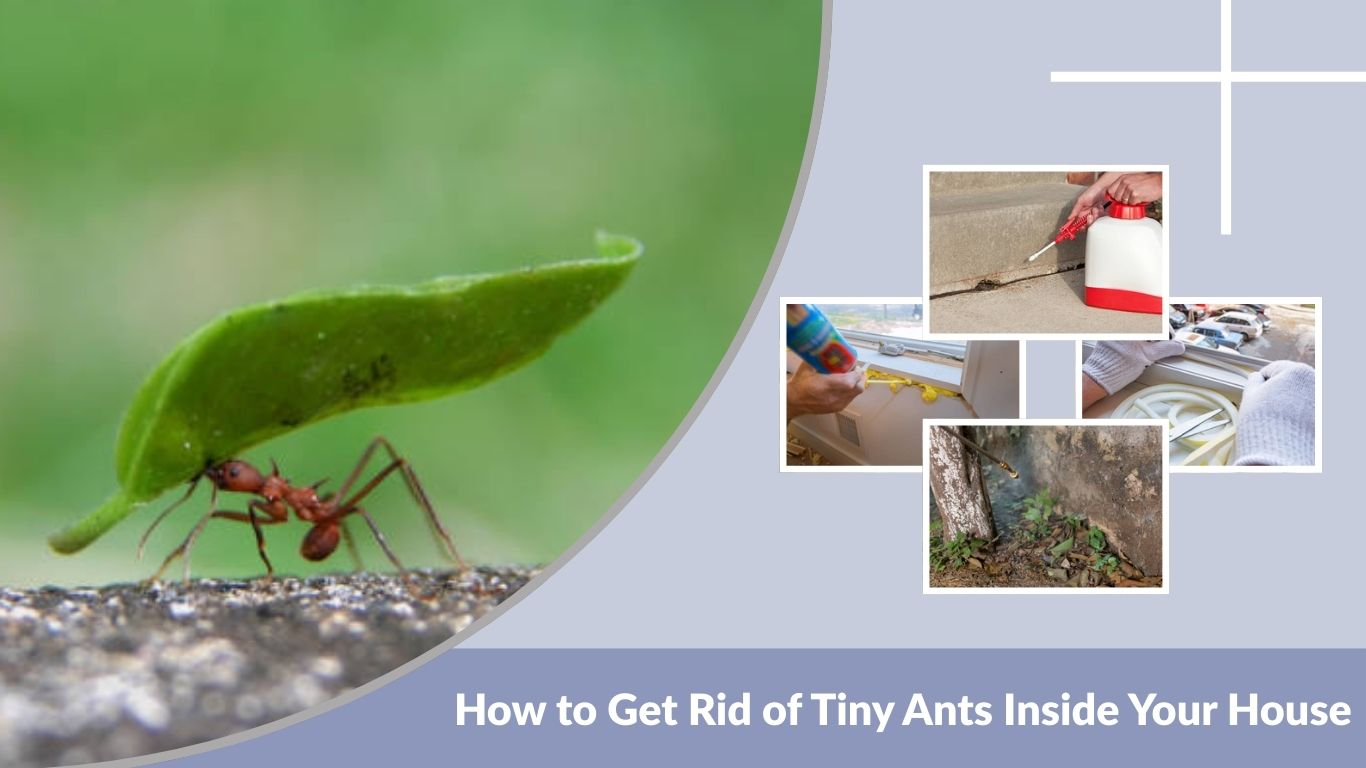
Tiny ants inside the house can feel like they appear out of nowhere. One day your kitchen is clean, and the next there’s a thin black line marching across the counter. The good news is that tiny indoor ants are one of the most manageable household pests. The key is acting quickly and following the right order: remove the trail, eliminate what’s attracting them, bait the colony, and then seal entry points. If you skip steps or do them out of order, they often come back.
This step-by-step fast guide will help you stop the infestation quickly and prevent it from returning.
Step 1: Find the Trail and Entry Point (5–10 Minutes)
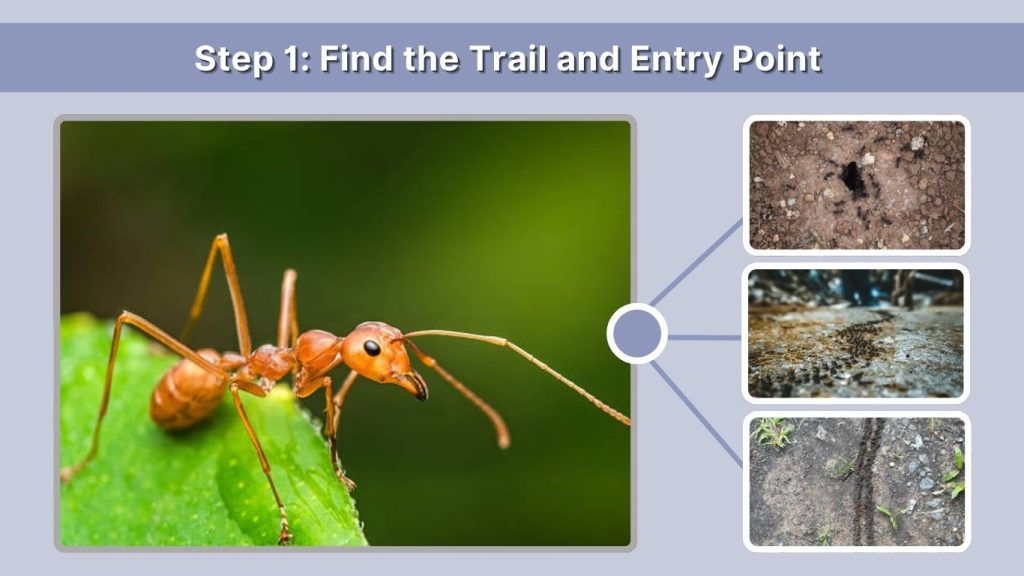
Tiny ants rarely wander randomly. They follow a scent trail laid down by scout ants who found food or water. Your first job is to locate:
- Where the ants are entering
- What they are heading toward
- The main “traffic line”
Watch the ants for a few minutes without disturbing them. Follow the line carefully. Common indoor entry points include:
- Window and door frame cracks
- Baseboard gaps
- Under-sink pipe openings
- Small wall or cabinet seams
- Electrical outlet gaps
In kitchens, ants often head toward crumbs, sugar spills, grease splatter, fruit, pet food, or trash bins. In bathrooms, they’re usually searching for moisture.
Do not spray them yet. If you break the trail too early, you may lose track of where they’re coming from.
Step 2: Erase the Scent Trail Completely (10 Minutes)
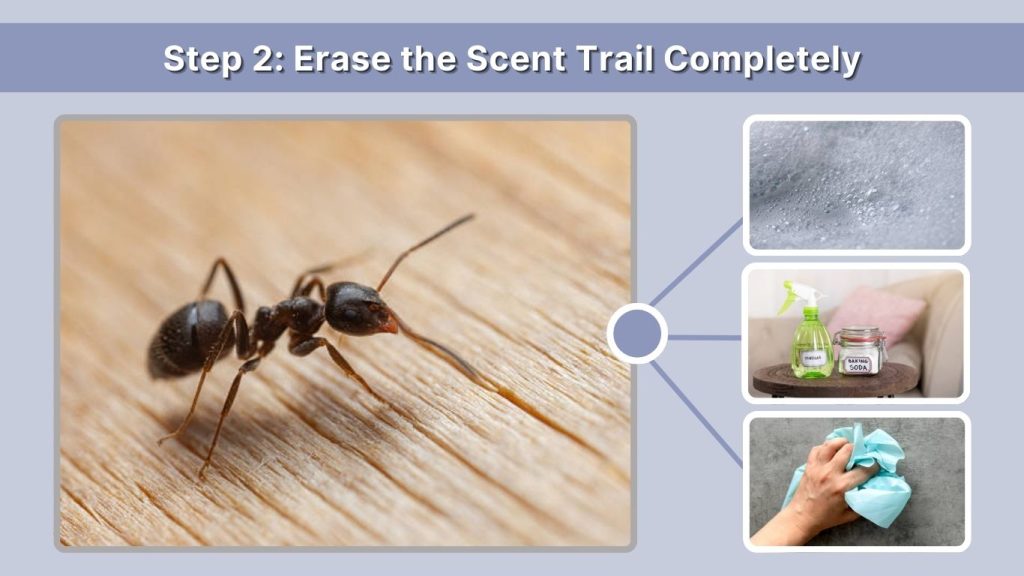
This is one of the most important steps. If the scent trail remains, more ants will continue arriving—even if you kill the visible ones.
- Wipe the area with warm soapy water.
- Spray a 1:1 mixture of vinegar and water or use a household cleaner.
- Wipe dry thoroughly.
Make sure to clean along the entire path, not just where you see clusters. Even faint chemical trails can guide new ants.
Important: Do not mix vinegar with bleach-based cleaners.
Step 3: Remove Food and Water Sources (15–30 Minutes)
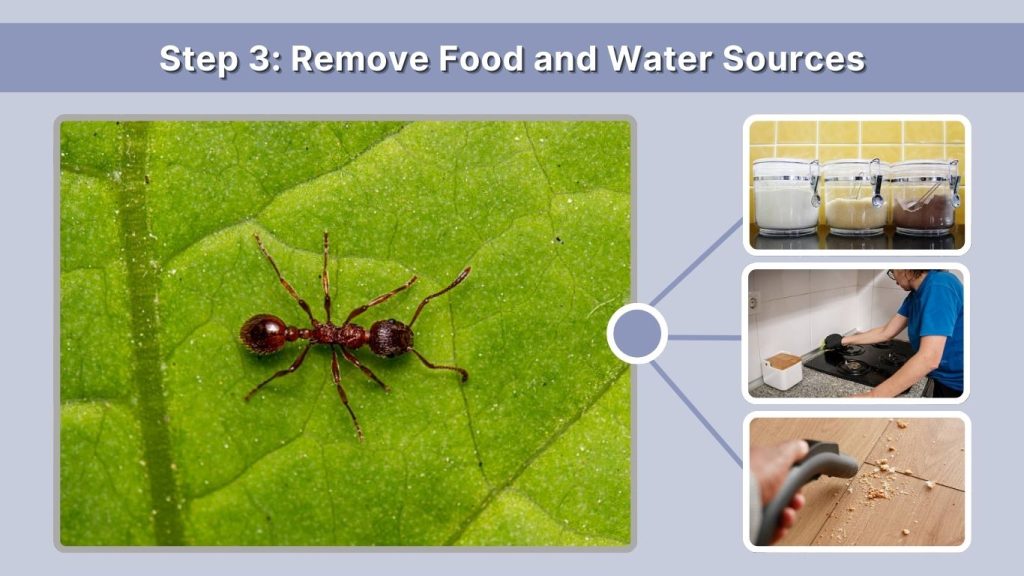
Ants stay because they’ve found a reliable resource. If you remove the reward, you weaken the infestation.
In the Kitchen:
- Store sugar, flour, cereal, and snacks in sealed containers.
- Wipe counters and stovetops daily.
- Vacuum crumbs from corners and under appliances.
- Take trash out nightly during an active infestation.
- Do not leave dirty dishes overnight.
In the Bathroom:
- Dry sinks and countertops before bed.
- Fix leaking faucets or pipes.
- Avoid leaving wet sponges or rags out.
Pet food is a major hidden attractant. Feed pets at set times and remove bowls afterward if possible.
Step 4: Use Ant Bait (Best Long-Term Solution)
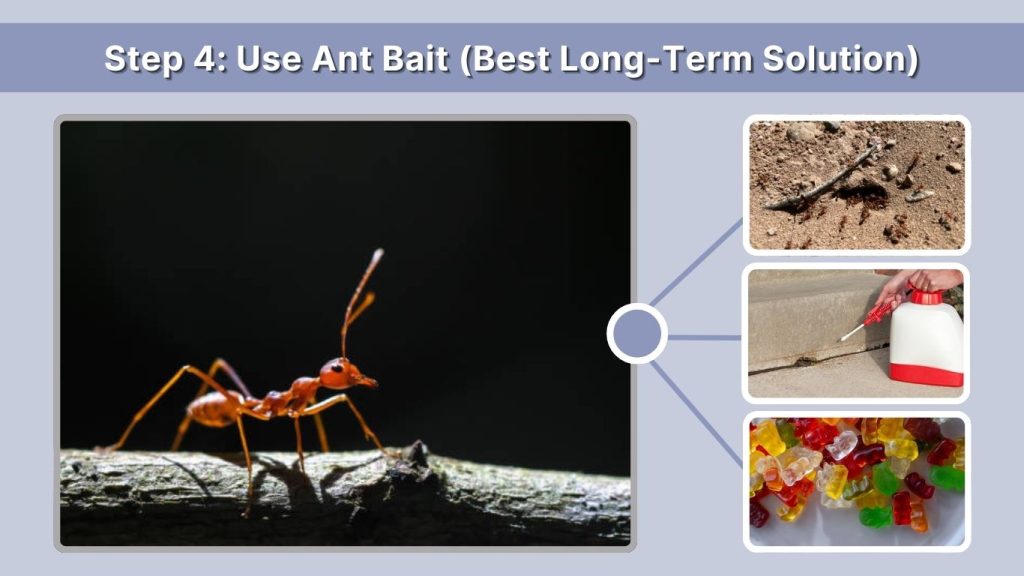
Many people make the mistake of using spray insecticides immediately. While sprays kill visible ants, they don’t eliminate the colony. Bait works better because worker ants carry it back to the nest and share it with others.
How to Use Bait Correctly:
- Place small amounts along active trails.
- Do not place bait randomly in the middle of rooms.
- Avoid spraying near bait (it makes ants avoid it).
- Be patient—activity may increase for 1–2 days.
If ants are going for sweet items like sugar or fruit, use a sweet gel bait. If they are attracted to greasy food or protein, use a protein-based bait.
You should begin seeing a noticeable reduction within 3–7 days. Larger colonies may take up to two weeks.
Step 5: Seal Entry Points (After Activity Drops)
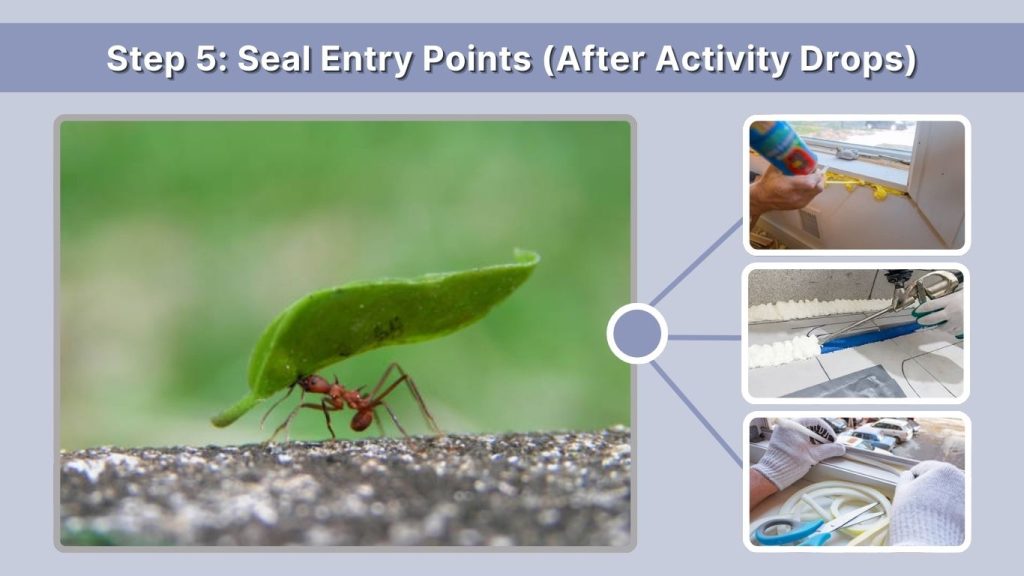
Once baiting reduces the number of ants, seal the openings they were using. Sealing too early can trap ants inside walls and sometimes cause colonies to split.
Use:
- Caulk for baseboards and window seams
- Expanding foam for pipe gaps
- Weather stripping for doors
Focus on the exact entry spot you identified earlier.
Fast Emergency Fixes (If You Need Immediate Relief)
Sometimes you need ants gone right now—especially if they’re covering food prep areas or crawling near guests. While bait works best long term, these quick actions can reduce visible activity immediately:
Vacuum the Trail
Use a vacuum hose to remove active ants quickly. Empty the vacuum bag or canister immediately afterward.
Soapy Water Spray
Mix dish soap with water in a spray bottle and spray directly on ants. This kills them on contact and helps break their scent trail.
Temporary Barriers
If ants are entering through a specific crack:
- Apply painter’s tape temporarily over small gaps.
- Place a thin line of food-grade diatomaceous earth in dry areas.
- Use sticky traps to monitor movement.
These are short-term solutions. You still need to bait the colony for complete elimination.
Common Mistakes That Make Ants Come Back
Even small errors can restart the problem. Avoid these common missteps:
1. Spraying Too Early
Heavy use of repellent sprays can scatter ants and cause colony splitting. This sometimes creates multiple smaller colonies instead of one manageable one.
2. Not Cleaning the Entire Trail
If you only clean the visible cluster and not the full path, new ants will retrace the same chemical route.
3. Sealing Entry Points Before Baiting
Closing gaps too early may force ants to find new routes deeper inside walls.
4. Leaving Bait Out of Reach
Bait should be placed directly along active trails. If ants can’t easily find it, they won’t take it back to the nest.
5. Ignoring Moisture
Tiny ants are often searching for water—not food. Damp cabinets, leaky pipes, or condensation under sinks can sustain an infestation even in a clean home.
If Ants Keep Returning Every Few Weeks
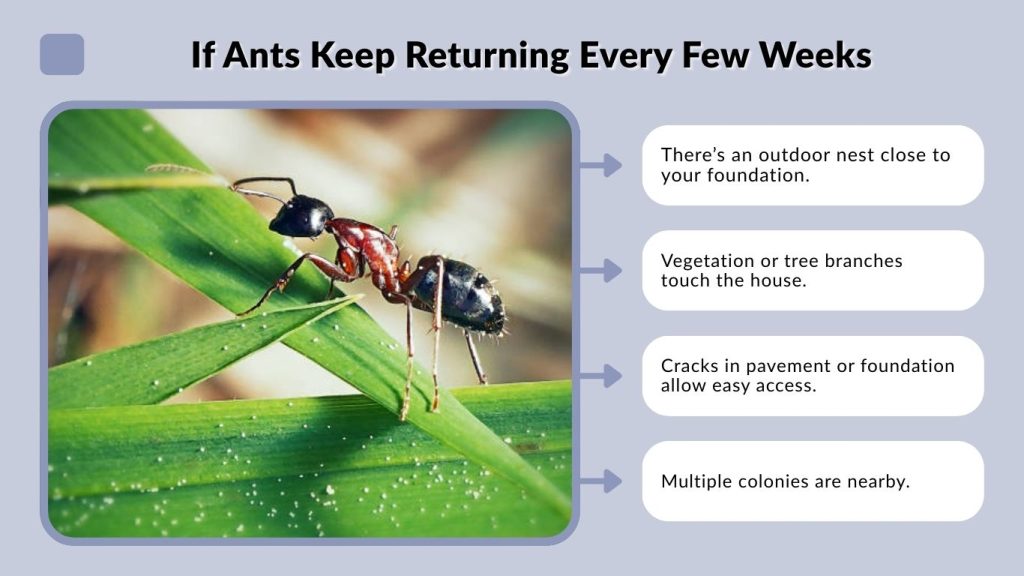
Recurring infestations usually mean one of the following:
- There’s an outdoor nest close to your foundation.
- Vegetation or tree branches touch the house.
- Cracks in pavement or foundation allow easy access.
- Multiple colonies are nearby.
What to Do:
- Inspect the exterior perimeter of your home.
- Look for ant activity in soil, garden beds, and pavement cracks.
- Keep mulch and firewood away from the foundation.
- Trim bushes and branches touching walls.
In some cases, placing bait outdoors near visible trails can help eliminate nearby colonies before they enter your home.
Simple Weekly Prevention Routine
Once the infestation is gone, maintenance is easy if you stay consistent.
Weekly:
- Wipe down cabinet shelves.
- Vacuum along baseboards and corners.
- Clean behind small appliances.
- Check under sinks for moisture.
Monthly:
- Inspect window frames and door seals.
- Refresh caulk in problem areas.
- Look for small cracks forming near baseboards.
Daily Habits That Matter:
- Don’t leave sugary spills overnight.
- Store pantry items in airtight containers.
- Dry sinks and countertops before bed.
- Take trash out regularly.
Consistency prevents scout ants from establishing new scent trails.
Natural vs. Chemical Control: What Works Best?
Many homeowners prefer natural methods. While vinegar and essential oils may disrupt trails, they rarely eliminate colonies.
Diatomaceous earth works well in dry voids but is slower acting than bait.
Commercial gel baits are generally the most reliable option for tiny indoor ants because they target the entire colony, including the queen.
The most effective approach is usually a combination:
- Clean and remove attractants.
- Use bait for colony elimination.
- Seal and prevent re-entry.
When to Call a Professional
Most tiny ant problems can be solved with proper baiting and sanitation. However, professional help may be necessary if:
- Ants are present in multiple rooms for several weeks.
- You suspect carpenter ants (larger ants, wood shavings, hollow-sounding wood).
- Infestations return repeatedly despite following all steps.
- You live in a multi-unit building and ants are coming from neighboring units.
Professionals can identify species, locate hidden nests, and apply targeted treatments safely.
FAQs
Why do I suddenly have tiny ants in my house?
Usually they found a steady food or water source and laid a scent trail for the colony. Weather changes (heat, heavy rain) can also push them indoors. Remove the attractant, erase trails, and use bait to eliminate the nest.
Should I spray ants or use bait?
Bait is usually better because it gets carried back to the colony and helps remove the source. Sprays kill visible ants but often don’t solve the nest, and can make ants avoid bait or split into new colonies.
How long does bait take to work?
You often see improvement in 2–3 days, with major reduction in 3–7 days. Some colonies take up to 2 weeks depending on size, bait freshness, and whether trails are being disturbed or sprayed.
Does vinegar really stop ants?
Vinegar helps because it removes the scent trail and disrupts navigation. It won’t eliminate the colony by itself, but it’s very effective combined with cleaning and proper bait placement.
What if ants are coming from under the sink or bathroom?
That usually points to moisture. Dry the area nightly, fix drips, clean trails, then place bait near the path. Once activity drops, seal gaps around pipes and edges with caulk or foam.
