

Fleas are one of the most stubborn household pests, capable of spreading quickly through pets, carpets, furniture, and even outdoor areas. What makes fleas especially difficult to eliminate is their life cycle—killing visible adult fleas alone won’t stop an infestation. Eggs, larvae, and pupae can survive for weeks and restart the problem if they aren’t addressed. This guide explains how to kill fleas effectively by treating your home, pets, and environment together, while also covering safe methods and realistic timelines for results.
How to Identify a Flea Infestation
Early detection makes flea control much easier. Fleas are small, dark brown insects that move by jumping rather than flying. On pets, the most common signs include constant scratching, biting at the skin, hair loss, and red or irritated patches.
Another clear indicator is flea dirt—tiny black specks that look like pepper—found on pet fur, bedding, or furniture. When placed on a damp paper towel, flea dirt turns reddish-brown, confirming the presence of fleas. In homes, fleas are often noticed first in carpets, rugs, upholstery, and pet sleeping areas. Bites on humans typically appear around ankles and lower legs and are often itchy and clustered.
Understanding the Flea Life Cycle
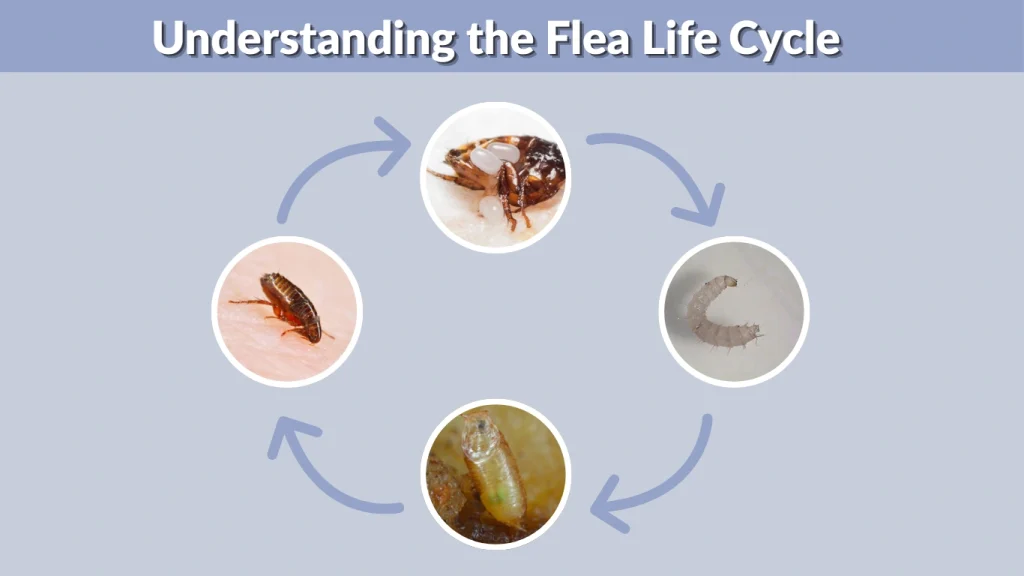
To successfully kill fleas, it’s important to understand how they reproduce. Fleas go through four life stages: egg, larva, pupa, and adult. Adult fleas live on pets, but flea eggs do not. Instead, eggs fall off pets and accumulate in carpets, furniture, cracks in flooring, and pet bedding.
Larvae hatch from these eggs and hide in dark, undisturbed areas, feeding on organic debris and flea dirt. They eventually form pupae, which are protected by a cocoon-like casing. Pupae can survive for weeks or even months, waiting for vibrations or warmth before emerging as adults. This is why flea infestations often seem to “come back” even after treatment. Effective flea control must target every stage of this life cycle.
How to Kill Fleas in the House
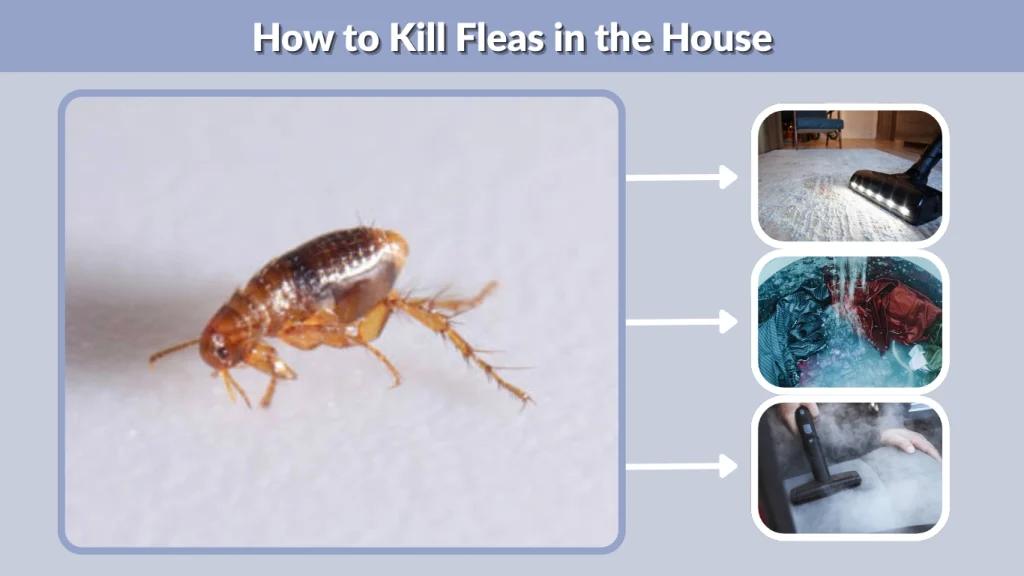
Treating your home is just as important as treating your pets. Without environmental control, fleas will continue to reinfest animals and people.
How to Kill Fleas in Carpet
Carpets are one of the most common flea hiding places. Thorough vacuuming is the first and most important step. Vacuum all carpets slowly and repeatedly, focusing on edges, corners, and areas where pets rest. This removes adult fleas, larvae, and some eggs.
Steam cleaning is highly effective because heat kills fleas at all life stages. The temperature from steam penetrates carpet fibers where sprays may not reach. Flea powders and sprays can be used as a follow-up, but they work best when combined with regular vacuuming rather than used alone.
How to Kill Fleas on Furniture and Bedding
Fleas often infest couches, chairs, and pet bedding. All washable fabrics should be laundered using hot water. Drying on high heat is especially important, as sustained heat kills fleas, eggs, and larvae effectively.
For non-washable furniture, vacuuming followed by steam treatment works well. Upholstery-safe flea sprays may help, but always check labels to ensure they are safe for indoor use and pets.
How to Kill Fleas on Pets
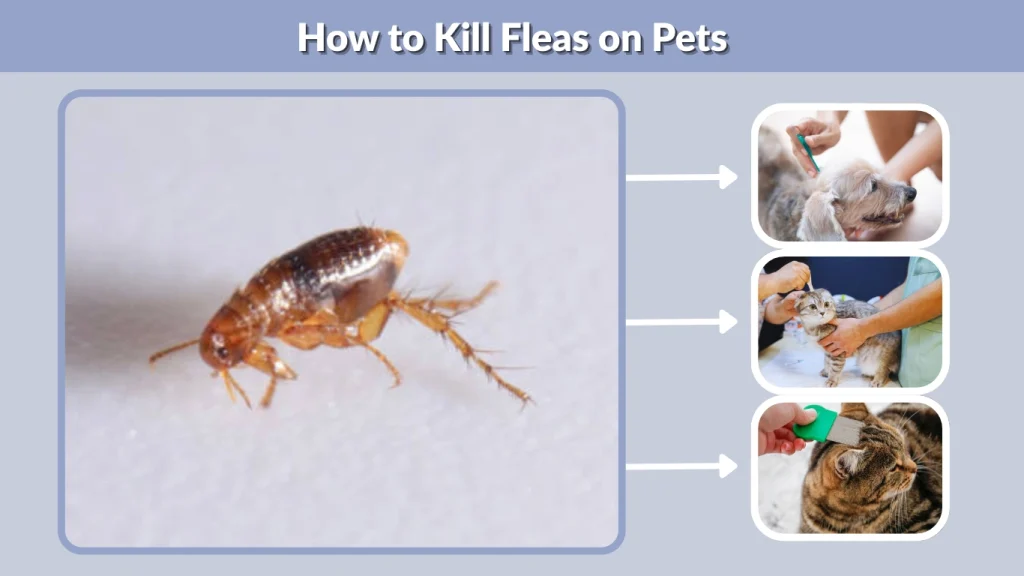
Pets are the primary hosts for fleas, so treating them correctly is essential to stopping an infestation.
How to Kill Fleas on Dogs
Dogs can be treated with vet-approved topical treatments, oral flea medications, or a combination of both. These products are designed to kill adult fleas quickly and continue working for weeks. In emergency situations, a flea bath using mild dish soap can kill fleas on contact, but this is only a temporary solution and does not provide long-term protection.
How to Kill Fleas on Cats
Cats require special care because many flea products safe for dogs are toxic to cats. Only use treatments specifically labeled for cats. Topical and oral flea medications designed for felines are effective when used as directed. Never apply dog flea treatments to cats.
How to Kill Fleas on Puppies and Kittens
Young animals are more sensitive to chemicals. Age-appropriate flea treatments or gentle flea combing may be recommended for puppies and kittens. Always consult a veterinarian before treating very young pets.
How to Kill Flea Eggs and Larvae
Flea eggs and larvae are the most overlooked part of flea control. Because eggs fall into carpets, bedding, and floor cracks, repeated vacuuming is critical. Vacuuming daily during an active infestation helps remove newly hatched larvae before they mature.
Washing pet bedding frequently and treating resting areas reduces egg buildup. Environmental sprays labeled for flea eggs and larvae can help interrupt the life cycle when used consistently.
How to Kill Fleas in the Yard
Outdoor areas often act as a reservoir for fleas, especially in warm and shaded locations. Fleas thrive in moist soil, tall grass, and areas where pets rest or wildlife passes through. If the yard is not treated, fleas can easily return to the home on pets.
Focus treatment on shaded spots, along fence lines, under decks, and around dog houses. Regular mowing reduces flea-friendly conditions by increasing sunlight exposure. Removing leaf litter and organic debris helps eliminate flea breeding areas.
Outdoor flea sprays or granules can be effective when applied correctly, but they should be used alongside environmental management. Watering the yard lightly after treatment can help products penetrate the soil where flea larvae develop.
Natural and DIY Ways to Kill Fleas
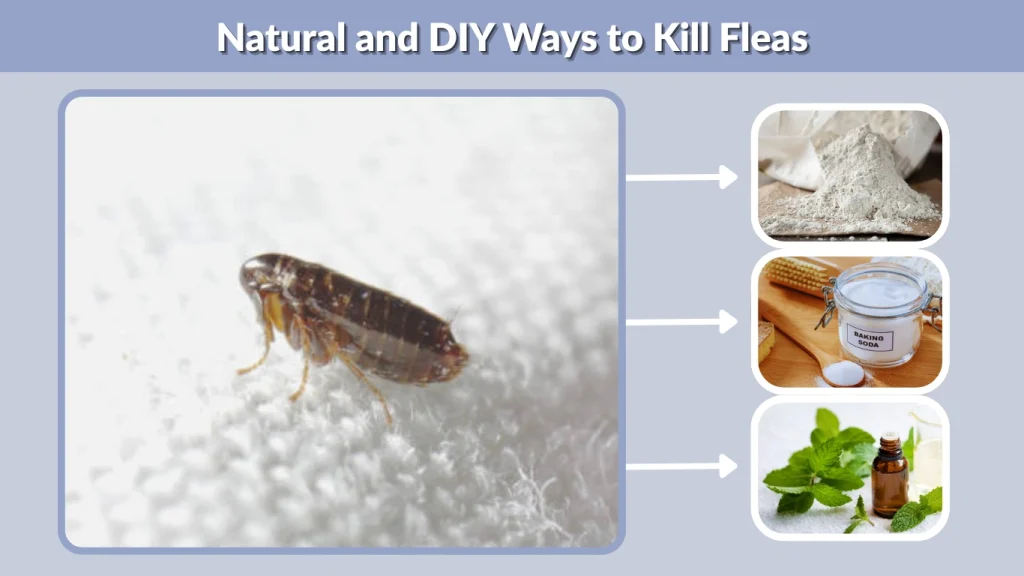
Some homeowners prefer natural flea control methods, especially when pets or children are present. While these methods may not work as quickly as chemical treatments, they can help reduce flea populations when used consistently.
Diatomaceous Earth
Food-grade diatomaceous earth kills fleas by dehydrating them. It should be lightly dusted into carpets, cracks, pet bedding, and outdoor resting areas. After allowing it to sit for several hours or overnight, vacuum thoroughly. Only food-grade diatomaceous earth should be used, and care should be taken to avoid inhalation.
Baking Soda and Salt
Baking soda and salt work by drying out flea eggs and larvae. When brushed into carpets and left for several hours, they can help reduce flea populations. These methods are most effective when combined with frequent vacuuming and are best used as supportive treatments rather than standalone solutions.
Vinegar, Oils, and Essential Oils
Vinegar does not kill fleas directly but may help repel them. Some essential oils have flea-repelling properties, but many are unsafe for pets, especially cats. These methods should be used cautiously and never applied directly to animals without veterinary approval.
How Long Does It Take to Kill Fleas?
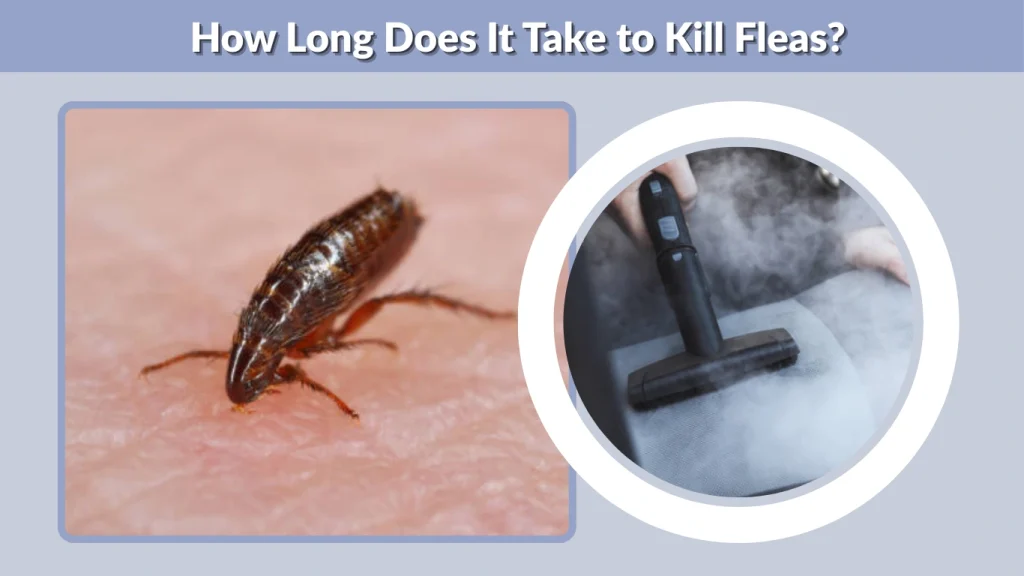
Flea control takes time, and results vary depending on the method used and the severity of the infestation.
How Long Do Flea Medications Take to Work?
Most vet-approved flea medications begin killing adult fleas within hours. Topical treatments such as Frontline or Advantage usually start working within 12 to 24 hours. Oral medications like NexGard, Bravecto, and Simparica often kill fleas faster, sometimes within 4 to 8 hours. However, no medication kills flea eggs instantly, which is why continued treatment is necessary.
How Long Do Home Remedies Take?
Natural methods generally work more slowly. Diatomaceous earth may take several days to reduce flea populations. Salt and baking soda require repeated applications over multiple days. Steam cleaning kills fleas instantly but does not prevent new fleas from emerging unless repeated.
Complete flea elimination often takes two to four weeks, depending on how well all life stages are addressed.
How to Instantly Kill Fleas
For immediate relief, fleas can be killed on contact using simple methods. Fleas removed manually can be dropped into soapy water, which kills them quickly. A flea comb is useful for removing fleas from pets, especially around the neck and tail.
Washing pet bedding or clothing in hot water followed by high heat drying kills fleas instantly. These instant methods provide temporary relief but must be paired with long-term control strategies to prevent reinfestation.
Common Flea Control Mistakes to Avoid
One of the biggest mistakes is treating pets without treating the home and yard. Fleas will continue to reappear if their environment is not addressed. Skipping follow-up treatments is another common error, as flea eggs can hatch weeks after initial treatment.
Using unsafe or unapproved products, especially on cats or young animals, can cause serious health issues. Inconsistent cleaning routines and underestimating flea eggs often lead to prolonged infestations.
Long-Term Flea Prevention Tips
Preventing fleas is easier than eliminating an active infestation. Monthly flea prevention for pets is one of the most effective long-term strategies. Regular vacuuming, washing pet bedding, and maintaining a clean yard significantly reduce flea risks.
Monitoring pets during warmer months and acting quickly at the first sign of fleas prevents infestations from becoming severe.
FAQs
What kills fleas the fastest?
Vet-approved oral flea medications kill fleas the fastest, often within a few hours. Steam cleaning and hot water washing also kill fleas instantly on contact. For best results, fast-acting treatments should be combined with home and yard control.
How long does it take to completely get rid of fleas?
Most flea infestations take 2 to 4 weeks to fully eliminate. This timeline depends on treating pets, killing flea eggs and larvae in the home, and preventing reinfestation from outdoor areas.
Can fleas live in carpets long-term?
Yes. Flea eggs, larvae, and pupae can survive in carpets for weeks or even months. Regular vacuuming and steam cleaning are essential to disrupt the flea life cycle and prevent long-term infestations.
Do natural flea remedies actually work?
Natural remedies can reduce flea populations but usually work more slowly than chemical treatments. Methods like diatomaceous earth and steam cleaning are most effective when used consistently and alongside proper pet treatment.
Why do fleas keep coming back?
Fleas often return because eggs and pupae survive initial treatments. Skipping follow-up cleaning, not treating the yard, or inconsistent pet prevention allows fleas to restart the infestation cycle.
