
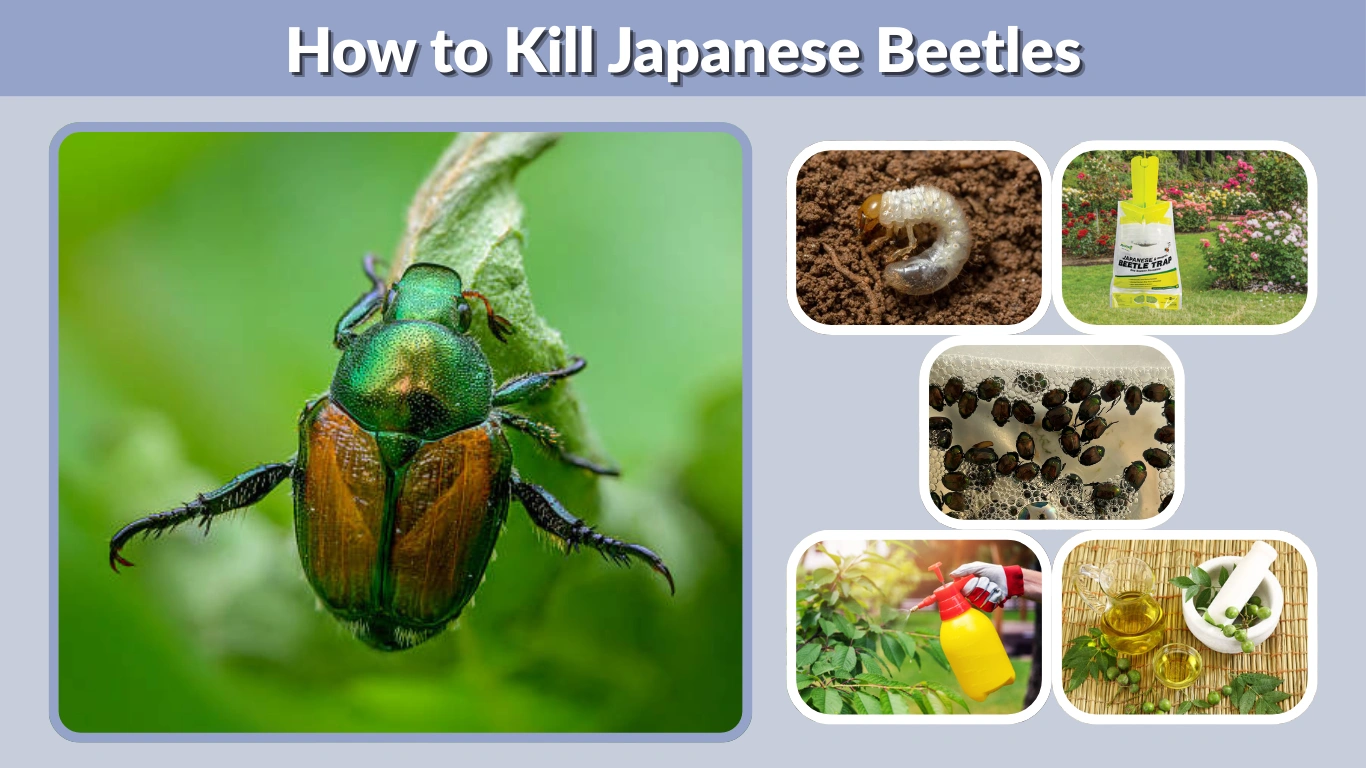
Japanese beetles are one of the most destructive garden pests, capable of skeletonizing leaves, damaging flowers, and ruining crops in a short amount of time. If you’ve noticed shiny green beetles swarming your roses, vegetables, or trees, you’re not alone—and you’re probably searching for the best way to stop them.
This guide explains how to kill Japanese beetles effectively, whether you prefer natural solutions, chemical control, or bee-safe methods. We’ll cover what works, what doesn’t, and how to control beetles without harming beneficial insects or plants.
Understanding Japanese Beetles
Before choosing a control method, it helps to understand how Japanese beetles live and why they are so persistent.
What Are Japanese Beetles?
Japanese beetles (Popillia japonica) are invasive insects that feed on more than 300 plant species. As adults, they attack leaves, flowers, and fruits. As larvae (grubs), they live underground and feed on grass roots, damaging lawns.
Adults are easy to identify by their:
- Metallic green head and body
- Copper-colored wings
- White hair tufts along the sides of the abdomen
Why Japanese Beetles Keep Coming Back
Japanese beetles have a predictable lifecycle:
- Eggs are laid in soil during summer
- Grubs feed underground through fall and spring
- Adults emerge in early summer and begin feeding
If grubs are not controlled, new beetles will return year after year, often in larger numbers.
How to Kill Japanese Beetles Naturally
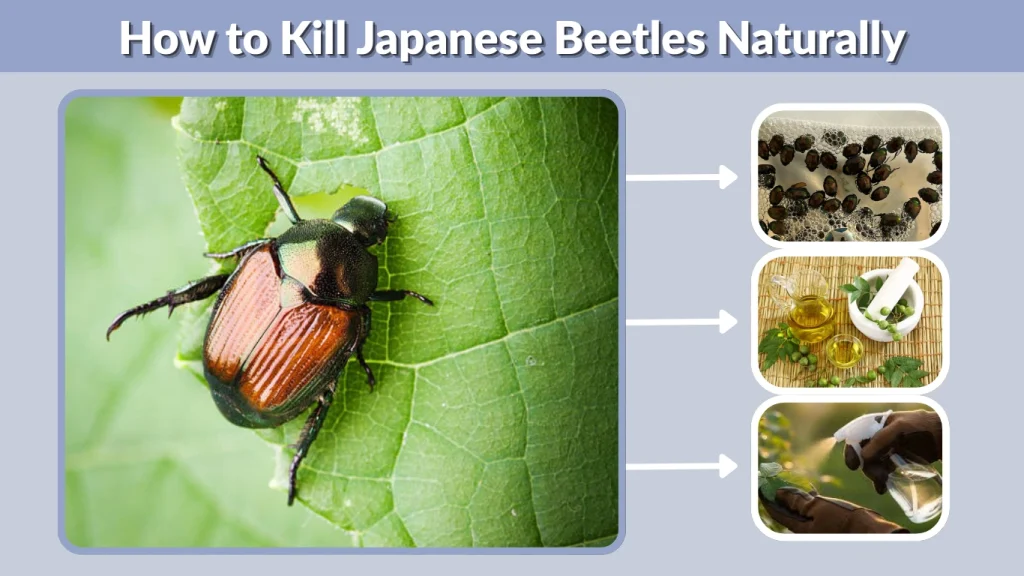
Natural control methods work best when infestations are caught early. These approaches are ideal for gardeners who want to avoid harsh chemicals.
Hand-Picking and the Soapy Water Method
One of the simplest and most effective ways to kill Japanese beetles is manual removal.
How it works:
- Pick beetles off plants early in the morning when they are sluggish
- Drop them into a bucket of water mixed with dish soap
The soap breaks the beetles’ outer coating, killing them quickly. This method is especially effective on roses, beans, and small plants.
How to Use Neem Oil to Kill Japanese Beetles
Neem oil is one of the most popular organic treatments for Japanese beetles.
Neem oil works by:
- Disrupting feeding behavior
- Interfering with reproduction
- Deterring beetles from returning
How to use it:
- Mix neem oil according to label instructions
- Spray leaves thoroughly, including undersides
- Apply in the early morning or evening
Neem oil does not kill beetles instantly, but it reduces damage over time and is safe for most beneficial insects when used correctly.
How to Kill Japanese Beetles Without Chemicals
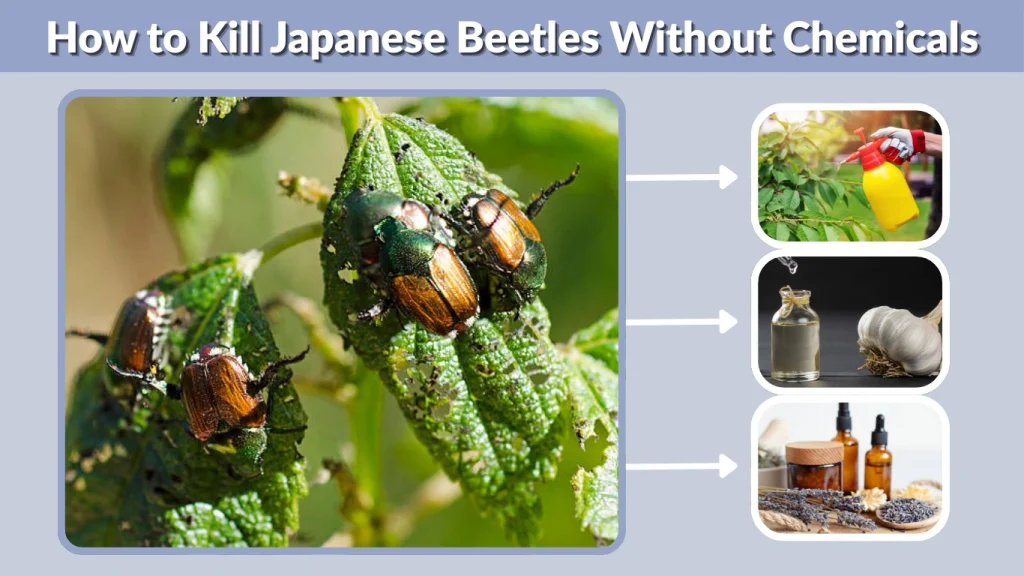
If you want to avoid insecticides completely, several non-chemical options can help reduce beetle populations.
These methods are best for:
- Home gardens
- Edible plants
- Pollinator-friendly yards
Natural Sprays and Repellents
Certain natural sprays can repel or kill Japanese beetles on contact.
Common options include:
- Mild soap-and-water sprays
- Garlic-based sprays
- Essential oil blends (peppermint or clove)
While these solutions may require frequent reapplication, they are effective for light to moderate infestations.
How to Kill Japanese Beetles Without Harming Bees
Protecting bees and other pollinators is critical, especially when treating flowering plants.
Bee-safe tips:
- Spray in early morning or late evening
- Avoid spraying open blooms
- Use targeted treatments instead of broad spraying
Neem oil and soap sprays are generally safe when applied properly and not sprayed directly on bees.
How to Kill Japanese Beetles on Plants
Japanese beetles are attracted to certain plants and often gather in large numbers, making targeted treatment essential.
General plant protection tips:
- Remove beetles as soon as they appear
- Focus on heavily damaged plants first
- Avoid over-fertilizing, which attracts beetles
How to Kill Japanese Beetles on Roses
Roses are one of the beetles’ favorite plants.
Effective methods include:
- Daily hand-picking
- Neem oil sprays
- Covering roses temporarily with garden netting
Consistent removal prevents beetles from releasing pheromones that attract more beetles.
How to Kill Japanese Beetles on Vegetables and Fruits

Japanese beetles frequently attack edible plants, which makes safe control especially important.
Green Beans and Other Vegetables
Green beans, squash, and leafy vegetables are common targets. For food crops, avoid harsh chemicals close to harvest.
Effective methods include:
- Hand-picking beetles daily
- Using neem oil or mild soap sprays
- Covering plants with floating row covers
Spray treatments should be applied in the early morning or evening and rinsed off produce before eating.
Raspberries and Other Fruit Plants
Japanese beetles can damage raspberry leaves and fruiting canes. Removing beetles early helps prevent serious damage.
Best practices:
- Shake beetles into soapy water
- Apply neem oil to leaves, not ripe fruit
- Keep the area free of fallen fruit
How to Kill Japanese Beetles in Trees
Trees can be challenging because beetles often feed high in the canopy.
For small trees:
- Use neem oil or insecticidal soap sprays
- Focus on lower branches where beetles gather
For larger trees:
- Target beetles early in the season
- Consider professional treatment if damage is severe
Systemic treatments should be used cautiously, especially on flowering trees that attract pollinators.
How to Kill Japanese Beetle Grubs
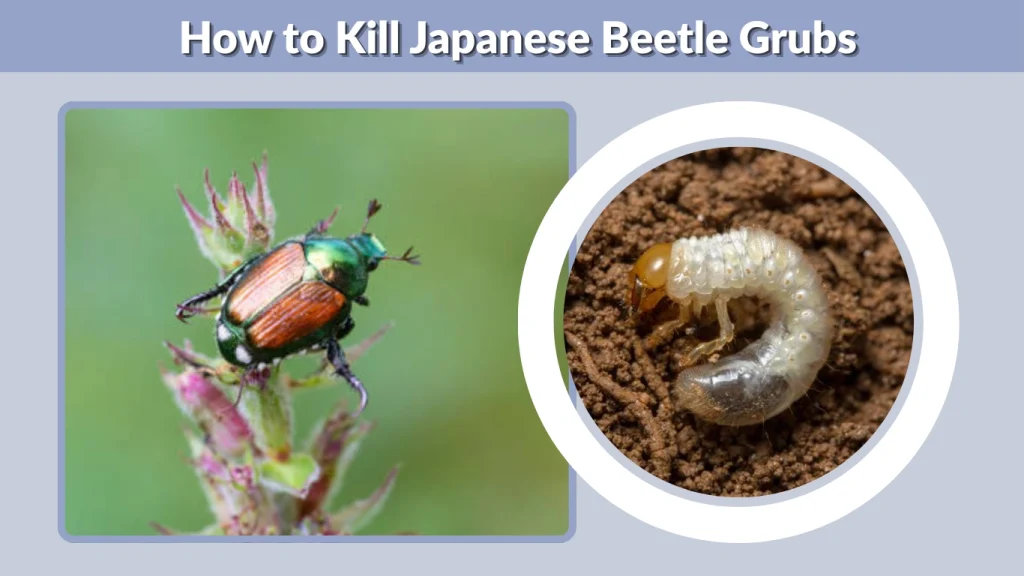
Controlling grubs is one of the most effective long-term strategies for reducing adult beetle populations.
Grubs live underground and feed on grass roots, causing brown patches in lawns.
Natural Grub Control Options
Natural solutions work best when applied at the right time.
Popular options include:
- Beneficial nematodes, which attack grubs in the soil
- Milky spore, a long-term biological control
These methods are safest for pets, wildlife, and beneficial insects.
Chemical Grub Killers
Chemical treatments may be necessary for severe infestations.
Key considerations:
- Apply in late summer when grubs are young
- Water the lawn after application
- Follow label instructions carefully
Chemical Control for Japanese Beetles
When natural methods fail, chemical insecticides can provide faster results.
How Long Does It Take Sevin to Kill Japanese Beetles?
Sevin is a commonly used insecticide for Japanese beetles.
What to expect:
- Beetles begin dying within hours
- Maximum results usually occur within 24–48 hours
However, Sevin can harm beneficial insects and should be used sparingly and only when necessary.
Traps: How to Attract and Kill Japanese Beetles
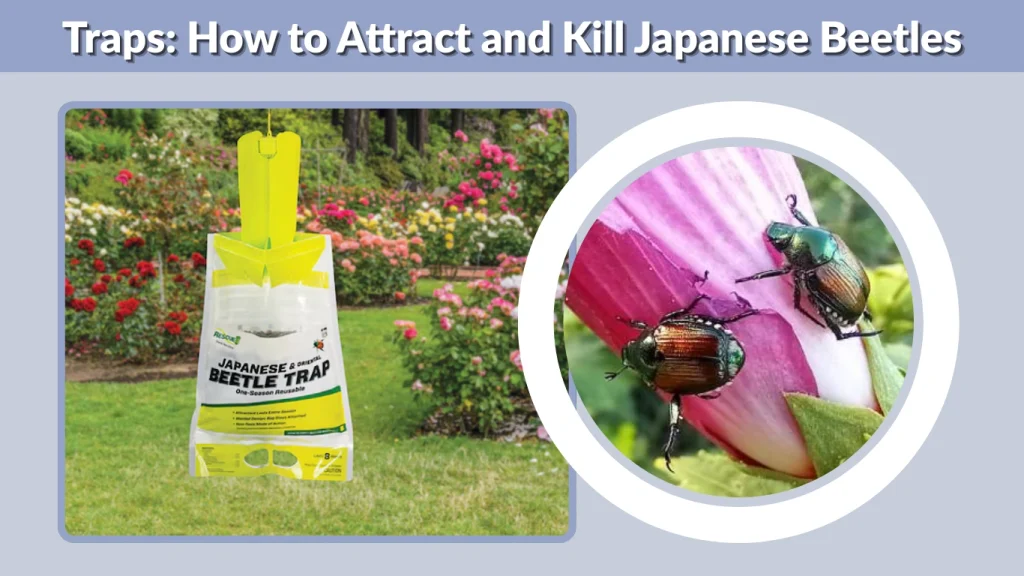
Japanese beetle traps use pheromones to lure beetles.
Pros:
- Can reduce beetle numbers when placed far from plant
Cons:
- May attract more beetles than they kill
- Not ideal for small yards
Traps should be placed at least 30–50 feet away from gardens.
How to Kill Japanese Beetles Indoors
Japanese beetles sometimes enter homes accidentally.
Safe indoor removal methods:
- Vacuum beetles and dispose of the bag
- Use light traps
- Seal entry points around doors and windows
Avoid spraying insecticides indoors unless absolutely necessary.
How to Kill Japanese Lady Beetles
Japanese lady beetles (Asian lady beetles) are different insects and may require different control methods.
Effective options include:
- Vacuuming indoors
- Using soapy water sprays outdoors
- Sealing cracks and entry points
FAQs
What Kills Japanese Beetles Instantly?
Soapy water and direct contact insecticides kill beetles quickly.
Can You Kill Japanese Beetles Without Insecticide?
Yes. Hand-picking, neem oil, and biological controls are effective without chemicals.
What Is the Best Way to Kill Japanese Beetles Naturally?
A combination of hand removal, neem oil, and grub control provides the best natural results.
