
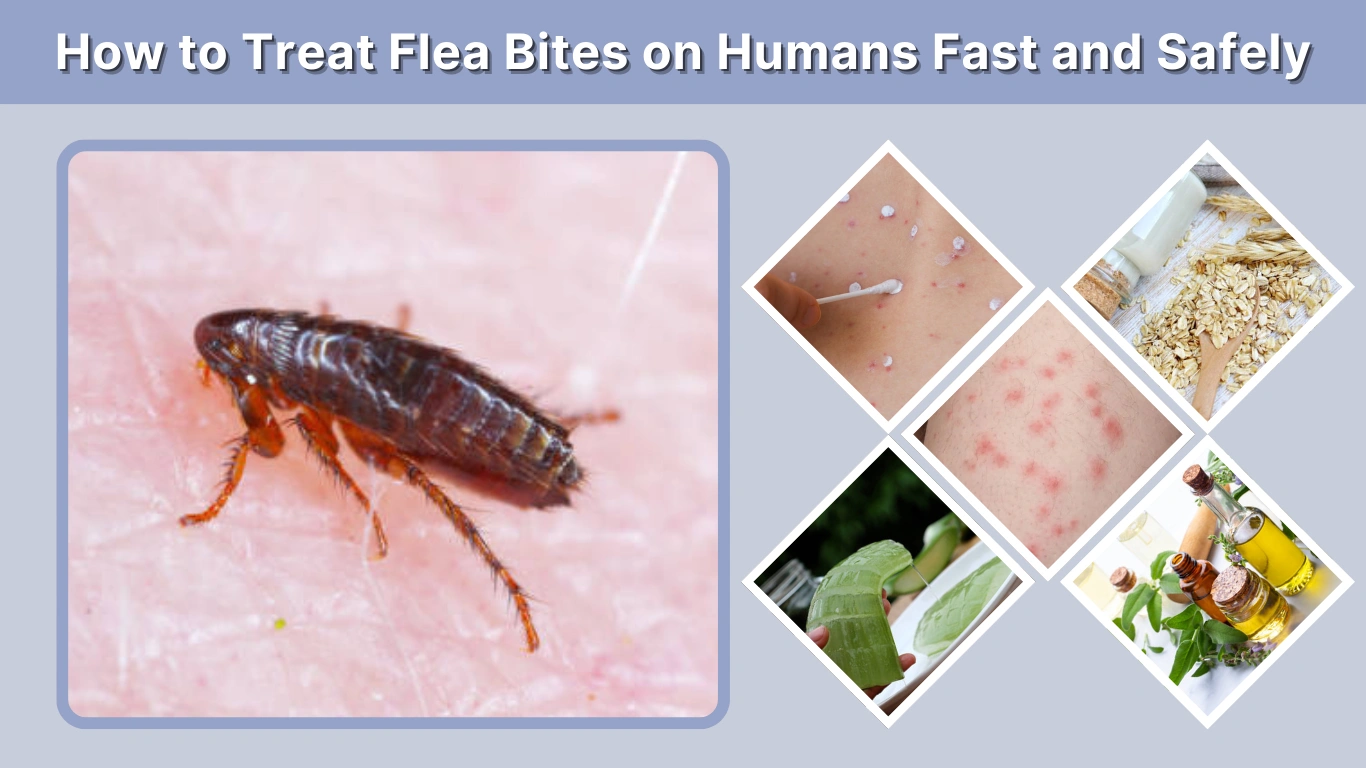
Flea bites on humans are uncomfortable, itchy, and often frustrating to deal with—especially when they appear suddenly and in clusters. While flea bites are usually not dangerous, improper treatment can lead to infection, prolonged itching, or scarring. Many people focus only on stopping the itch, but effective treatment also involves protecting the skin and preventing further irritation. This guide explains how to treat flea bites on humans safely and quickly, using home care, over-the-counter treatments, and medical guidance when necessary.
What Are Flea Bites on Humans?
Flea bites occur when a flea pierces the skin to feed on blood. During this process, the flea injects saliva that contains anticoagulants, which prevent blood from clotting. This saliva triggers the body’s immune response, causing redness, itching, and swelling.
Humans are not ideal flea hosts, but fleas will bite people when pets are nearby or when infestations are present in carpets, bedding, or furniture. Because fleas often bite multiple times, people usually notice several bites rather than just one.
What Do Flea Bites Look Like on Humans

Flea bites typically appear as small red or pink bumps on the skin. Many have a darker center or pinpoint mark where the flea pierced the skin. Unlike mosquito bites, flea bites usually remain small and firm rather than swelling into large welts.
They commonly appear in clusters or short lines, especially on the ankles, lower legs, feet, and waistline. Fleas live close to the ground, which is why bites are rarely found on the face or upper body unless someone is lying on an infested surface.
Why Flea Bites Itch and Swell
The itching associated with flea bites is caused by an allergic reaction to flea saliva. Some people experience mild irritation, while others develop intense itching, redness, or even rash-like reactions.
Itching may worsen several hours after the bite rather than immediately. Scratching breaks the skin barrier, increasing inflammation and raising the risk of infection. This is why early treatment is important, even for mild flea bites.
How to Treat Flea Bites on Humans at Home

Most flea bites can be treated safely at home with simple care methods designed to clean the skin, reduce itching, and prevent infection.
Immediate First Aid for Flea Bites
The first step is to wash the affected area with mild soap and warm water. This removes bacteria and any remaining flea saliva from the skin. Pat the area dry gently with a clean towel rather than rubbing.
Applying a cold compress or ice pack wrapped in a cloth for 10 to 15 minutes helps reduce swelling and numbs itching. Cold treatment can be repeated several times a day as needed.
How to Treat Itchy Flea Bites on Humans
For itching relief, over-the-counter anti-itch creams containing hydrocortisone or calamine lotion are commonly effective. These products reduce inflammation and calm irritated skin.
Oral antihistamines may help if itching is severe or widespread. They reduce the body’s allergic response and are especially helpful at night when itching interferes with sleep. Always follow dosage instructions carefully.
How to Treat Flea Bites on Humans Fast
When fast relief is needed, focus on treatments that reduce inflammation quickly. Cold compresses combined with hydrocortisone cream often provide the fastest improvement.
Avoid scratching, even if itching feels intense. Scratching slows healing and increases the chance of infection. Keeping nails trimmed and covering bites loosely with breathable clothing can help reduce irritation.
Avoid using harsh chemicals, alcohol, or strongly scented products on flea bites. These can dry out the skin and make symptoms worse rather than better.
Home Remedies for Flea Bites on Humans

Some natural remedies can support healing when used carefully.
Natural Remedies That Can Help
Aloe vera gel has soothing and anti-inflammatory properties that help calm itching and redness. Applying a thin layer to clean skin can promote comfort and healing.
Oatmeal baths or oatmeal paste applied to bites can help relieve itching, especially when multiple bites are present. Baking soda mixed with water into a paste may also reduce itching when applied briefly and rinsed off.
Remedies to Use With Caution
Essential oils and vinegar are often suggested online but can irritate sensitive skin. These should never be applied directly to flea bites without dilution and are not recommended for children or people with sensitive skin.
How to Treat Infected Flea Bites on Humans
If flea bites become increasingly red, swollen, warm, or painful, infection may be developing. Pus, crusting, or spreading redness are warning signs.
Clean infected bites gently with soap and water, then apply an antiseptic cream. If symptoms worsen or do not improve, medical treatment may be necessary.
How to Treat Severe or Allergic Reactions to Flea Bites
Some people are more sensitive to flea saliva and may experience severe reactions. Symptoms of an allergic reaction can include intense itching, swelling, hives, or a widespread rash around the bite area. In rare cases, swelling may extend beyond the bite itself.
For mild allergic reactions, oral antihistamines and hydrocortisone cream usually provide relief. If swelling continues to worsen, becomes painful, or spreads rapidly, medical attention should be sought. Difficulty breathing, facial swelling, or dizziness may indicate a serious allergic reaction and requires urgent medical care.
How to Treat Sand Flea Bites on Humans

Sand flea bites differ from common flea bites. Instead of small bumps, sand fleas may burrow into the skin, causing a swollen area with a dark or white center. These bites are often painful and can become infected if not treated properly.
Do not attempt to dig out an embedded sand flea at home. Medical removal is usually recommended to prevent infection. After removal, keeping the area clean and applying prescribed antibiotics or antiseptics helps promote healing. Sand flea bites should always be monitored closely for signs of infection.
How to Treat Flea Bite Scars on Humans
Most flea bites heal without scarring, but repeated scratching or infection can leave marks behind. Preventing scars begins with proper bite care, including reducing inflammation early and avoiding scratching.
Once bites have healed, keeping the skin moisturized can improve appearance. Products containing vitamin E or silicone-based gels may help reduce discoloration over time. Sun protection is also important, as sun exposure can darken healing skin and make scars more noticeable.
NHS and Medical Guidance for Flea Bites (UK Focus)
According to general medical guidance, flea bites usually do not require medical treatment and often resolve on their own. Treatment focuses on relieving symptoms such as itching and swelling.
Medical care is recommended if flea bites become infected, cause severe allergic reactions, or fail to improve after several days. Children, elderly individuals, and people with compromised immune systems should be monitored more closely for complications.
How to Treat and Prevent Flea Bites on Humans
Treating flea bites alone will not stop new bites from appearing. Prevention requires addressing the source of fleas in the environment.
Pets should be treated with vet-approved flea prevention products. Bedding, carpets, and furniture should be cleaned regularly, and vacuuming should be done frequently during an infestation. Washing clothing and bedding in hot water and drying on high heat helps kill fleas and eggs.
Reducing flea exposure prevents repeat bites and supports long-term relief.
Common Mistakes to Avoid
One common mistake is scratching flea bites, which increases inflammation and infection risk. Another is using harsh chemicals or unproven home remedies that irritate the skin.
Treating flea bites without addressing fleas in the home or on pets often leads to ongoing problems. Consistent environmental control is just as important as treating the bites themselves.
FAQs
How long do flea bites last on humans?
Most flea bites heal within a few days to a week. Severe reactions or infected bites may take longer.
What is the fastest way to treat flea bites?
Cold compresses combined with hydrocortisone cream provide fast relief from itching and swelling.
Can flea bites get infected?
Yes. Scratching flea bites can introduce bacteria, leading to infection.
Do flea bites require medical treatment?
Most flea bites do not, but infected bites or allergic reactions should be evaluated by a healthcare professional.
How do you prevent flea bites from coming back?
Treat pets, clean the home thoroughly, and maintain regular flea prevention to stop repeat exposure.
