
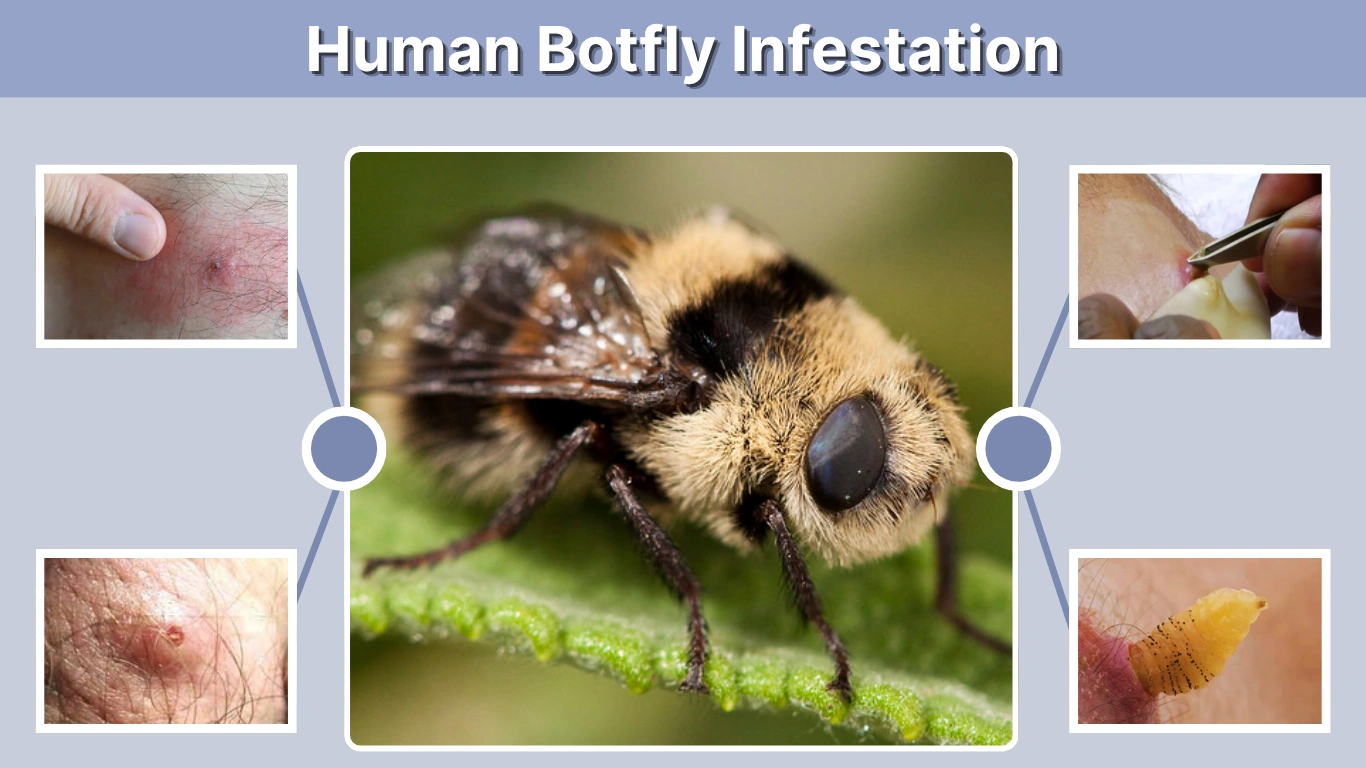
The human botfly (Dermatobia hominis) is one of the most fascinating yet disturbing parasites that can infect humans. Known for laying larvae beneath the skin, this insect causes a condition called myiasis, where larvae grow and feed inside human tissue. Understanding its life cycle, symptoms, and safe removal methods is essential for early detection and treatment.
What Is a Human Botfly?
The human botfly, scientifically named Dermatobia hominis, belongs to the family Oestridae. It is primarily found in tropical regions of Central and South America. Adult botflies are hairy, robust insects that resemble bumblebees. Unlike other flies, they do not bite or feed on humans. Instead, their larvae develop inside the host’s skin, feeding on tissue and bodily fluids.
These parasites are also known as skin botflies or human skin botflies, and though rare in temperate regions, cases have been reported among travelers returning from endemic areas.
Botfly Life Cycle and How It Affects Humans

The life cycle of a human botfly includes four stages: egg, larva, pupa, and adult. The adult female botfly attaches her eggs to mosquitoes or other insects. When the mosquito bites a human, body heat causes the botfly eggs to hatch, releasing larvae that burrow painlessly into the skin.
Inside the skin, larvae grow over several weeks, forming a small lump with a central breathing hole. Once mature, the larva exits the skin and pupates in the soil before becoming an adult fly. This unique parasitic cycle makes botfly infestations highly distinctive.
Where Human Botflies Are Found
Human botflies thrive in humid tropical environments such as Belize, Brazil, Costa Rica, and Panama. Travelers visiting rural forests or farmlands in these regions are most at risk.
Though uncommon in the United States, imported cases occur when people return from tropical destinations. Reports show occasional infestations in states like Florida and Texas, often due to exposure during vacations or research expeditions in Central America.
How Botflies Enter the Human Body
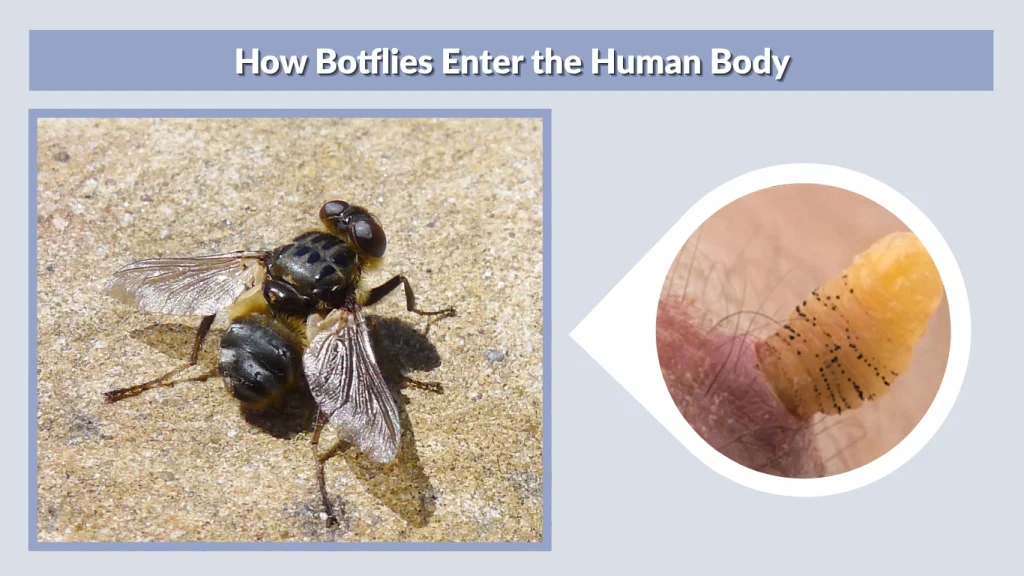
Botflies do not land directly on humans to lay eggs. Instead, they rely on mosquitoes, ticks, or other biting insects to transfer their eggs. When these insects land on a person, warmth triggers the eggs to hatch, and larvae quickly penetrate the skin through hair follicles or bite wounds.
Contrary to myths, botflies cannot fly into your body or lay eggs internally. The infection process is entirely external and typically results from insect bites in infested regions.
Symptoms of Human Botfly Infestation
Symptoms begin gradually and often resemble an insect bite. Early signs include redness, swelling, and mild itching. Over time, the area develops into a painful, boil-like lump that may secrete fluid.
The most distinctive symptom is the sensation of movement beneath the skin — a sign that the larva is alive and growing. In some cases, small holes appear in the center of the lesion, which the larva uses to breathe.
If left untreated, the swelling may worsen, and secondary bacterial infections can occur due to scratching or improper extraction attempts.
Common Body Areas Affected by Botfly Larvae

Human botfly larvae can infest almost any part of the body, but certain areas are more vulnerable due to exposure or insect bites. Common locations include:
- Head and scalp: where mosquitoes frequently bite.
- Face and neck: leading to visible swelling or discomfort.
- Arms and legs: especially in people wearing short sleeves or shorts.
- Back and shoulders: areas often unnoticed until pain develops.
- Rare cases: ears, eyes, nose, or even the breast, which can cause severe irritation and infection.
Complications and Risks
Although botfly infestations are not life-threatening, complications can arise if the larva remains inside the body for too long. The wound may become infected, leading to tissue damage and scarring.
In rare cases, botfly larvae located near sensitive areas like the eye, ear, or brain can cause serious medical issues such as vision problems, hearing loss, or nerve pain. Prompt medical attention is crucial to avoid permanent damage.
Human Botfly Removal Methods

Home Remedies and Safe Extraction
Home remedies can work effectively if done carefully. Many people use petroleum jelly, bacon fat, or beeswax to suffocate the larva by blocking its air hole. Once deprived of oxygen, the larva emerges partially, allowing for gentle extraction with sterilized tweezers.
Another traditional method involves applying adhesive tape or nail polish to seal the opening. However, improper attempts can rupture the larva, leading to infection, so it’s important to proceed cautiously.
Medical Extraction and Treatment
Medical removal is the safest and most effective method for treating a human botfly infestation. Doctors typically use a local anesthetic to numb the area before making a small incision. The larva is then carefully extracted intact to prevent infection or inflammation.
After removal, the wound is thoroughly cleaned and treated with antibiotic ointments to prevent bacterial growth. In severe or multiple infestations, oral antibiotics and pain relievers may be prescribed. Healing usually takes one to two weeks, depending on the wound size.
Prevention of Human Botfly Infestation
Prevention is the best protection, especially for travelers to tropical or rural areas. Always apply insect repellent containing DEET, picaridin, or eucalyptus oil before going outdoors. Wear long sleeves, pants, and hats to minimize skin exposure.
Sleeping under mosquito nets and avoiding sitting near livestock also help reduce risks. Travelers returning from endemic regions should check for unusual skin lesions or bumps that may indicate larvae beneath the skin.
FAQs
1. Can botflies infect humans in the U.S.?
Human botflies are native to Central and South America, not the U.S. However, travelers can bring larvae back unknowingly. Occasional cases have been recorded in southern states like Florida or Texas, usually involving people who were bitten by mosquitoes while abroad in endemic areas.
2. How long can a botfly live inside a human?
A botfly larva typically lives under the skin for six to ten weeks. During this time, it feeds on tissue and grows steadily until mature enough to exit the body. If not removed, it eventually emerges naturally to pupate in the soil, leaving a small wound behind.
3. What happens if a botfly larva dies under the skin?
When a larva dies inside the body, it can cause inflammation or infection, as the immune system reacts to foreign tissue. Dead larvae must be surgically removed to prevent abscess formation. Prompt medical treatment ensures proper cleaning and reduces the risk of permanent scarring or complications.
4. Is botfly infestation contagious between humans?
No, botfly infestations are not contagious. The larvae cannot transfer directly from one person to another. Infection only occurs through contact with an insect—like a mosquito or tick—that carries botfly eggs. Proper hygiene and protective measures completely prevent human-to-human transmission.
5. What’s the largest recorded botfly removal case?
Some of the largest botfly larvae removed from humans have measured nearly one inch long. Viral videos on YouTube and medical reports often show extreme cases where larvae were extracted from the scalp or face. These large infestations are rare and usually result from delayed medical attention.
