
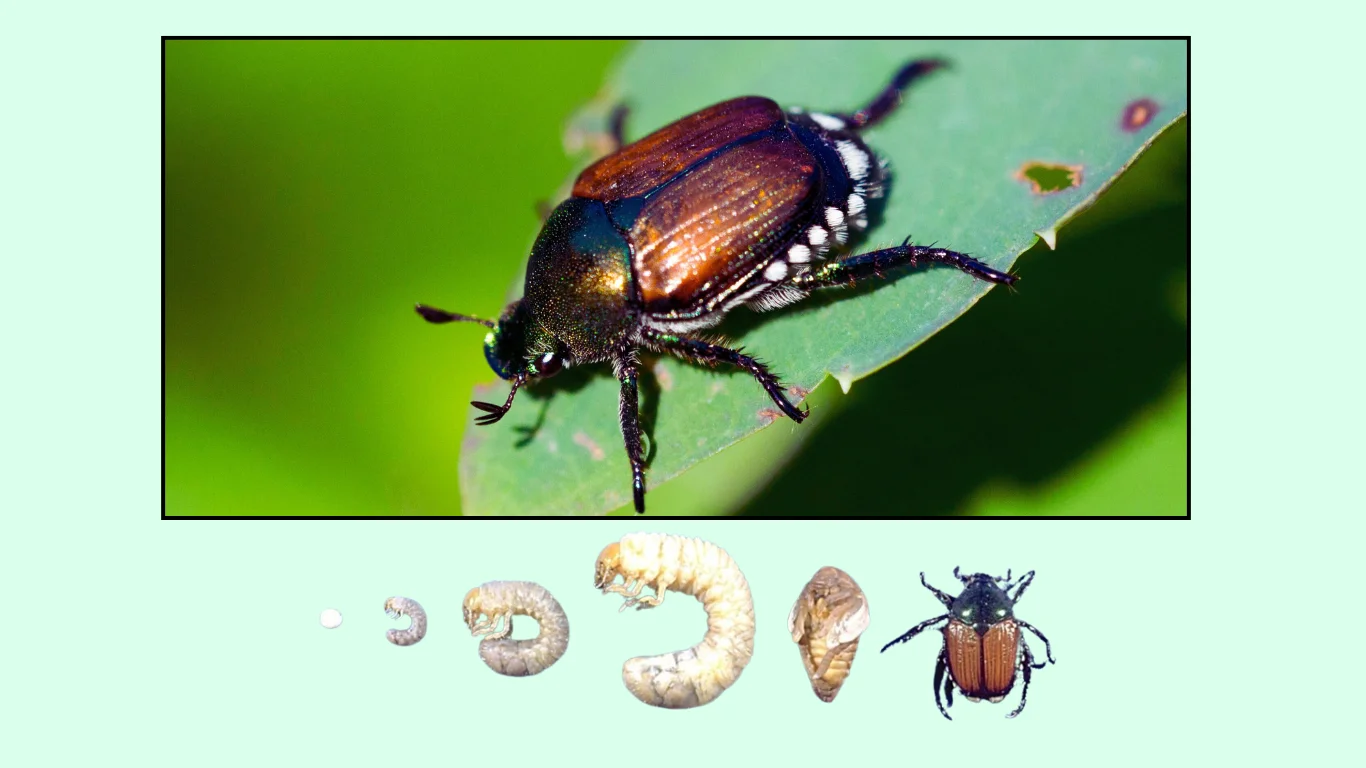
Japanese beetles are shiny, metallic pests that can quickly destroy gardens and lawns. From identifying their unique features to understanding their life cycle and knowing what plants they target, this guide covers everything you need to know.
Learn how to prevent infestations, use natural and chemical control methods, and protect your landscape from these invasive beetles—especially during their peak summer activity.
What Are Japanese Beetles?
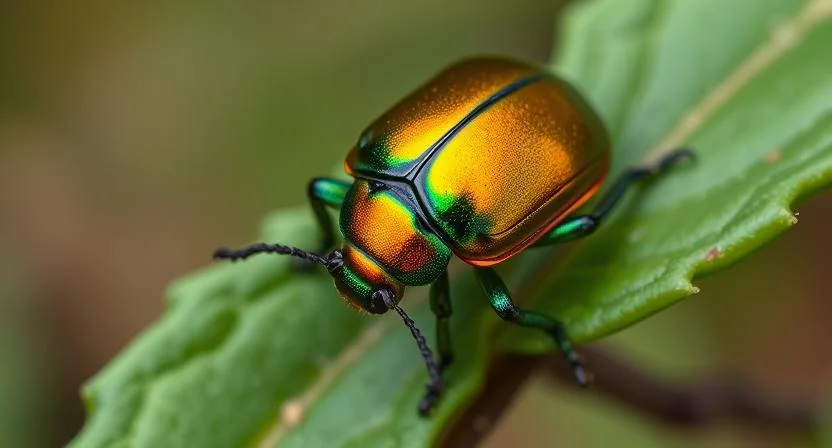
Japanese beetles are one of the most recognizable and widespread garden pests in North America. These shiny, metallic insects are known for their destructive feeding habits and ability to damage a wide range of plants in a short time.
What Is a Japanese Beetle?
The Japanese beetle (Popillia japonica) is a small invasive insect originally native to Japan. It was first discovered in the United States in the early 1900s and has since spread across many states, especially in the East and Midwest.
Japanese Beetles Key Features
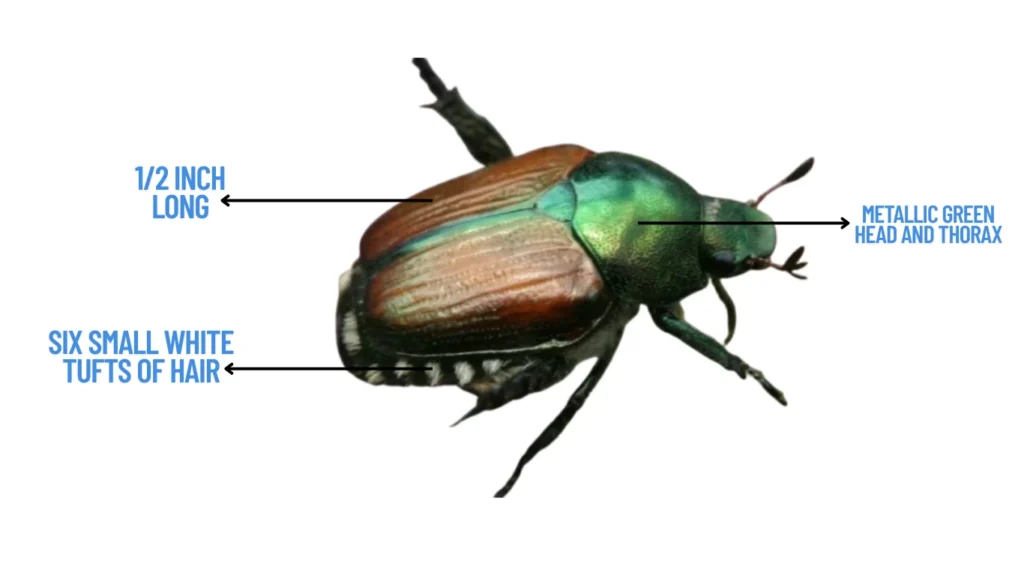
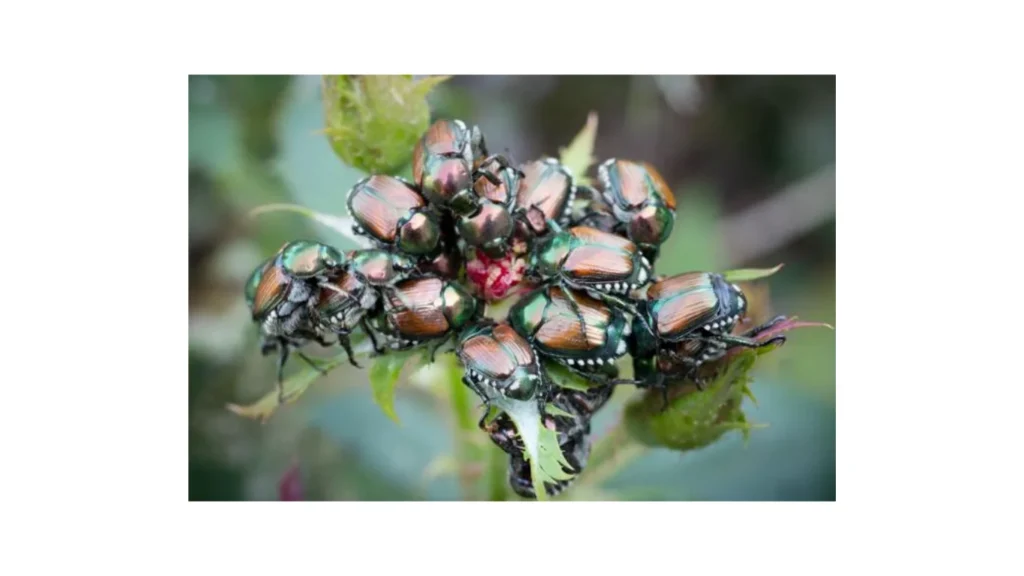
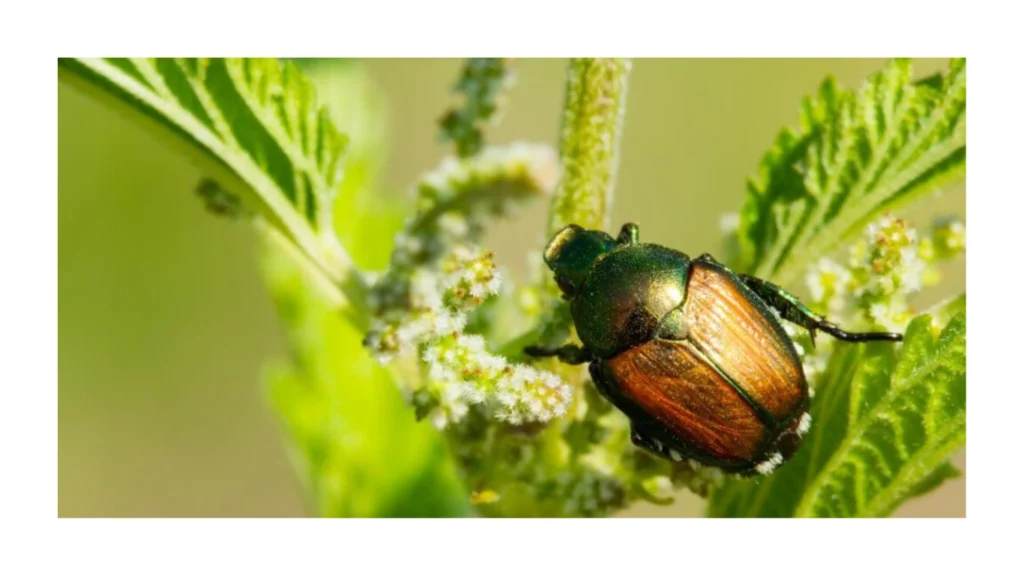
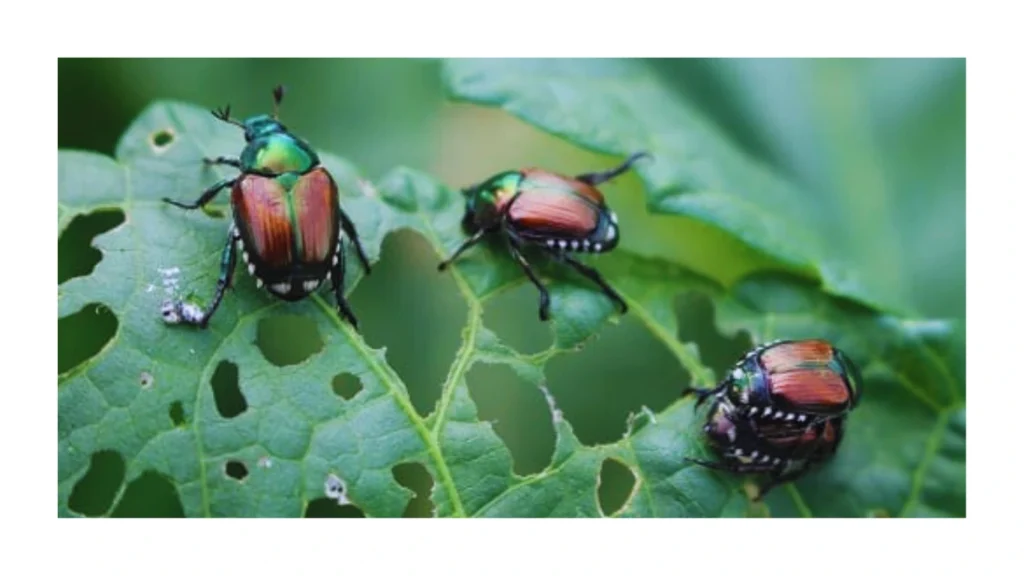
These beetles are easy to identify. Adult Japanese beetles are about 1/2 inch long. They have a metallic green head and thorax, with copper-brown wing covers. One of their key features is the presence of six small white tufts of hair along each side of their abdomen.
Their eye-catching color may look beautiful, but their impact on plants is anything but.
Japanese Beetles Pictures and Appearance
If you’re wondering what do Japanese beetles look like, think of a shiny, jewel-toned beetle that reflects light. Their metallic look often confuses gardeners at first. Viewing Japanese beetles pictures can help with quick identification.
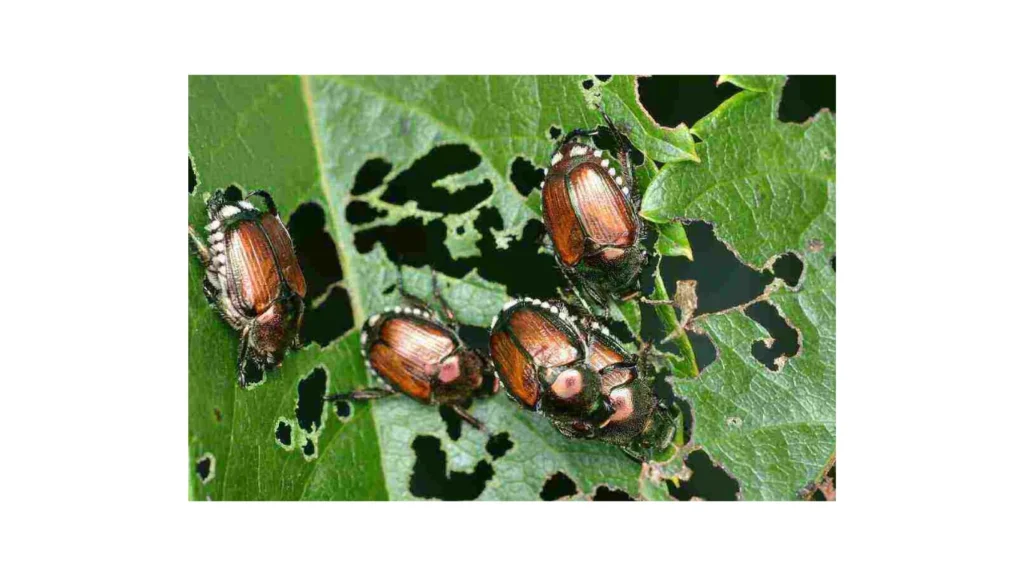
They are usually found in clusters, especially on the leaves and flowers of their favorite plants.
Japanese Beetles Size and Behavior
Japanese beetles are small but mighty. At around 13 mm (0.5 inch) in size, they may seem harmless, but they feed in groups and can skeletonize leaves in just a few hours.
Japanese Beetles Facts
- Scientific name: Popillia japonica
- Life span: Around 30–45 days as adults
- Active months: Late June to August (varies by region)
- Known for: Feeding on over 300 plant species
Understanding their features is the first step in recognizing and managing an infestation.
Life Cycle and Behavior of Japanese Beetles

To control Japanese beetles effectively, it helps to understand their life cycle and how they behave throughout the year. These insects go through complete metamorphosis, and each stage has its own impact on your garden.
Japanese Beetles Life Cycle
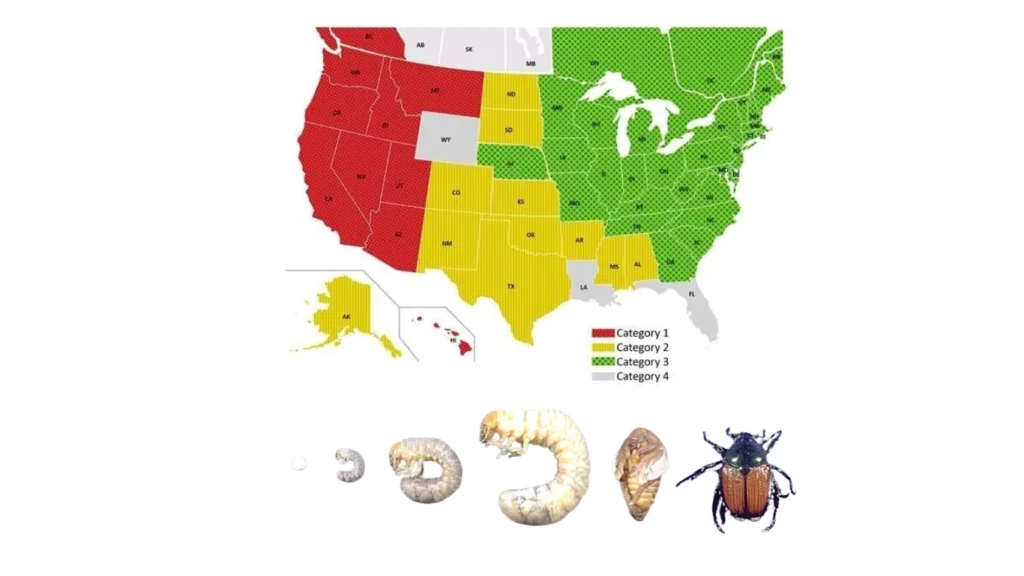
The life cycle of a Japanese beetle includes four stages: egg, larva (grub), pupa, and adult.
- Eggs are laid in the soil during mid to late summer.
- These hatch into larvae, or grubs, that feed on grass roots underground.
- After overwintering in the soil, grubs pupate in spring and emerge as adults in early summer.
On average, it takes one year for a Japanese beetle to complete its full life cycle.
Japanese Beetles Larvae and Grubs

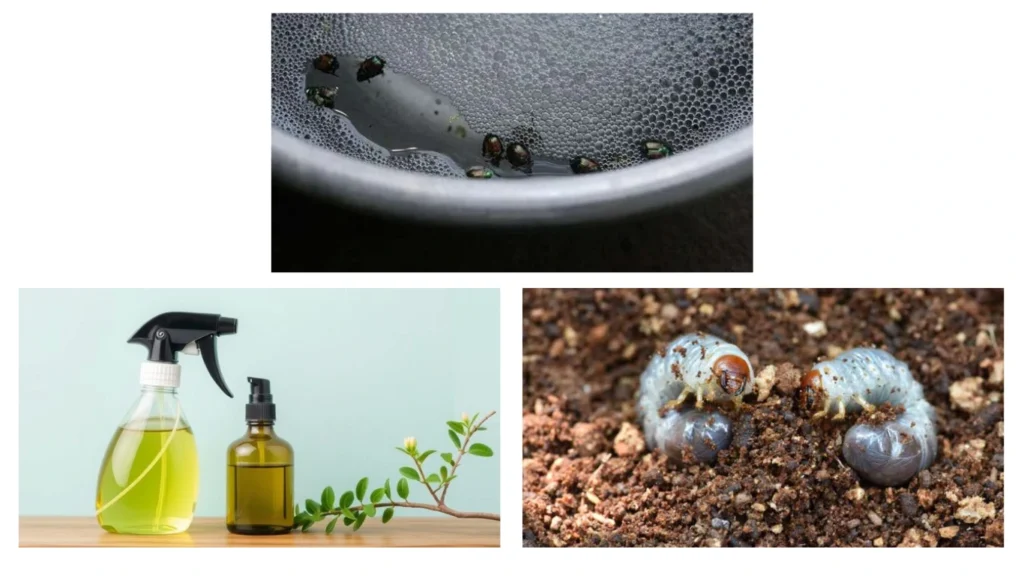
The larvae, also called grubs, are white and C-shaped. They’re commonly found in lawns and cause root damage to turfgrass. If your lawn has brown patches, it may be a sign of a grub infestation.
These grubs are active in the fall and again in the spring before transforming into adult beetles.
When Do Japanese Beetles Appear?
Adult beetles typically emerge in late June and are most active through July and August, depending on your location. This is when you’ll start seeing them feeding on plants in groups.
How Long Do Japanese Beetles Live?
An adult Japanese beetle lives for about 30 to 45 days. While that might seem short, their group activity during that time can cause significant plant damage.
Japanese Beetles Mating and Behavior
Adult beetles begin mating soon after emerging, often right on the leaves they feed on. Females lay dozens of eggs over a few weeks. The entire beetle population can grow fast if left untreated.
Habitat and Origin of Japanese Beetles
Understanding where Japanese beetles come from and where they live now is key to managing their spread in your garden or region.
Where Did Japanese Beetles Come From?
Japanese beetles are native to Japan, where they are kept in check by natural predators. They were first discovered in the United States in 1916, near Riverton, New Jersey.
They likely arrived accidentally in imported plants or soil, and without their natural enemies, their population quickly expanded.
Where Do Japanese Beetles Live?
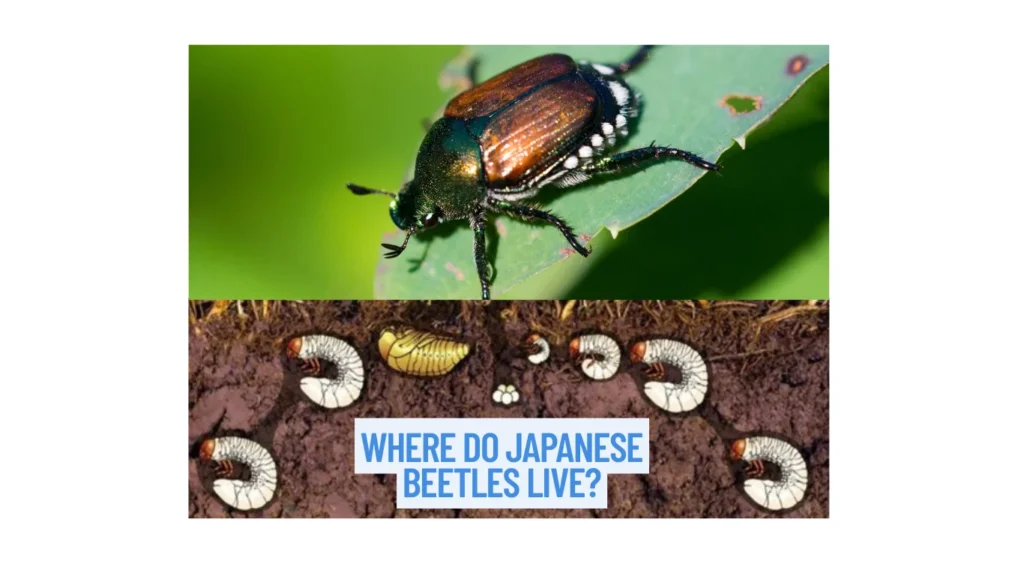
In the U.S., Japanese beetles are now common in over 30 states, especially in the eastern and midwestern regions. They thrive in areas with:
- Warm summers
- Well-irrigated lawns and gardens
- Plenty of host plants
They prefer sunny areas and are rarely found in shaded or heavily wooded environments.
Japanese Beetles Map and Spread
The spread of Japanese beetles is carefully monitored by agriculture departments in many states. You can often find them on distribution maps that track infestations by region.
They continue moving west and south as temperatures warm and suitable habitats increase.
How Did Japanese Beetles Get to America?
These pests most likely arrived hidden in soil around plant roots on imported nursery stock. With no natural predators and plenty of food sources, they quickly became a problem.
Japanese Beetles Location Today

Today, they are commonly found in:
- Gardens
- Lawns
- Orchards
- Farms
- Golf courses
They are considered invasive pests in North America and are subject to control and quarantine regulations in some states.
How to Identify Japanese Beetle Damage
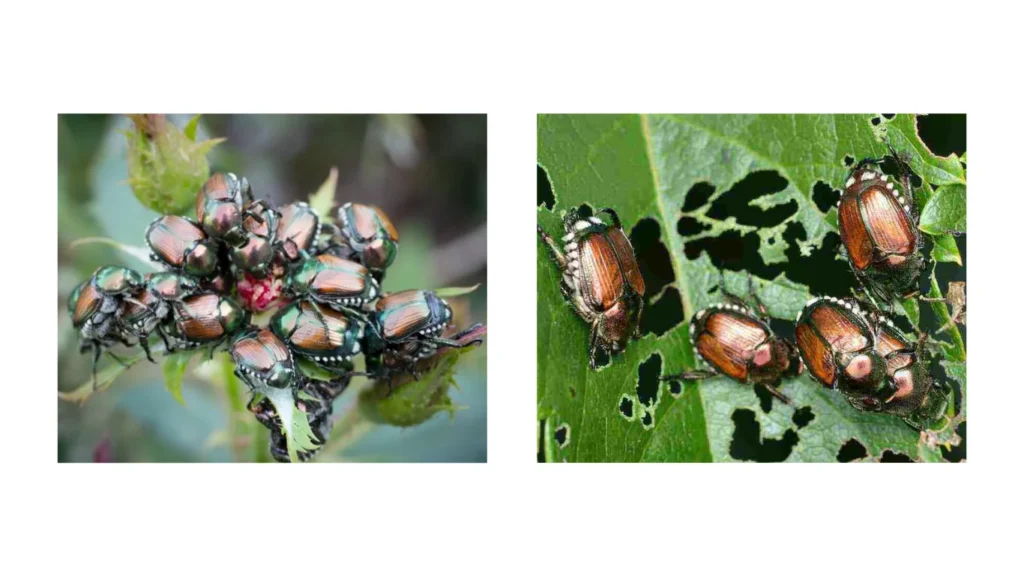
Japanese beetles are small, but their damage is easy to spot. They feed in groups and can quickly ruin your plants if left unchecked.
What Do Japanese Beetles Eat?
Japanese beetles feed on over 300 plant species, including flowers, fruits, and vegetables. They’re especially attracted to:
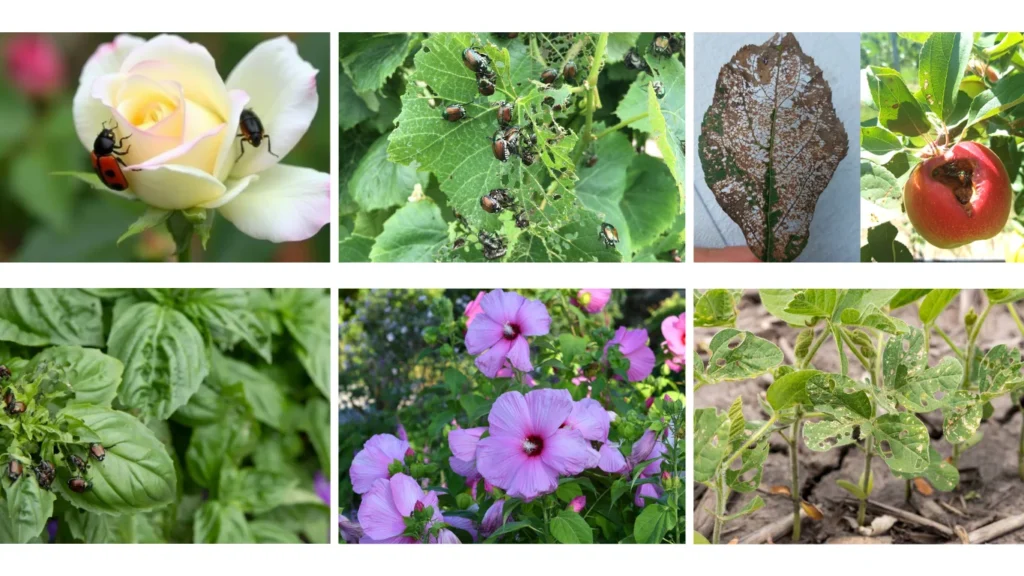
- Roses
- Grapevines
- Apple trees
- Basil
- Hibiscus
- Beans
- Zinnias
They prefer plants with soft, tender foliage and bright-colored flowers.
Signs of Japanese Beetles Eating Plants
One of the most obvious signs is skeletonized leaves. These beetles chew the soft parts of the leaf between the veins, leaving behind a lace-like structure.
If you notice leaves with just the veins remaining or holes in flower petals, Japanese beetles may be the cause.
Japanese Beetles Favorite Plants
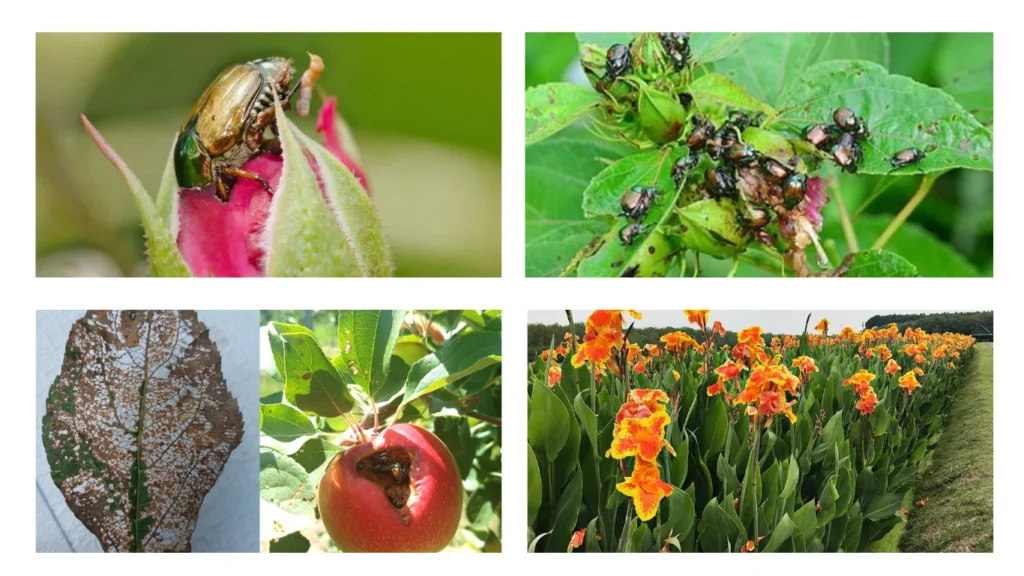
Their favorite targets include:
- Roses – both flowers and leaves are attacked
- Basil and Zinnias – highly preferred for feeding
- Grapes and Apple trees – common hosts in orchards
- Hibiscus and Canna lilies – frequent victims in flower gardens
They often gather in large groups on a single plant, making the damage more severe.
Damage Beyond Leaves
Besides feeding on leaves and flowers, they can also affect:
- Fruit skins (especially grapes, peaches, and plums)
- Young plant growth
- Lawns (as grubs feed on grassroots)
Once beetles find a plant they like, they release aggregation pheromones to attract more beetles—leading to rapid, widespread damage.
Common Host Plants of Japanese Beetles

Japanese beetles are not picky eaters. They feed on a wide variety of plants, but some are more vulnerable than others. Knowing which plants attract them the most can help you protect your garden.
Japanese Beetles on Roses

Roses are one of the top targets. Beetles feed on both the petals and leaves, often clustering in groups. Damaged rose leaves appear skeletonized, and flower buds may be deformed or fail to open.
If you grow roses, be prepared to monitor them daily during beetle season.
Japanese Beetles on Fruit and Flowering Plants
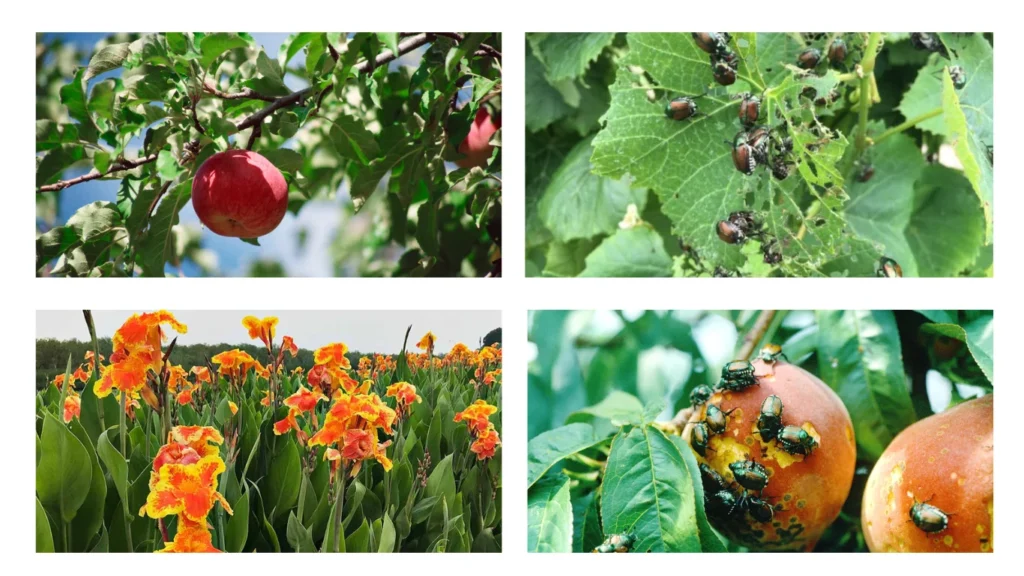
These beetles love fragrant, blooming plants and juicy fruits. Common targets include:
- Apple trees
- Grapevines
- Canna lilies
- Zinnias
- Hibiscus
- Peaches and plums
They chew through foliage and flowers, often ruining the plant’s aesthetic and reducing its productivity.
Japanese Beetles on Basil and Herbs

Basil is a favorite for Japanese beetles. Gardeners often find entire basil plants stripped within days. Other soft-leaf herbs may also attract them, especially in sunny, exposed garden beds.
Japanese Beetles on Trees and Shrubs
Adult beetles are often seen feeding on ornamental and fruit trees. They tend to favor:
- Maple
- Birch
- Crabapple
- Elm
- Cherry
Tree damage is usually seen in the upper canopy and can be harder to notice until significant harm has been done.
Predators and Natural Enemies of Japanese Beetles
While Japanese beetles can be a major garden pest, they do have some natural predators that help control their population. Knowing what eats Japanese beetles can guide your pest control strategy and support a more balanced ecosystem.
What Eats Japanese Beetles?
Several animals and insects will feed on Japanese beetles at different stages of their life cycle. These include:
- Birds
- Chickens
- Frogs and toads
- Predatory insects like praying mantises and assassin bugs
- Parasitic wasps and flies
Some of these predators eat adult beetles, while others target the larvae (grubs) in the soil.
Do Birds Eat Japanese Beetles?

Yes, birds are natural predators of Japanese beetles. Starlings, robins, cardinals, blue jays, and grackles are known to snack on adult beetles. Ground-feeding birds like crows and turkeys may dig up and eat the grubs.
Encouraging birds in your yard—by adding bird feeders or baths—can be a helpful organic control method.
Do Chickens Eat Japanese Beetles?
Chickens happily eat Japanese beetles, both adults and larvae. If you have backyard chickens, let them forage in beetle-infested areas (with care to protect your plants). They can reduce the population significantly.
Other Predators of Japanese Beetles
- Praying mantises are beneficial insects that hunt and eat adult beetles.
- Tachinid flies and tiphiid wasps lay eggs on or near beetles or grubs, which their larvae then consume.
- Nematodes in the soil can help reduce grub populations.
Are Japanese Beetles Poisonous?
No, Japanese beetles are not poisonous to humans or pets. They don’t bite or sting, though their presence in large numbers can be alarming. They’re safe to touch but unpleasant to deal with.
Prevention Tips: How to Keep Japanese Beetles Away
Preventing Japanese beetles is easier than trying to control a full-blown infestation. With the right steps, you can make your garden less attractive to them and protect your plants before they arrive.
How to Prevent Japanese Beetles
Start by planning ahead. These beetles are most active in late June through August, so take action early in the season.
- Remove any early signs of beetles by hand.
- Avoid over-watering your lawn in summer, as moist soil attracts egg-laying females.
- Choose plants that are less attractive to beetles for your garden.
- Apply grub control treatments in spring or fall.
Plants That Repel Japanese Beetles
While Japanese beetles love certain plants, there are others they tend to avoid. Consider adding these to your landscape:
- Garlic
- Catnip
- Chives
- Marigolds
- Rue
- Tansy
These repellent plants can act as natural deterrents when placed near more vulnerable species.
Do Marigolds Repel Japanese Beetles?
Yes, marigolds can help repel Japanese beetles, although results may vary. Their strong scent is believed to discourage beetles, especially when planted as borders or companion plants.
How to Keep Japanese Beetles Off Plants
- Use row covers to physically block beetles from feeding on young plants.
- Spray leaves with a mild soap-and-water mix to make them less appealing.
- Keep your garden clean—fallen fruit and decaying leaves attract beetles.
- Consider using natural repellents like neem oil (covered in the next section).
How to Keep Japanese Beetles Off Roses
Roses are highly attractive to Japanese beetles, so take extra precautions:
- Check rose bushes daily during peak beetle season.
- Shake beetles off into soapy water early in the morning.
- Use neem oil or insecticidal soap as a barrier.
- Surround roses with repellent plants for added protection.
Natural Remedies and Organic Solutions for Japanese Beetles
If you want to control Japanese beetles without using harsh chemicals, there are several natural and homemade methods that are safe for your plants, pets, and the environment.
How to Get Rid of Japanese Beetles Naturally
Natural methods may not eliminate every beetle instantly, but they are effective when used consistently. Start by:
- Hand-picking beetles early in the morning and dropping them into soapy water
- Using homemade sprays like vinegar or neem oil
- Applying beneficial microbes like milky spore to target grubs underground
Japanese Beetles Home Remedy: Vinegar Spray
A common home remedy for Japanese beetles involves mixing water with white vinegar and a bit of dish soap. Spray this directly on beetles or on the leaves of affected plants. Be careful—vinegar can also harm delicate plants, so spot-test first.
Neem Oil for Japanese Beetles
Neem oil is a powerful organic solution. It acts as both a repellent and a growth inhibitor for beetles and their larvae.
- Spray neem oil directly on leaves and flowers
- Reapply after rain or every few days during peak season
- Safe for bees when used in early morning or evening
Neem also interferes with beetle mating, helping reduce the next generation.
Milky Spore for Grub Control
Milky spore is a natural bacteria that targets Japanese beetle grubs in the soil. Apply it once, and it can remain active for years, killing grubs before they become adults.
- Best applied in late summer or fall
- Works slowly but provides long-term control
Other Organic Options
- Diatomaceous earth: A fine powder that damages beetles’ exoskeletons
- Soapy water spray: Mix dish soap with water and spray beetles directly
- Japanese beetle killer homemade spray: Combine water, dish soap, garlic, and peppermint oil for a DIY repellent
Using these natural solutions regularly can help keep beetle numbers under control—without harming your garden’s ecosystem.
Chemical Control and Traps for Japanese Beetles
If natural remedies aren’t enough, chemical insecticides and beetle traps can offer stronger control—especially during peak infestations. Here’s how to use them safely and effectively.
How to Get Rid of Japanese Beetles with Chemicals
Chemical treatments can quickly kill large numbers of beetles. These are ideal for:
- Severe infestations
- Large garden spaces
- Protecting valuable or heavily affected plants
Choose products labeled for Japanese beetle treatment and follow all safety instructions.
Best Insecticide for Japanese Beetles
Look for insecticides containing:
- Carbaryl (Sevin)
- Pyrethrin
- Bifenthrin
- Imidacloprid (for systemic control)
These products can be applied to foliage, flowers, and even lawns where grubs may be hiding.
For organic gardeners, pyrethrin-based sprays offer a balance between potency and environmental safety.
Japanese Beetle Killer Spray
Ready-to-use sprays make treatment simple—just spray directly on beetles or on the leaves they feed on. Reapply every few days or after rain for ongoing protection.
If you prefer homemade solutions, a mild soap and peppermint oil spray can work as a repellent but is less effective for large infestations.
Using Japanese Beetle Traps
Traps, such as the popular Spectracide Bag-A-Bug Japanese Beetle Trap, use pheromones to lure beetles into a bag where they cannot escape.
Tips for success:
- Place traps far from your garden to draw beetles away from plants
- Empty bags regularly to prevent overflow
- Use traps as a monitoring tool, not your only solution
What Kills Japanese Beetles Permanently?
The key to long-term control is targeting both adults and their larvae. Use:
- Insecticide sprays during adult season
- Milky spore or grub killers in the lawn during late summer or early fall
- Preventive plant care to discourage future attacks
Regional Concerns and Lawn Management
Japanese beetles are found across much of the United States, but some areas experience more severe infestations than others. Your region and lawn health play a big role in how you manage these pests.
Japanese Beetles by State
These beetles thrive in warm, moist climates, especially in the eastern and midwestern U.S. States with common or rising Japanese beetle populations include:
- Wisconsin
- Michigan
- Missouri
- Florida
- Texas
- California
- Colorado
- Tennessee
- Washington State
If you live in one of these areas, you’re more likely to see beetles appear from late June through August, with peak activity in mid-summer.
Japanese Beetles in the House
Although they prefer outdoor plants, beetles sometimes enter homes accidentally, especially during swarming. You might find them near windows or lights.
To keep Japanese beetles out of your home:
- Check for gaps around doors and windows
- Use fine mesh screens on vents and openings
- Remove indoor plants near entrances during beetle season
- Vacuum beetles instead of crushing them, as they release odor when squashed
Lawn Management and Grub Control
Your lawn can be a breeding ground for future beetle generations if left untreated. Grubs feed on grass roots, causing patches of dead or brown turf.
How to manage grubs in your lawn:
- Apply grub control products in late summer or early fall
- Use milky spore for long-term, natural suppression
- Avoid overwatering—moist soil attracts egg-laying females
- Mow high to reduce heat stress and maintain grass strength
Keeping your lawn healthy and grub-free is one of the best ways to reduce Japanese beetles in the following year.
