
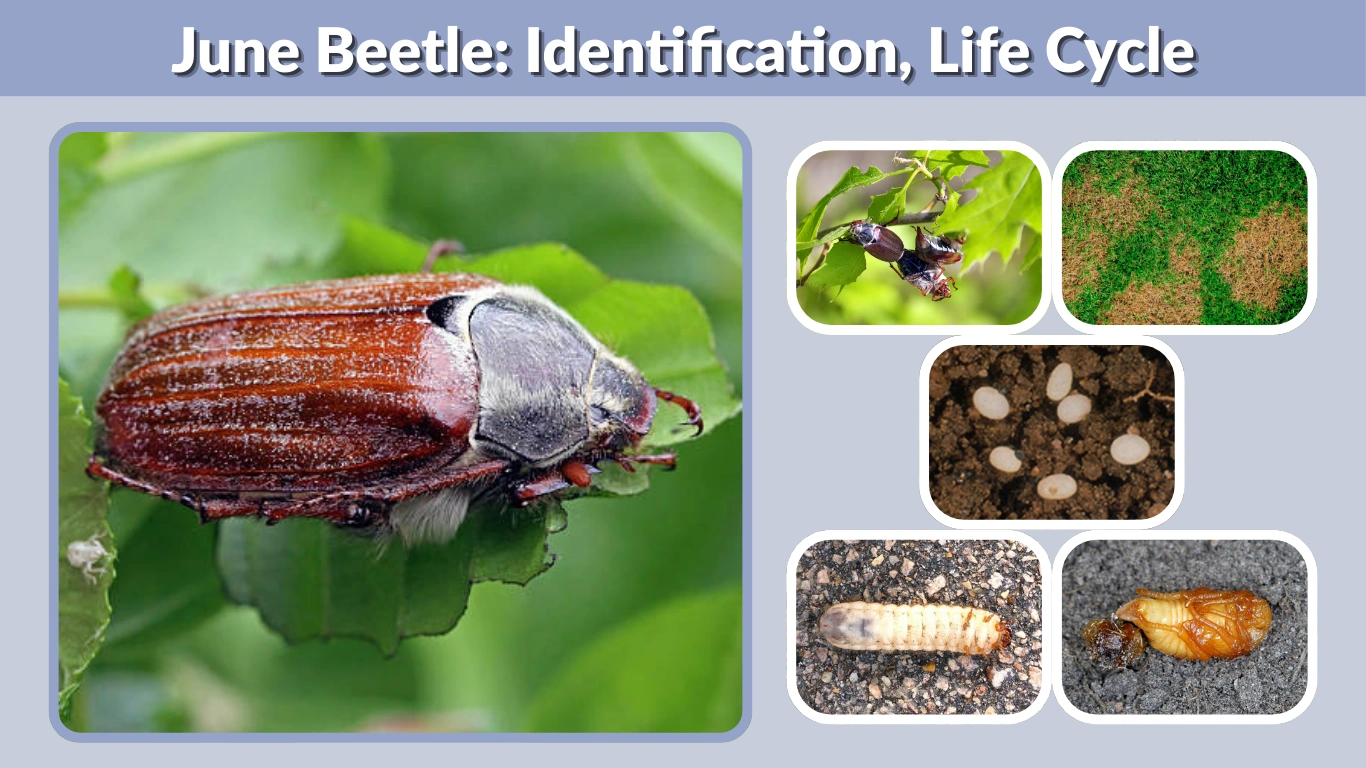
June beetles are common insects that appear during the early summer months, especially in warm regions. Many people notice them flying around lights at night or buzzing clumsily in yards and gardens. Although they may seem harmless, June beetles can cause damage to lawns and plants during certain stages of their life cycle. Understanding what June beetles are, how they develop, and how to control them can help homeowners protect their gardens and outdoor spaces. This guide explains their identification, life cycle, and potential impact.
What Is a June Beetle?
A June beetle is a type of scarab beetle that becomes active in late spring and early summer. These insects belong to the family Scarabaeidae, which includes many species known for their hard shells and strong flying abilities. The name “June beetle” comes from the time of year when adult beetles typically emerge from the soil.
June beetles are commonly found in North America, but related species also exist in many other parts of the world. They are often seen flying at night and are strongly attracted to artificial lights around homes and streets.
While adult June beetles mainly feed on leaves and plants, the real damage often occurs during their larval stage, when they live underground as white grubs and feed on grass roots.
June Beetle vs June Bug: Are They the Same?
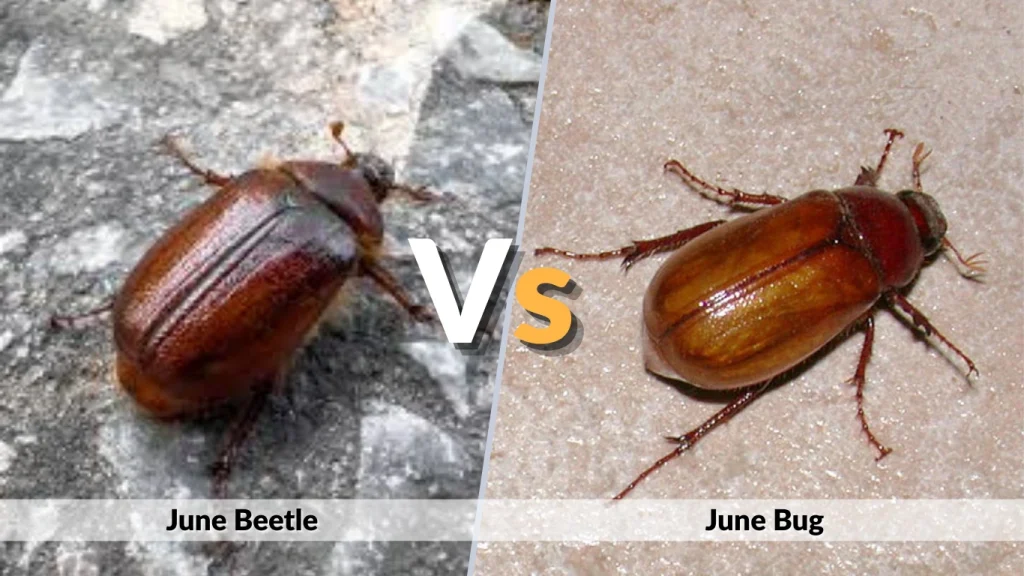
Many people use the terms June beetle and June bug interchangeably. In everyday language, both names usually refer to the same group of beetles in the scarab family. However, technically there can be slight differences depending on the species being described.
In general:
- June beetle is a broader term used for several species of scarab beetles that appear in early summer.
- June bug is a common nickname often used for the same insects in North America.
Regardless of the name used, these insects share similar characteristics such as brown or green bodies, nighttime activity, and attraction to light sources.
How to Identify a June Beetle
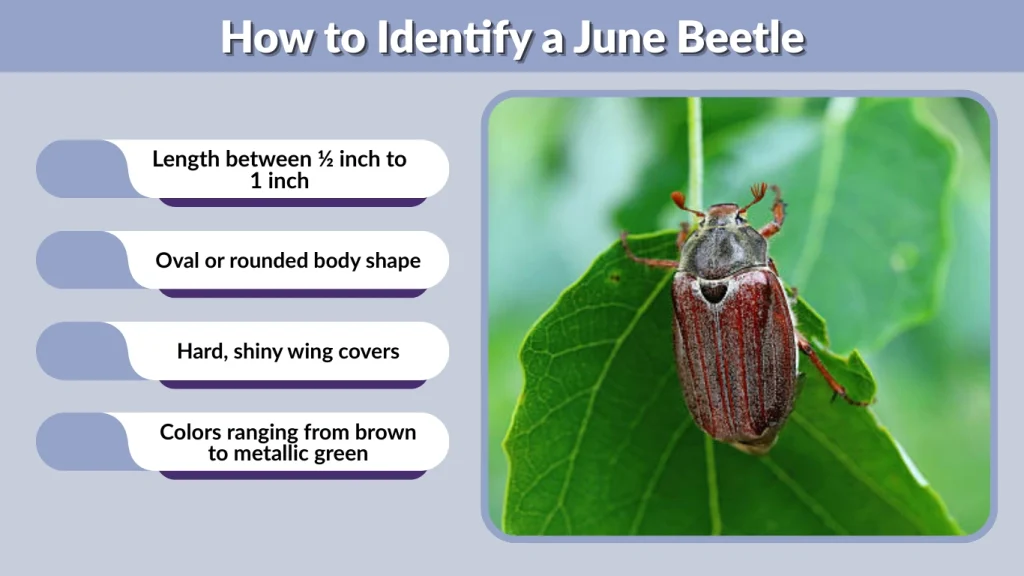
Correct identification is important when determining whether these insects are causing problems in your yard or garden.
Physical Characteristics
Most June beetles have a hard outer shell that protects their bodies. Their appearance can vary slightly depending on the species, but they typically share several common traits:
- Length between ½ inch to 1 inch
- Oval or rounded body shape
- Hard, shiny wing covers
- Colors ranging from brown to metallic green
Some species, such as the green June beetle, have a bright metallic green color that makes them easy to recognize.
Behavior Traits
June beetles have several behaviors that make them easy to spot:
- They are nocturnal, meaning they are most active at night.
- They are strongly attracted to lights, including porch lights and street lamps.
- Their flight is often slow and clumsy, which causes them to bump into objects or people.
Because of these behaviors, many homeowners notice them flying around outdoor lights during warm summer evenings.
Common Species of June Beetles
Several species are commonly referred to as June beetles. Some of the most well-known include:
Green June Beetle
This species is known for its metallic green color and is often found in gardens and lawns.
Ten-lined June Beetle
Recognized by its striped wing covers, this species is larger and produces a buzzing sound while flying.
Brown June Beetle
One of the most common types, this beetle has a dull brown body and frequently appears around lights at night.
June Beetle Life Cycle
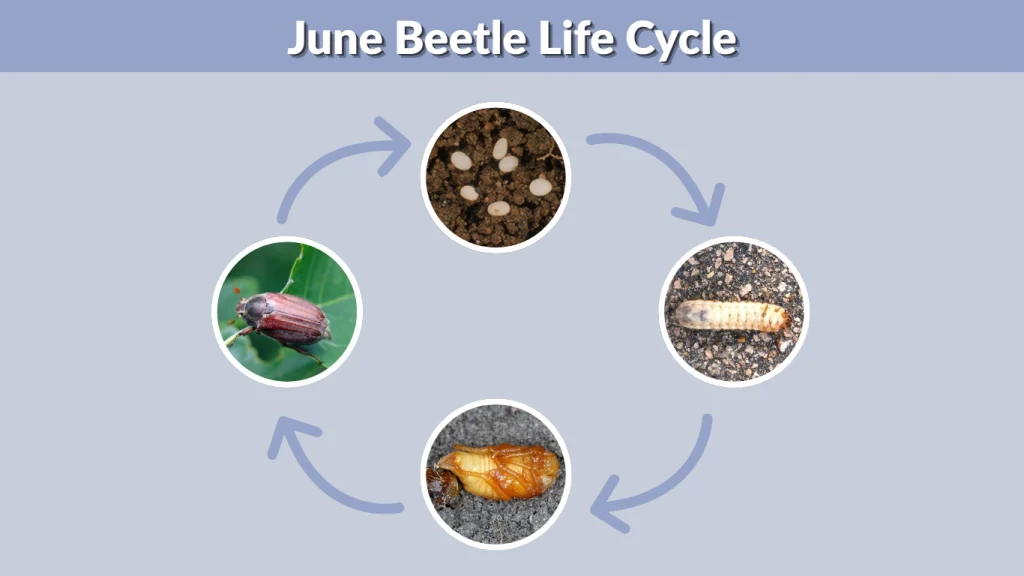
The life cycle of a June beetle is complex and can take one to three years to complete depending on the species and environmental conditions. The cycle includes four main stages: egg, larva, pupa, and adult.
Egg Stage
Female June beetles lay their eggs in soil during early summer. They typically choose grassy areas such as lawns, fields, or gardens.
After about two to four weeks, the eggs hatch into larvae.
Larvae (Grub) Stage
The larval stage is when June beetles are known as white grubs. These grubs live underground and feed on grass roots and organic material in the soil.
White grubs are easy to recognize because they have:
- Soft white bodies
- Curved “C” shape
- Brown heads
- Small legs near the front of the body
During this stage, they can cause significant damage to lawns by weakening or destroying grass roots.
Pupa Stage
After feeding for an extended period, the larvae form a pupa in the soil. This stage is a transition period where the insect develops into an adult beetle.
The pupal stage usually lasts several weeks before the adult beetle emerges.
Adult Stage
Adult June beetles typically emerge from the soil in late spring or early summer, which is why they are commonly seen in June.
Once they emerge, they begin feeding on plants, searching for mates, and laying eggs to start the cycle again.
Why June Beetles Appear in Summer
June beetles are most commonly seen during late spring and early summer, particularly in the month of June. Their appearance is closely tied to their natural life cycle and environmental conditions.
During the warmer months, the soil temperature rises, which triggers adult beetles to emerge from the ground. After spending months or even years developing underground as larvae and pupae, the adults come out to feed, mate, and reproduce.
Another reason June beetles become more noticeable in summer is their nighttime activity. Adult beetles are strongly attracted to artificial light sources such as porch lights, streetlights, and illuminated windows. This behavior often brings them close to homes, where people easily notice them flying or crawling around outdoor areas.
Are June Beetles Harmful?
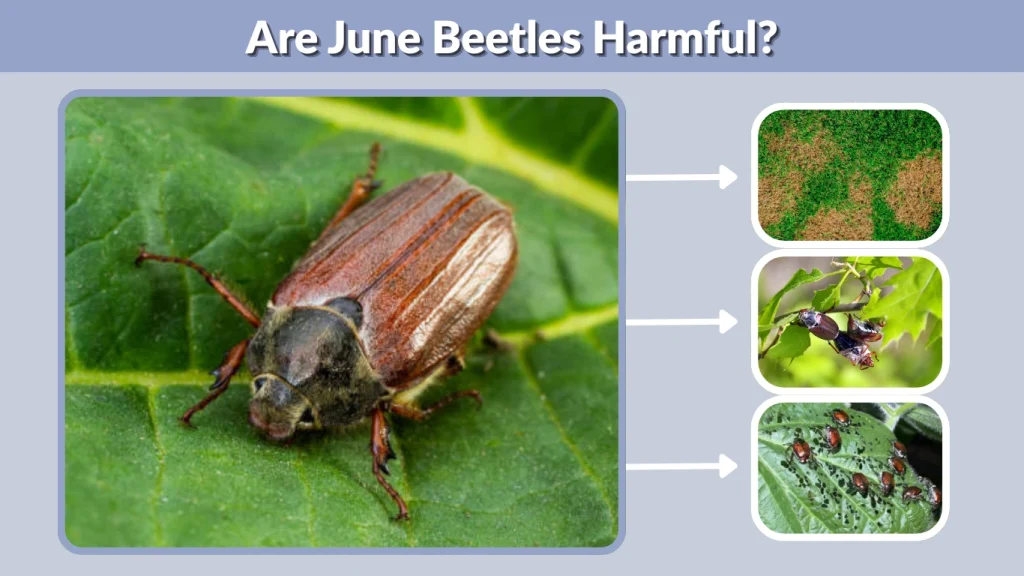
June beetles are generally not dangerous to humans, but they can be harmful to lawns and plants during certain stages of their life cycle.
Damage to Lawns
The greatest damage occurs during the larval stage, when June beetle grubs feed on grass roots underground. As the roots are eaten, grass begins to lose its ability to absorb water and nutrients.
Signs of grub damage in lawns include:
- Brown or patchy grass areas
- Grass that pulls up easily from the soil
- Increased animal activity (such as birds, raccoons, or moles digging for grubs)
Severe infestations can weaken large areas of turf and make lawns more vulnerable to drought.
Damage to Gardens and Crops
Adult June beetles may feed on leaves, fruits, and ornamental plants. While most species do not cause major crop destruction, large numbers of beetles can chew plant leaves and reduce plant health.
Some species are known to feed on:
- Fruit trees
- Garden vegetables
- Ornamental shrubs
Do June Beetles Bite or Sting?
June beetles do not sting, and they rarely bite humans. Even when handled, they are more likely to try to fly away than defend themselves.
However, their buzzing flight and tendency to bump into people can make them seem more threatening than they actually are.
Signs of a June Beetle Infestation
If June beetles are present in large numbers, you may notice several warning signs around your yard or garden.
Common indicators include:
- Increased beetle activity around outdoor lights at night
- Brown or thinning patches of grass in the lawn
- Presence of white grubs in the soil
- Animals digging in the yard to feed on grubs
Checking the soil beneath damaged grass can often reveal whether white grubs are present and causing the problem.
How to Get Rid of June Beetles
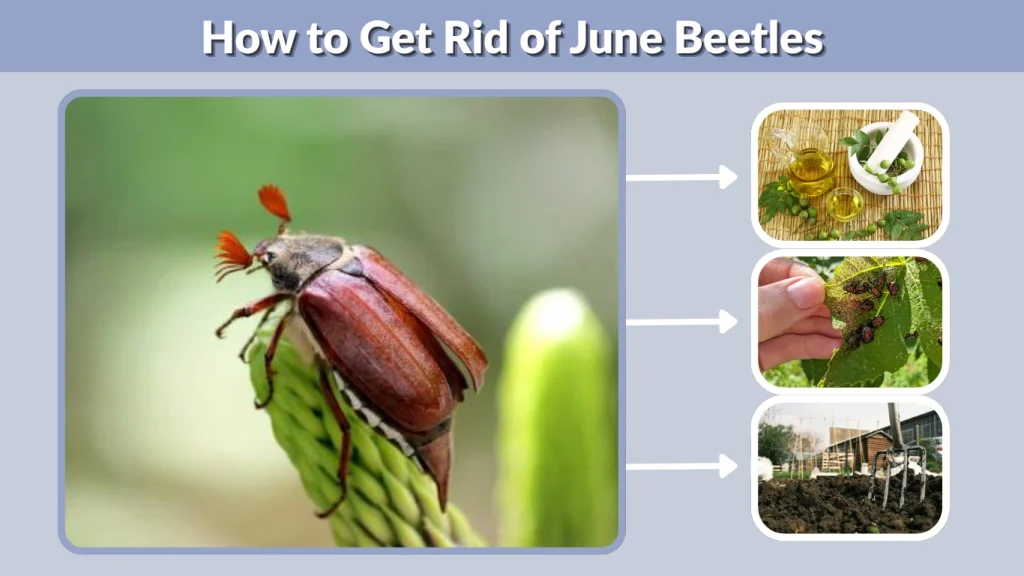
Managing June beetles often involves controlling both adult beetles and underground grubs. Several methods can help reduce their population.
Natural Control Methods
Many homeowners prefer environmentally friendly pest control options.
Some natural solutions include:
Beneficial nematodes
These microscopic organisms attack and kill grub larvae in the soil without harming plants.
Neem oil
Neem-based treatments can help reduce beetle feeding and disrupt their life cycle.
Manual removal
In small gardens, adult beetles can be picked off plants by hand, especially during early morning hours when they are less active.
Lawn Care Prevention
Healthy lawns are more resistant to grub damage. Proper lawn care can reduce the likelihood of infestations.
Helpful practices include:
- Maintaining proper watering schedules
- Aerating soil regularly
- Removing excessive lawn thatch
- Keeping grass strong and healthy
A well-maintained lawn can better tolerate minor grub activity.
Chemical Control Options
In severe infestations, homeowners may consider using insecticides designed for grub control. These products are typically applied to lawns during specific times of the year when larvae are most vulnerable.
It is important to follow product instructions carefully to avoid harming beneficial insects or the surrounding environment.
How to Prevent June Beetles
Preventing June beetles from becoming a problem is often easier than controlling a large infestation.
Some effective prevention strategies include:
- Reducing outdoor lighting at night to avoid attracting adult beetles
- Keeping gardens clean and removing decaying plant material
- Maintaining healthy soil and strong grass roots
- Monitoring lawns for early signs of grub activity
Regular lawn inspections during the growing season can help detect problems before they become severe.
Interesting Facts About June Beetles
June beetles have several fascinating characteristics that many people may not realize.
- Some species can live underground as larvae for up to three years before becoming adults.
- Their strong wings allow them to travel long distances while searching for food and mates.
- Despite their clumsy flight, June beetles are capable of quick bursts of movement when disturbed.
- Many animals, including birds, skunks, and raccoons, feed on beetle larvae.
Because of this, June beetles also play a role in the natural ecosystem as part of the food chain.
FAQs
Why are June beetles attracted to light?
June beetles navigate using natural light sources such as the moon. Artificial lights can confuse them, causing them to fly toward lamps and illuminated areas.
How long do June beetles live?
Adult June beetles usually live a few weeks to a few months, but their entire life cycle can last up to three years depending on the species.
Do June beetles damage homes?
June beetles do not damage houses or structures. Their impact is mostly limited to lawns, gardens, and agricultural plants.
What attracts June beetles to lawns?
June beetles are attracted to lawns that provide soft soil for laying eggs and healthy grass roots for larvae to feed on.
Conclusion
June beetles are common summer insects that many people encounter around their homes and gardens. While adult beetles are mostly harmless, their underground larvae can cause noticeable damage to lawns by feeding on grass roots. Understanding their life cycle, identifying signs of infestation, and using proper lawn care techniques can help prevent problems before they become severe. With a combination of natural control methods and good garden maintenance, homeowners can effectively manage June beetle populations and keep their outdoor spaces healthy.
