
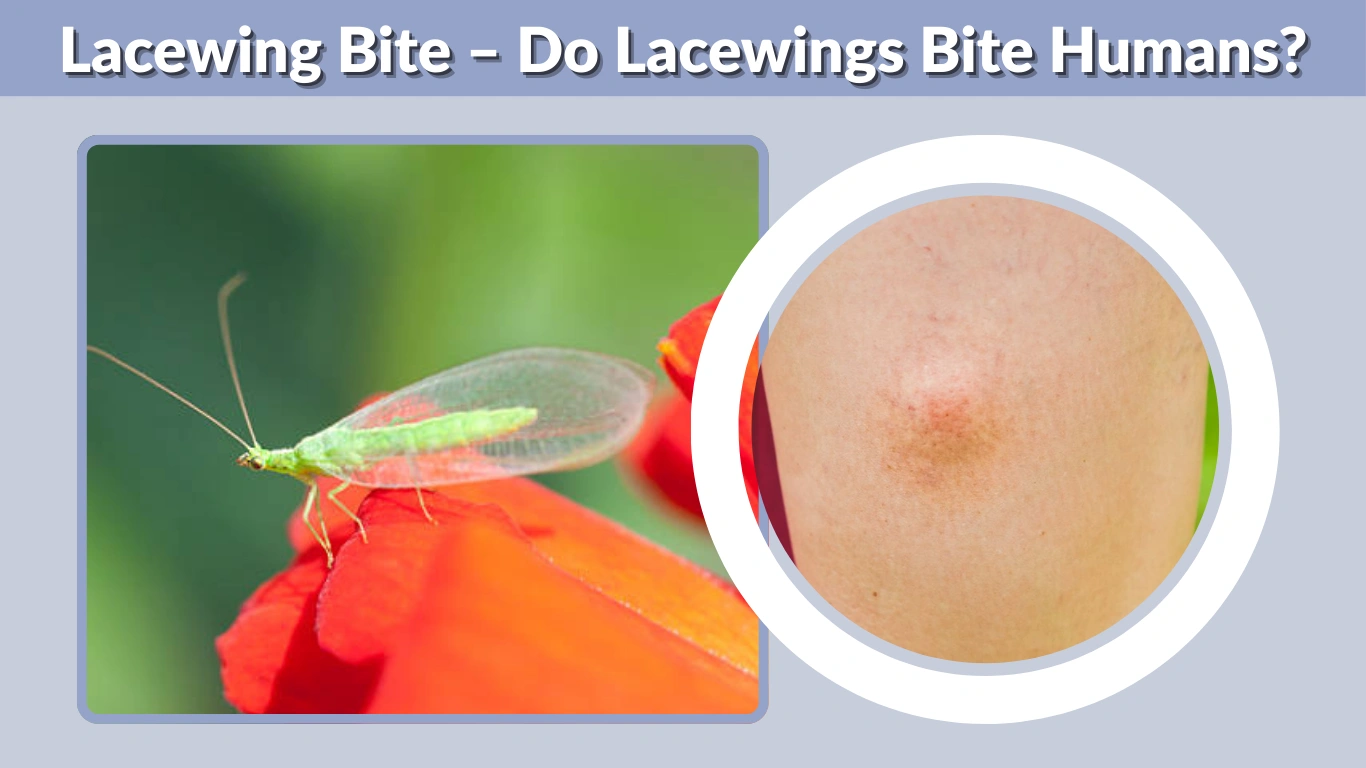
Lacewings are small, delicate insects known for their transparent, lace-like wings and bright golden eyes. Although they look fragile, these insects play a powerful role in nature, especially in gardens and farms. Lacewings are considered beneficial insects because their larvae feed on many common plant pests. Gardeners often welcome them as natural pest controllers. Understanding lacewings, including their life cycle, diet, habitat, lifespan, and whether they bite humans, can help people appreciate their importance in maintaining healthy ecosystems.
What Are Lacewings?
Lacewings are insects belonging to the order Neuroptera, a group known for insects with delicate wings and complex vein patterns. The name “lacewing” comes from the intricate, lace-like appearance of their wings. These insects are found all around the world and are commonly seen in gardens, forests, and agricultural fields.
Lacewings are especially valued because they help control harmful insect populations naturally. Their larvae are aggressive predators that feed on pests like aphids and mites, making them an important ally for gardeners and farmers.
Types of Lacewings
There are two main types of lacewings commonly found in nature:
Green Lacewings (Chrysopidae)
Green lacewings are the most common and widely recognized species. They have bright green bodies, large golden eyes, and transparent wings. These insects are frequently used in biological pest control because their larvae eat large numbers of plant pests.
Brown Lacewings (Hemerobiidae)
Brown lacewings are smaller and darker than green lacewings. They are less commonly noticed but still play an important role in pest management.
Both types of lacewings are beneficial insects and contribute to natural pest control in ecosystems.
Physical Appearance
Lacewings have several distinctive physical features that make them easy to identify:
- Transparent wings with a delicate lace-like pattern
- Slender green or brown bodies
- Large golden or copper-colored eyes
- Long antennae
Their wings are usually held roof-like over their bodies when resting. Adult lacewings are also attracted to lights at night, which is why they are sometimes seen around outdoor lamps.
Lacewing Life Cycle
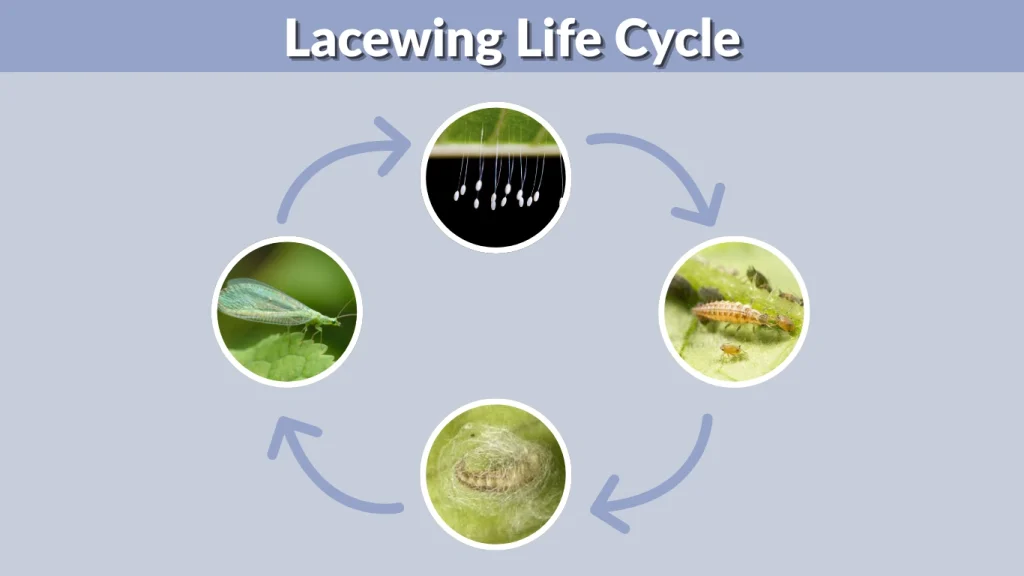
The lacewing life cycle consists of four stages of complete metamorphosis: egg, larva, pupa, and adult. Each stage plays a unique role in the insect’s development.
The most active and predatory stage is the larval stage, where lacewings consume large numbers of garden pests.
Lacewing Eggs
Female lacewings lay their eggs in a very unique way. Each egg is attached to the end of a thin silk stalk that can be several millimeters long. These stalks keep the eggs separated from each other and help protect them from predators and even from other lacewing larvae.
Eggs are usually laid near colonies of aphids or other soft-bodied insects so the larvae will have immediate access to food when they hatch.
The egg stage typically lasts about 3 to 5 days, depending on environmental conditions.
Lacewing Larvae (Aphid Lions)
After hatching, lacewing larvae emerge as small, elongated insects with strong jaws. This stage is often called the “aphid lion” stage because the larvae are fierce predators of aphids and other soft-bodied pests.
Lacewing larvae are highly active hunters and can consume large numbers of insects during this stage. Their diet commonly includes:
- Aphids
- Mealybugs
- Thrips
- Spider mites
- Small caterpillars
A single lacewing larva may eat hundreds of aphids during its development. Because of this, they are considered one of the most effective natural pest control insects in gardens.
The larval stage usually lasts two to three weeks.
Lacewing Pupae
After completing the larval stage, the insect enters the pupal stage. The larva spins a small, round silk cocoon, usually attached to leaves, bark, or other surfaces.
Inside this cocoon, the insect undergoes transformation into its adult form. During this stage, major physical changes occur as the larval body structure reorganizes into the adult lacewing.
The pupal stage typically lasts about 5 to 14 days, depending on temperature and environmental conditions.
Adult Lacewings
Once the transformation inside the cocoon is complete, the adult lacewing emerges. Adult lacewings are delicate insects with soft green or brown bodies and large transparent wings. They are most active during the evening and night and are often attracted to lights.
Adult lacewings mainly focus on reproduction and spreading to new areas. Female lacewings can lay hundreds of eggs during their lifetime, usually placing them near pest colonies so their larvae will have a ready food source after hatching.
Unlike larvae, many adult lacewings feed on nectar, pollen, and honeydew, which provide the energy needed for flying and reproduction.
Lacewing Diet
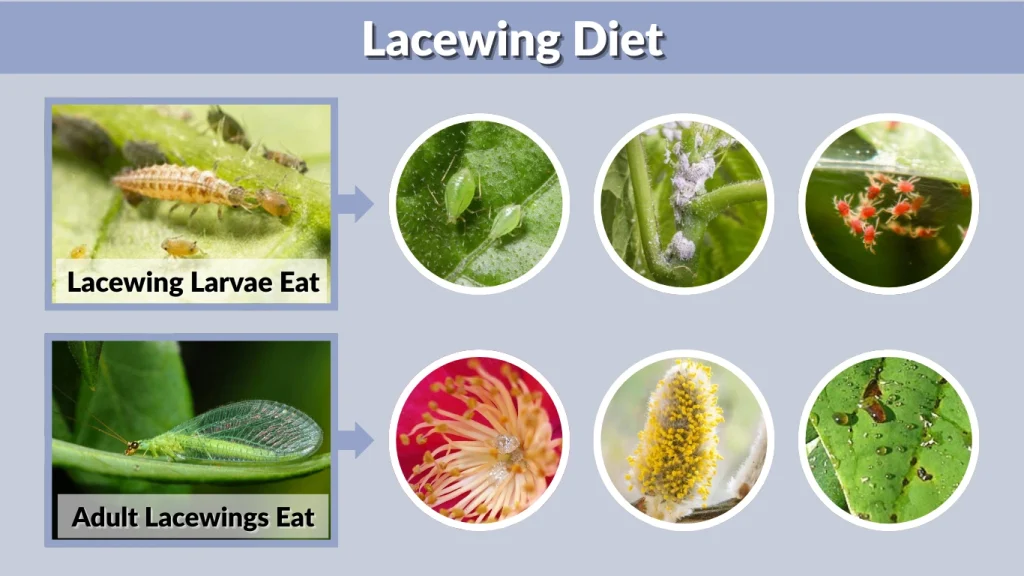
Lacewing diets vary depending on the stage of their life cycle. The larvae are the main predators, while adults usually feed on plant-based substances.
What Do Lacewing Larvae Eat?
Lacewing larvae are extremely active predators and consume many garden pests. Their diet includes:
- Aphids
- Mealybugs
- Thrips
- Spider mites
- Whiteflies
- Small caterpillars
Because they feed on so many pests, lacewing larvae are widely used in biological pest control programs. Farmers and gardeners sometimes release lacewing larvae into their gardens to reduce pest populations naturally.
What Do Adult Lacewings Eat?
Adult lacewings mainly feed on:
- Nectar
- Pollen
- Honeydew produced by aphids
These food sources provide energy for flight and reproduction.
Lacewings Live for Garden (Benefits)
Lacewings are considered one of the most beneficial insects for gardens. Their ability to control pests naturally makes them very valuable for organic gardening.
Natural Pest Control
Lacewing larvae can consume hundreds of pests during their development. This makes them extremely helpful in controlling aphids, mites, and other plant-damaging insects.
Organic Gardening Benefits
Since lacewings reduce pest populations naturally, gardeners can rely less on chemical pesticides. This helps protect beneficial insects, soil health, and the environment.
How to Attract Lacewings to Your Garden
Gardeners can encourage lacewings to live in their gardens by creating a friendly environment. Some effective methods include:
- Planting nectar-rich flowers such as dill, fennel, and yarrow
- Avoiding chemical pesticides
- Providing diverse plants and shelter areas
These practices help attract lacewings and support natural pest control.
Lacewing Habitat
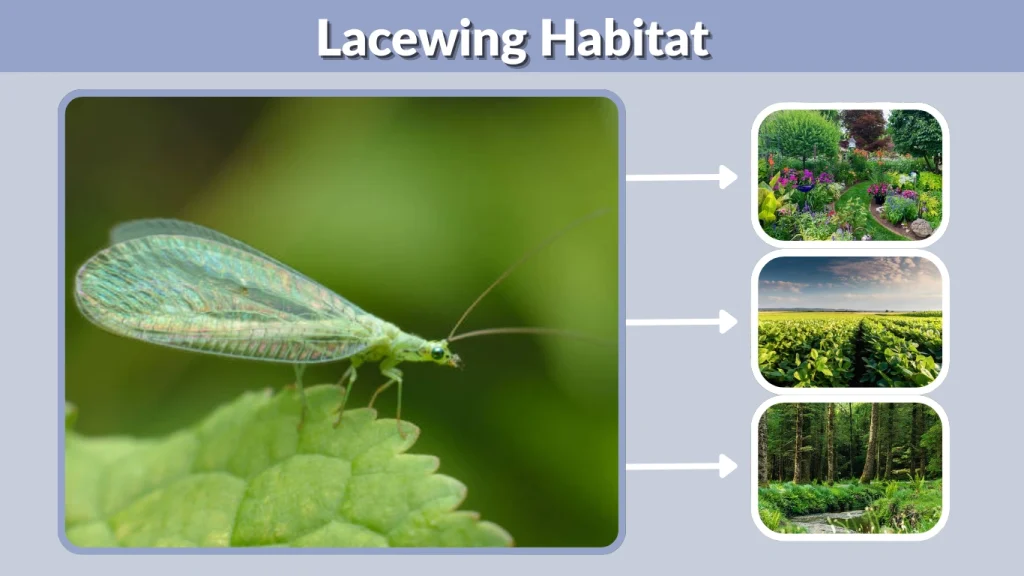
Lacewings live in many different environments around the world. They prefer areas where food is abundant and plants are available.
Common Environments
Lacewings can commonly be found in:
- Gardens
- Agricultural fields
- Forests
- Meadows
- Parks and natural landscapes
They usually stay close to plants where their prey, such as aphids and mites, are present.
Plants That Attract Lacewings
Certain flowering plants are especially attractive to adult lacewings because they provide nectar and pollen. These include:
- Dill
- Fennel
- Yarrow
- Cosmos
- Coriander
Planting these flowers can help maintain healthy populations of lacewings in gardens.
Lacewing Bite – Do Lacewings Bite Humans?
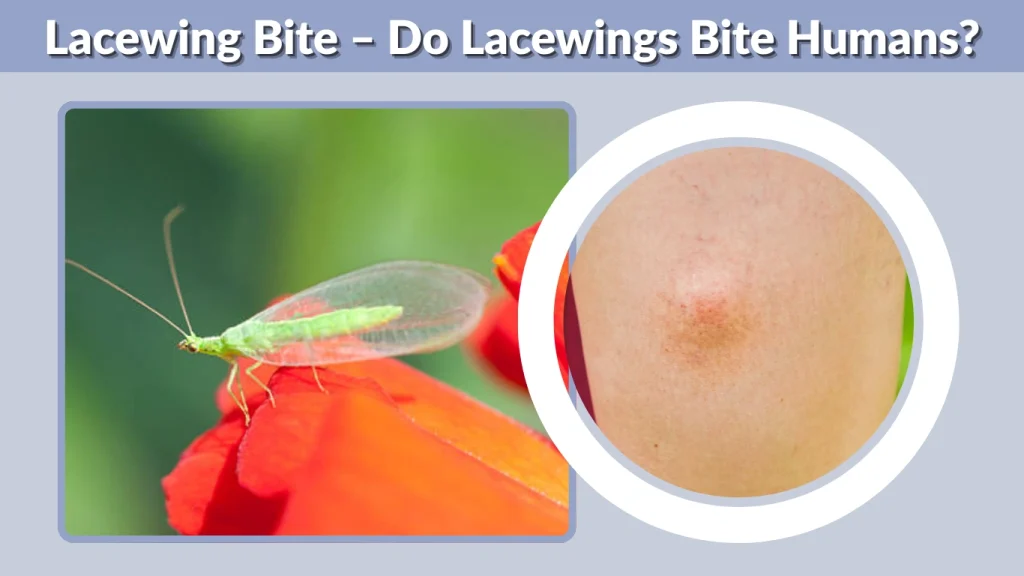
Many people wonder whether lacewings can bite humans. In general, lacewings are not harmful to people.
Why Lacewings May Bite
Occasionally, a lacewing might give a small pinch if it lands on human skin. This usually happens because the insect mistakes the skin for prey or reacts defensively.
Is a Lacewing Bite Dangerous?
A lacewing bite is harmless and very rare. The bite does not contain venom and does not cause serious health problems.
Lacewing Bite Symptoms
If a bite occurs, the symptoms are usually mild and temporary, such as:
- Slight irritation
- Minor redness
- A small pinching sensation
These symptoms usually disappear quickly.
Lacewing Lifespan
The lifespan of a lacewing varies depending on the species and environmental conditions.
Egg Stage Duration
The egg stage typically lasts 3–5 days before the larvae hatch.
Larval Stage Duration
The larval stage lasts about 2–3 weeks, during which the insect actively hunts and feeds.
Pupal Stage Duration
The pupal stage lasts 5–14 days as the insect transforms inside the cocoon.
Adult Lacewing Lifespan
Adult lacewings generally live for 4–6 weeks, though some may live longer in favorable conditions.
FAQs
Are lacewings harmful to humans?
No, lacewings are harmless insects and are actually beneficial because they help control garden pests.
Can lacewings bite?
Lacewings may occasionally pinch the skin, but the bite is harmless and very rare.
How long do lacewings live?
Most lacewings live around 4–6 weeks as adults, but their entire life cycle lasts several weeks.
What do lacewings eat?
Lacewing larvae eat pests like aphids and mites, while adults mainly consume nectar, pollen, and honeydew.
How can I attract lacewings to my garden?
Plant nectar-rich flowers, avoid pesticides, and create a diverse garden environment to attract lacewings.
Conclusion
Lacewings are small but highly beneficial insects that play an important role in controlling garden pests. Their life cycle includes egg, larva, pupa, and adult stages, with the larval stage acting as a powerful natural predator. Lacewings feed on harmful insects like aphids and mites, making them valuable allies for gardeners and farmers. By understanding their habitat, diet, and lifespan, people can encourage these helpful insects to thrive and support healthier ecosystems.
