

A ladybug infestation occurs when large numbers of ladybugs gather inside homes or buildings, usually during the colder months. Although ladybugs are beneficial insects in gardens because they eat pests like aphids, they can become a nuisance when they enter houses seeking shelter. Many homeowners notice clusters of ladybugs near windows, walls, or ceilings during fall and winter. Understanding why ladybug infestations happen, how to identify them, and what causes these insects to enter homes can help you manage the situation effectively.
What Is a Ladybug Infestation?
A ladybug infestation refers to a situation where large groups of ladybugs enter and gather inside homes or buildings. Unlike seeing one or two ladybugs occasionally, an infestation involves dozens or even hundreds of insects appearing indoors at the same time.
Ladybugs naturally gather in groups as part of their survival strategy. During colder seasons, they look for warm and protected places where they can stay dormant until temperatures rise again. Homes, attics, wall gaps, and other indoor spaces can provide ideal shelter.
It is important to understand the difference between a normal presence of ladybugs and an infestation. Occasionally seeing a single ladybug inside your home is not unusual and usually does not indicate a problem. However, if you begin noticing many ladybugs repeatedly appearing in the same areas, it may mean they have found a place inside your house to overwinter.
Ladybugs tend to cluster together once they enter a building. This behavior helps them conserve heat and improve their chances of surviving the winter months.
Why Do Ladybugs Infest Houses?

Ladybugs do not enter homes because they want to damage property or become pests. Instead, their indoor appearance is mainly related to seasonal survival behavior.
Overwintering Behavior
One of the primary reasons ladybugs enter homes is to find a safe place to overwinter. Overwintering is the process insects use to survive cold temperatures by remaining inactive during winter.
As the weather becomes cooler in fall, ladybugs begin searching for warm and sheltered locations. In nature, they might hide under tree bark, rocks, or leaf litter. However, buildings and houses often provide even better protection from cold temperatures.
When ladybugs find small openings in a house, they may enter and gather in wall spaces, attics, or ceilings to stay warm until spring.
Attraction to Warm Surfaces
Ladybugs are also attracted to warm and sunny surfaces. Buildings with light-colored walls or areas that receive a lot of sunlight can attract large numbers of ladybugs.
During autumn, you may notice ladybugs gathering on the sunny side of houses. These insects often land on walls and windows while searching for entry points. Once they find small cracks or gaps, they may move inside and remain hidden until warmer indoor temperatures cause them to become active.
Entry Points in Homes
Ladybugs usually enter homes through tiny openings and gaps around the exterior of the building. Common entry points include:
- Cracks around windows and doors
- Gaps in siding or walls
- Open vents and chimneys
- Damaged window screens
- Small openings around pipes or cables
Because ladybugs are small insects, they can squeeze through very narrow spaces. Once inside, they may hide in dark, quiet areas such as wall voids or attic corners.
Types of Ladybugs That Cause Infestations
Not all ladybugs are likely to invade homes. In many cases, the insects responsible for indoor infestations are actually Asian lady beetles, a species that closely resembles traditional ladybugs.
Asian Lady Beetles
Asian lady beetles are one of the most common insects responsible for ladybug infestations in homes. These beetles were originally introduced in many regions to help control agricultural pests such as aphids.
While they are beneficial outdoors, Asian lady beetles often gather in large groups and search for sheltered locations during fall. Because of this behavior, they frequently enter houses and buildings.
Asian lady beetles can vary in color from orange to red and may have several black spots. One distinctive feature is a small “M”-shaped marking behind the head, which helps distinguish them from many native ladybug species.
Native Ladybug Species
Native ladybugs are less likely to invade homes in large numbers. These species typically spend winter in natural environments such as tree bark, forest floors, or rock crevices.
Although a few native ladybugs may occasionally enter houses, they rarely cause large indoor infestations.
How to Tell the Difference
Identifying whether the insects in your home are Asian lady beetles or native ladybugs can help explain why they are appearing indoors.
Some key differences include:
- Asian lady beetles often vary more in color
- They commonly gather in large clusters
- They may produce a noticeable odor when disturbed
Understanding the species involved can help homeowners take appropriate steps to manage the situation and prevent future infestations.
Signs of a Ladybug Infestation

There are several common signs that may indicate a ladybug infestation in your home.
One of the most noticeable signs is seeing large groups of ladybugs near windows or light sources. These insects are attracted to sunlight and may gather on window frames or glass surfaces.
Another sign is finding ladybugs on walls, ceilings, or corners of rooms. They may appear suddenly when indoor temperatures warm up, especially during winter days when sunlight heats the walls.
In some cases, you may also notice ladybugs emerging from small cracks or gaps around windows, doors, or baseboards. This can indicate that they are hiding inside wall spaces or other sheltered areas within the house.
Are Ladybug Infestations Harmful?
In most cases, ladybug infestations are more of a nuisance than a serious problem. Ladybugs do not damage homes, furniture, or food supplies, and they are not known to spread diseases. However, when large numbers gather indoors, they can become inconvenient for homeowners.
One common issue is that ladybugs may release a yellowish fluid when disturbed or crushed. This fluid can leave stains on walls, fabrics, or curtains and may produce a noticeable odor.
Another concern is that large numbers of ladybugs may gather in visible areas such as windows, ceilings, and light fixtures. While they are harmless, seeing many insects indoors can be unpleasant for some people.
In rare cases, certain species like Asian lady beetles may pinch the skin if handled, though this bite is usually mild and does not cause serious harm.
Overall, ladybug infestations are generally harmless but can still be inconvenient if large groups gather inside the home.
How to Get Rid of Ladybug Infestations
If ladybugs have already entered your home, there are several safe and effective ways to remove them without causing damage to your property.
Vacuum Removal
One of the easiest methods is using a vacuum cleaner to remove ladybugs from walls, ceilings, or windows. After vacuuming, it is best to empty the vacuum bag or container outside to prevent the insects from returning indoors.
Light Traps
Ladybugs are attracted to light, so light traps can sometimes help capture them. These traps use a light source combined with a container or sticky surface to attract and collect insects.
Sweeping or Collecting
For small numbers of ladybugs, you can gently sweep them into a container or use a piece of paper to move them outside. Releasing them outdoors is a humane way to remove them while still allowing them to survive.
Natural Ways to Remove Ladybugs
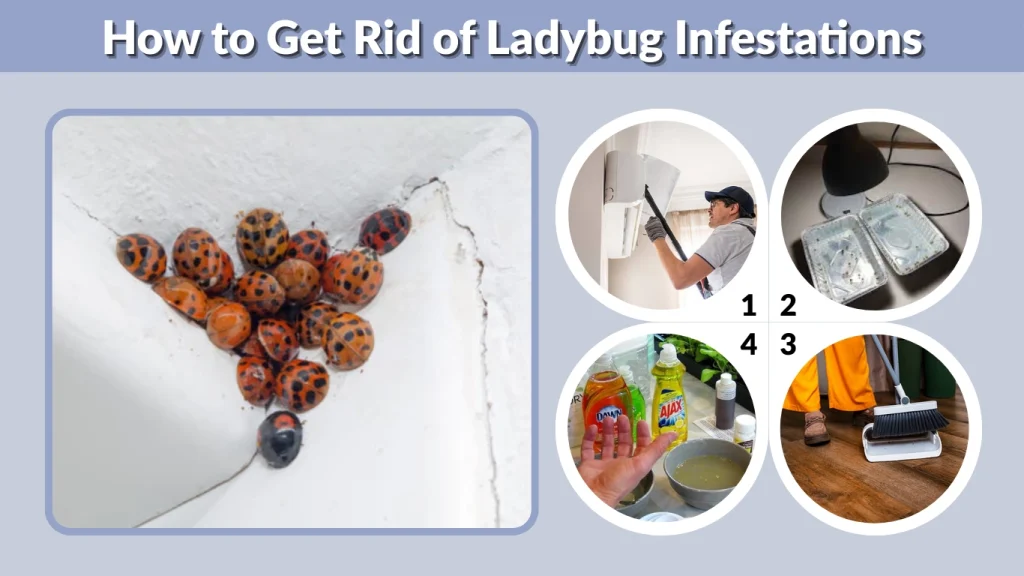
Many homeowners prefer natural methods to remove or discourage ladybugs without using chemical pesticides.
Soap and Water Solution
A simple mixture of water and mild dish soap can be sprayed lightly on surfaces where ladybugs gather. This solution helps remove them without introducing harmful chemicals into the home.
Essential Oil Repellents
Some natural scents may discourage ladybugs from staying in certain areas. Essential oils such as:
- Peppermint
- Citronella
- Clove
- Lavender
can sometimes help repel insects when diluted with water and sprayed around windows or entry points.
Relocating Ladybugs Outdoors
When possible, gently collecting and releasing ladybugs outside can be an effective and environmentally friendly solution. Since ladybugs are beneficial insects, relocating them allows them to continue helping control garden pests.
How to Prevent Ladybug Infestations
Prevention is one of the most effective ways to avoid future ladybug infestations. Taking a few simple steps can make it much harder for these insects to enter your home.
Seal Cracks and Entry Points
Inspect the exterior of your home for small cracks, gaps, and openings where insects could enter. Sealing these areas with caulk or weatherstripping can prevent ladybugs from finding their way inside.
Repair Window Screens
Damaged or loose window screens can allow insects to enter easily. Repairing or replacing screens helps keep ladybugs and other pests outside.
Reduce Outdoor Attractants
Keeping the exterior of your home well-maintained may reduce the chances of attracting ladybugs. Cleaning window frames, removing debris near walls, and maintaining landscaping can help limit hiding spots.
When to Call Professional Pest Control
While most ladybug infestations can be handled with simple removal and prevention methods, professional pest control may be necessary in certain situations.
You may want to contact a professional if:
- The infestation involves large numbers of insects
- Ladybugs keep returning every year
- They are hiding in hard-to-reach areas such as wall voids or attics
Pest control professionals can inspect your home, identify entry points, and recommend solutions to prevent future infestations.
Common Myths About Ladybug Infestations
There are several misunderstandings about ladybugs that can lead people to treat them as dangerous pests.
Myth: Ladybugs damage homes
In reality, ladybugs do not chew wood, destroy furniture, or damage structures.
Myth: All ladybugs are harmful indoors
Most ladybugs are beneficial insects that simply enter homes by accident while searching for winter shelter.
Myth: The only solution is to kill them
In many cases, ladybugs can be safely removed or relocated without harming them.
FAQs
Why are there so many ladybugs in my house?
Ladybugs often enter homes during fall while searching for warm places to survive the winter.
Do ladybug infestations happen every year?
They can occur repeatedly if the same entry points remain open and ladybugs find the house suitable for overwintering.
Can ladybugs bite humans?
Some species, such as Asian lady beetles, may pinch the skin lightly, but they are not dangerous.
What smell keeps ladybugs away?
Scents like peppermint, citronella, and clove oil are sometimes used as natural repellents for ladybugs.
