
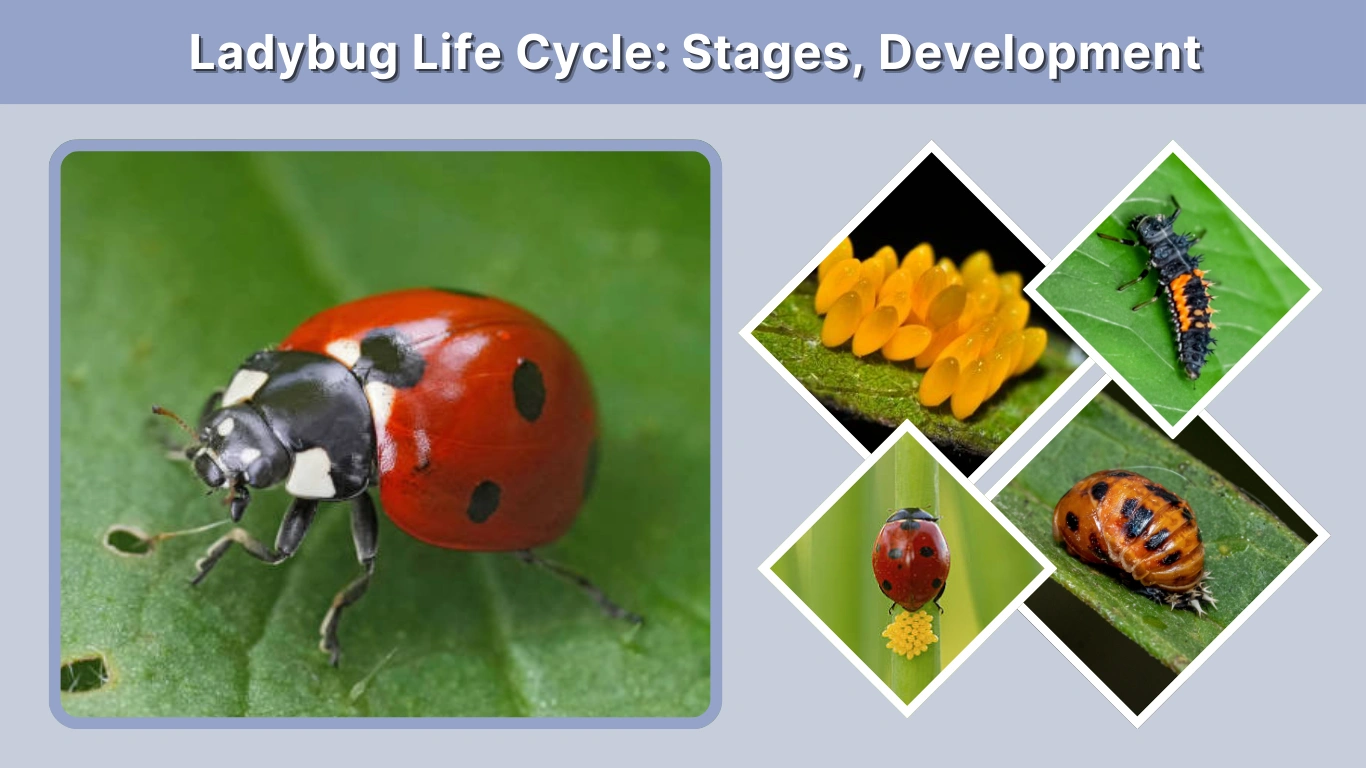
The ladybug life cycle is a fascinating example of complete metamorphosis, a process in which an insect transforms through several distinct stages before becoming an adult. Ladybugs, also known as lady beetles, develop through four main stages: egg, larva, pupa, and adult. Each stage has a different appearance and role in the insect’s growth. Understanding the ladybug life cycle helps gardeners, students, and nature enthusiasts recognize these beneficial insects and appreciate how they help control pests like aphids in gardens and agricultural environments.
What Is the Ladybug Life Cycle?
The ladybug life cycle refers to the entire development process of a ladybug from the moment it is laid as an egg until it becomes an adult beetle capable of reproducing. Like many beetles, ladybugs go through complete metamorphosis, meaning their bodies change dramatically during development.
Ladybugs belong to the insect family Coccinellidae, which includes more than 5,000 species found around the world. Despite differences in color and patterns among species, most ladybugs follow a very similar life cycle.
The four stages of the ladybug life cycle include:
- Egg
- Larva
- Pupa
- Adult
Each stage serves a specific purpose. The egg stage protects the developing insect, the larval stage focuses on feeding and growth, the pupal stage allows transformation, and the adult stage is responsible for reproduction and spreading the species.
Understanding these stages is important because many people only recognize adult ladybugs and may not realize that their larvae look completely different. Learning about the full life cycle helps gardeners avoid accidentally removing beneficial insects from their plants.
The Four Stages of the Ladybug Life Cycle
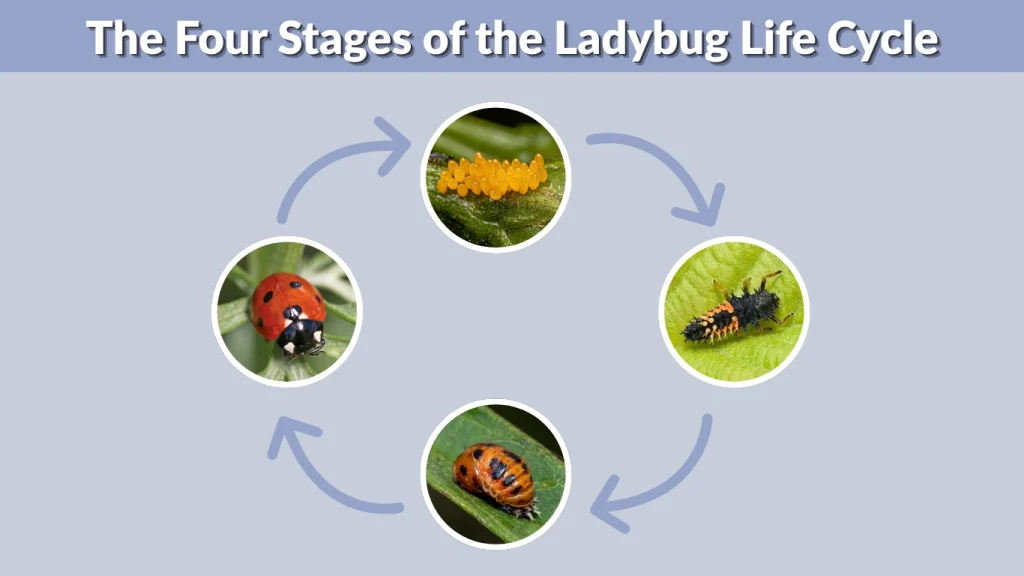
Ladybugs go through four distinct stages during their life cycle. This process is called complete metamorphosis, and it allows the insect to develop specialized forms for different phases of life.
During each stage, the insect changes both in appearance and behavior. The early stages focus mainly on growth and feeding, while the adult stage focuses on reproduction and dispersal.
The transformation follows this sequence:
Egg → Larva → Pupa → Adult
These stages occur over several weeks, depending on environmental conditions such as temperature, food availability, and habitat quality.
Because each stage looks very different, people often mistake the larvae for pests or fail to recognize the pupal stage attached to plants. However, every stage is part of the natural development of a ladybug.
Stage 1 – Ladybug Eggs
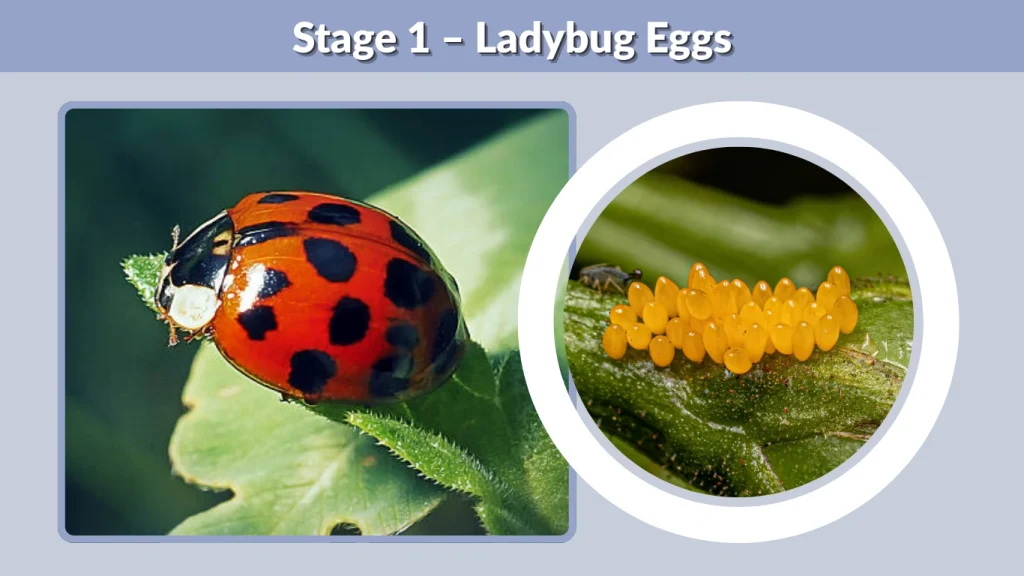
The life cycle begins when a female ladybug lays eggs on plants. These eggs are typically bright yellow or orange and are laid in small clusters.
Ladybugs carefully choose where to lay their eggs. Most females place them on the underside of leaves, especially near colonies of aphids or other small insects. This ensures that when the eggs hatch, the larvae will immediately have access to food.
A typical egg cluster may contain 10 to 30 eggs, though the exact number depends on the species and environmental conditions. Over the course of her life, a female ladybug can lay hundreds of eggs.
Ladybug eggs are very small, usually about 1 millimeter long, and have an elongated, oval shape. They stand upright on the leaf surface and remain in place until they hatch.
The egg stage does not last very long. Under favorable conditions, the eggs usually hatch within three to ten days. During this time, the developing embryo forms inside the egg and prepares to emerge as a larva.
Stage 2 – Ladybug Larvae
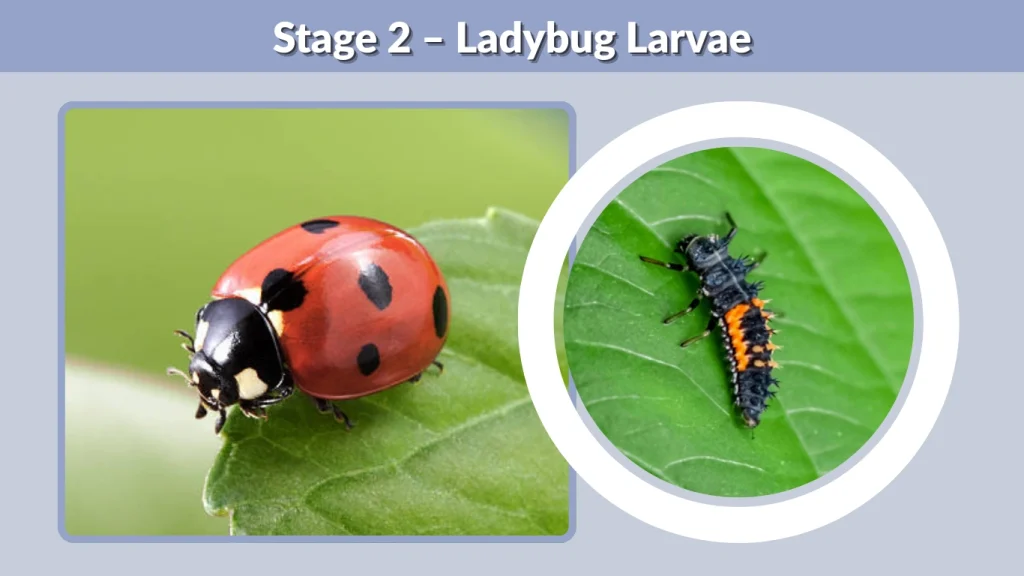
After the eggs hatch, tiny larvae emerge and begin searching for food almost immediately. Ladybug larvae look very different from adult ladybugs. Instead of having a round red body with black spots, they have an elongated, dark-colored body with orange or yellow markings.
Many people describe ladybug larvae as looking like tiny alligators because of their long body shape and segmented appearance.
The larval stage is the most active feeding period of the ladybug’s life. During this stage, the larvae hunt and consume large numbers of pests, especially aphids. Because aphids reproduce rapidly and damage plants, the feeding behavior of ladybug larvae makes them extremely beneficial in gardens.
A single larva can eat dozens of aphids in a single day. Over the course of its development, it may consume hundreds of pests, helping control infestations naturally.
As the larva grows, it passes through several stages known as instars. During each instar, the larva sheds its outer skin in a process called molting. This allows the insect to grow larger and continue feeding.
The larval stage typically lasts two to four weeks, depending on environmental conditions and food supply.
By the end of this stage, the larva has grown significantly and is ready to transform into the next phase of its life cycle. At this point, it prepares to enter the pupal stage, where the major transformation into an adult ladybug begins.
Stage 3 – Ladybug Pupa
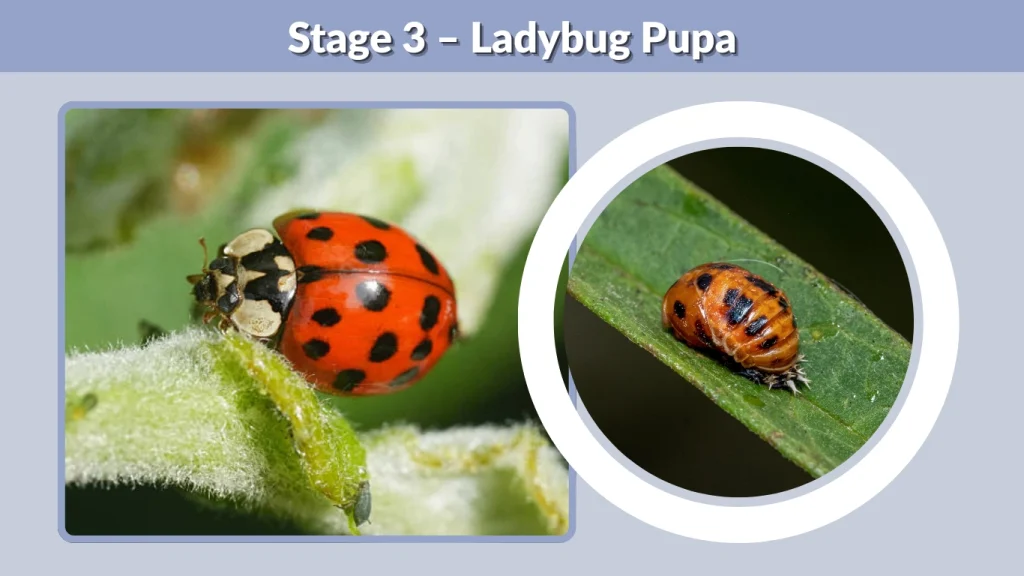
After the larval stage is complete, the ladybug enters the pupal stage, which is the transformation phase of its life cycle. At this point, the larva attaches itself to a leaf, stem, or other plant surface and forms a pupa.
During this stage, the insect appears inactive from the outside. The pupa often looks like a small, rounded structure attached to the plant. Its color can vary depending on the species, but it is usually orange, yellow, brown, or dark with spots.
Although the pupa does not move much, important changes are happening inside. The insect’s body is reorganizing as it transforms from a larva into an adult ladybug. This transformation includes the development of wings, legs, antennae, and the familiar rounded body shape of the adult beetle.
The pupal stage usually lasts about 5 to 7 days, although the exact time depends on environmental factors such as temperature and humidity. Warmer temperatures often speed up development, while cooler conditions may slow it down.
When the transformation is complete, the adult ladybug emerges from the pupal shell. At first, the newly emerged adult may appear pale or soft, but it soon develops its bright colors and hardened wings.
Stage 4 – Adult Ladybug
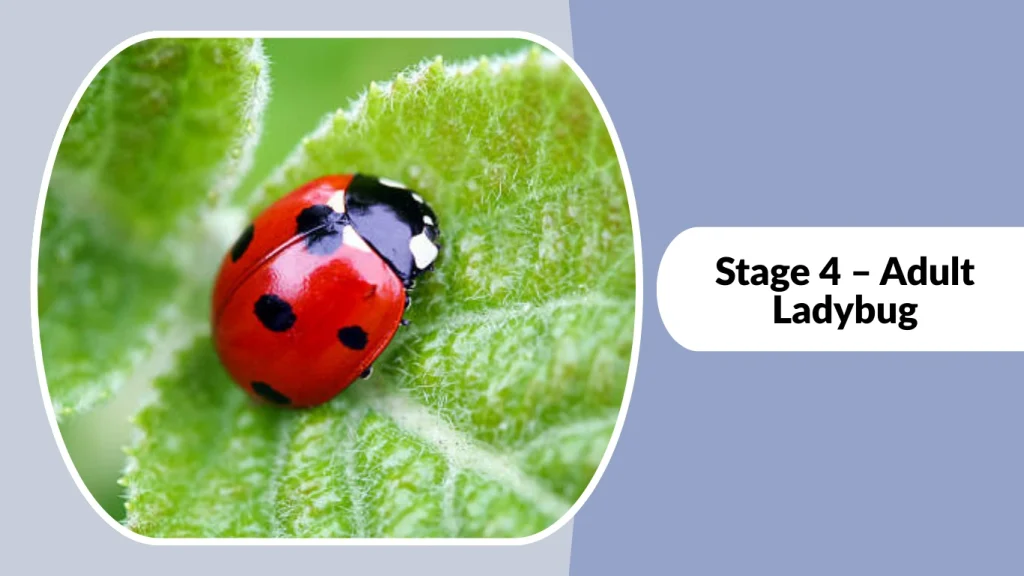
The final stage of the life cycle is the adult ladybug. This is the stage most people recognize, as adult ladybugs are known for their round shape, bright colors, and distinctive black spots.
Adult ladybugs can vary in color depending on the species. While the classic appearance is red with black spots, some species may be orange, yellow, or even black with red spots.
Once the adult emerges from the pupa, its outer shell gradually hardens and its color becomes brighter. Within a few hours, the wings are fully developed and ready for flight.
Adult ladybugs continue to feed on pests, especially aphids, mites, and small insects. Because of their diet, they remain highly beneficial to gardens and farms. Both larvae and adult ladybugs contribute to natural pest control.
The adult stage also focuses on reproduction. Female ladybugs search for plants that contain aphid colonies or other food sources. When they find a suitable location, they begin laying eggs, starting the life cycle all over again.
Adult ladybugs can live for several months to about one year, depending on environmental conditions and species. During their lifespan, they may produce multiple generations, especially in warm climates where food is abundant.
How Long Is the Ladybug Life Cycle?
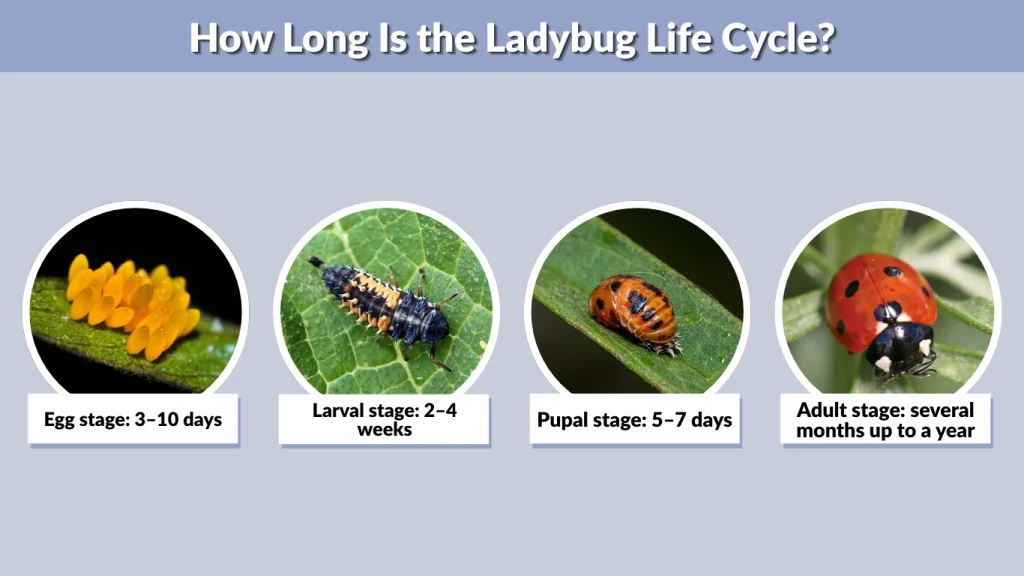
The complete ladybug life cycle from egg to adult usually takes three to six weeks. However, this timeline can vary depending on factors such as temperature, food availability, and environmental conditions.
Here is the typical duration of each stage:
- Egg stage: 3–10 days
- Larval stage: 2–4 weeks
- Pupal stage: 5–7 days
- Adult stage: several months up to a year
Warmer temperatures generally allow ladybugs to develop faster, while cooler environments may slow their growth.
Because the life cycle is relatively short, ladybugs can produce multiple generations in a single year, especially during the warm growing season when prey insects are plentiful.
Why the Ladybug Life Cycle Is Important for Gardens
Understanding the ladybug life cycle is helpful for gardeners because it allows them to recognize beneficial insects at every stage of development. Many people are familiar with adult ladybugs but may not realize that the larvae also play a major role in pest control.
Ladybug larvae and adults both feed heavily on aphids and other plant-damaging insects. By reducing pest populations naturally, they help protect plants without the need for chemical pesticides.
Gardens that support ladybugs often experience fewer pest outbreaks because these insects help keep populations under control.
Encouraging ladybugs in the garden can also promote biodiversity. A balanced ecosystem with beneficial insects helps maintain healthier plants and reduces the reliance on synthetic pest control methods.
How to Encourage Ladybugs in Your Garden
Gardeners can attract and support ladybugs by creating a welcoming environment for them.
One of the most effective ways is to plant flowers and herbs that attract beneficial insects. Plants that produce nectar and pollen provide food for adult ladybugs when insect prey is limited.
Some plants that attract ladybugs include:
- Dill
- Fennel
- Yarrow
- Marigolds
- Calendula
- Cosmos
Another important step is to avoid using chemical pesticides whenever possible. Many pesticides kill both harmful pests and beneficial insects like ladybugs.
Providing a diverse garden with a variety of plants also creates a habitat where ladybugs can thrive. When adult ladybugs find a suitable environment with food and shelter, they are more likely to lay eggs and establish future generations in the garden.
Common Myths About the Ladybug Life Cycle
There are several misconceptions about ladybugs and their development.
Myth: Ladybugs only eat plants
In reality, most ladybug species are predators that feed on aphids and other small insects.
Myth: Ladybug larvae are harmful pests
Because they look unusual, ladybug larvae are sometimes mistaken for harmful insects. However, they are beneficial predators that help protect plants.
Myth: Ladybugs live only for a few days
Although the early stages develop quickly, adult ladybugs can live for many months under favorable conditions.
FAQs
How many stages are in the ladybug life cycle?
The ladybug life cycle has four stages: egg, larva, pupa, and adult.
How long does the entire life cycle take?
The complete cycle usually takes three to six weeks, depending on environmental conditions.
What do ladybug larvae look like?
Ladybug larvae have a dark, elongated body with orange or yellow markings and are often described as having an alligator-like appearance.
Do all ladybugs go through metamorphosis?
Yes. All ladybugs undergo complete metamorphosis, which includes the egg, larva, pupa, and adult stages.
