
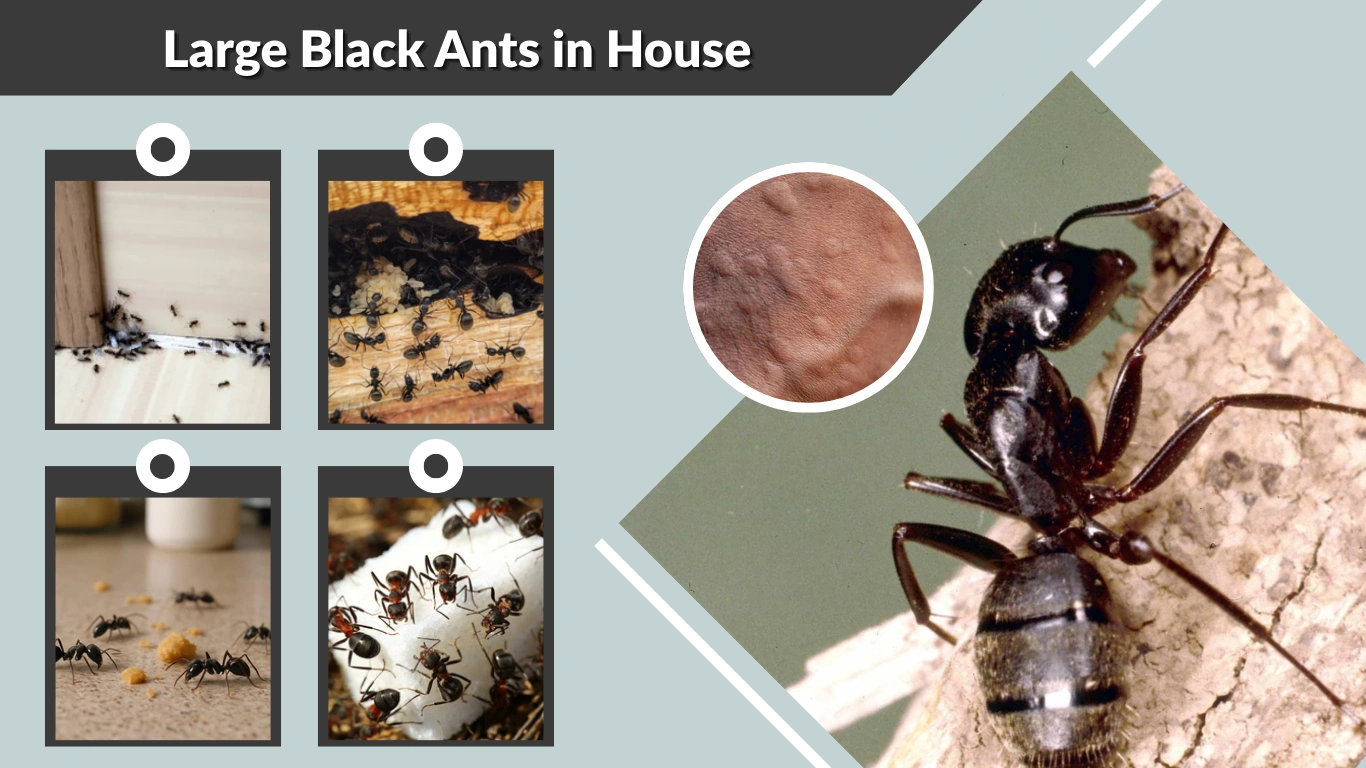
Large black ants inside your home can be alarming. Many people instantly worry about damage to wood or wonder if it means an infestation is growing. In most cases, these ants are carpenter ants or other similar species seeking food, water, or nesting spots. Understanding what they are, why they appear, and what they mean is the first step toward controlling them effectively.
What Are the Large Black Ants in Your House?

Large black ants found indoors are most often carpenter ants (genus Camponotus), one of the biggest ant species in North America and other regions. These ants are noticeably larger than sugar ants or pavement ants, often measuring 6–12 mm in length, and they have strong mandibles for chewing through soft or decaying wood.
Other possible species include black garden ants or field ants, but carpenter ants are the most likely culprits when you notice very large individuals inside your house.
Identification of Large Black Ants
- Size: Larger than most household ants; often longer than 1/4 inch.
- Color: Shiny black or black with reddish tones.
- Wings: Winged ants may appear in spring or summer during mating season, often mistaken for termites.
- Behavior: Move in steady trails, often toward food sources.
- Nesting habits: Carpenter ants don’t eat wood like termites, but they hollow it out to build their nests.
Winged vs. Wingless Ants
If you see large black ants with wings in your house, they are reproductive swarmers. Their appearance often means a colony is well-established nearby, possibly inside walls or wooden structures. Wingless ants are typically workers scouting for food.
Why Do You Have Large Black Ants in the House?
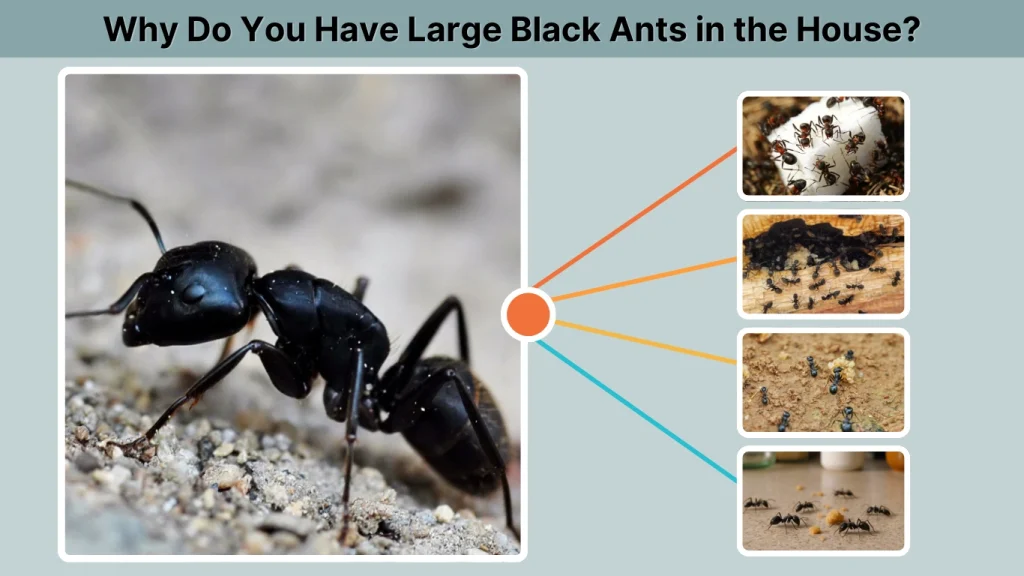
Seeing large ants doesn’t happen by chance. Ants follow trails and signals that lead them indoors when conditions outside aren’t ideal.
What Attracts Them Indoors
- Food crumbs and spills – especially sweets and proteins.
- Moisture sources – bathrooms, kitchens, or leaky basements.
- Wood damage – carpenter ants seek damp or decaying wood to excavate nests.
Causes of Sudden Appearance
- Springtime activity: As temperatures rise, colonies expand, and ants begin foraging indoors.
- Summer searches: Warm months increase food demand, so you might notice them in kitchens and pantries.
- Winter sightings: If you spot large black ants in the house during winter, it often means a nest exists inside your walls, since outdoor colonies would normally be dormant.
Regional and Seasonal Differences
- Northern states (Michigan, Wisconsin, Ohio, New Hampshire): Carpenter ants become active in late spring as homes warm up.
- Southern states (Georgia, Colorado): Ant activity may last year-round due to mild winters.
- Canada & Ontario: Long winters force ants indoors seeking warmth.
- Australia: Large black ants can be both carpenter ants and bull ants, which are aggressive species that sometimes wander inside.
Meaning and Significance of Large Black Ants Indoors
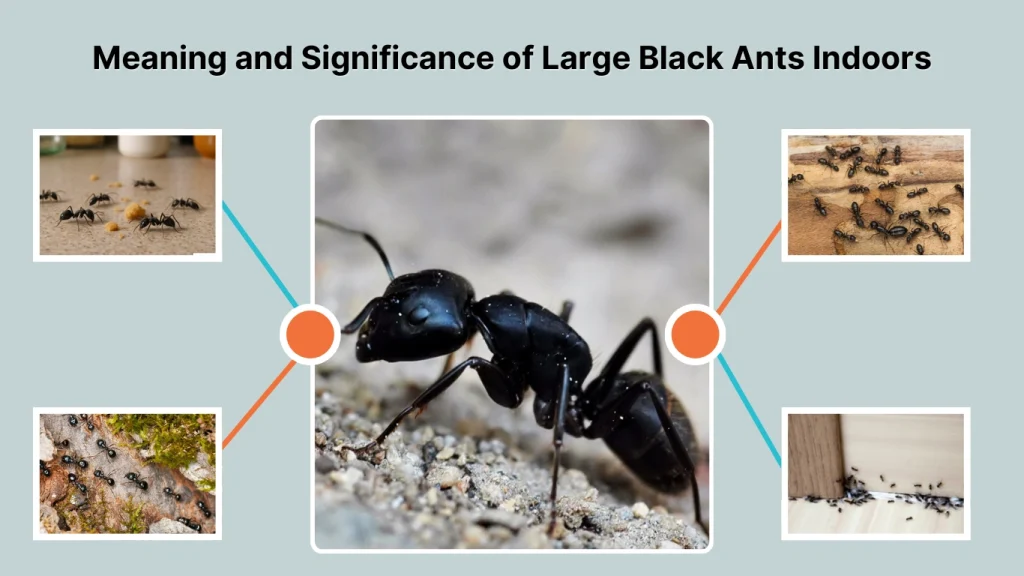
Many people wonder if large ants carry special meaning. While some cultures associate ants with hard work and prosperity, the practical explanation is more straightforward.
What It Means If You See One Ant vs. Many
- One random ant: Often just a scout looking for food. If it doesn’t return, you may not have an infestation.
- Consistent sightings: A steady presence suggests a trail leading back to a colony.
- Winged ants indoors: This is the strongest sign that a nest is nearby, possibly within your home’s structure.
Why Large Black Ants May Die in Your House
Sometimes you may notice dead ants indoors. This happens because:
- Ants became trapped and couldn’t find their way out.
- They encountered household chemicals or sprays.
- The colony is stressed or battling other ant groups (you may even see large black ants fighting in your house).
Risks and Problems Caused by Large Black Ants
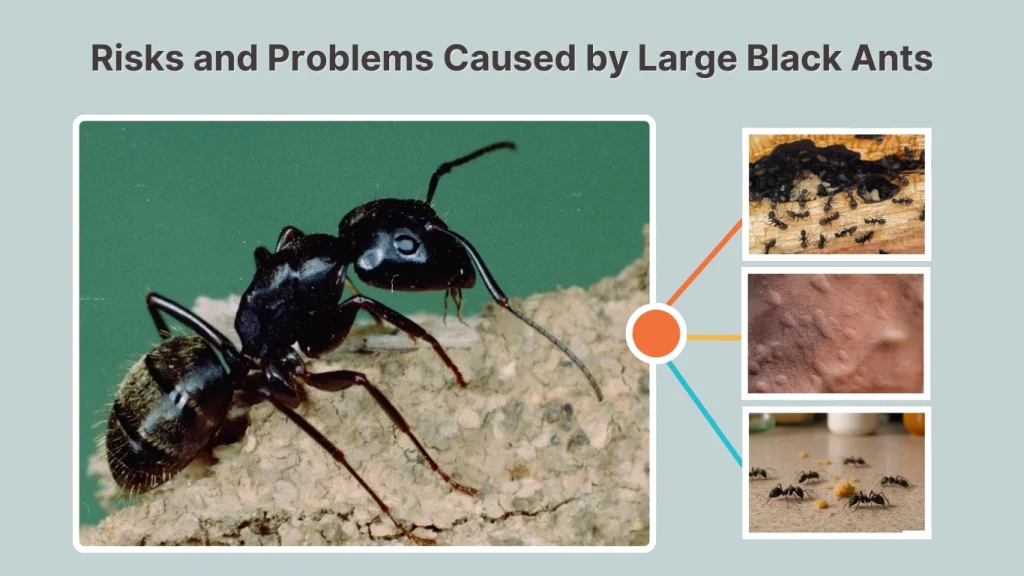
Large black ants can be more than a nuisance.
Structural Risks
Carpenter ants don’t eat wood, but they excavate tunnels inside it to expand their nests. Over time, this weakens wooden beams, window frames, and flooring. Severe infestations can compromise your home’s integrity.
Do Large Black Ants Bite?
Yes, carpenter ants can bite with their strong jaws if threatened. While not venomous, their bite can be painful and may cause mild irritation. However, they are not as dangerous as stinging insects like wasps.
Signs of a Large Black Ant Infestation
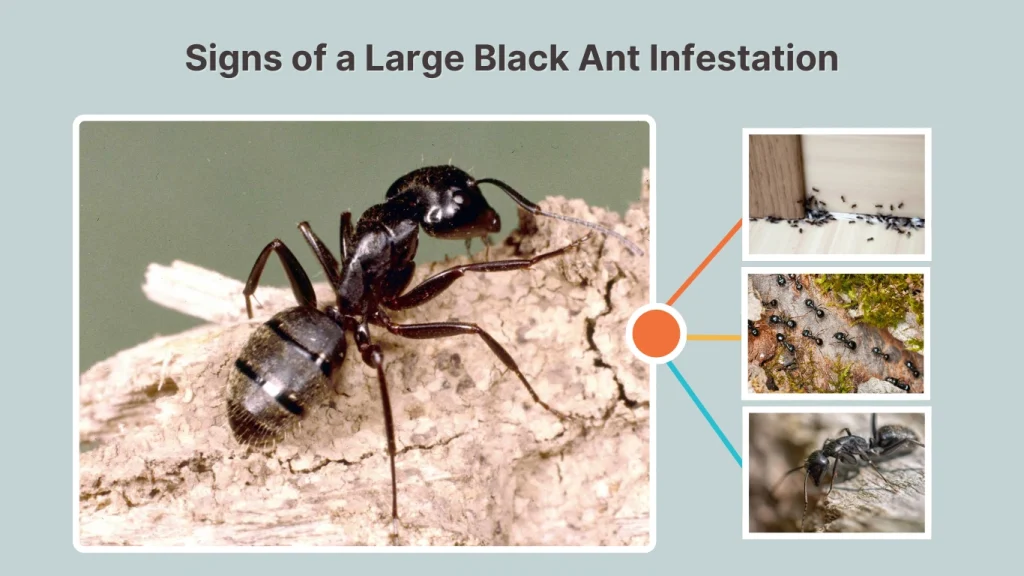
Spotting a single ant doesn’t always mean you’re infested, but repeated or clustered sightings are strong indicators.
Random vs. Consistent Sightings
- Random large black ant in house: Likely a scout ant searching for food.
- Regular trails: Indicates an established colony nearby, either indoors or close to the foundation.
- Large black ants in house all of a sudden: Often occurs during spring swarms when reproductive ants leave the colony to start new nests.
Winged Ants Inside
When you see large black ants with wings in the house, especially in winter or spring, it strongly suggests a nest hidden inside woodwork. Winged ants (swarmers) are reproductive males and females, and their presence means the colony is mature.
Fighting or Dying Ants
- Large black ants fighting in house: Colonies may clash over territory or food sources.
- Finding dead ants: Indicates exposure to household chemicals, environmental stress, or failed scouting attempts.
How to Get Rid of Large Black Ants in the House
Once you’re sure ants are more than just visitors, quick action is necessary.
Natural & Preventive Methods
- Seal entry points: Caulk gaps around windows, doors, and foundation cracks.
- Clean food sources: Wipe counters, sweep crumbs, and store food in airtight containers.
- Reduce moisture: Fix plumbing leaks and improve ventilation in damp areas like basements and bathrooms.
- Trim vegetation: Branches and shrubs touching your home can act as ant highways.
DIY Treatments
- Vinegar solution: Wipe ant trails with vinegar-water to disrupt pheromones.
- Boric acid baits: Place bait stations where ants travel; workers carry poison back to the colony.
- Diatomaceous earth: A natural powder that kills ants by dehydrating them.
Chemical & Professional Solutions
- Ant sprays and gels: Effective for small infestations but may not reach hidden nests.
- Professional pest control: Recommended for severe carpenter ant infestations, especially when nests are inside structural wood.
Long-Term Prevention Strategies
- Conduct seasonal inspections of wooden beams, attics, and basements.
- Store firewood away from your house to avoid attracting ants.
- Keep outdoor areas free from rotting wood or damp mulch.
- Schedule routine pest control checks if you live in high-risk regions like Michigan, Ontario, or the southern U.S.
FAQs
Why are large black ants in my house all of a sudden?
They likely entered during a seasonal swarm or followed a food trail. Sudden appearances often mean a nearby nest has grown and ants are expanding their search for resources.
Do large black ants in the house mean I have termites?
Not always. Carpenter ants can be mistaken for termites because both are large and may have wings. Unlike termites, ants have narrow waists and bent antennae.
What attracts large black ants indoors?
Food crumbs, sugar, pet food, and moisture sources like leaky pipes or damp wood attract ants inside.
How to stop large black ants from coming back?
Eliminate food and water sources, seal cracks, and use bait traps. Long-term prevention includes fixing leaks and reducing indoor humidity.
Are large black ants harmful to humans?
They don’t spread diseases like some pests, but carpenter ants can bite if threatened, and infestations may cause serious structural wood damage.
