

The leafhopper bug is a small plant-feeding insect commonly found in gardens, farms, and grassy areas. Although tiny, leafhoppers can cause significant damage to crops and ornamental plants by feeding on plant sap. These insects are known for their wedge-shaped bodies and impressive jumping ability. Understanding the leafhopper life cycle, including leafhopper eggs, nymphs, and adult stages, can help gardeners and farmers identify and control infestations effectively. Learning about their habitat and behavior is also important for preventing plant damage.
What Is a Leafhopper Bug?
A leafhopper bug is a small insect belonging to the family Cicadellidae, which is part of the order Hemiptera. Leafhoppers are widely distributed around the world and are commonly found on plants where they feed on sap.
These insects use specialized mouthparts to pierce plant tissues and suck out fluids. This feeding behavior can weaken plants and sometimes spread plant diseases. Because of this, leafhoppers are often considered agricultural pests.
There are more than 20,000 species of leafhoppers worldwide, and they vary in color, size, and habitat. Despite their small size, they are highly active insects that can jump or fly quickly when disturbed.
Physical Characteristics of Leafhoppers
Leafhoppers have several unique physical features that help distinguish them from other insects.
Common characteristics include:
- Small body size, usually 3–15 millimeters long
- Wedge-shaped or triangular body
- Colors ranging from green and yellow to brown
- Strong hind legs designed for jumping
- Wings folded over the back
Their wedge-shaped bodies allow them to move easily between plant leaves and stems.
How to Identify a Leafhopper
Identifying leafhoppers can sometimes be challenging because of their small size and quick movements. However, several signs can help recognize them.
Typical identification traits include:
- A narrow wedge-shaped body
- Quick sideways movement when disturbed
- Strong jumping ability
- Presence on the underside of leaves
If you gently shake a plant and see tiny insects quickly jumping or flying away, they may be leafhoppers.
Leafhoppers Life Cycle
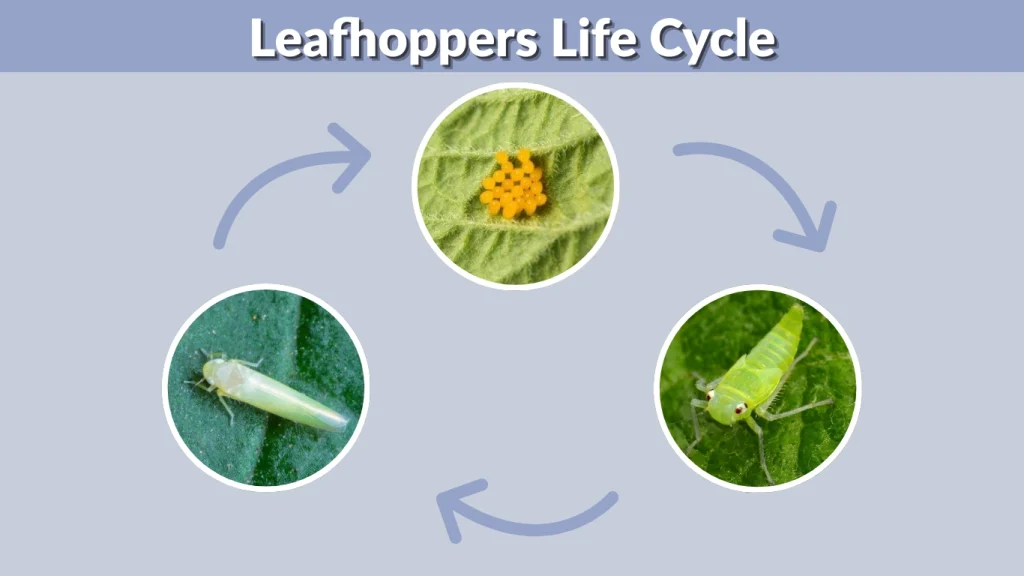
The leafhopper life cycle follows a process known as incomplete metamorphosis. Unlike insects that go through a larval and pupal stage, leafhoppers develop gradually through three main stages:
- Egg
- Nymph
- Adult
Each stage plays an important role in the insect’s growth and reproduction.
Leafhopper Eggs
Female leafhoppers lay their eggs directly inside plant tissues. They use specialized egg-laying organs to insert the eggs into leaves or stems. This helps protect the eggs from predators and environmental conditions.
The eggs are very small and usually difficult to see without close inspection. They are often hidden within the plant material.
Depending on temperature and species, leafhopper eggs typically hatch within one to three weeks.
Leafhopper Nymph
After hatching, the young insects emerge as leafhopper nymphs. Nymphs resemble miniature versions of adult leafhoppers but do not yet have fully developed wings.
Key characteristics of leafhopper nymphs include:
- Small wingless bodies
- Pale green or yellow coloring
- Strong jumping legs
- Active feeding on plant sap
During this stage, nymphs feed heavily on plant fluids to support their growth. As they grow, they shed their outer skin several times in a process called molting.
The nymph stage usually lasts two to three weeks, depending on environmental conditions.
Leafhopper Larvae (Clarification)
Some people refer to young leafhoppers as leafhopper larvae, but technically this is not correct. Leafhoppers do not have a true larval stage.
Instead, the immature stage of leafhoppers is called a nymph. The term “larvae” is usually used for insects that go through complete metamorphosis, such as butterflies or beetles.
Understanding this difference helps avoid confusion when studying insect life cycles.
Adult Leafhopper
After several molts, the nymph develops into a fully grown adult leafhopper. Adult leafhoppers have fully developed wings and are capable of both jumping and flying.
Adults continue feeding on plant sap and eventually reproduce, starting the life cycle again.
Female leafhoppers can lay many eggs during their lifetime, which allows populations to grow quickly in favorable conditions.
Leafhopper Habitat
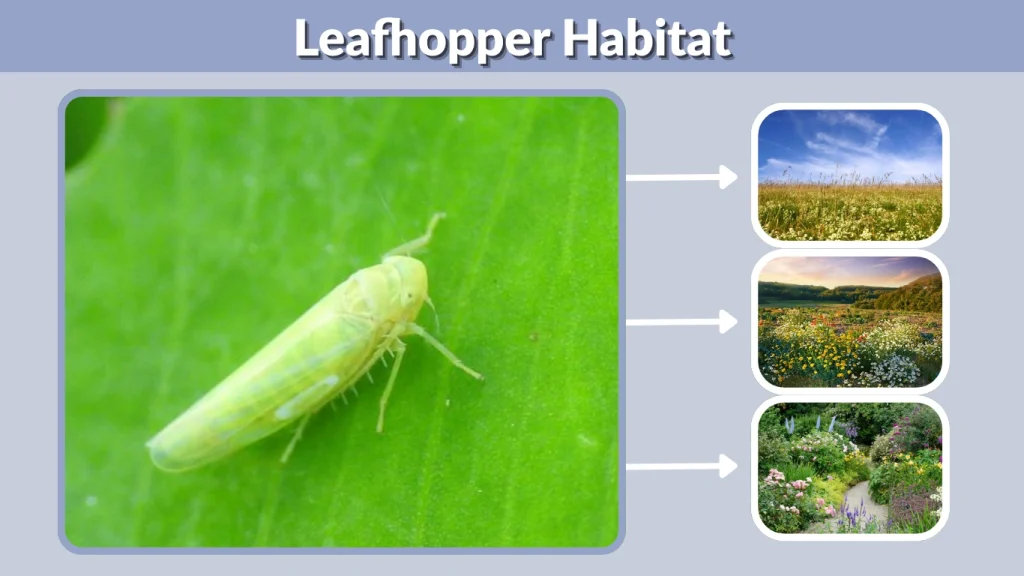
Leafhoppers live in many different environments where plants are abundant. Since they feed on plant sap, they are usually found in areas with dense vegetation. These insects prefer warm climates but can survive in many regions around the world.
Leafhoppers are most commonly seen on the leaves and stems of plants, where they hide and feed. Their small size and quick movements help them avoid predators.
Natural Habitats
In natural ecosystems, leafhoppers live in places such as:
- Grasslands
- Meadows
- Forest edges
- Shrubs and bushes
- Wild plant areas
These habitats provide plenty of plants that serve as food sources. Leafhoppers often remain on the underside of leaves, where they are protected from weather and predators.
Agricultural Habitats
Leafhoppers are also commonly found in agricultural environments. Farmers often encounter these insects in crop fields because many species feed on cultivated plants.
Common agricultural habitats include:
- Vegetable gardens
- Crop fields
- Orchards
- Vineyards
Because leafhoppers can reproduce quickly, they may become serious pests in large farming areas.
Plants That Attract Leafhoppers
Many plant species attract leafhoppers because they provide a rich supply of plant sap. Some commonly affected plants include:
- Beans
- Potatoes
- Tomatoes
- Corn
- Grapes
Leafhoppers can feed on both wild plants and cultivated crops, which is why they are widespread in many environments.
Leafhopper vs Grasshopper
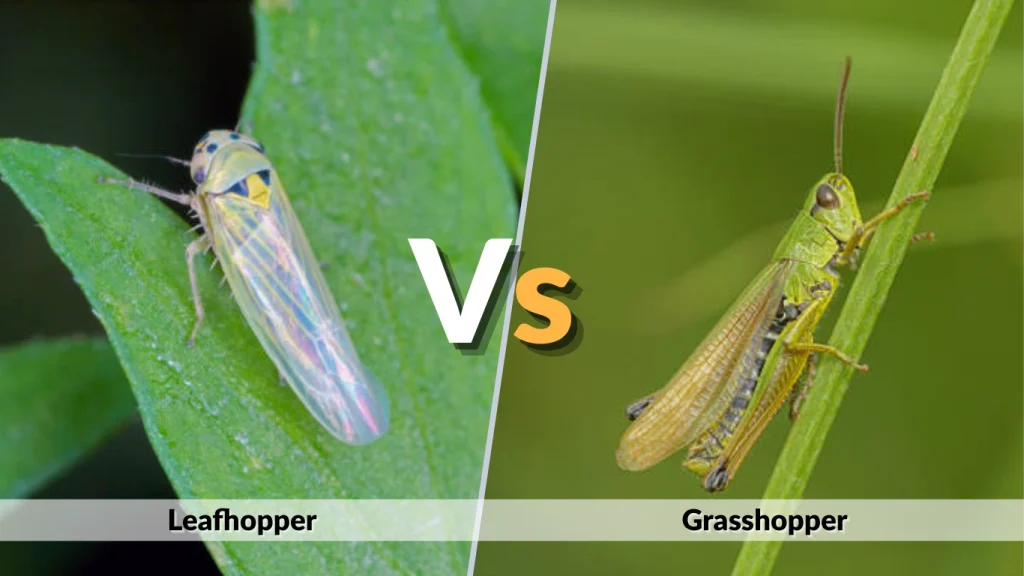
Leafhoppers and grasshoppers are sometimes confused because both insects are known for their jumping ability. However, they are very different in size, behavior, and feeding habits.
Key Differences
| Feature | Leafhopper | Grasshopper |
| Size | Small (3–15 mm) | Much larger (1–7 cm) |
| Body Shape | Wedge-shaped | Thick-bodied |
| Movement | Quick sideways hops | Strong vertical jumps |
| Diet | Sucks plant sap | Chews plant leaves |
| Damage Type | Sap feeding | Leaf chewing |
Leafhoppers are much smaller than grasshoppers and feed by sucking fluids from plants. Grasshoppers, on the other hand, chew plant leaves using strong mouthparts.
Why They Are Often Confused
People sometimes confuse these insects because both are commonly seen jumping on plants. Their quick movements can make them difficult to observe closely.
However, once you notice their size and body shape, it becomes easier to distinguish a leafhopper from a grasshopper.
Damage Caused by Leafhoppers
Although leafhoppers are small insects, they can cause noticeable damage to plants. Their feeding habits can weaken plants and reduce crop productivity.
Plant Sap Feeding
Leafhoppers use piercing mouthparts to suck sap from plant tissues. This feeding process removes important nutrients that plants need for healthy growth.
Over time, heavy infestations can weaken plants and slow their development.
Leafhopper Burn
One of the most common symptoms of leafhopper damage is known as leafhopper burn. This occurs when leaf edges turn yellow or brown due to sap loss.
Plants affected by leafhopper burn may show:
- Yellowing leaves
- Brown leaf edges
- Reduced plant growth
Transmission of Plant Diseases
Some leafhopper species can also spread plant diseases. As they move from plant to plant while feeding, they may transmit harmful pathogens.
This makes leafhoppers especially problematic for farmers growing crops such as grapes, potatoes, and vegetables.
Leafhoppers Control
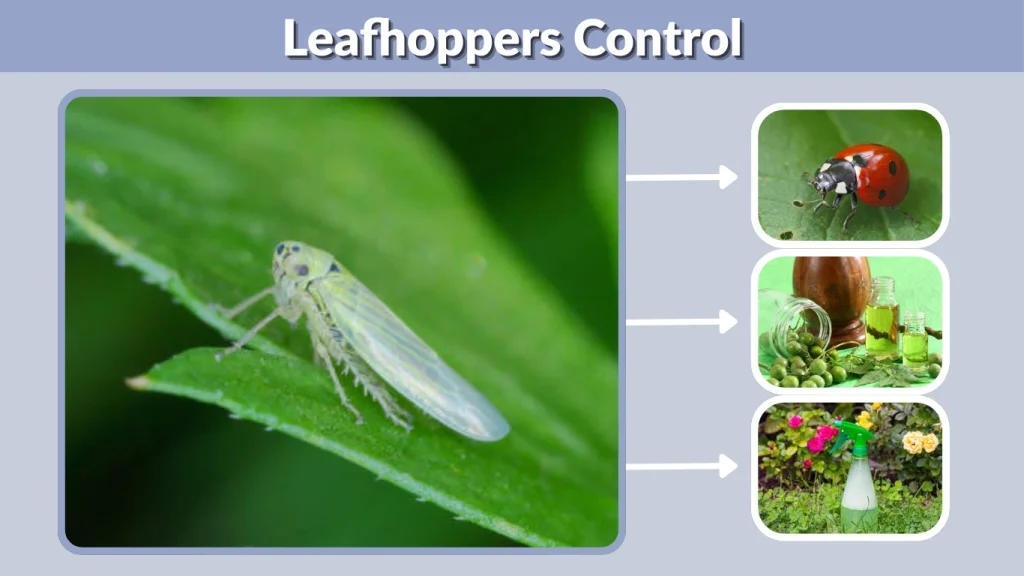
Managing leafhopper populations is important for protecting plants and crops. Several methods can help control these insects effectively.
Natural Predators
Many natural predators feed on leafhoppers and help keep their populations under control.
Common predators include:
- Lady beetles
- Lacewings
- Spiders
- Parasitic wasps
Encouraging these beneficial insects can help reduce leafhopper numbers naturally.
Organic Control Methods
Organic gardening methods can also help control leafhoppers without using harmful chemicals.
Popular organic options include:
- Neem oil sprays
- Insecticidal soap
- Garlic or pepper sprays
These treatments can reduce leafhopper populations while remaining safe for beneficial insects.
Garden Prevention Tips
Preventing leafhopper infestations is often easier than treating them later.
Helpful prevention strategies include:
- Removing weeds that host leafhoppers
- Using row covers to protect plants
- Inspecting plants regularly for early signs of pests
Maintaining healthy plants can also make them more resistant to insect damage.
Chemical Control (When Necessary)
In severe infestations, chemical insecticides may be used as a last resort. Farmers sometimes use selective pesticides designed to target sap-feeding insects.
However, these should be applied carefully to avoid harming beneficial insects and pollinators.
FAQs
What is a leafhopper bug?
A leafhopper bug is a small plant-feeding insect that belongs to the family Cicadellidae. These insects feed on plant sap and are commonly found in gardens and agricultural fields.
Are leafhoppers harmful to plants?
Yes, leafhoppers can damage plants by sucking sap from leaves and stems. Some species can also spread plant diseases.
What do leafhopper nymphs look like?
Leafhopper nymphs resemble small wingless versions of adult leafhoppers. They are usually pale green or yellow and actively feed on plant sap.
Where do leafhoppers lay eggs?
Female leafhoppers insert their eggs inside plant tissues such as leaves or stems to protect them from predators.
How can you control leafhoppers in a garden?
Leafhoppers can be controlled by encouraging natural predators, using organic sprays like neem oil, removing weeds, and regularly monitoring plants.
Conclusion
Leafhopper bugs are small but highly active insects that can affect many plants in gardens and agricultural fields. Their life cycle includes egg, nymph, and adult stages, with nymphs feeding heavily on plant sap as they grow. Leafhoppers live in a variety of habitats where plants are abundant and can sometimes cause plant damage or spread diseases. By understanding their behavior, habitat, and life cycle, gardeners and farmers can take effective steps to control leafhopper populations and protect their crops.
