
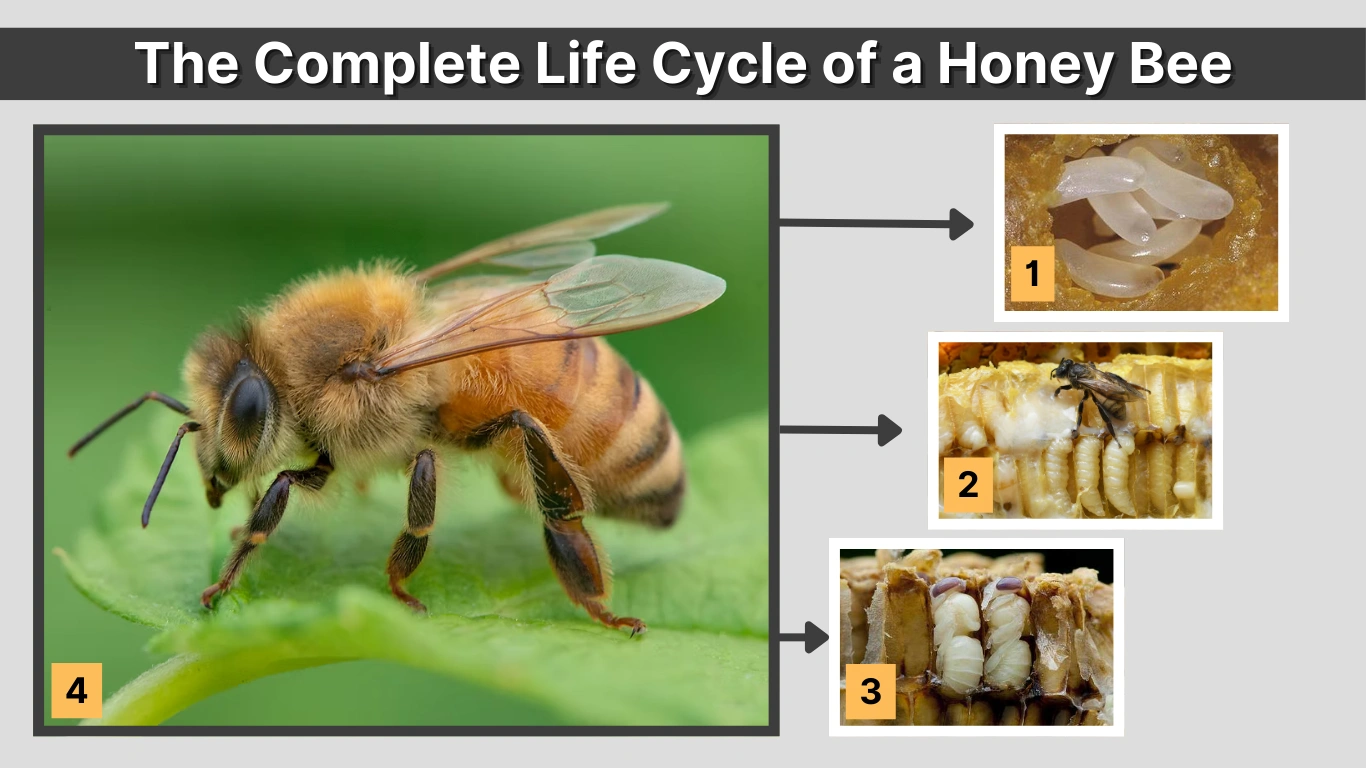
The journey of a honey bee from a tiny egg to a fully grown, buzzing pollinator is nothing short of extraordinary. In just a few short weeks, it undergoes a remarkable transformation through four distinct stages—egg, larva, pupa, and adult. Each step is vital for the bee’s survival and the health of the entire colony. Understanding this process not only reveals the wonders of nature but also highlights the delicate balance that keeps our ecosystems thriving.
Egg Stage

The egg stage marks the very beginning of a honey bee’s life, laid with precision and purpose by the colony’s queen. This phase may seem simple, but it sets the foundation for the bee’s future role in the hive.
How the Egg Is Laid
The queen bee is solely responsible for laying all the eggs in the hive. She carefully inspects each hexagonal cell before depositing a single, tiny egg at its base. Depending on the needs of the colony, she may lay fertilized eggs that develop into workers or queens, or unfertilized eggs that become drones.
Appearance and Size of the Egg
- Cylindrical in shape and slightly curved.
- About the size of a grain of rice.
- Pearly white in color and delicate in texture.
Duration of the Egg Stage
Honey bee eggs remain in this stage for around three days. During this time, they are kept at an ideal hive temperature of about 93–95°F (34–35°C) to ensure proper development. After this short incubation, the larva will emerge, ready for its first meal.
Larva Stage

Once the egg hatches, the honey bee enters the larva stage—a period of rapid growth fueled by constant feeding and care from worker bees. This is when the bee’s future role in the colony is largely determined.
Hatching from the Egg
On the third day, the egg splits open, and a tiny, legless larva emerges. Unable to care for itself, it relies entirely on nurse bees for food and protection. The larva lies curled at the bottom of its cell, awaiting nourishment.
Diet and Growth of Larvae
- For the first three days, all larvae are fed royal jelly, a nutrient-rich secretion produced by nurse bees.
- After this, worker and drone larvae switch to a diet of bee bread (a mix of pollen and honey), while potential queen larvae continue receiving royal jelly exclusively.
- This difference in diet is what triggers the development of a queen bee versus a worker or drone.
Duration and Changes
The larval stage lasts about six days for workers, seven for drones, and five for queens. During this time, the larva will shed its skin several times as it grows rapidly—expanding more than 1,500 times its original size before entering the pupal stage.
Pupa Stage

The pupa stage is when the most dramatic transformation occurs, turning a soft, worm-like larva into a fully formed honey bee. This phase takes place in complete darkness, inside a sealed cell, away from the hustle of the hive.
Cell Capping Process
Once the larva has reached its full size, worker bees cover its cell with a wax cap. This capping creates a protective, climate-controlled chamber where metamorphosis can safely take place.
Transformation Inside the Cell
Inside the sealed cell, the larva spins a thin cocoon around itself and begins changing into a pupa. During this stage:
- Wings, legs, eyes, and antennae start forming.
- The bee’s body segments become clearly defined.
- Its exoskeleton begins to harden, preparing it for life outside the cell.
Duration of the Pupal Stage
The pupal phase lasts around 12 days for workers, 14 days for drones, and 8 days for queens. When development is complete, the bee is ready to emerge as a fully formed adult.
Adult Stage
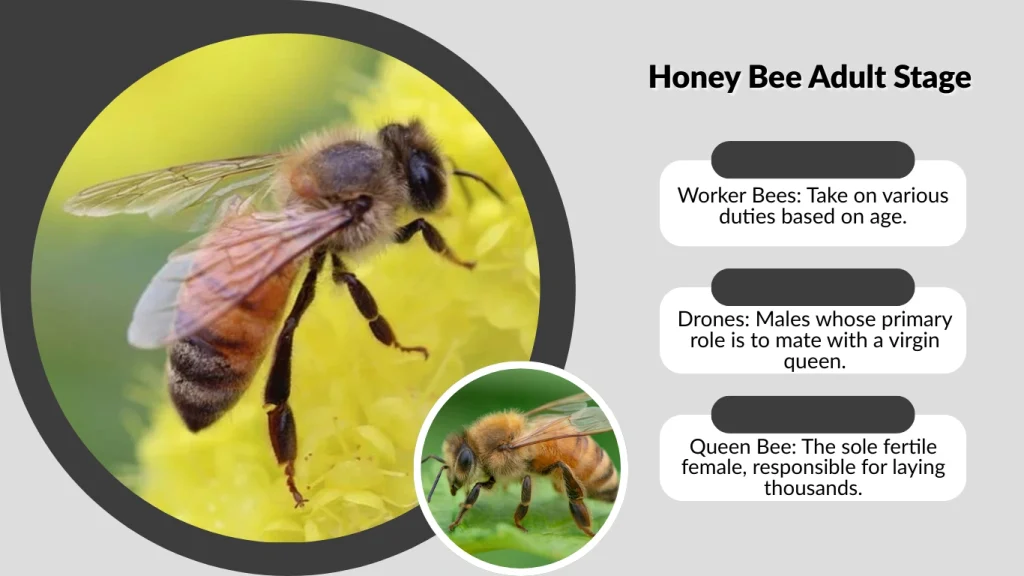
The adult stage is the final step in the honey bee’s life cycle, marking the moment it emerges from its capped cell to join the bustling colony. Each bee’s role is determined by its caste—worker, drone, or queen—and begins immediately after emergence.
Emerging from the Cell
When development is complete, the young bee chews through the wax capping to free itself. Newly emerged bees are soft-bodied and pale in color but soon darken as their exoskeleton hardens.
Roles in the Colony
- Worker Bees: Take on various duties based on age, starting with cleaning cells, feeding larvae, and tending the queen before progressing to foraging outside the hive.
- Drones: Males whose primary role is to mate with a virgin queen.
- Queen Bee: The sole fertile female, responsible for laying thousands of eggs to sustain the colony.
Lifespan of Different Castes
Worker bees live about 5–7 weeks during the active season, drones survive for a few weeks if they don’t mate, and queens can live up to 5 years under ideal conditions.
Factors Affecting Honey Bee Development
While the honey bee’s life cycle generally follows a predictable pattern, several external and internal factors can influence the speed, health, and success of development from egg to adult.
Environmental Conditions
Temperature and humidity inside the hive must remain stable for healthy growth—ideally 93–95°F (34–35°C) with moderate humidity. Too much fluctuation can slow development or cause deformities.
Food Supply and Nutrition
The quality and quantity of food provided to larvae have a direct impact on their health. Abundant pollen and nectar lead to strong, healthy bees, while poor nutrition can stunt growth and weaken the colony.
Diseases and Pests
Parasitic mites like Varroa destructor, bacterial infections such as American foulbrood, and viruses can disrupt normal development, sometimes killing bees before they reach adulthood. Healthy hive management is essential to reduce these risks.
Summary Table of Honey Bee Life Cycle Durations

The table below provides a quick comparison of the time each caste—worker, drone, and queen—spends in each stage of development from egg to adult.
| Stage | Worker Bee | Drone Bee | Queen Bee |
| Egg | 3 days | 3 days | 3 days |
| Larva | 6 days | 7 days | 5 days |
| Pupa | 12 days | 14 days | 8 days |
| Total Development | ~21 days | ~24 days | ~16 days |
FAQs
How long does it take for a honey bee to go from egg to adult?
The time varies by caste—workers take about 21 days, drones around 24 days, and queens only 16 days to develop from egg to adult.
What determines if a honey bee becomes a queen or worker?
Diet is the deciding factor. Larvae fed exclusively on royal jelly throughout their development become queens, while those switched to bee bread develop into workers or drones.
Do all bees in the hive develop at the same speed?
No. Queens develop the fastest, followed by workers, with drones taking the longest. Environmental conditions can also speed up or slow down development.
Can environmental changes delay bee development?
Yes. Extreme temperatures, poor hive ventilation, or insufficient food supply can delay growth or cause incomplete development.
