
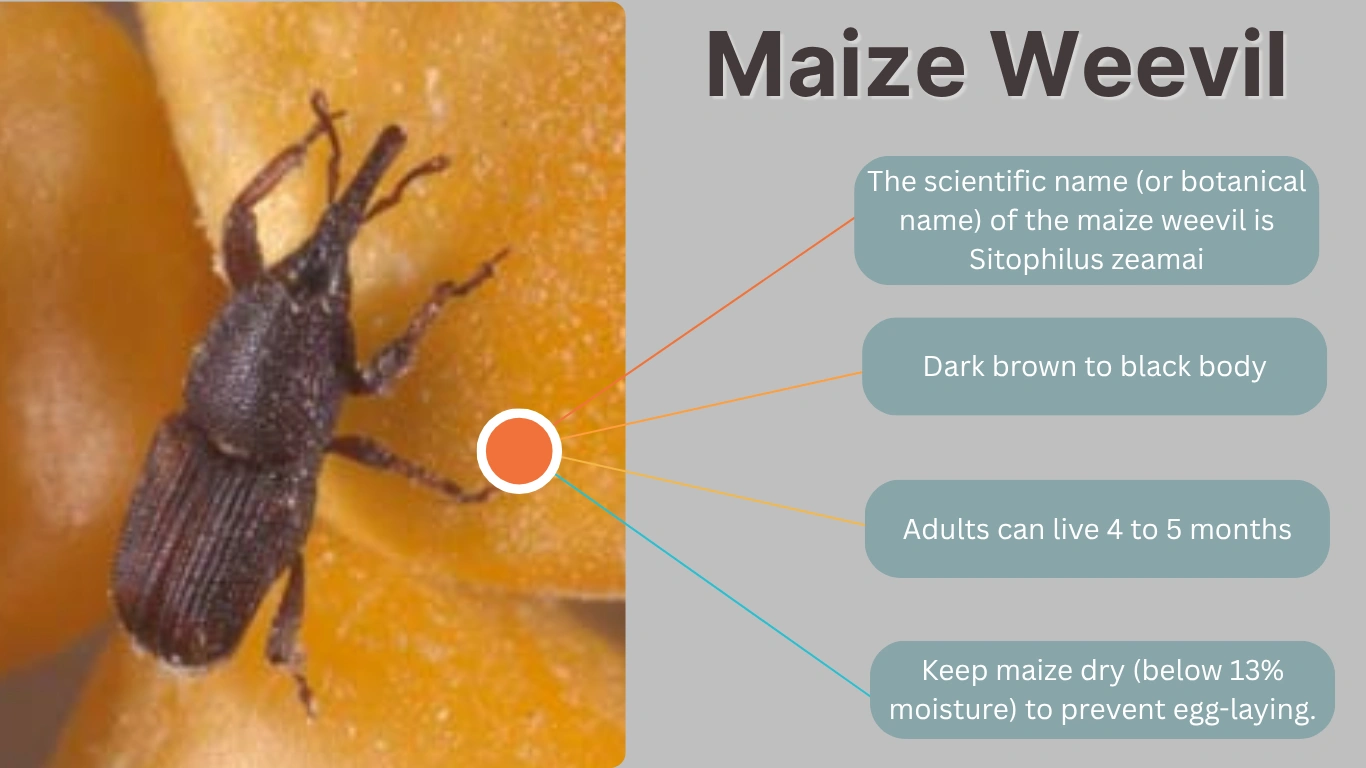
The maize weevil is a destructive pest of stored grains, particularly maize, rice, and wheat. It is notorious for its ability to bore into whole kernels and cause significant post-harvest loss. Found in many parts of the world, especially in warm and humid climates, the maize weevil infests both field-grown and stored maize, making it a major threat to food security.
This article covers everything about the maize weevil, including its scientific classification, life cycle, control methods, and economic importance. You’ll also find a description of its physical structure and a labeled diagram for easy identification.
What Is a Maize Weevil?
The maize weevil is a type of beetle that belongs to the family Curculionidae, commonly known as true weevils or snout beetles. It is often confused with the rice weevil, but the maize weevil is slightly larger and can infest both growing and stored crops.
It’s sometimes referred to as the maize grain weevil, especially in storage contexts. Despite its small size, this pest has devastating effects on food supplies, especially in developing countries where maize is a staple food.
Scientific Name of Maize Weevil
The scientific name (or botanical name) of the maize weevil is Sitophilus zeamais. It is closely related to the rice weevil (Sitophilus oryzae), but the two can be differentiated based on size, elytra markings, and preferred grain types.
Maize Weevil Identification and Diagram

Maize weevils are small, brown-to-black beetles measuring around 3 to 4.5 mm in length. They have a characteristic elongated snout (rostrum) and pitted wing covers (elytra) that may have faint lighter spots.
Key features:
- Slender snout used for boring into kernels
- Clubbed, elbowed antennae
- Hardened forewings with punctured texture
- Dark brown to black body
- Capable of flying
Draw and Label a Maize Weevil (Visual Summary):
A proper diagram of a maize weevil should include the following labeled parts:
- Head
- Compound eye
- Antenna
- Rostrum (snout)
- Thorax
- Elytra (wing covers)
- Legs
- Abdomen
A well-labeled diagram is essential for students or pest management professionals learning to identify this beetle under a microscope or magnifying glass.
Life Cycle of Maize Weevil

Like many beetles, the maize weevil undergoes a complete metamorphosis with four life stages: egg, larva, pupa, and adult. Understanding the life cycle is critical for developing an effective control strategy.
Egg Stage
Female maize weevils chew a tiny hole into a maize kernel and deposit a single egg inside. She seals the hole with a waxy plug, making detection difficult. Each female can lay up to 300 to 400 eggs in her lifetime.
Larva Stage
The egg hatches inside the kernel after a few days, and the grub-like larva feeds on the internal contents of the maize seed. This stage causes the most physical damage to the grain.
Pupa Stage
After sufficient feeding, the larva forms a pupa within the hollowed kernel. It transforms over the course of several days into an adult weevil.
Adult Stage
The adult weevil chews its way out of the maize grain. Adults can live 4 to 5 months and continue the cycle by mating and laying more eggs. The entire life cycle takes approximately 30–35 days under favorable conditions.
Weevils in Maize: How Infestation Happens
Infestations often begin in the field before harvest. Female maize weevils may deposit eggs in developing maize cobs through the husk. After harvest, if grains are stored under humid or warm conditions, these infestations can spread rapidly.
Signs of maize weevils in stored grains include:
- Tiny exit holes in kernels
- Fine dust at the bottom of containers
- Grains that feel lighter than normal
- Presence of live or dead adult weevils in sacks or storage bins
Once inside storage, they can easily spread to other grains, including rice, wheat, sorghum, and even processed foods like pasta.
Economic Importance of Maize Weevil
The maize weevil is economically significant for several reasons:
- Post-harvest Losses: It causes serious grain damage in warehouses, silos, and household storage. In some developing regions, 30–50% of stored maize can be lost due to weevil infestation.
- Reduced Grain Quality: Infested maize loses its nutritional value and market appeal. Hollowed grains can’t be used for food, feed, or seed.
- Increased Storage Costs: Farmers and warehouse owners spend heavily on protective measures, fumigation, and alternative storage methods.
- Food Insecurity: Since maize is a staple food in many countries, maize weevil infestations contribute to hunger and reduced crop availability.
Even small-scale infestations can reduce profitability and increase grain waste, making the maize weevil a major concern for both agriculture and food safety.
Maize Weevil Control Pesticides and Management

Controlling maize weevils involves a combination of chemical, physical, and cultural practices. Timing and prevention are crucial since the weevil develops inside the grain, making early infestations hard to detect.
1. Proper Storage
- Keep maize dry (below 13% moisture) to prevent egg-laying.
- Use hermetically sealed containers or bags (e.g., PICS bags).
- Clean storage areas before loading new grain.
2. Temperature and Humidity Management
- Maintain cool, dry conditions in grain storage facilities.
- In low-resource settings, sun-drying grain for 2–3 days before storage can reduce infestation risk.
3. Chemical Control (Pesticides)
- Use insecticides such as malathion, deltamethrin, or pirimiphos-methyl to treat empty storage before loading.
- In large-scale operations, fumigants like phosphine are used under airtight conditions to kill all life stages.
- Always follow local pesticide safety regulations and usage instructions.
4. Natural and Biological Control
- Use neem seed powder or ash as natural repellents in traditional systems.
- Encourage predators like parasitoid wasps in field settings (where applicable).
5. Regular Monitoring
- Check grains monthly for early signs of infestation.
- Use light traps or pheromone traps in larger storage areas to monitor adult weevils.
What to Do with Infested Maize
If maize is lightly infested and you wish to salvage it:
- Freeze the grain at 0°F (−18°C) for at least 4 days.
- Heat in an oven at 120°F (49°C) for 30 minutes.
- After treatment, sieve or winnow the maize to remove dust and dead insects.
Grains heavily damaged by maize weevils should not be consumed or sold. Discard in sealed bags and burn or dispose of them properly.
Conclusion
The maize weevil (Sitophilus zeamais) is one of the most damaging pests of stored maize. With its concealed life cycle and rapid reproduction, it can destroy vast quantities of grain before you even realize there’s a problem. By understanding its life cycle, monitoring storage areas, and applying appropriate control methods—including pesticides, natural repellents, and improved storage—you can greatly reduce the threat it poses.
