
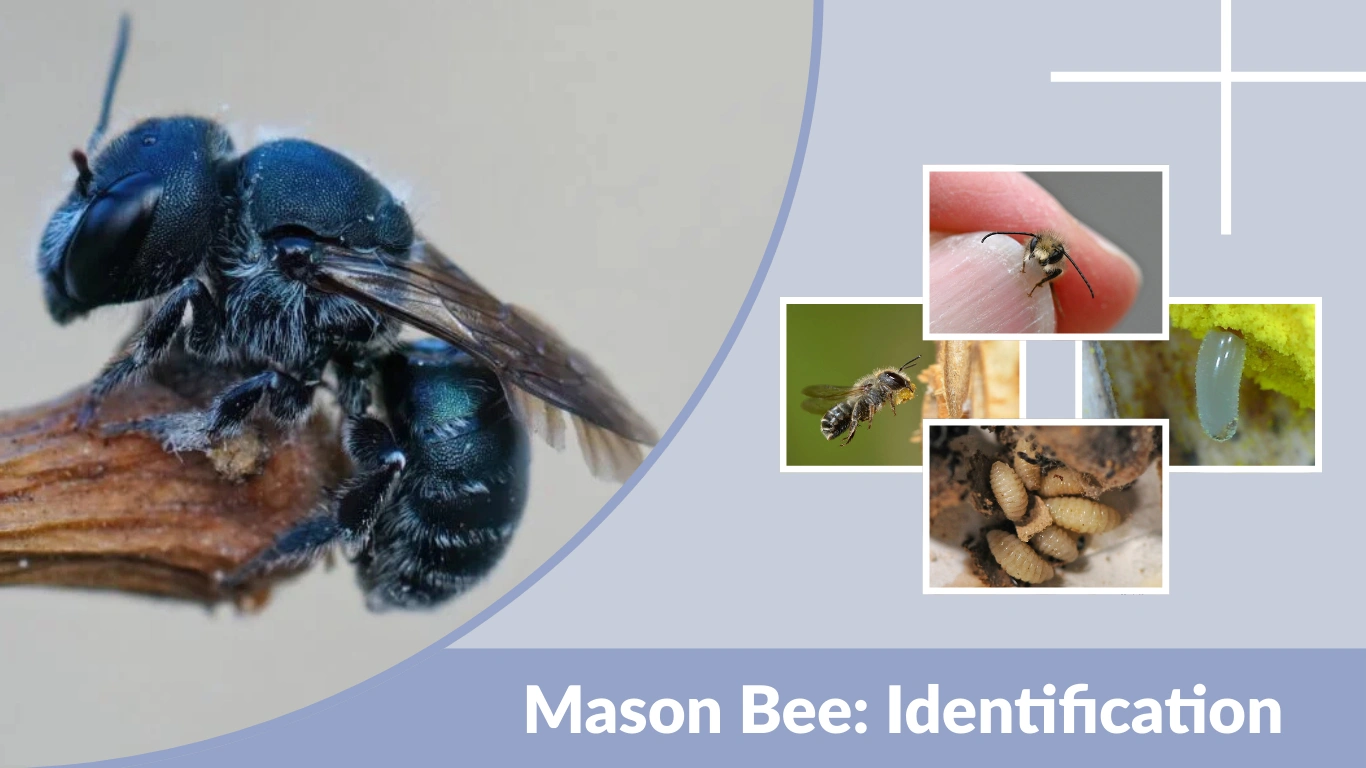
Mason bees are gentle, solitary bees known for their impressive pollination abilities. Unlike honey bees, they do not live in large colonies or produce honey, but they play a crucial role in pollinating gardens, orchards, and wild plants. These bees belong to the genus Osmia and are named for their habit of using mud to build and seal their nests. Mason bees are active mainly in early spring when many plants begin to bloom, making them important pollinators for fruit trees and flowering plants.
Mason Bee Identification
Physical Characteristics
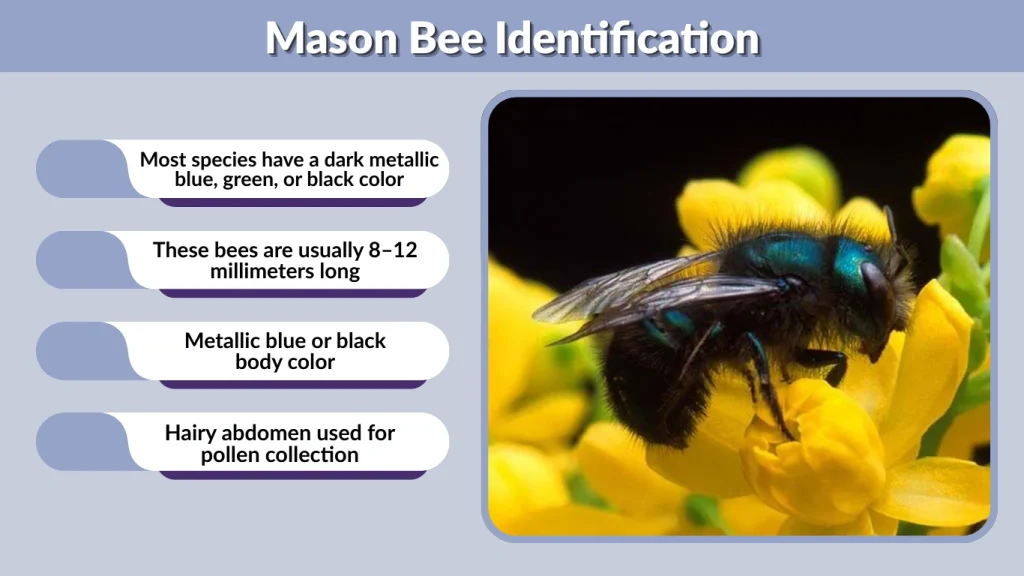
Mason bees are small to medium-sized insects with a compact and slightly rounded body. Most species have a dark metallic blue, green, or black color, which makes them easy to distinguish from many other bees. Their bodies are covered with fine hairs that help collect pollen from flowers.
These bees are usually 8–12 millimeters long, making them similar in size or slightly smaller than honey bees. However, mason bees appear thicker and fuzzier than honey bees because of their dense body hair.
Another noticeable feature is their strong wings, which allow them to fly efficiently even in cooler temperatures. This ability enables them to pollinate plants early in the spring when other pollinators may still be inactive.
Mason Bee Identification Chart
A mason bee identification chart typically highlights several features that help distinguish these bees from other species. These characteristics include:
- Metallic blue or black body color
- Hairy abdomen used for pollen collection
- Compact and rounded body shape
- Short antennae compared to other bees
- Solitary nesting behavior
Female mason bees are usually slightly larger than males and are responsible for building nests and collecting pollen. Male mason bees can often be identified by their lighter facial hair and slightly smaller size.
Key Identification Features
One of the most distinctive identification features of mason bees is the way they carry pollen on the underside of their abdomen. Most other bees, including honey bees, carry pollen on specialized structures on their hind legs called pollen baskets.
Mason bees also tend to appear less aggressive than other bee species. They are frequently seen visiting flowers in gardens, orchards, and parks during the spring months.
Mason Bee vs Honey Bee
Social Structure Differences
One of the most important differences between mason bees and honey bees is their social behavior. Honey bees are social insects that live in large colonies with thousands of individuals. These colonies include a queen bee, worker bees, and drones that work together to maintain the hive.
Mason bees, however, are solitary insects. Each female mason bee builds and manages her own nest without the help of other bees. Even though many mason bees may nest in the same area, each bee is responsible only for her own offspring.
Physical Differences
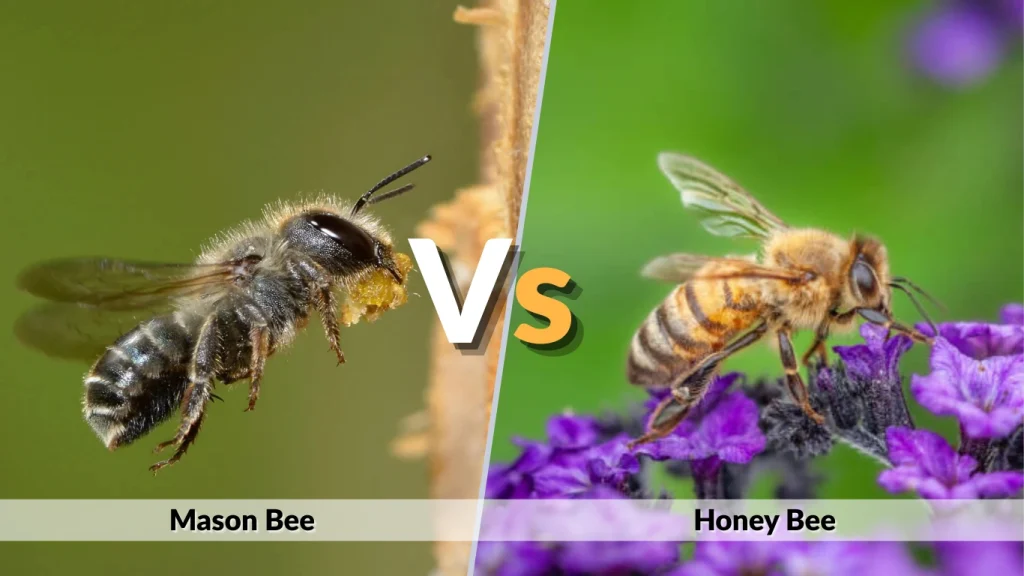
Mason bees and honey bees also differ in appearance. Honey bees usually have a golden brown body with darker stripes, while mason bees often have a darker metallic appearance.
Another clear difference is how they carry pollen. Honey bees store pollen on their hind legs in pollen baskets, while mason bees carry pollen on their abdomen. This method often makes mason bees appear dustier when they visit flowers.
Pollination Efficiency
Mason bees are considered some of the most efficient pollinators among bees. Because they collect pollen on their abdomen rather than neatly packing it on their legs, pollen easily falls onto flowers as they move from plant to plant.
For this reason, farmers and gardeners sometimes encourage mason bee populations to help pollinate fruit trees such as apples, cherries, and peaches. A relatively small number of mason bees can pollinate large numbers of flowers in a short period of time.
Do Mason Bees Sting?
Stinging Behavior
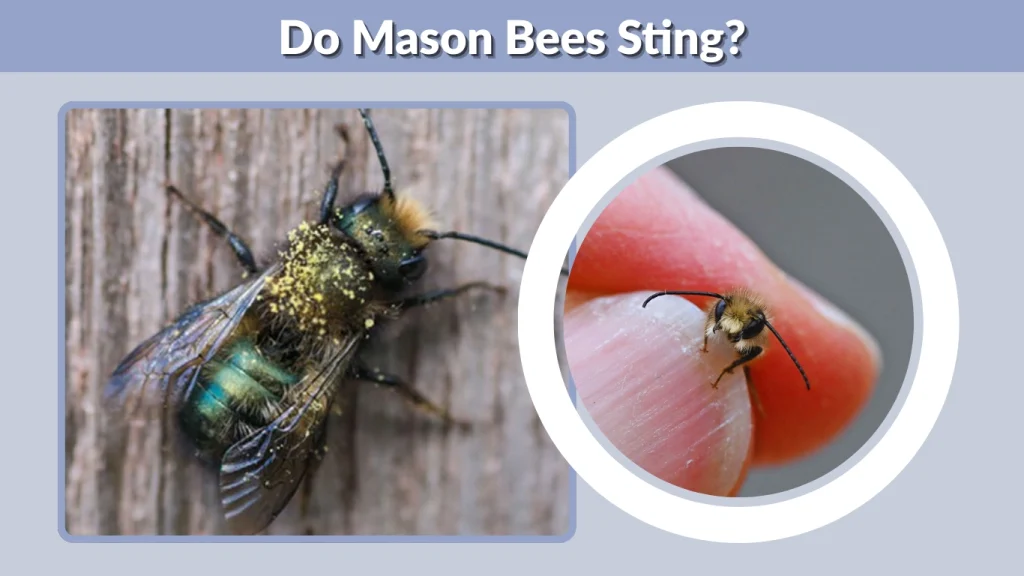
Mason bees are known for their gentle and non-aggressive behavior. Female mason bees do have a stinger, but they rarely use it. In most situations, they will only sting if they feel directly threatened or are handled roughly.
Male mason bees do not have stingers at all, so they are completely harmless.
Why Mason Bees Rarely Sting
Unlike honey bees, mason bees do not have a large colony or hive to defend. Because they live alone and do not store large amounts of honey, they have little reason to behave aggressively toward people or animals.
Their calm nature allows them to focus mainly on collecting pollen and building nests rather than defending territory.
Are Mason Bees Safe Around People?
Mason bees are generally considered very safe around humans and pets. Their peaceful behavior makes them ideal pollinators for home gardens, orchards, and urban green spaces.
Gardeners often encourage mason bees by providing nesting tubes or bee houses. These simple structures give the bees a safe place to build nests while helping improve pollination for nearby plants.
Mason Bee Habitat
Natural Habitats
Mason bees are commonly found in gardens, orchards, forest edges, and meadows where flowering plants are abundant. These environments provide the nectar and pollen they need for food. Because mason bees are active mainly in early spring, they are often seen around flowering fruit trees and early-blooming plants.
Unlike honey bees, mason bees do not build large hives. Instead, they prefer quiet natural areas where small nesting spaces are available. These locations provide protection for their eggs and developing larvae.
Nesting Sites
Mason bees nest in small natural cavities rather than constructing wax hives. Common nesting sites include:
- Hollow plant stems
- Holes in wood created by other insects
- Cracks in tree bark
- Small gaps in rocks or walls
- Artificial bee houses or nesting tubes
Inside these cavities, female mason bees create separate chambers for each egg. They use mud to divide the chambers and seal the nest, which is how they earned the name “mason” bees.
Environmental Preferences
Mason bees prefer habitats with plenty of flowering plants and access to moist soil or mud, which they use for building their nests. Warm spring temperatures also help support their activity since most mason bee species emerge when early spring flowers bloom.
Because they depend on flowers for nectar and pollen, mason bees thrive in environments with diverse plant life.
Mason Bee Life Cycle
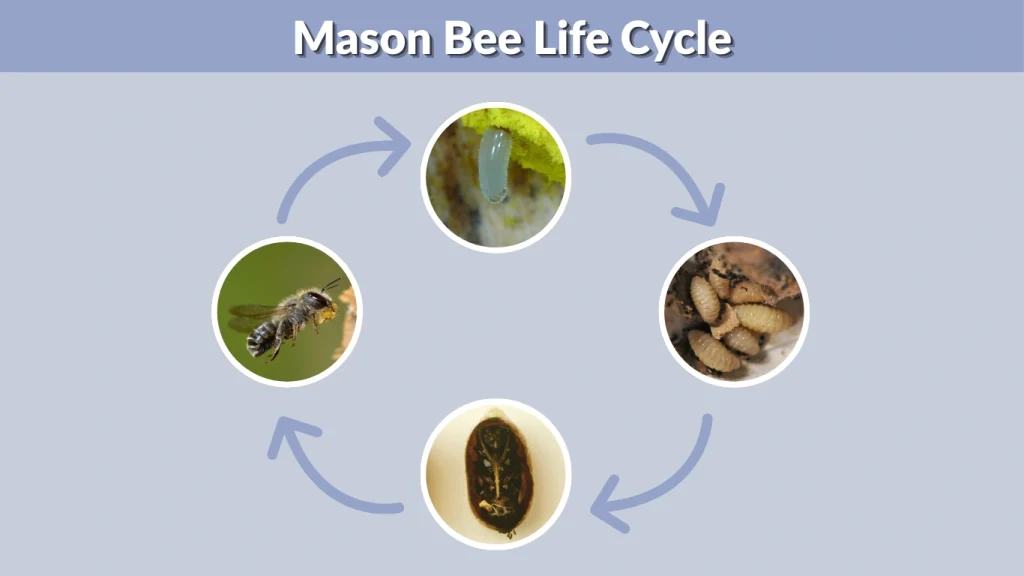
Egg Stage
The life cycle of a mason bee begins when a female lays eggs inside a nesting cavity. Each egg is placed in its own small chamber along with a supply of pollen and nectar that will serve as food for the developing larva.
After laying the egg and storing the food, the female seals the chamber with mud before creating the next chamber for another egg. This process continues until the nesting tube is filled.
Mason Bee Larvae
After the egg hatches, the larva begins feeding on the stored pollen and nectar provided by the mother. The larva remains inside the sealed chamber, where it is protected from predators and environmental changes.
During this stage, the larva grows rapidly as it consumes its food supply. This stage is important for building the energy needed for the next phase of development.
Pupal Stage
Once the larva has finished feeding, it forms a protective cocoon and enters the pupal stage. Inside the cocoon, the insect undergoes a transformation as its body changes from a larva into an adult bee.
This stage may last several weeks or months depending on environmental conditions.
Adult Stage
Adult mason bees typically emerge from their nests in early spring, usually when temperatures begin to rise and flowers start to bloom. Male bees often emerge first, followed by females a short time later.
After mating, female mason bees begin searching for nesting sites where they can lay eggs and start the life cycle again.
Mason Bee Life Cycle Chart
The development of a mason bee can be summarized in four main stages:
- Egg – laid in a mud-sealed chamber within a nesting cavity
- Larva – feeds on stored pollen and nectar
- Pupa – transforms into an adult bee inside a cocoon
- Adult – emerges in spring to mate and reproduce
Most mason bees complete their life cycle in about one year, with much of their development occurring inside the nest.
Mason Bee Facts
Mason bees are fascinating insects with many unique characteristics. There are hundreds of species of mason bees found across different regions of the world. These bees are known for their exceptional pollination abilities and their gentle nature.
Unlike honey bees, mason bees do not produce honey or form large colonies. Instead, each female independently builds her nest and provides food for her offspring. Because of their efficient pollination skills, mason bees are often considered one of the most valuable pollinators for fruit trees.
Another interesting fact is that mason bees use mud partitions to separate the chambers of their nests. This behavior is what gives them their name. Their nesting habits, combined with their calm temperament, make them ideal pollinators for gardens and agricultural environments.
Conclusion
Mason bees are remarkable insects that play an essential role in pollination and ecosystem health. Their unique nesting behavior, efficient pollination abilities, and gentle temperament make them valuable allies for gardeners and farmers alike.
By understanding mason bee identification, habitat, life cycle, and behavior, we can better appreciate their contribution to plant reproduction and biodiversity. Encouraging mason bees by planting flowers and providing nesting spaces can help support these beneficial pollinators and maintain healthy ecosystems.
