
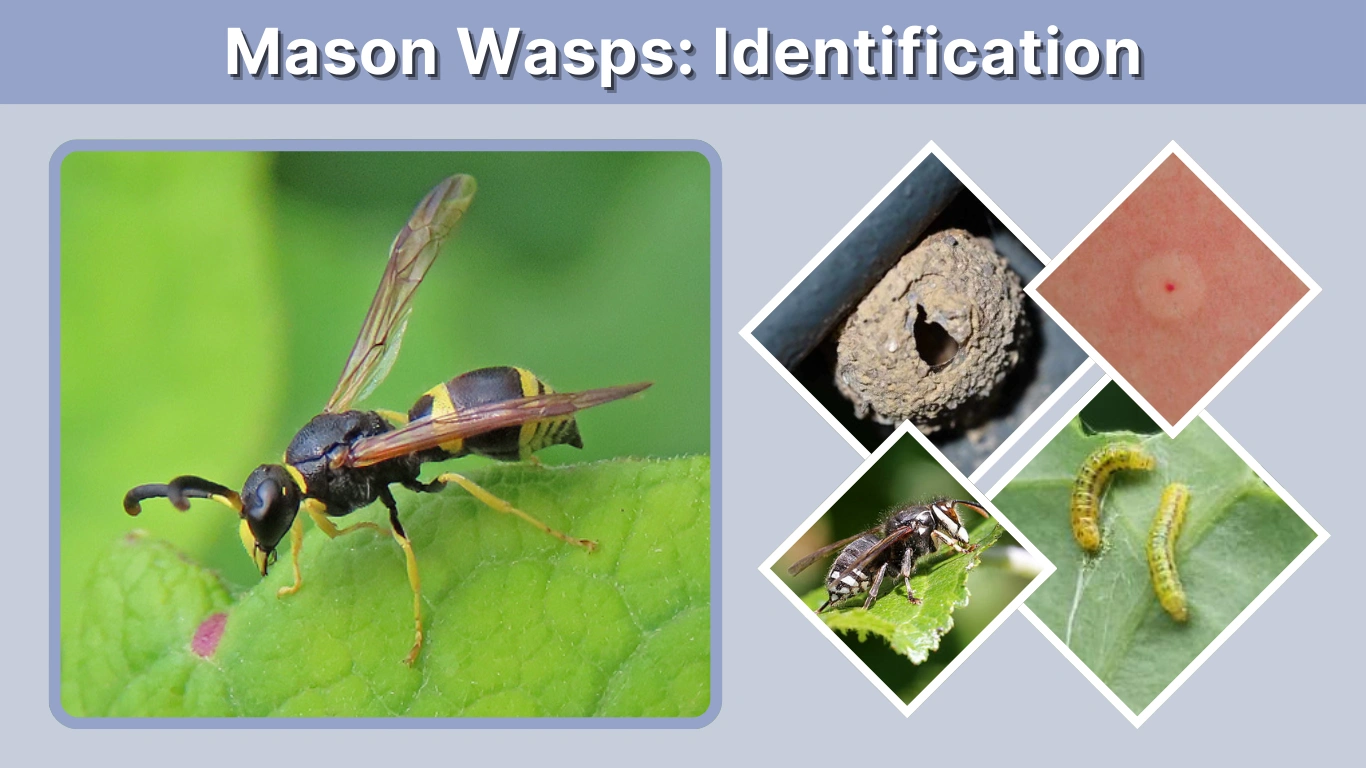
Mason wasps are often misunderstood insects. Their bold colors and habit of building mud nests on walls or buildings cause many people to assume they are aggressive or dangerous. In reality, mason wasps are solitary wasps with calm behavior and a very low risk to humans. Most concerns come from seeing their nests up close or encountering a wasp flying slowly around a structure. This article explains what mason wasps are, how to identify them, and how their nests work. Understanding their behavior makes it much easier to decide whether they should be left alone or removed.
What Is a Mason Wasp?
A mason wasp is a type of solitary wasp belonging to a group that builds nests from mud, resin, or similar materials. The name “mason” comes from their ability to construct small, sturdy nests that resemble tiny clay structures attached to walls, rocks, or wood.
Unlike social wasps such as yellowjackets or hornets, mason wasps do not live in colonies. Each female works alone, building her own nest and caring only for her offspring. Because there is no colony to defend, mason wasps are far less aggressive and rarely sting people.
Mason Wasp vs Other Wasps
The biggest difference between mason wasps and common pest wasps is behavior. Social wasps defend their nests aggressively because many individuals are at risk. Mason wasps, on the other hand, have no shared nest and no reason to attack unless they are directly handled or trapped.
Mason Wasp Identification
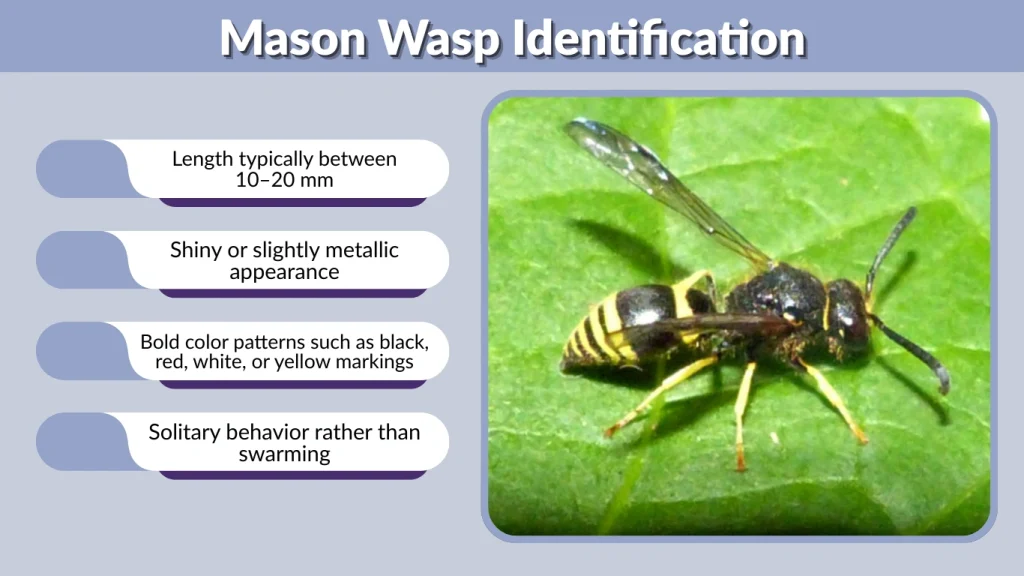
Mason wasps are medium-sized insects with a narrow waist, smooth bodies, and folded wings when resting. Their flight is usually slow and deliberate, especially when they are searching for nesting material or prey.
Common identification features include:
- Length typically between 10–20 mm
- Shiny or slightly metallic appearance
- Bold color patterns such as black, red, white, or yellow markings
- Solitary behavior rather than swarming
Common Types of Mason Wasps
There are many species of mason wasps worldwide, but some of the most commonly noticed include:
- Black mason wasp – solid black or nearly black, often mistaken for more dangerous wasps
- Red and black mason wasp – striking color contrast that draws attention
- White-striped black mason wasp – black body with thin white bands
- Brown or red mason wasp – common in warmer regions
Color and size vary by region, but appearance alone does not indicate danger.
Four-Toothed Mason Wasp
The four-toothed mason wasp is one of the most frequently searched species. It gets its name from small tooth-like structures on its face, visible up close. This species is typically black with pale markings and is known for building neat mud nests on buildings. Despite its intimidating look, its behavior is consistent with other mason wasps—calm and non-aggressive.
Mason Wasp Nest Explained
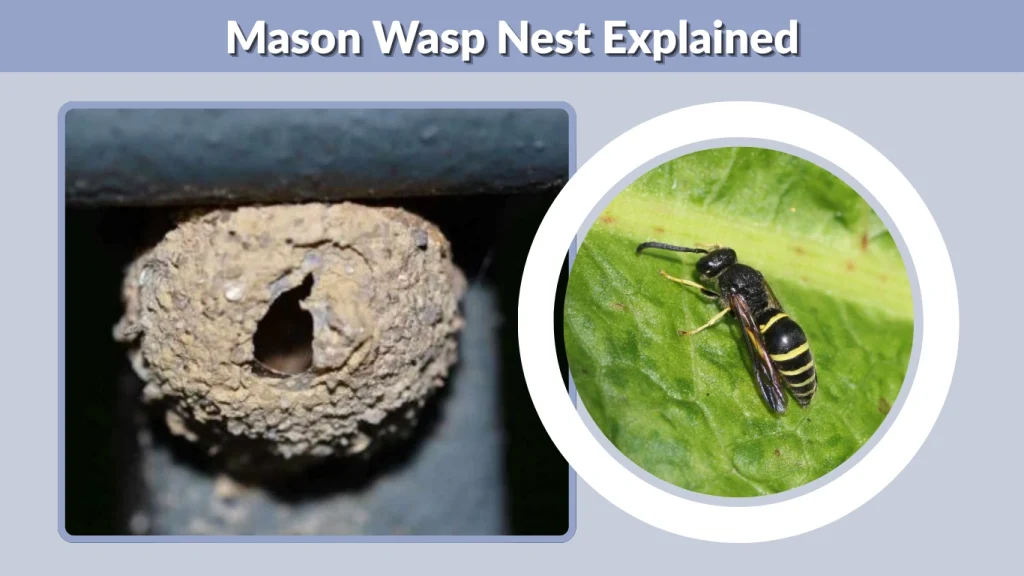
Mason wasp nests are usually small, compact structures made from mud or resin. They are often attached firmly to flat surfaces and may resemble tiny lumps or rounded cells rather than the open combs seen in paper wasp nests.
Common nesting locations include:
- Exterior house walls
- Under roof eaves
- Fence posts
- Sheds, garages, or barns
Each nest usually contains one or a few sealed chambers. Once completed, the nest is closed permanently and never reused.
Inside a Mason Wasp Nest
Inside each chamber, the female mason wasp lays a single egg. She then hunts caterpillars or other soft-bodied insects, which she paralyzes and places inside the nest. These insects serve as fresh food for the developing larva.
After the egg hatches:
- The larva feeds on the stored prey
- It grows safely inside the sealed nest
- It eventually pupates and later emerges as an adult wasp
After emergence, the nest remains empty and inactive.
Mason Wasp Life Cycle
The mason wasp life cycle follows four simple stages:
- Egg – laid inside the mud or resin nest
- Larva – feeds on paralyzed insects
- Pupa – transforms into an adult inside the nest
- Adult – exits the nest and begins the cycle again
The entire process can take several weeks to a few months, depending on temperature and species.
Do Mason Wasps Sting?
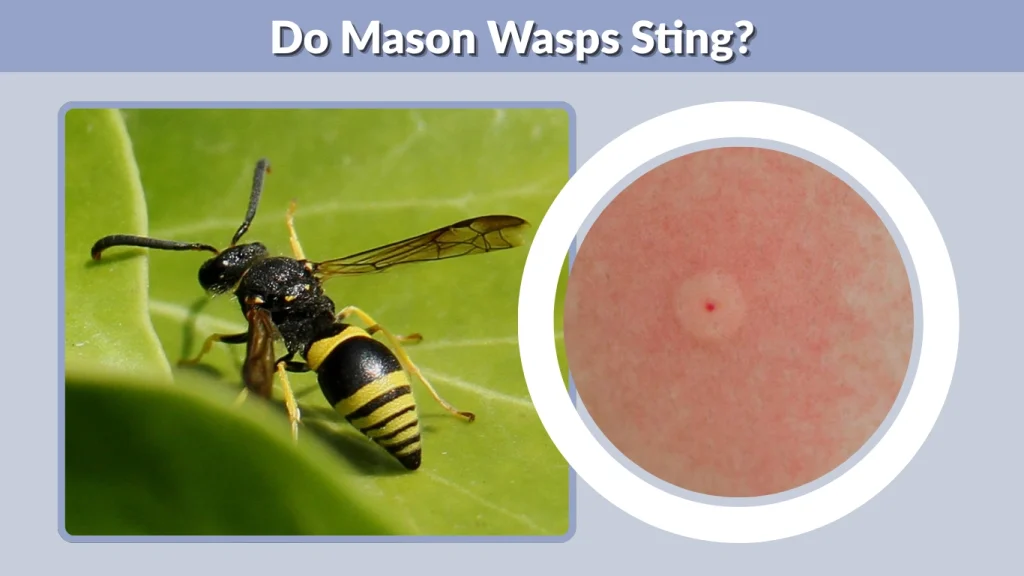
Yes, mason wasps can sting, but stings are uncommon. Only female mason wasps have a stinger, which they primarily use to paralyze prey rather than defend themselves. Because mason wasps are solitary and do not protect a shared nest, they are unlikely to sting unless they are grabbed, trapped in clothing, or pressed against the skin.
Most people can work or walk near a mason wasp nest without provoking any reaction.
Mason Wasp Sting Pain
A mason wasp sting is usually described as mild to moderate. The pain is often short-lived and far less intense than stings from yellowjackets or hornets. Typical symptoms include:
- A brief sharp sting or burning sensation
- Minor swelling and redness around the sting site
- Itching that fades within a few hours
Severe reactions are rare, but people with known insect sting allergies should take precautions.
Mason Wasp Sting Treatment
In most cases, simple first aid is enough:
- Clean the area with soap and water
- Apply a cold pack to reduce swelling
- Use an antihistamine or hydrocortisone cream if itching occurs
Seek medical help if symptoms such as difficulty breathing, facial swelling, or dizziness appear.
Are Mason Wasps Dangerous or Aggressive?
Mason wasps are not considered dangerous to humans. Their natural behavior is calm and non-aggressive, and they do not chase or swarm. Without a colony to defend, they have little reason to attack people or pets.
Most reports of “aggressive” behavior occur when a wasp is accidentally disturbed during nest construction. Even then, the wasp usually flies away rather than stinging.
Are Red and Black Mason Wasps Dangerous?
Red and black mason wasps often look intimidating due to their bold coloration. Despite this, they behave no differently from other mason wasps. They are not poisonous and do not have stronger venom than other solitary wasps. Stings remain rare and defensive.
Are Four-Toothed Mason Wasps Aggressive?
The four-toothed mason wasp is frequently mistaken for aggressive species such as hornets. In reality, it is solitary and non-territorial. Even when nesting on buildings, it typically ignores nearby human activity.
What Do Mason Wasps Eat?
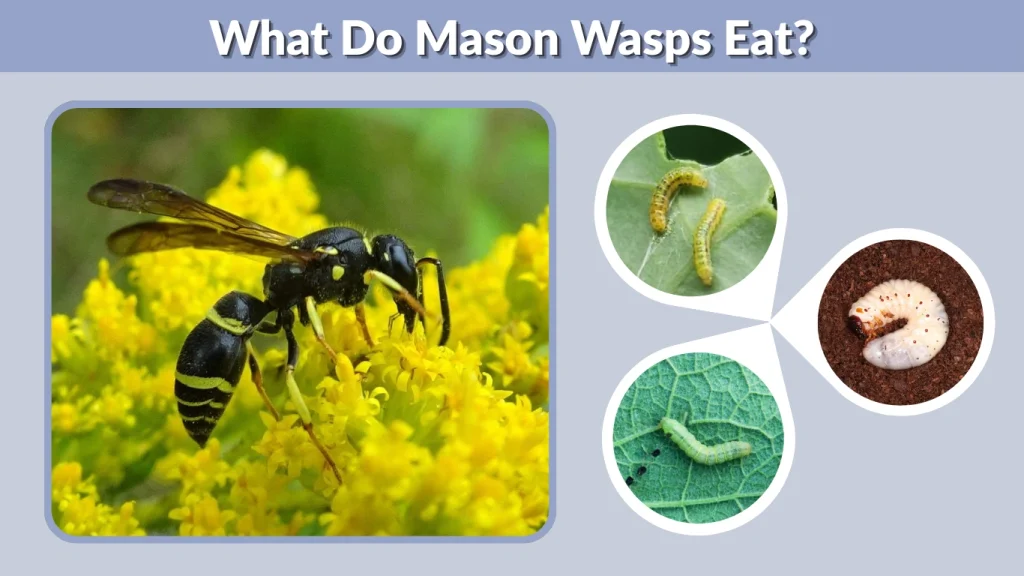
Adult mason wasps feed mainly on nectar, sap, and other sugary plant substances. This makes them occasional pollinators.
Their larvae require protein, so female mason wasps hunt:
- Caterpillars
- Beetle larvae
- Other soft-bodied garden pests
These insects are paralyzed and stored inside the nest to feed the developing larvae.
Are Mason Wasps Beneficial?
Yes, mason wasps are beneficial insects. By reducing populations of plant-damaging caterpillars, they help protect gardens and crops naturally. Because they rarely sting and do not damage structures, many homeowners choose to tolerate their presence.
Benefits include:
- Natural pest control
- Low risk to humans
- Contribution to local ecosystems
Mason Wasp vs Other Insects
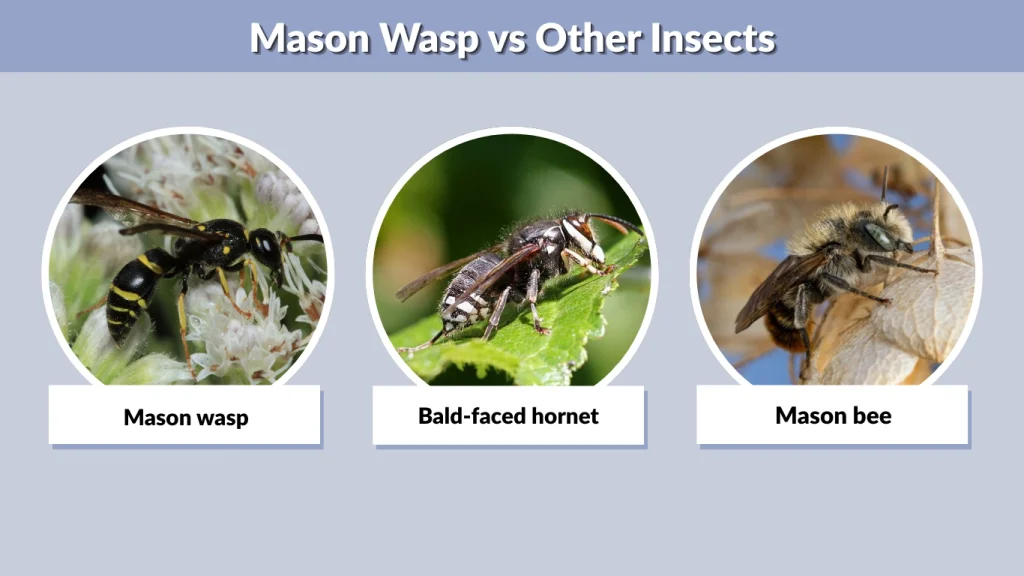
Mason wasps are commonly confused with other stinging insects.
- Mason wasp vs bald-faced hornet: Bald-faced hornets are social, aggressive, and defend large nests. Mason wasps are solitary and non-aggressive.
- Mason wasp vs mason bee: Mason bees are harmless pollinators and do not sting. Mason wasps are predators and build sealed mud nests.
Understanding these differences helps prevent unnecessary fear or extermination.
Mason Wasp Nest Removal
In most cases, mason wasp nests do not need to be removed. Once the adult emerges, the nest is abandoned and poses no risk.
Removal may be appropriate if:
- The nest is indoors
- Someone in the household has a severe insect allergy
- Nests are built in high-traffic areas
How to Get Rid of Mason Wasps Safely
If removal is necessary:
- Wait until there is no visible wasp activity
- Wear gloves and protective clothing
- Gently scrape the nest off with a putty knife
- Clean the surface to discourage rebuilding
Chemical sprays are usually unnecessary and can harm beneficial insects.
Mason Wasp in the House
Occasionally, a mason wasp may enter a house by accident. This does not mean there is an infestation.
To remove it safely:
- Open windows or doors
- Turn off indoor lights and allow natural light outside to guide it out
- Avoid swatting, which increases sting risk
.
FAQs
Are mason wasps dangerous to humans?
Mason wasps are not considered dangerous to humans. They are solitary wasps and rarely sting unless they are handled or trapped. Because they do not defend colonies, the risk of stings is very low.
Do mason wasps sting more than once?
Yes, a female mason wasp can sting more than once because it does not lose its stinger. However, mason wasps are not aggressive, and multiple stings are extremely unlikely in real-life encounters.
How painful is a mason wasp sting?
A mason wasp sting is usually mild to moderate and much less painful than a yellowjacket or hornet sting. Most people experience brief pain, minor swelling, and redness that fades within a few hours.
Should I remove a mason wasp nest?
In most cases, mason wasp nests do not need to be removed. They are small, inactive after use, and pose little risk. Removal may be appropriate if the nest is indoors or in a high-traffic area.
Are mason wasps beneficial insects?
Yes, mason wasps are beneficial. They help control garden pests by hunting caterpillars and other insects, and they pose minimal risk to people, making them helpful rather than harmful around homes.
