
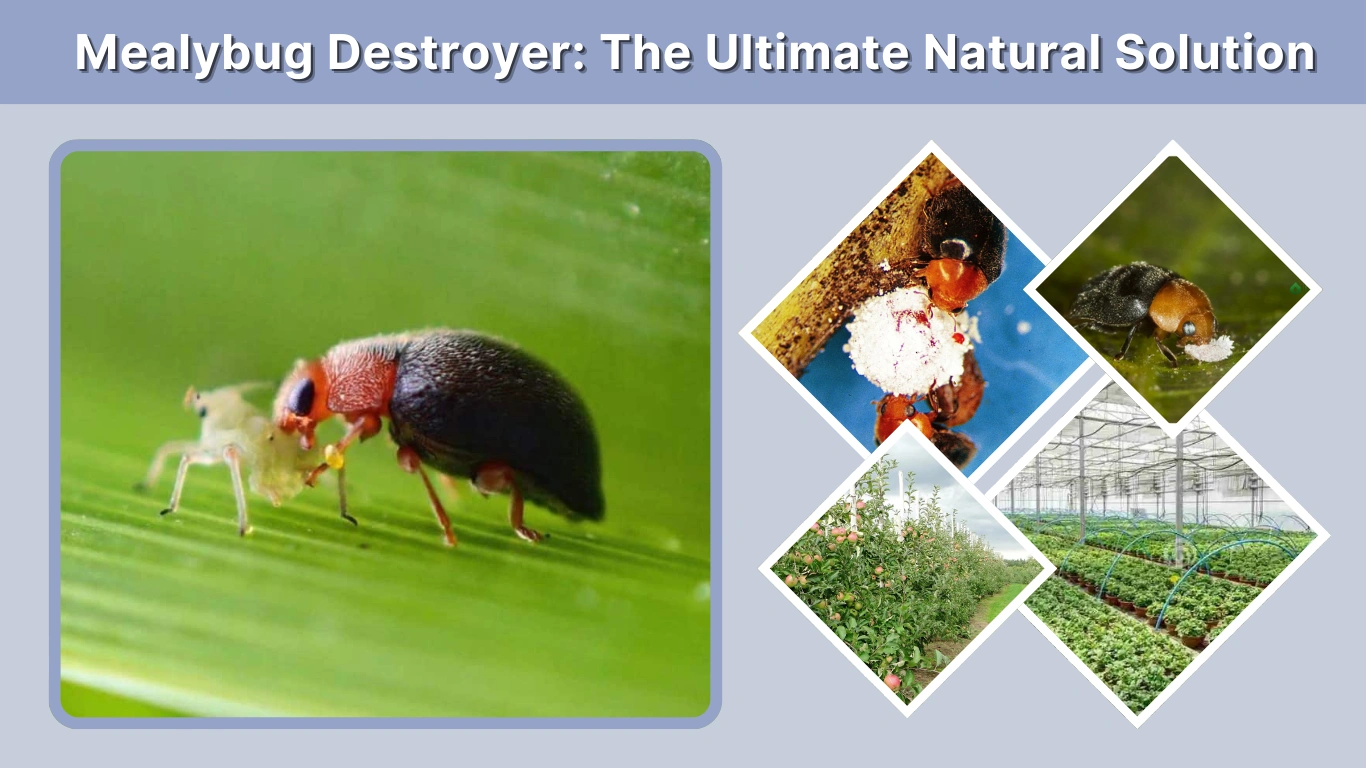
Mealybugs are among the most frustrating pests for gardeners and plant lovers. These tiny insects feed on plant sap and can quickly damage indoor plants, garden crops, and greenhouse plants. Instead of relying on chemical pesticides, many gardeners prefer natural pest control methods. One of the most effective solutions is the mealybug destroyer, a beneficial beetle that feeds on mealybugs. Known scientifically as Cryptolaemus montrouzieri, this predator plays a powerful role in biological pest control and helps maintain a healthy, eco-friendly garden.
What Is a Mealybug Destroyer?
A mealybug destroyer is a beneficial predatory beetle that belongs to the lady beetle family. It is widely used in biological pest control to reduce mealybug populations in gardens, greenhouses, and agricultural fields.
Scientific Classification
The mealybug destroyer’s scientific name is Cryptolaemus montrouzieri. It belongs to the Coccinellidae family, which includes many species of lady beetles. Like other lady beetles, it is considered a helpful insect because it feeds on harmful plant pests.
Taxonomic classification:
- Kingdom: Animalia
- Phylum: Arthropoda
- Class: Insecta
- Order: Coleoptera
- Family: Coccinellidae
- Species: Cryptolaemus montrouzieri
This beetle is specifically valued for its ability to target mealybugs, making it one of the most specialized natural predators used in pest management.
Origin and Distribution
The mealybug destroyer is native to Australia, but it has been introduced to many regions around the world. Because of its effectiveness, it is now widely used in North America, Europe, Asia, and tropical regions for biological pest control.
Greenhouses, orchards, and indoor plant growers frequently introduce this beetle to control mealybug infestations naturally. Its adaptability to warm climates makes it especially useful in controlled environments like greenhouses.
Why It Is Called a Mealybug Destroyer
The name “mealybug destroyer” comes from the insect’s remarkable appetite for mealybugs. Both the larvae and adult beetles feed aggressively on these pests.
A single mealybug destroyer can consume dozens of mealybugs per day, and its larvae are even more voracious. Because of this strong feeding behavior, the beetle can significantly reduce mealybug populations in a short period of time.
How Mealybug Destroyers Control Mealybug Infestations
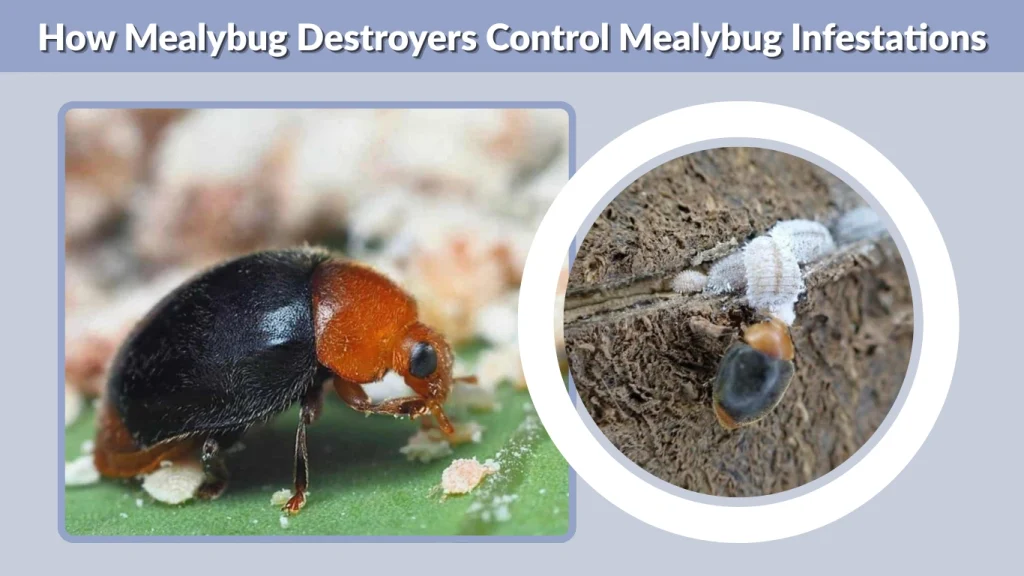
Biological pest control relies on natural predators to manage harmful insects. The mealybug destroyer is one of the most effective predators used to control mealybugs without chemicals.
Predator–Prey Relationship
Mealybug destroyers actively search for mealybugs on plant leaves, stems, and roots. When they find them, they feed on all life stages of the pest, including eggs, nymphs, and adult mealybugs.
The larvae resemble mealybugs in appearance, which helps them blend into mealybug colonies. This allows them to move among the pests and feed without being easily detected.
Feeding Capacity
Mealybug destroyers are known for their impressive feeding capacity. A single larva may consume hundreds of mealybug eggs and nymphs during its development. Adult beetles also feed heavily on mealybugs throughout their lives.
Because both life stages are active predators, releasing mealybug destroyers into an infested area can rapidly reduce pest numbers.
Effectiveness Compared to Chemical Pesticides
Chemical pesticides can kill mealybugs quickly, but they often harm beneficial insects and may leave residues on plants. Over time, pests can also develop resistance to certain chemicals.
In contrast, mealybug destroyers offer a sustainable and environmentally friendly solution. They target the pests directly without damaging plants or harming the surrounding ecosystem. For organic gardeners and greenhouse growers, this makes them a preferred pest management option.
Life Cycle of the Mealybug Destroyer
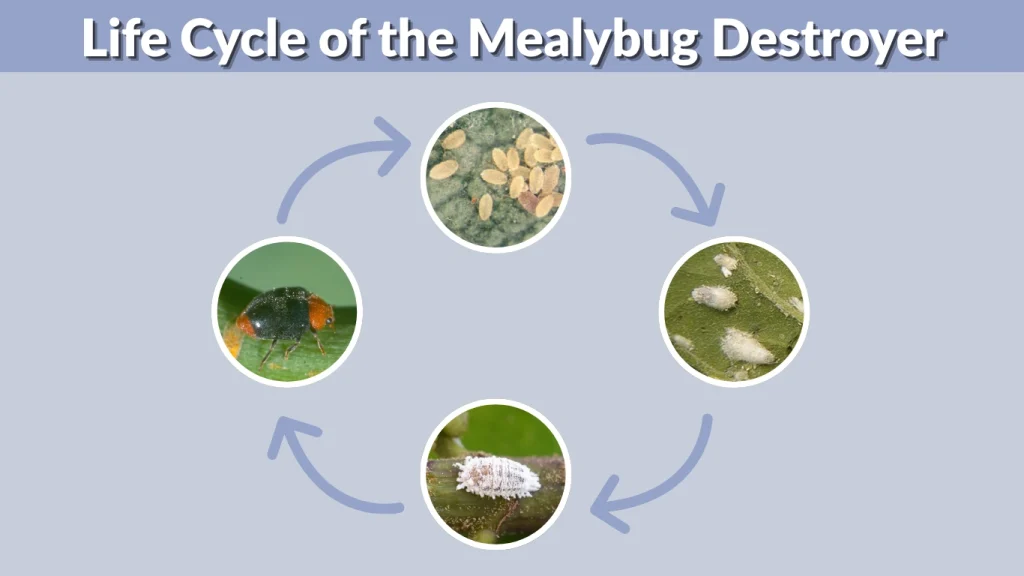
Understanding the life cycle of the mealybug destroyer helps gardeners use this beneficial insect more effectively. Like most beetles, it goes through four stages of development.
Egg Stage
Female mealybug destroyers lay their eggs near mealybug colonies. This ensures that the larvae have an immediate food source once they hatch.
The eggs are usually laid within or near cottony masses created by mealybugs. After several days, the eggs hatch into larvae.
Larval Stage
The larval stage is the most aggressive feeding phase of the mealybug destroyer’s life cycle. Larvae are covered with waxy filaments that make them resemble mealybugs.
This disguise helps them move easily through mealybug colonies while feeding on eggs and young mealybugs. During this stage, larvae consume large numbers of pests, making them extremely valuable for pest control.
Pupal Stage
After completing the larval stage, the insect enters the pupal stage. During this time, the larva attaches itself to a plant surface and transforms into an adult beetle.
This stage usually lasts about one to two weeks, depending on environmental conditions such as temperature and humidity.
Adult Stage
Adult mealybug destroyers are small beetles with a distinctive appearance. They continue feeding on mealybugs and eventually reproduce, starting the life cycle again.
Under favorable conditions, populations of mealybug destroyers can grow quickly, allowing them to control mealybug infestations effectively.
Identifying Mealybug Destroyers
Correct identification is important because the larvae of the mealybug destroyer can easily be mistaken for the pests they feed on.
Adult Beetle Appearance
Adult mealybug destroyers are small beetles that measure about 4 millimeters long. They have a dark brown or black body with an orange or reddish head and thorax.
Their appearance is somewhat similar to other lady beetles, but their color pattern helps distinguish them from common garden species.
Larvae Appearance
The larvae look very different from the adults. They are covered with white waxy filaments, which give them a cotton-like appearance.
Because of this feature, many gardeners initially mistake them for large mealybugs. However, these larvae are actually beneficial predators actively feeding on the pests.
Difference Between Mealybugs and Larvae
Although they look similar at first glance, there are some clear differences between mealybugs and mealybug destroyer larvae.
Mealybugs move slowly and cluster together while feeding on plant sap. In contrast, the larvae are more active and move around the plant while hunting for prey.
Recognizing these differences helps gardeners avoid accidentally removing or killing beneficial insects.
Benefits of Using Mealybug Destroyers
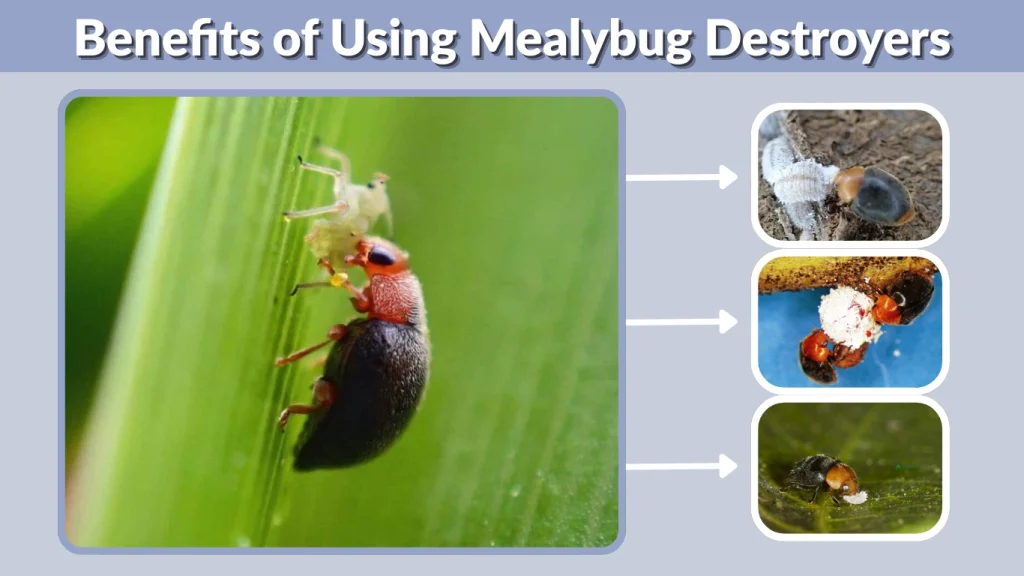
Using mealybug destroyers offers several advantages for gardeners, farmers, and greenhouse growers who want to control pests naturally. These beneficial insects provide an effective and environmentally friendly alternative to chemical pesticides.
Natural Pest Control
One of the biggest benefits of mealybug destroyers is that they provide natural pest control. Instead of spraying chemicals, growers can rely on these predators to reduce mealybug populations. Both larvae and adult beetles actively hunt and consume mealybugs, which helps control infestations in a sustainable way.
Safe for Plants and the Environment
Unlike chemical pesticides, mealybug destroyers do not damage plants or contaminate soil and water. They target specific pests without harming beneficial insects, pets, or humans. This makes them an ideal choice for gardeners who want to maintain a healthy ecosystem in their garden.
Ideal for Organic Gardening
Organic gardening focuses on natural methods of pest control and plant care. Mealybug destroyers fit perfectly into this approach because they are a biological control agent. Many organic farmers use these beetles to manage pest problems without relying on synthetic chemicals.
Long-Term Pest Management
Chemical treatments may eliminate pests temporarily, but infestations can return quickly. Mealybug destroyers, however, can provide longer-term control. As they reproduce and establish populations, they continue feeding on mealybugs and help keep pest numbers low over time.
Where Mealybug Destroyers Are Used
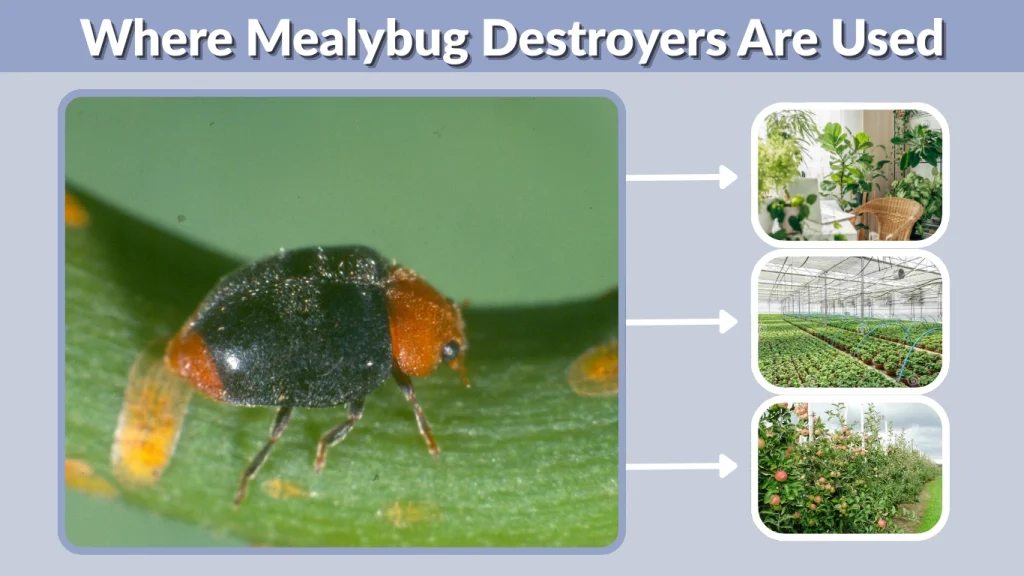
Mealybug destroyers are used in a variety of environments where mealybugs are a common problem. Their ability to thrive in controlled conditions makes them especially useful for growers.
Home Gardens
Gardeners often use mealybug destroyers to protect plants such as roses, fruit trees, ornamental plants, and vegetables. Releasing these beetles can help manage infestations without damaging beneficial insects that support the garden ecosystem.
Greenhouses
Greenhouses are one of the most common places where mealybug destroyers are used. Because the environment is warm and controlled, the beetles can survive and reproduce more easily. Many commercial growers rely on them to manage pest populations in greenhouse crops.
Orchards
Fruit orchards can suffer significant damage from mealybugs. Growers sometimes introduce mealybug destroyers to control these pests naturally. This approach helps reduce pesticide use and protects beneficial pollinators in the orchard.
Indoor Plants
Houseplants are frequently affected by mealybugs, especially when plants are kept in warm indoor environments. Mealybug destroyers can help control infestations on indoor plants, though they perform best when there is a sufficient supply of prey.
How to Use Mealybug Destroyers for Pest Control
To get the best results, gardeners should understand how and when to release mealybug destroyers. Proper use can greatly improve their effectiveness.
When to Release Them
Mealybug destroyers should be released when mealybugs are already present. These beetles require a food source to survive, so releasing them too early may not be effective. The best time to release them is when a moderate infestation has been detected.
How Many to Release
The number of beetles needed depends on the size of the infestation and the area being treated. For small gardens or indoor plants, a small number may be enough. Larger infestations may require multiple releases to achieve effective control.
Best Environmental Conditions
Mealybug destroyers perform best in warm temperatures and moderate humidity. Temperatures between 70°F and 80°F (21–27°C) are generally ideal for their activity and reproduction.
Cold weather can slow their development, which is why they are often used in greenhouses or warmer climates.
Tips for Successful Biological Control
To maximize success with mealybug destroyers, gardeners should avoid using broad-spectrum insecticides that could harm the beetles. Providing a stable environment with plenty of prey will help them establish and continue controlling pests.
Limitations of Mealybug Destroyers
Although mealybug destroyers are highly effective predators, they do have some limitations. Understanding these factors can help gardeners use them more successfully.
Temperature Sensitivity
These beetles prefer warm conditions and may struggle in cold climates. If temperatures drop too low, their activity and reproduction may decrease significantly.
Slow Establishment
Unlike chemical pesticides that work immediately, biological control can take time. Mealybug destroyers need time to locate prey, reproduce, and reduce pest populations.
Availability Issues
In some regions, mealybug destroyers may not be readily available for purchase. Gardeners may need to obtain them from specialized biological control suppliers.
Mealybug Destroyer vs. Other Biological Controls
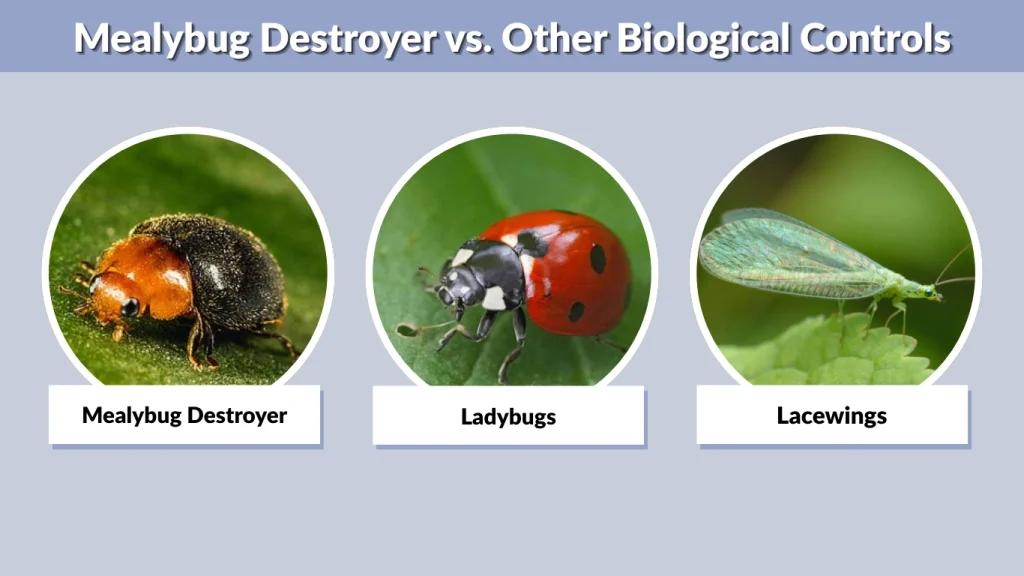
Several beneficial insects can help control garden pests. However, the mealybug destroyer is particularly specialized for targeting mealybugs.
Ladybugs
Many species of ladybugs feed on aphids and other soft-bodied pests. While they may occasionally eat mealybugs, they are not as specialized as the mealybug destroyer.
Lacewings
Green lacewing larvae are known as “aphid lions” because they feed on aphids, thrips, and other small insects. They can help reduce pest populations, but they may not focus primarily on mealybugs.
Parasitic Wasps
Certain parasitic wasps lay eggs inside pest insects. These wasps can help control mealybugs in some cases, but their impact may vary depending on environmental conditions.
Compared to these predators, the mealybug destroyer is often the most effective specialist for controlling mealybug infestations.
How to Attract Mealybug Destroyers Naturally
Although many growers purchase and release mealybug destroyers, it is also possible to encourage beneficial insects naturally.
Planting Beneficial Plants
Growing flowering plants that provide nectar and pollen can help attract beneficial insects. Plants such as dill, fennel, and marigolds often support a healthy population of helpful predators.
Avoiding Chemical Pesticides
Using fewer chemical pesticides helps protect beneficial insects in the garden. When these insects are allowed to thrive, they can naturally control pest populations.
Creating a Healthy Garden Ecosystem
A diverse garden with a variety of plants can support a balanced ecosystem. Beneficial insects, including mealybug destroyers, are more likely to appear in gardens that provide shelter, food sources, and a stable environment.
FAQs
Are mealybug destroyers safe for plants?
Yes. Mealybug destroyers feed only on mealybugs and similar soft-bodied pests. They do not damage plants.
How long do mealybug destroyers live?
The lifespan of a mealybug destroyer typically ranges from several weeks to a few months, depending on environmental conditions and food availability.
Do they eat other pests?
While they mainly target mealybugs, they may occasionally consume other soft-bodied insects if necessary.
Can they survive indoors?
Yes, they can survive indoors if temperatures are warm and there is a sufficient population of mealybugs for them to feed on.
Conclusion
Mealybugs can cause serious damage to plants, but natural predators offer an effective and eco-friendly solution. The mealybug destroyer (Cryptolaemus montrouzieri) is one of the most reliable biological control agents for managing these pests. By feeding on mealybugs at multiple life stages, this beneficial beetle helps protect plants without the need for harmful chemicals. For gardeners, greenhouse growers, and farmers looking for sustainable pest control, the mealybug destroyer remains one of the best natural allies in the fight against mealybug infestations.
