
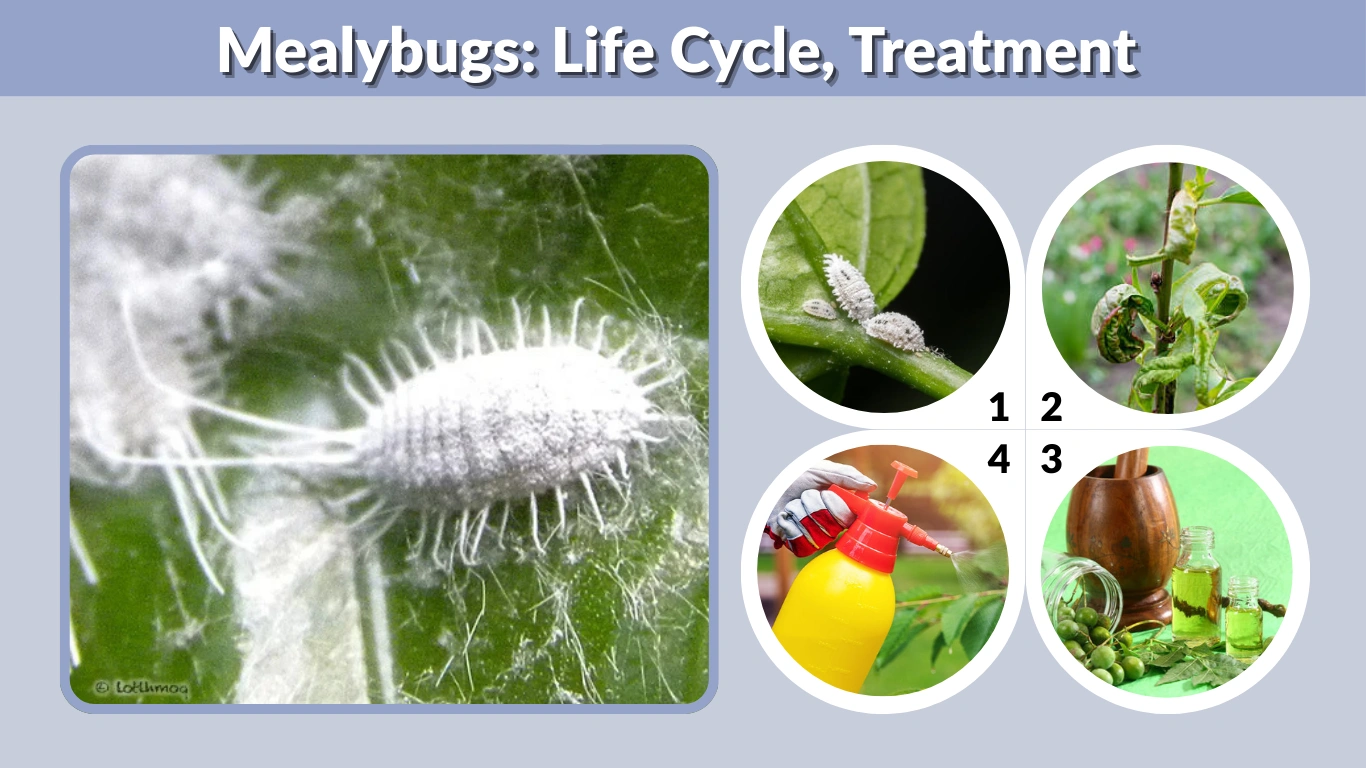
Mealybugs are small sap-sucking insects that commonly infest both indoor and outdoor plants. These pests are easy to recognize because of their white, cotton-like appearance and the sticky residue they leave behind. Mealybugs weaken plants by feeding on plant sap, which can lead to yellowing leaves, slow growth, and overall plant decline. If left untreated, they can spread quickly to nearby plants. Understanding mealybugs, including their life cycle, common signs of infestation, and effective treatment methods, is essential for protecting your plants.
What Are Mealybugs?
Mealybugs are soft-bodied insects that belong to the Pseudococcidae family. They are considered common plant pests and are often found on houseplants, greenhouse plants, and garden plants. These insects feed by inserting their needle-like mouthparts into plant tissues and sucking out the sap.
The white waxy coating that covers their bodies helps protect them from predators and some pesticides. Because of this protective layer, mealybugs can sometimes be difficult to eliminate if infestations become severe.
Mealybugs tend to gather in clusters on stems, leaves, and plant joints where they can feed and reproduce.
Physical Characteristics of Mealybugs
Mealybugs have several features that make them recognizable. Although they are small insects, their distinctive appearance makes them easier to spot compared to many other plant pests.
Some common characteristics include:
- Small oval-shaped bodies
- White cottony or powdery covering
- Soft bodies without a hard outer shell
- Slow movement across plant surfaces
Most mealybugs measure only a few millimeters in length, but large infestations can quickly become visible because they gather in groups.
How to Identify Mealybugs on Plants
Identifying mealybugs early is important because infestations can spread quickly from one plant to another. Gardeners and plant owners should regularly inspect plants for signs of these pests.
Some common signs of mealybugs on plants include:
- White cotton-like clusters on stems or leaves
- Sticky residue known as honeydew on plant surfaces
- Presence of black sooty mold growing on the honeydew
- Increased activity of ants near plants
Ants are often attracted to the honeydew produced by mealybugs, so noticing ants around plants can sometimes indicate a hidden infestation.
Mealybugs on Plants
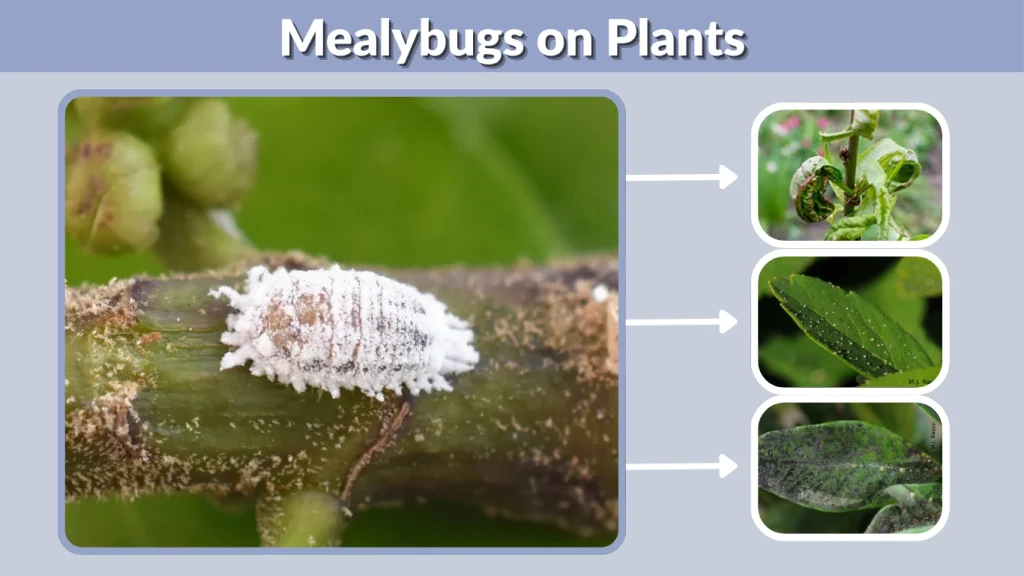
Mealybugs can infest a wide range of plants, both indoors and outdoors. They often hide in protected areas such as leaf joints, stems, and the underside of leaves. Because they feed on plant sap, they gradually weaken the plant over time.
Plants that are already stressed due to poor growing conditions are more likely to attract mealybugs.
Signs of Mealybugs on Plants
Mealybug infestations can cause several visible symptoms that indicate plant stress or damage.
Some of the most common signs include:
- Yellowing or curling leaves
- Sticky honeydew coating on leaves and stems
- Black mold growth caused by honeydew accumulation
- Weak or stunted plant growth
Over time, heavy infestations may cause leaves to drop prematurely and reduce the overall health of the plant.
Plants Commonly Affected by Mealybugs
Mealybugs can attack many different types of plants. However, certain plants tend to be more vulnerable to infestations.
Some commonly affected plants include:
- Succulents
- Citrus trees
- Orchids
- Tomato plants
- Decorative houseplants
These pests can infest stems, leaves, and even plant roots, depending on the species of mealybug.
Mealybugs on Indoor Plants
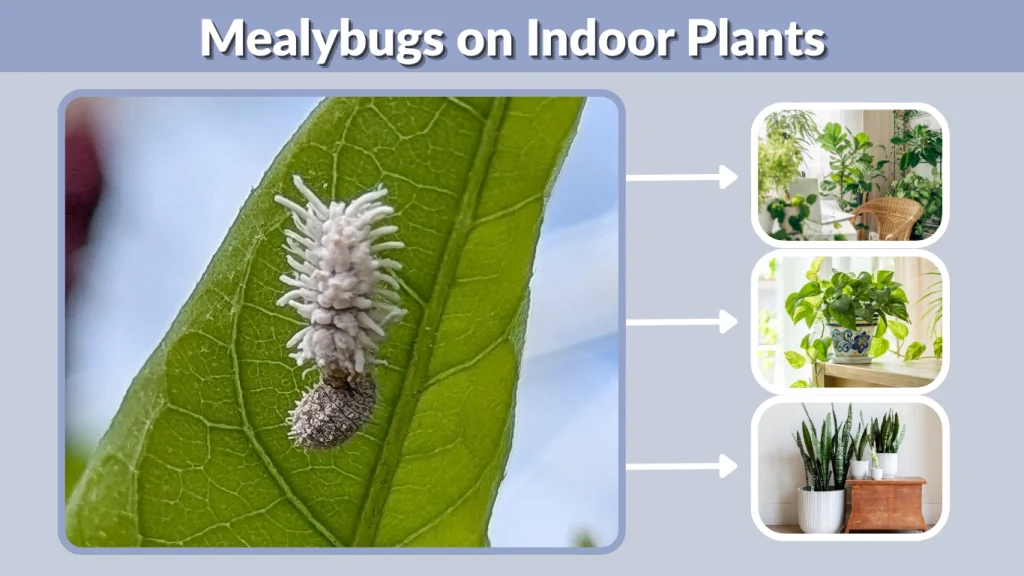
Indoor plants are particularly vulnerable to mealybug infestations because the indoor environment usually lacks natural predators that would normally keep these pests under control.
Once mealybugs appear on indoor plants, they can spread easily from plant to plant, especially when plants are placed close together.
How Mealybugs Spread Indoors
There are several ways mealybugs can enter homes and spread among houseplants.
Common causes include:
- Bringing home new plants that already contain hidden pests
- Contact between infected and healthy plants
- Contaminated pots, soil, or gardening tools
Because mealybugs are small and often hide in plant crevices, infestations may go unnoticed until populations grow larger.
Common Indoor Plants Affected
Many popular houseplants can be affected by mealybugs. Some plants are especially vulnerable due to their thick leaves or sheltered growth patterns.
Examples of commonly affected indoor plants include:
- Pothos
- Snake plants
- Jade plants
- Orchids
- Fiddle leaf figs
Regular plant inspection can help detect infestations early and prevent the pests from spreading to other plants.
Mealybug Life Cycle
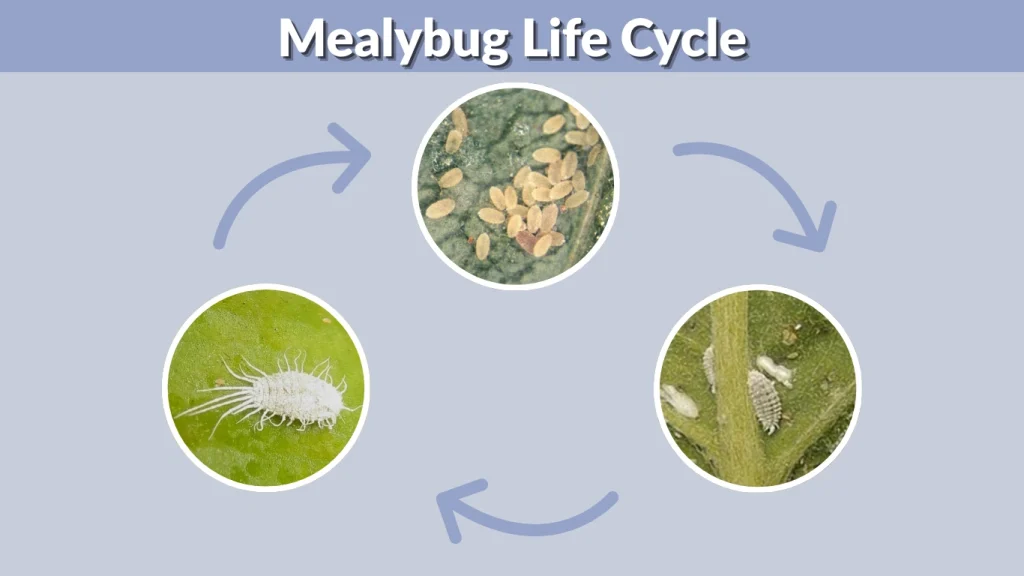
Understanding the mealybug life cycle is important for controlling infestations effectively. Since these pests reproduce quickly, a small problem can become a large infestation within a short time. The life cycle of mealybugs includes several stages, and knowing these stages can help determine the best time to apply treatment.
Mealybugs generally develop through three main stages: eggs, nymphs, and adults. The complete life cycle usually takes six to ten weeks, depending on temperature and environmental conditions.
Mealybug Eggs
Female mealybugs lay their eggs inside soft, cotton-like sacs that they produce on plant surfaces. These sacs protect the eggs from environmental damage and predators.
A single female can lay hundreds of eggs at one time, which allows infestations to spread rapidly if not controlled.
The eggs are usually found in hidden parts of the plant, such as:
- Leaf joints
- Stem crevices
- Undersides of leaves
After several days to a few weeks, the eggs hatch into young insects known as crawlers.
Mealybug Nymphs (Crawlers)
Newly hatched mealybugs are called crawlers, and this is the most active stage in their life cycle. Crawlers move around the plant searching for suitable feeding areas.
During this stage, they are very small and may be difficult to see without careful inspection. Once they find a feeding spot, they begin sucking plant sap and gradually develop their white waxy coating.
The crawler stage is important for pest control because treatments are often most effective before the protective wax layer fully develops.
Adult Mealybugs
As the insects mature, they become adult mealybugs. Adult females remain on the plant and continue feeding on plant sap.
Female mealybugs are wingless and usually stay attached to the plant for most of their lives. Males are less common and may have wings in some species, but they typically live for a shorter time.
Adult females continue laying eggs, which starts the life cycle again and allows infestations to grow quickly.
How to Get Rid of Mealybugs on Plants
Getting rid of mealybugs requires early detection and consistent treatment. If caught early, infestations can often be controlled before serious plant damage occurs.
Several methods can be used to remove mealybugs from plants.
Manual Removal
One of the simplest ways to control mealybugs is to remove them manually. This method works best when infestations are small.
You can use a cotton swab dipped in rubbing alcohol to wipe the insects off the plant. The alcohol dissolves the wax coating and kills the pests on contact.
Carefully check:
- Leaf joints
- Undersides of leaves
- Stem connections
Removing visible insects can help reduce the population quickly.
Washing Plants
Another helpful method is rinsing the plant with water. A gentle spray of water can dislodge mealybugs from leaves and stems.
When washing plants, make sure to spray areas where pests tend to hide, such as under leaves and around plant stems.
Regular washing can help keep infestations under control.
Pruning Infested Areas
If parts of the plant are heavily infested, pruning may be necessary. Removing affected leaves or stems can prevent the pests from spreading to healthy areas.
Dispose of the removed plant material carefully so the insects do not return to the plant.
Mealybugs Treatment Methods
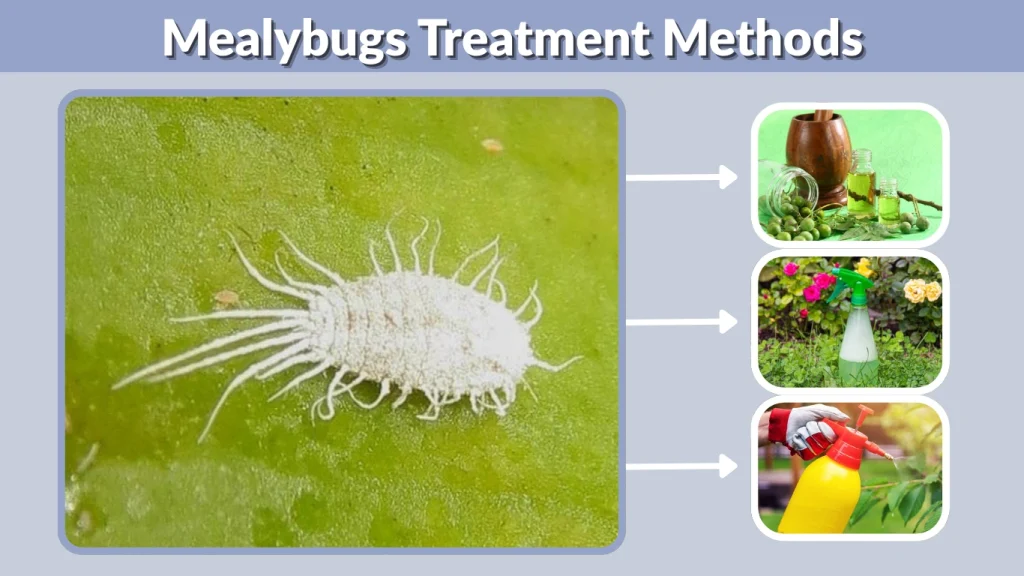
When infestations become more serious, additional treatments may be required to control the pests effectively.
Natural Treatments
Natural pest control methods are commonly used to treat mealybug infestations.
Some effective natural treatments include:
- Neem oil spray
- Insecticidal soap
- Horticultural oil
These treatments work by disrupting the insect’s protective coating and preventing them from feeding.
Applying these sprays regularly can help eliminate pests over time.
Biological Control
Beneficial insects can also help control mealybug populations naturally. Some predators feed on mealybugs and reduce their numbers.
Examples of beneficial insects include:
- Lady beetles
- Lacewings
- Parasitic wasps
These insects are often used in greenhouse pest management programs.
Chemical Treatment Options
In severe infestations, chemical insecticides may be used. Systemic insecticides can be absorbed by the plant and affect insects that feed on plant sap.
However, chemical treatments should be used carefully to avoid harming beneficial insects or pollinators.
How to Prevent Mealybug Infestations
Preventing mealybugs is often easier than treating an established infestation. Simple plant care practices can help reduce the risk of pests.
Inspect Plants Regularly
Regular inspection allows you to detect pests early before they spread.
Check:
- Undersides of leaves
- Stem joints
- New plant growth
Early detection makes treatment much easier.
Quarantine New Plants
When bringing home new plants, it is a good idea to keep them separate from existing plants for a few weeks.
This quarantine period allows you to monitor the plant for pests before placing it near other plants.
Maintain Healthy Plants
Healthy plants are generally more resistant to pest problems.
Good plant care includes:
- Proper watering
- Adequate sunlight
- Good air circulation
These practices help reduce the chances of mealybug infestations.
FAQs
What are mealybugs?
Mealybugs are small sap-sucking insects that feed on plant fluids and often appear as white cotton-like clusters on plants.
How do you get rid of mealybugs on indoor plants?
Mealybugs can be removed using rubbing alcohol, neem oil sprays, insecticidal soap, or manual removal with cotton swabs.
Are mealybugs harmful to humans?
No, mealybugs are not harmful to humans, but they can damage plants by feeding on plant sap.
What causes mealybugs on plants?
Mealybugs usually appear when infested plants are introduced into a garden or home environment.
Conclusion
Mealybugs are common plant pests that can affect both indoor and outdoor plants. These insects feed on plant sap and often hide in protected areas such as leaf joints and stems. Their life cycle allows them to reproduce quickly, which can lead to serious infestations if left untreated. By identifying early signs of mealybugs and applying proper treatment methods such as manual removal, neem oil, and preventive care, gardeners can successfully control these pests and keep their plants healthy.
