
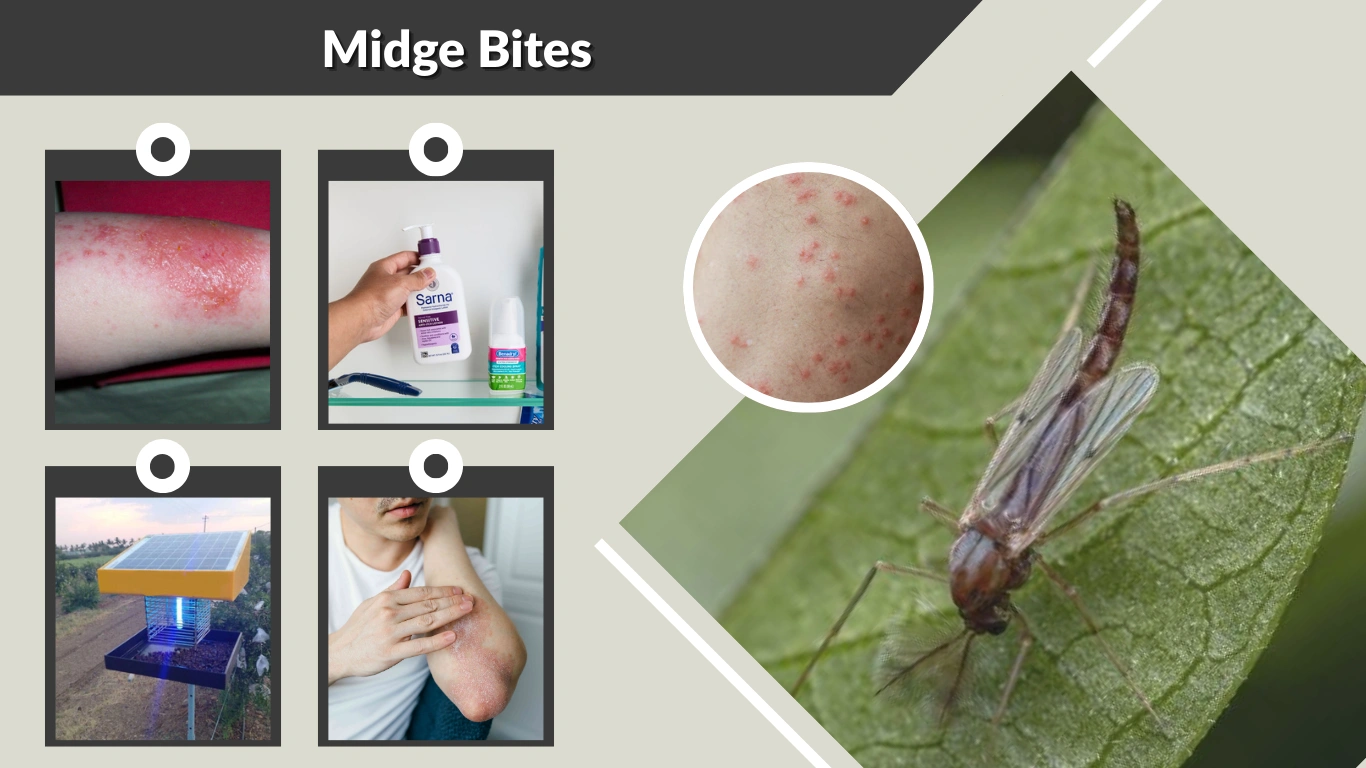
Midges are tiny flying insects that can quickly turn a peaceful outdoor moment into an uncomfortable one. Their bites are notorious for causing red, itchy bumps and, in some cases, severe allergic reactions. While many people only experience minor irritation, others may find themselves dealing with swelling, blisters, or even infections if bites are scratched too much. This guide covers everything you need to know about midge bites, including how to identify them, common symptoms, treatment options, and effective prevention strategies.
What Are Midge Bites?
Midge bites occur when a female biting midge pierces the skin to feed on blood. These insects are extremely small—often just 1–3 mm in length—making them difficult to see, which is why they are sometimes called no-see-ums. Unlike non-biting midges, which are harmless and often mistaken for mosquitoes, biting midges are the real culprits behind irritating bites.
The saliva they inject into the skin causes an allergic response in the body. For some, this reaction is mild, leading to small red bumps. For others, it can result in intense itching, swelling, or blister formation.
What Do Midge Bites Look Like?
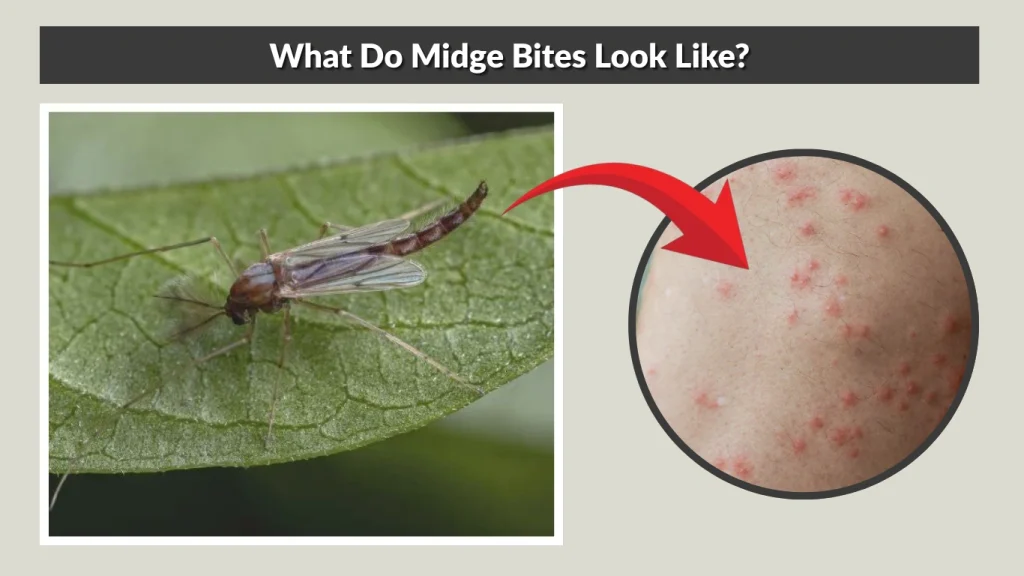
Midge bites are often confused with other insect bites, but there are some telltale signs. They typically appear as small red dots or raised bumps, often clustered together because midges tend to bite multiple times in the same area.
On sensitive skin, the bites may blister or swell significantly. In some cases, scratching can break the skin, leading to secondary infections.
Midge Bites vs Mosquito Bites
- Size: Midge bites are usually smaller than mosquito bites.
- Appearance: Mosquito bites tend to be larger, raised welts, while midge bites are small red dots, often in clusters.
- Reaction: Mosquito bites itch immediately, while midge bites can sometimes take a few hours to appear.
Midge Bites vs Bed Bug Bites
- Bed bug bites usually form in straight lines or zigzag patterns, while midge bites appear more randomly.
- Bed bug bites are often found on exposed skin after sleeping, whereas midge bites happen outdoors.
Midge Bites vs Flea Bites
- Flea bites commonly appear around the ankles and lower legs, often as tiny red bumps with a dark center.
- Midge bites can occur anywhere on the body and usually appear in clusters.
Common Symptoms of Midge Bites

Most people experience mild irritation from midge bites, but symptoms can vary based on skin sensitivity and the number of bites.
- Red bumps: The most common sign of a midge bite.
- Itching: Bites can cause persistent itching, which may worsen at night.
- Swelling: Localized swelling, particularly around the face, arms, or legs.
- Blistering: In severe cases, fluid-filled blisters may form.
- Scarring: If bites are scratched excessively, they may leave scars.
Are Midge Bites Itchy?
Yes, midge bites are typically very itchy. The itching results from the body’s allergic reaction to proteins in the insect’s saliva.
Do Midge Bites Hurt?
Unlike bee or wasp stings, midge bites don’t usually cause pain. Instead, they lead to itching and irritation. However, repeated bites in the same area may cause soreness.
Do Midge Bites Spread?
Midge bites don’t spread on their own, but scratching them can break the skin, leading to secondary infections that appear worse over time.
Allergic Reactions to Midge Bites

While most people recover quickly from midge bites, some individuals may suffer from allergic reactions. These reactions occur when the body overreacts to the saliva proteins.
Signs of an Allergic Reaction
- Large, swollen welts around the bite area
- Extreme itchiness that doesn’t improve with basic treatments
- Fluid-filled blisters
- Red patches that expand beyond the original bite site
Midge Bites Allergic Reaction Treatment
- Antihistamine tablets: Help reduce swelling and itching.
- Topical antihistamine or hydrocortisone cream: Soothes irritation.
- Cold compress: Eases swelling and provides relief.
Can Midge Bites Make You Sick?
In most cases, midge bites are not dangerous and don’t spread diseases like mosquito bites can. However, infections caused by scratching or severe allergic reactions may require medical attention.
Are Midge Bites Dangerous?
For the average person, midge bites are more of a nuisance than a serious health issue. But for those prone to strong allergic reactions, they can be uncomfortable and potentially harmful if not treated properly.
How Long Do Midge Bites Last?
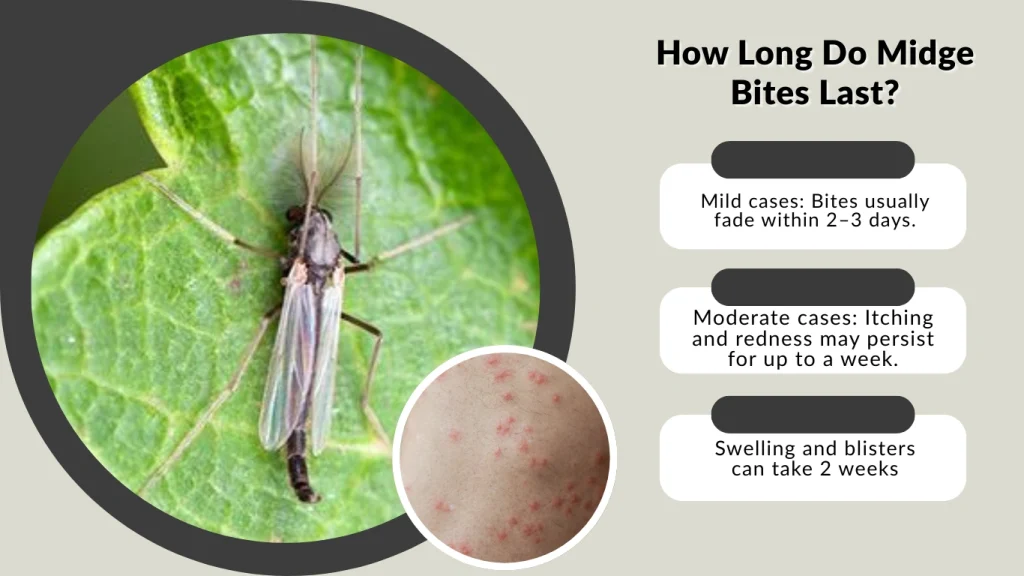
The duration of midge bites depends on several factors, including skin sensitivity, the number of bites, and whether or not you scratch them.
- Mild cases: Bites usually fade within 2–3 days.
- Moderate cases: Itching and redness may persist for up to a week.
- Severe or allergic cases: Swelling and blisters can take 2 weeks or more to fully heal.
How Long Do Midge Bites Itch?
The itching typically lasts 2–4 days but may feel worse at night. People with sensitive skin may find that the itch persists longer.
How Long Do Biting Midge Bites Last?
In most cases, bites last around 3–5 days. However, repeated scratching can extend the healing process and increase the risk of infection.
Can Midge Bites Appear Days Later?
Yes, in some cases, midge bites may take several hours or even a day to become visible. The delayed reaction is caused by the body’s immune system responding to the insect’s saliva.
Treatment for Midge Bites

If you’ve been bitten by midges, prompt treatment can reduce discomfort and prevent complications.
First Aid Steps
- Wash the area: Gently clean with soap and warm water.
- Avoid scratching: Scratching worsens irritation and can lead to infection.
- Apply a cold compress: Reduces swelling and soothes itching.
- Keep the area dry: Moisture can slow healing or irritate the bite.
Best Creams for Midge Bites
- Calamine lotion: Classic remedy for soothing itch and irritation.
- Antihistamine cream: Helps reduce swelling and allergic reactions.
- Hydrocortisone cream: Useful for intense itching and inflammation.
- Tea tree or lavender oil (diluted): Natural alternatives with anti-inflammatory properties.
Antihistamine Tablets for Midge Bites
Oral antihistamines can be effective if bites are widespread or if you experience severe allergic reactions. They help calm the immune response and reduce swelling.
Home Remedies for Midge Bites
- Aloe vera gel: Cooling and soothing for irritated skin.
- Honey: Natural antibacterial properties may help prevent infection.
- Oatmeal paste: Relieves itching and reduces redness.
- Cold milk compress: Calms irritated skin and reduces burning sensations.
How to Treat Infected Midge Bites
If scratching has caused the skin to break, you may notice pus, increased swelling, or spreading redness. In this case:
- Clean the area daily with mild antiseptic.
- Apply an antibiotic cream.
- Seek medical attention if swelling continues or spreads rapidly.
Midge Bites in Different Locations
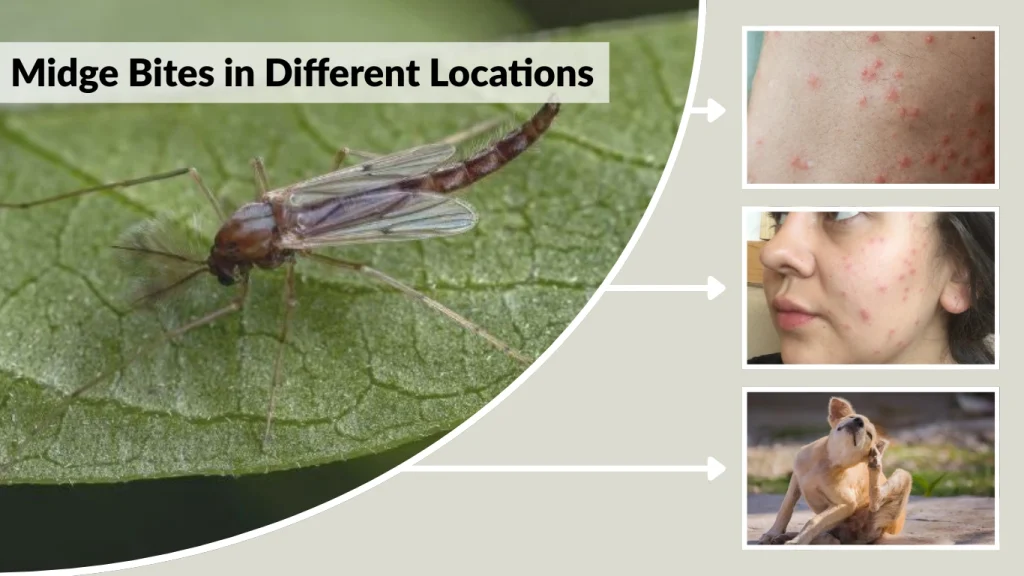
Midge Bites on Humans
Midges can bite anywhere on exposed skin. Common areas include the legs, arms, ankles, and face. The irritation may be worse in areas where the skin is thinner.
Midge Bites on Face
Facial skin is especially sensitive, so bites on the face often cause more noticeable swelling. This can be uncomfortable and, in some cases, lead to temporary redness that looks like a rash.
Dog Midge Bites
Pets, particularly dogs, can also suffer from midge bites. They often scratch or lick the affected area, which can lead to hair loss and skin irritation. In severe cases, a vet may recommend antihistamines or topical creams.
Highland Midge Bites (Scotland)
The Scottish Highlands are infamous for dense swarms of biting midges, especially in summer. Visitors often report dozens of bites at once, making prevention essential in this region.
Florida Midge Bites
In warmer climates like Florida, midge bites are common near lakes, marshes, and coastal areas. They tend to be seasonal, with outbreaks worse during humid weather.
Prevention: How to Avoid Midge Bites
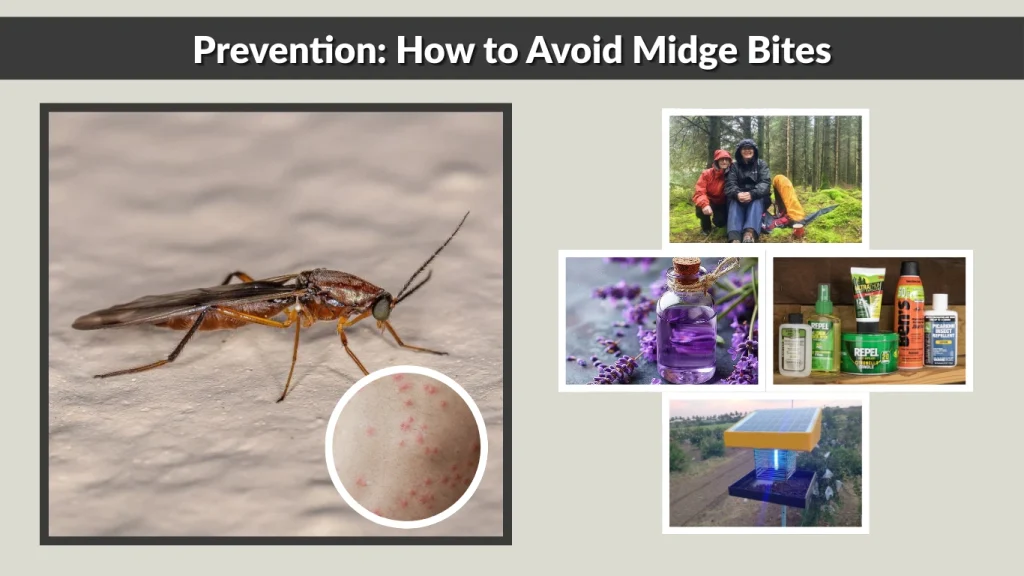
The best approach is to prevent bites in the first place. Midges are most active during dawn and dusk, especially in humid and damp environments.
Protective Clothing
- Wear long sleeves, trousers, and socks when outdoors.
- Light-colored clothing is less attractive to biting insects.
- Fine mesh head nets are useful in areas with heavy infestations.
Using Insect Repellents
- DEET-based repellents: Highly effective against midges.
- Picaridin: A good alternative with less odor.
- Natural oils (citronella, eucalyptus, or lavender): Offer some protection but may need frequent reapplication.
Avoiding Peak Activity Times
If possible, stay indoors during early morning and evening hours, especially near water. Midges are less active in windy, sunny conditions.
How to Stop Midge Bites Itching
- Apply a cold pack to the bite.
- Use soothing creams such as calamine or aloe vera.
- Take an antihistamine tablet if the itching is severe.
How to Stop Itchy Midge Bites
Consistently treat bites with cooling remedies and resist scratching. Keeping nails short can also help prevent skin damage if scratching occurs unconsciously.
Comparing Midge Bites with Other Insects

Because midge bites resemble other insect bites, they’re often misidentified. Knowing the differences helps with proper treatment.
Midge Bites vs Mosquito Bites
- Appearance: Mosquito bites are larger and appear as raised welts, while midge bites are smaller, often clustered.
- Timing: Mosquito bites usually appear within minutes, while midge bites can take hours to show.
- Itching: Midge bites may itch longer and more intensely.
- Risk: Mosquitoes can transmit diseases; midges rarely spread illness but can cause severe irritation.
Midge Bites vs Bed Bug Bites
- Pattern: Bed bug bites appear in rows or zigzag lines, usually after sleeping.
- Location: Bed bugs target exposed skin, while midges bite any uncovered area during outdoor activity.
- Reaction: Bed bug bites may cause slower reactions, while midge bites can itch almost immediately.
Midge Bites vs Flea Bites
- Placement: Flea bites are commonly found on ankles and legs.
- Look: Flea bites often have a central puncture mark; midge bites appear as red clusters without a clear center.
- Spread: Fleas bite multiple times in close proximity, while midges scatter bites across exposed skin.
Remedies for Healing and Relief
Best Cure for Midge Bites
There’s no single “cure,” but a combination of cleaning, soothing creams, and antihistamines works best. Avoid scratching to speed healing.
Best Remedy for Midge Bites
Natural remedies such as aloe vera, honey, or oatmeal baths provide gentle relief. These options are particularly useful for children or people with sensitive skin.
Best Thing for Midge Bites
Cold compresses remain the fastest way to reduce swelling and itching immediately after being bitten.
Best Way to Treat Midge Bites
- Wash with soap and water.
- Apply a soothing cream or lotion.
- Take an antihistamine if the reaction is strong.
- Reapply treatments until the irritation fades.
Calamine Lotion for Midge Bites
A traditional but highly effective treatment. It cools the skin, reduces itching, and dries out small blisters.
Do Midge Bites Cause Other Problems?
Can You Get Sick from Midge Bites?
Generally, no. Unlike mosquitoes, midges are not known for transmitting human diseases. The primary risk is infection from scratching.
Can Midge Bites Spread?
The bites themselves don’t spread, but infection can cause redness to expand.
Do Midge Bites Scar?
Most heal without scarring, but repeated scratching can leave marks.
Can Midge Bites Appear Days Later?
Yes, delayed allergic reactions can cause bites to become visible hours or days after exposure.
Control and Prevention in Detail
- Indoors: Keep windows closed or use fine mesh screens in midge-prone areas.
- Outdoors: Avoid still water where midges breed.
- Travel: Research high-risk areas like Scotland’s Highlands before visiting and pack strong repellents.
- Lifestyle: Wearing loose, long clothing is one of the simplest ways to avoid bites.
FAQs about Midge Bites
What are midge bites?
Midge bites are small, itchy red marks caused by female biting midges feeding on blood. They are often clustered and can lead to irritation, swelling, or blisters.
Are midge bites worse than mosquito bites?
Yes, for many people. Midge bites are smaller but itch more intensely and can last longer. Unlike mosquito bites, they rarely carry disease, but they can be more irritating.
Do midge bites scar?
Usually not, but if scratched aggressively, they may leave temporary dark marks or even small scars, especially on sensitive skin.
Can you get sick from midge bites?
Midge bites don’t transmit diseases, but infections from scratching can cause fever or worsening symptoms, which may require medical care.
What is the best way to treat midge bites quickly?
Wash the area, apply a cold compress, and use calamine lotion or antihistamine cream. Taking an oral antihistamine can help if the reaction is widespread.
