

Midge larvae are small, worm-like organisms that represent the early life stage of midges, tiny flies found worldwide. While often overlooked, these larvae play an important role in aquatic ecosystems, acting as both decomposers and food for fish, birds, and other wildlife. Depending on the species, midge larvae may be harmless, beneficial, or even a nuisance when they appear in large numbers in ponds, pools, or hydroponic systems. Some species, like gall midges and wheat midges, can also be destructive to plants and crops, making them a concern for gardeners and farmers.
What Are Midge Larvae?
Midge larvae are the immature stage of midges, insects belonging to the order Diptera (true flies). They resemble tiny worms and can vary in color depending on the species. Non-biting midges (Chironomidae) are the most widespread and are commonly seen in ponds, aquariums, and rivers. Biting midges (Ceratopogonidae) are less common in their larval stage but are well known for the biting adults. Other groups, such as gall midges (Cecidomyiidae), feed on plants, while phantom midges are predatory and transparent.
While mosquitoes are also aquatic dipteran larvae, midges are usually harmless in comparison. Their importance lies in recycling organic matter and forming a major link in aquatic food chains.
Identification of Midge Larvae
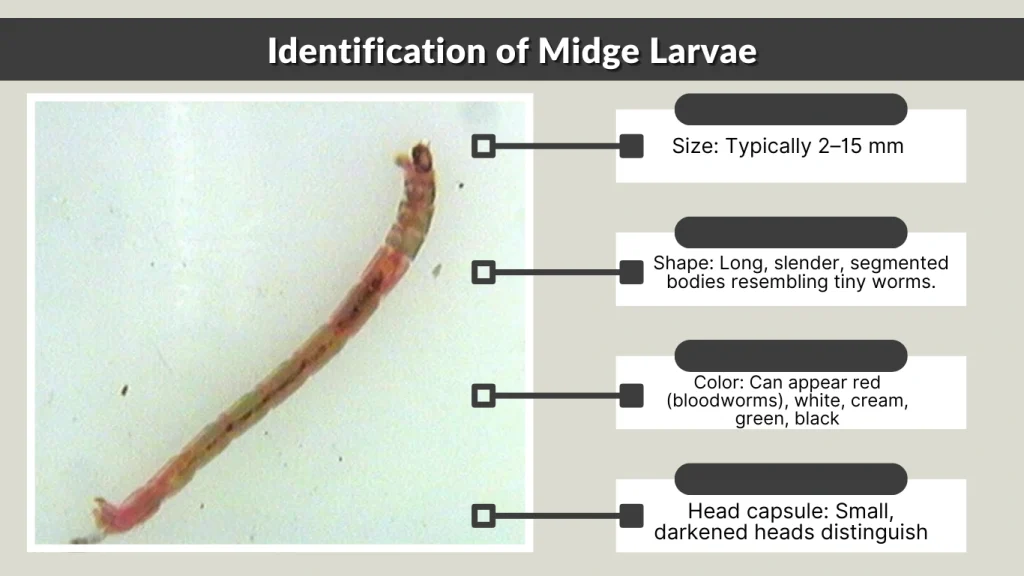
Physical Characteristics
- Size: Typically 2–15 mm, though some species may grow slightly larger.
- Shape: Long, slender, segmented bodies resembling tiny worms.
- Color: Can appear red (bloodworms), white, cream, green, black, or transparent. The red color in bloodworm larvae comes from hemoglobin, which helps them survive in low-oxygen environments.
- Head capsule: Small, darkened heads distinguish them from mosquito larvae.
- Movement: They wiggle or snake through the water in an “S” motion.
Types of Midge Larvae
- Biting midge larvae – Found in damp soil and waterlogged areas; they develop into biting adults.
- Non-biting midge larvae (Chironomids) – The most common type; harmless and often seen in ponds, pools, and aquariums.
- Gall midge larvae – Plant pests that feed on crops and ornamentals such as wheat, soybeans, and roses.
- Phantom midge larvae – Transparent and predatory, feeding on other small larvae in ponds.
- Blood midge larvae (Bloodworms) – Bright red, thanks to their hemoglobin content, and widely used as fish food.
Patterns and Fly Fishing Use
Midge larvae are well known in the world of fly fishing. Anglers often use artificial fly patterns that mimic bloodworms or other midge larval forms. Because many fish, especially trout, feed on them heavily, these fly patterns are among the most reliable for fishing success.
Midge Larvae Habitat

Midge larvae are highly adaptable and occur in a wide range of environments.
- Aquatic habitats: Most species live in ponds, lakes, rivers, streams, and even puddles. They often burrow into sediments or cling to vegetation.
- Man-made water systems: Pools, aquariums, hydroponic tanks, and rain barrels are common breeding spots. In aquariums, bloodworms often appear as a natural food source for fish. In pools, however, they are considered pests.
- Soil environments: Gall midge and rose midge larvae thrive in moist soils and plant tissues, forming galls or damaging buds.
- Regional presence: Midges are found worldwide, with species diversity highest near freshwater systems. They are especially common in the UK, US, and tropical regions.
Midge larvae flourish in stagnant or slow-moving water rich in organic debris. These conditions provide both shelter and food, explaining why larvae often appear in ponds or aquariums with high nutrient levels.
Midge Larvae Life Cycle

The life cycle of midge larvae follows the complete metamorphosis pattern seen in other flies.
Stages of Development
- Eggs: Female midges lay eggs on the water surface or within damp soil.
- Larvae: The worm-like larvae hatch and remain in this stage for days to several weeks. Duration depends on temperature, oxygen levels, and food supply.
- Pupa: After the larval phase, they transform into pupae, which float to the surface.
- Adult midges: The final stage emerges as small flies, many of which live only a few days.
Duration of Larval Stage
Midge larvae typically live for 2–7 weeks, but some species may extend their larval phase under unfavorable conditions. For example, in cold or oxygen-poor water, bloodworms can survive for longer periods thanks to their hemoglobin, which allows them to extract oxygen efficiently.
Behavior & Movement
Midge larvae display fascinating movement patterns. They wriggle through water in quick, jerky motions and can also burrow into sediments. Many species avoid light, staying hidden at the bottom of ponds or within soil. Research shows that larvae actively avoid obstacles, navigating around stones and plants in search of food and protection.
Diet of Midge Larvae

Midge larvae have diverse feeding habits depending on the species, but all play an essential role in breaking down organic matter or acting as prey in food chains.
- Organic debris: Many non-biting midge larvae feed on decaying plant material and algae in pond sediments.
- Microorganisms: They consume bacteria and protozoa living in water.
- Plant tissue: Gall midge larvae feed directly on plant cells, forming galls and damaging stems, buds, or flowers.
- Predatory species: Phantom midge larvae are transparent hunters, feeding on smaller larvae, rotifers, and tiny crustaceans.
- Special adaptations: Bloodworm larvae use their hemoglobin-rich bodies to thrive in oxygen-poor mud, filtering organic matter as food.
What Eats Midge Larvae?
Midge larvae are an important food source for a variety of animals:
- Fish (trout, carp, goldfish, bettas)
- Tadpoles and amphibians
- Aquatic insects like dragonfly nymphs
- Birds that forage in shallow water
Their abundance makes them vital in maintaining aquatic food chains.
Midge Larvae in Different Environments
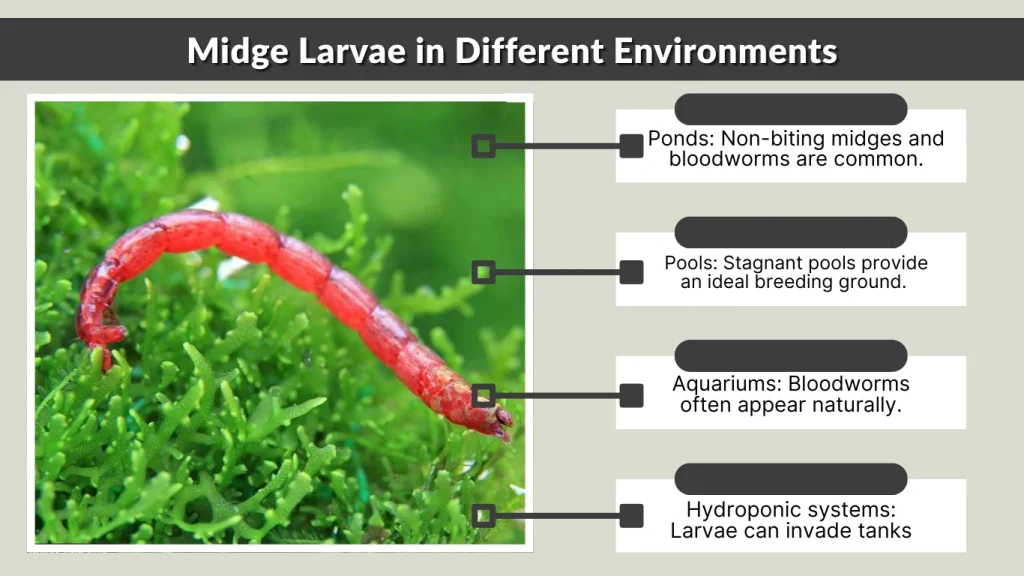
In Water Systems
Midge larvae thrive in a wide range of water bodies:
- Ponds: Non-biting midges and bloodworms are common. While not directly harmful, large populations may reduce water quality.
- Pools: Stagnant pools provide an ideal breeding ground. Swimmers may notice red larvae in the water or at the pool bottom.
- Aquariums: Bloodworms often appear naturally or are introduced as fish food. In moderation, they’re safe, but an outbreak may indicate poor water maintenance.
- Hydroponic systems: Larvae can invade tanks, feeding on organic buildup and disrupting plant growth.
In Agriculture
Some midge larvae are notorious pests:
- Wheat midge larvae: Feed on wheat kernels, lowering grain yield and quality.
- Soybean gall midge larvae: Damage soybean stems, causing wilting and yield loss.
- Rose midge larvae: Attack ornamental roses, destroying buds and young shoots.
These agricultural midges cause millions of dollars in crop losses annually, making them a serious concern for farmers.
Regional Occurrence
- UK: Non-biting midge larvae are common in ponds and lakes, often mistaken for mosquito larvae.
- US: Both agricultural gall midges and aquatic midges are widespread.
- Global: Found on every continent except Antarctica, wherever water and organic matter accumulate.
Are Midge Larvae Harmful?
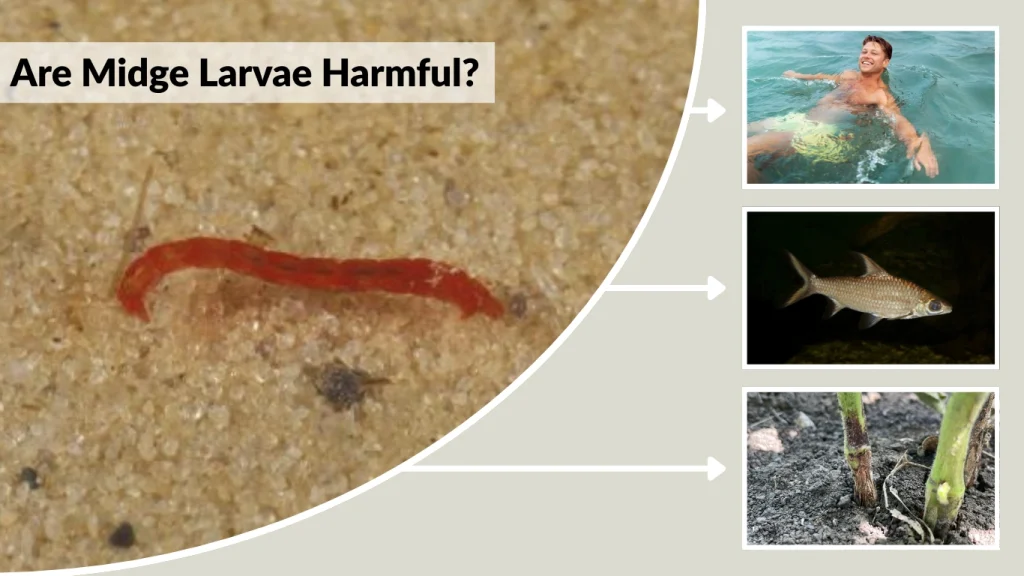
The impact of midge larvae depends on the species and environment.
To Humans
- Non-biting midges (Chironomid larvae): Harmless to humans and often used in fish feed.
- Bloodworms (red larvae): Not harmful; safe as fish food but may cause allergic reactions in sensitive individuals when handled in bulk.
- Gall midges: Harm plants, not people.
- Biting midges: Larvae are less problematic; adult midges cause painful bites.
Overall, midge larvae do not bite humans, unlike mosquito larvae that develop into disease vectors.
To Pets and Fish
- Dogs: Accidental ingestion of aquatic larvae is not dangerous; however, dirty water where larvae breed may carry pathogens.
- Fish: Bloodworm larvae are a common and nutritious food. Both live and frozen versions are sold for aquariums.
Diseases & Risks
Unlike mosquitoes, midge larvae are not disease carriers. However, their overpopulation can lead to:
- Poor water quality in aquariums and ponds
- Foul odors in stagnant pools
- Plant damage in agricultural systems
Their nuisance factor comes more from their sheer numbers than from direct harm.
Midge Larvae in Fly Fishing
One of the most practical human uses of midge larvae is in fly fishing. Because trout and other fish feed heavily on larvae, artificial imitations of bloodworms and non-biting midges are among the most reliable patterns.
- Fly tying: Anglers replicate red midge larvae with threads, wires, or beads to create realistic lures.
- Fishing techniques: Fished near the bottom of streams or lakes, these patterns mimic larvae wriggling in sediment.
- Year-round use: Since midges emerge in all seasons, especially in cold months, larvae patterns are vital in winter fishing.
How to Get Rid of Midge Larvae
While many midge larvae are harmless, they can become a nuisance when they overpopulate pools, ponds, or aquariums. Managing them effectively requires a combination of natural, biological, and chemical methods.
Natural Control
- Introduce predators: Adding fish such as goldfish, guppies, or koi to ponds keeps larvae under control. Tadpoles and amphibians also feed on them.
- Remove stagnant water: Empty unused containers, bird baths, or puddles where midges breed.
- Clean aquariums regularly: Siphon debris from the bottom, perform water changes, and avoid overfeeding fish to reduce organic waste that attracts larvae.
- Skim pools: Regular pool cleaning and filtration prevent larvae buildup.
Biological Control
- Bacillus thuringiensis israelensis (BTI): A natural bacterium sold in granules or “mosquito dunks.” When applied to water, BTI kills midge and mosquito larvae but is safe for fish, pets, and humans.
- Mosquito dunks in ponds/pools: Effective in small water bodies, though they may not eliminate non-biting midge larvae entirely.
Chemical Control
- Biocides: Certain approved chemicals can kill larvae in pools or industrial tanks. These must be used with caution to avoid harming aquatic life.
- Chlorination: In swimming pools, proper chlorine levels prevent larvae survival.
Prevention
- Maintain clean, circulating water in ponds and pools.
- Cover rain barrels or hydroponic tanks with fine mesh.
- Reduce organic buildup in aquariums and outdoor water sources.
- Gardeners can reduce gall midge problems by pruning infested shoots early.
Interesting Facts About Midge Larvae
- Bloodworm adaptation: The red color of bloodworms comes from hemoglobin, which lets them survive in oxygen-poor mud.
- Phantom midge transparency: Phantom midge larvae are nearly invisible, making them efficient predators of smaller aquatic creatures.
- Ecosystem engineers: By burrowing and feeding, midge larvae recycle nutrients and aerate sediments.
- Fishing importance: Many popular fly patterns are designed to mimic midge larvae because fish feed on them year-round.
- Agricultural pests: Wheat midge larvae can destroy entire crops by feeding on kernels, while rose midge larvae ruin ornamental roses.
Midge Larvae FAQs
How do I identify midge larvae?
Midge larvae are tiny, worm-like creatures, usually 2–15 mm long. They may be red, white, green, or transparent depending on the species. Unlike mosquito larvae, they have a dark head capsule and wriggle in an “S” motion.
How long do midge larvae live?
The larval stage usually lasts 2–7 weeks, but it can extend longer in cold or oxygen-poor conditions. Some species remain larvae until environmental conditions improve.
Are midge larvae dangerous to humans?
Most species are harmless. Non-biting midge larvae and bloodworms pose no danger, though handling large numbers may cause mild allergic reactions. They do not bite or spread disease.
What do midge larvae eat?
They feed on algae, organic debris, microorganisms, or plant tissue depending on the species. Phantom midge larvae are predators, while gall midge larvae feed on plant cells.
How do I get rid of midge larvae in ponds or pools?
Introduce fish, use BTI granules, and maintain clean water circulation. In pools, proper filtration and chlorine levels prevent infestations.
