
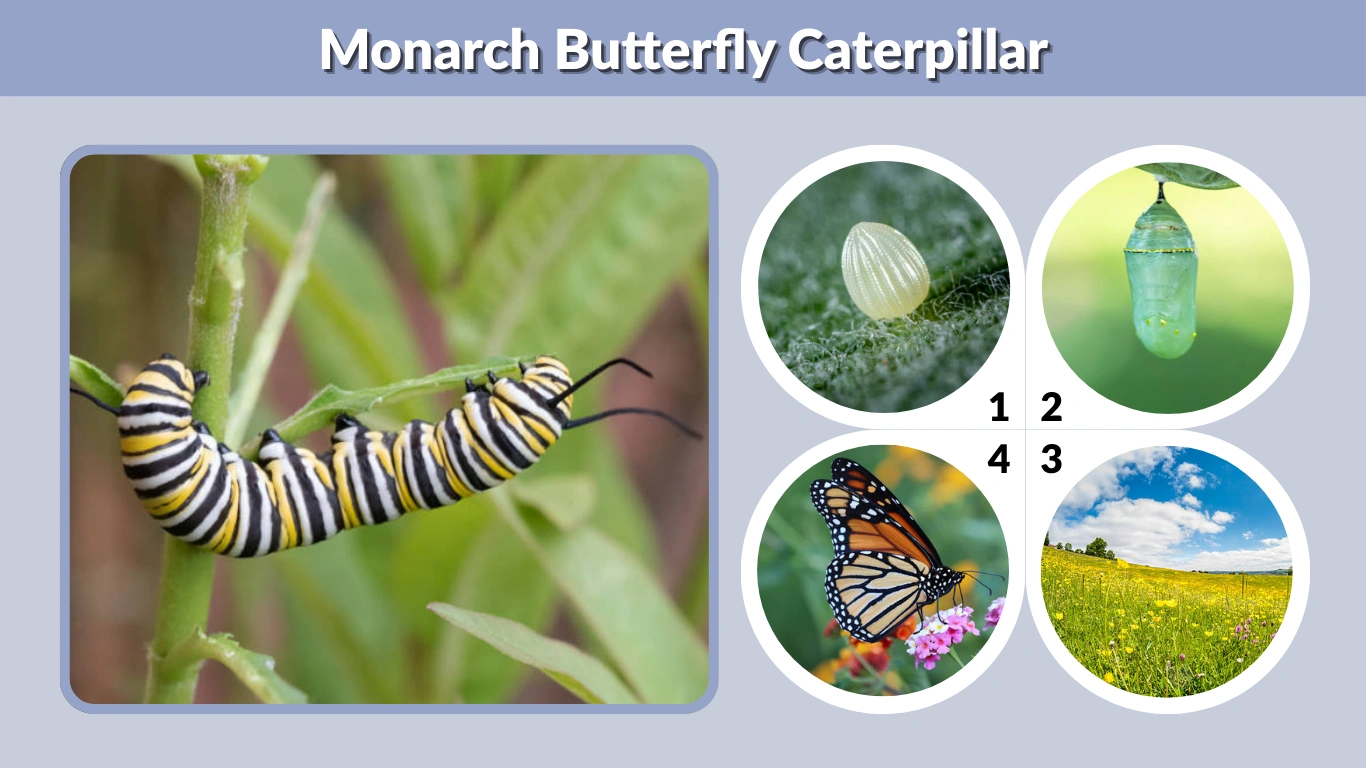
The monarch butterfly caterpillar is one of the most recognizable caterpillars in the world, famous for its bold stripes, milkweed diet, and dramatic transformation into a monarch butterfly. Found across North America and parts of Australia, this caterpillar plays a critical role in the monarch life cycle. Understanding its appearance, stages, and habitat helps with identification, conservation, and proper care for anyone raising monarchs at home.
Monarch Butterfly Caterpillar Overview
The monarch butterfly caterpillar is the larval form of the monarch butterfly (Danaus plexippus). This stage is entirely focused on eating and growing. During its short life as a caterpillar, it increases its body size many times over before forming a chrysalis.
Monarch caterpillars are closely tied to milkweed plants, which serve as both their food source and their primary defense. Without milkweed, monarch butterflies cannot reproduce successfully. This strong plant–insect relationship is one of the main reasons monarch conservation efforts focus on planting milkweed.
Because of their distinctive look and predictable life cycle, monarch caterpillars are commonly used in educational kits and school science projects.
What Does a Monarch Butterfly Caterpillar Look Like
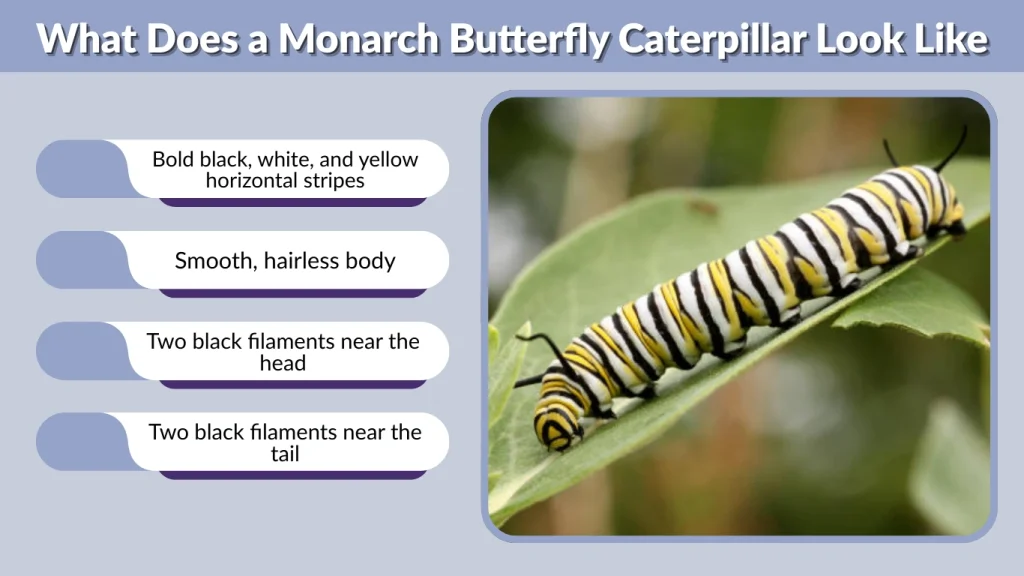
People searching for what does a monarch butterfly caterpillar look like are usually trying to confirm identification. Monarch caterpillars have very consistent visual traits that make them easy to recognize once you know what to look for.
Key identification features include:
- Bold black, white, and yellow horizontal stripes
- Smooth, hairless body
- Two black filaments near the head
- Two black filaments near the tail
- Rounded head with chewing mouthparts
A full-grown monarch caterpillar reaches about 2 inches in length. Younger caterpillars are paler and thinner, but the striping becomes more vivid with each molt.
Monarch Butterfly Caterpillar Stages (Instars)
The caterpillar stage is divided into five growth phases called instars. Each instar ends when the caterpillar molts and sheds its skin.
- First instar: Very small, pale, and lightly striped
- Second instar: Clear banding begins to appear
- Third instar: Stripes become bold and defined
- Fourth instar: Rapid feeding and size increase
- Fifth instar: Largest stage before pupation
Across these stages, the monarch caterpillar may increase its body mass by more than 2,000 times. Most of its time is spent feeding on milkweed leaves and resting between meals.
Monarch Butterfly Egg to Caterpillar
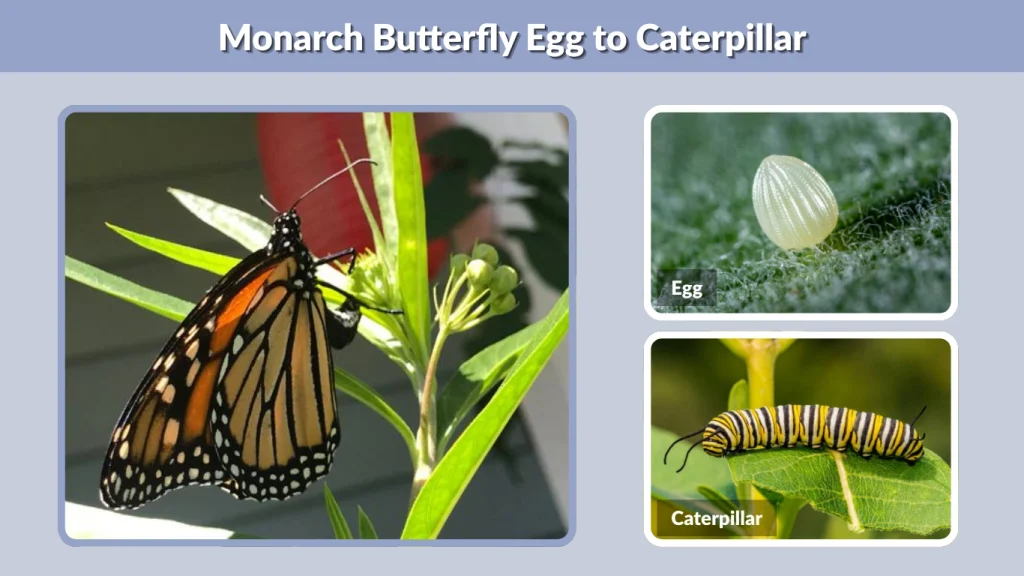
The monarch life cycle begins with a single egg laid on the underside of a milkweed leaf. Monarch butterfly eggs are tiny, cream-colored, and shaped like miniature footballs.
After about three to five days, the egg hatches and the monarch caterpillar emerges. The newly hatched caterpillar often eats its eggshell first, gaining important nutrients before moving on to milkweed leaves. This early stage is the most vulnerable, as the caterpillar is small and exposed to predators.
Monarch Butterfly Caterpillar Food and Diet
Monarch butterfly caterpillar food is one of the most searched topics—and for good reason. Monarch caterpillars eat only milkweed. No other plant can support their growth.
Important points about their diet:
- Milkweed is the sole host plant
- Different milkweed species are acceptable
- Leaves, flowers, and stems are eaten
- Toxins from milkweed protect the caterpillar
Despite common myths, monarch caterpillars do not eat parsley, fennel, or dill. These plants are host plants for swallowtail butterflies, not monarchs.
Monarch Butterfly Caterpillar on Milkweed
Milkweed is essential for monarch survival, and monarch caterpillars are almost always found directly on milkweed plants. Female monarch butterflies will only lay eggs where milkweed is present, ensuring food for the hatchlings.
Milkweed species such as common milkweed, swamp milkweed, and butterfly weed all support monarch caterpillars. As caterpillars feed, they absorb toxic compounds from the plant, which makes them distasteful or poisonous to many predators later in life.
This plant–caterpillar relationship is a classic example of coevolution and is central to monarch conservation efforts.
How Long Is a Monarch Butterfly a Caterpillar
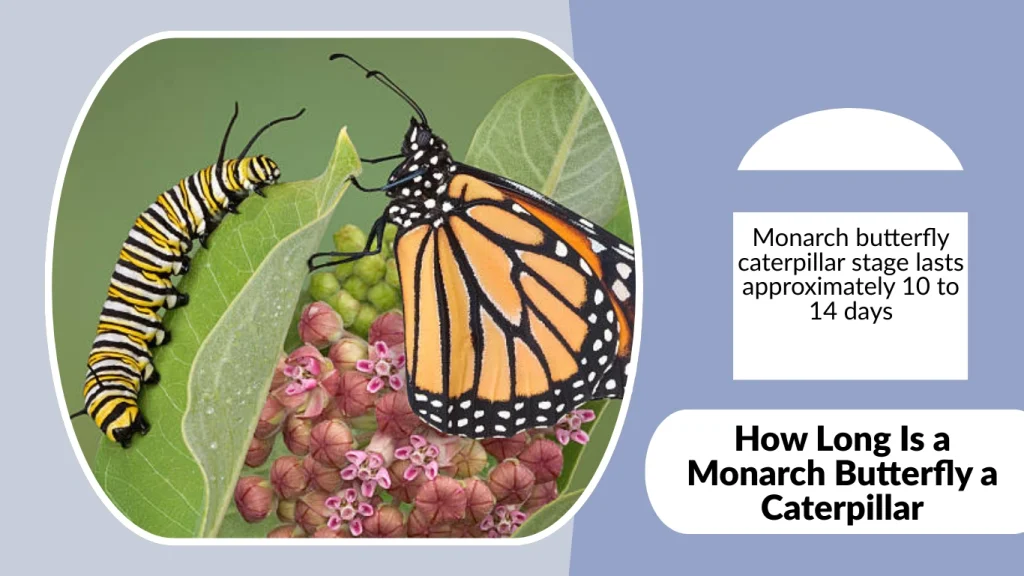
The monarch butterfly caterpillar stage lasts approximately 10 to 14 days under normal conditions. Temperature, humidity, and food quality can affect the exact timing.
During this period, the caterpillar feeds almost continuously, pauses to molt between instars, and eventually prepares for transformation. Once fully grown, it stops eating, wanders away from the feeding area, and attaches itself to a secure surface to begin forming a chrysalis.
Monarch Butterfly Caterpillar Chrysalis Stage
Once the monarch caterpillar reaches its final instar, it stops feeding and searches for a safe place to pupate. It attaches itself using a small silk pad and hangs upside down in a characteristic “J” shape. This stage often lasts about a day before the skin splits.
The chrysalis that forms is not a cocoon. Monarchs, like all butterflies, form a chrysalis, while moths form cocoons. The monarch chrysalis is smooth, jade green, and decorated with tiny metallic gold spots near the top.
Inside the chrysalis, the caterpillar’s body is completely reorganized. Organs dissolve and reform into wings, legs, antennae, and reproductive structures. This stage usually lasts 8 to 14 days, depending on temperature and season.
Monarch Caterpillar to Butterfly Life Cycle
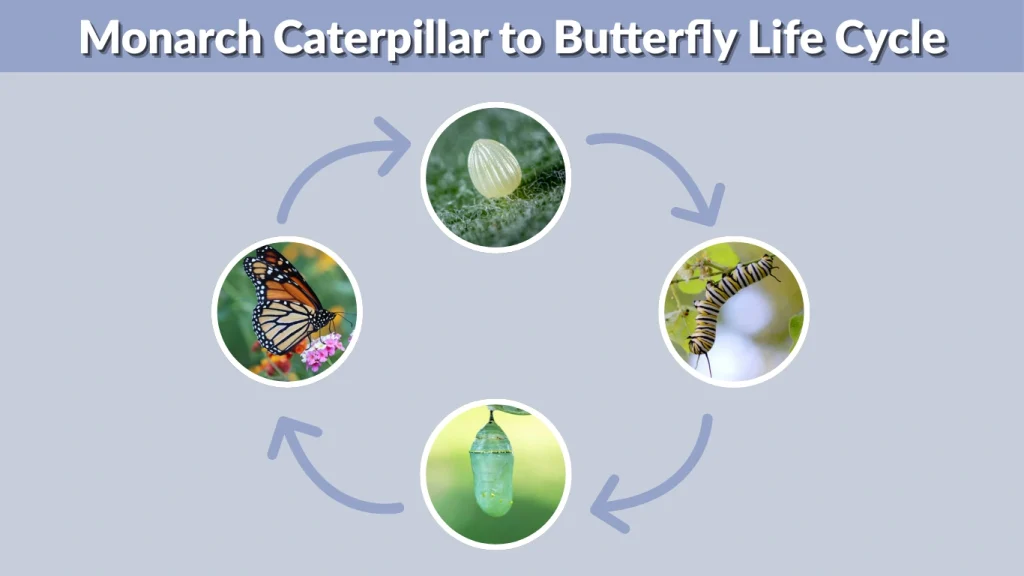
The monarch butterfly life cycle is a classic example of complete metamorphosis. Each stage has a distinct role and appearance, making monarchs ideal for education and observation.
The four stages include:
- Egg stage on milkweed leaves
- Caterpillar stage focused on feeding
- Chrysalis stage for transformation
- Adult butterfly stage for migration and reproduction
From egg to adult butterfly, the entire process takes roughly 28 to 30 days. Migratory monarchs that emerge in late summer live much longer than spring or summer adults, sometimes surviving up to eight months.
Monarch Butterfly Caterpillar Predators and Defense
Despite their toxicity, monarch caterpillars face many threats in the wild. Eggs and young caterpillars are especially vulnerable.
Common monarch caterpillar predators include:
- Ants and spiders
- Wasps and beetles
- Birds that have not learned avoidance
The bright striping of monarch caterpillars serves as a warning coloration. Predators that attempt to eat them often experience nausea from milkweed toxins and learn to avoid them in the future. This chemical defense carries through to the adult butterfly stage.
Monarch Butterfly Caterpillar Look Alikes
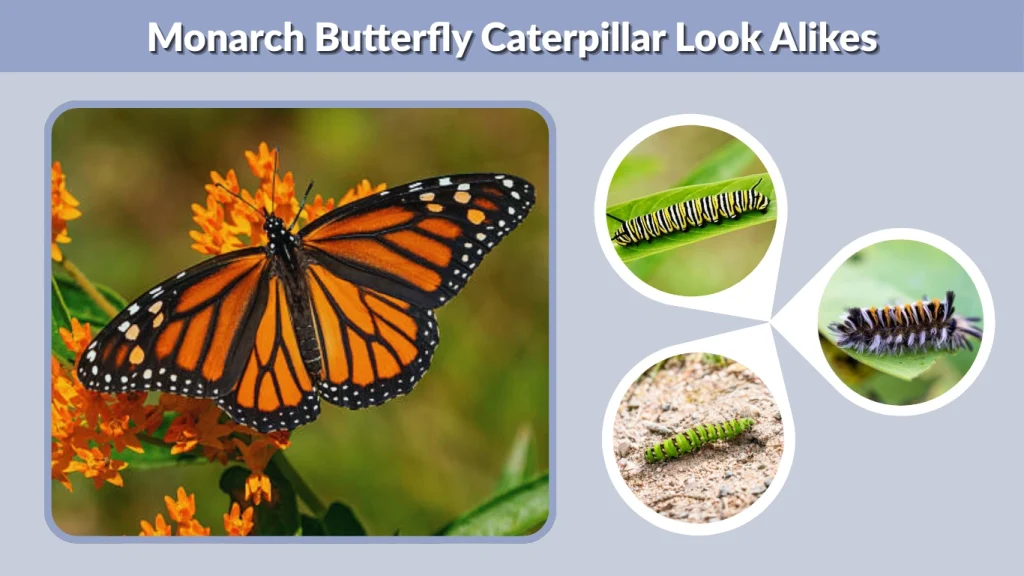
Several caterpillars resemble monarchs, leading to frequent confusion. Correct identification is important, especially for conservation and rearing.
Common look-alikes include:
- Queen butterfly caterpillar (fewer stripes, different filament length)
- Milkweed tussock moth caterpillar (hairy, orange and black)
- Soldier butterfly caterpillar in some regions
Queen butterfly caterpillars are the most commonly mistaken for monarchs, but monarch caterpillars have more distinct and evenly spaced striping.
Monarch Butterfly Caterpillar Care and Rearing
Raising monarch caterpillars has become popular in classrooms and homes. Proper care is essential to ensure healthy development and successful release.
Basic monarch caterpillar care includes:
- Providing fresh, pesticide-free milkweed daily
- Cleaning frass (droppings) regularly
- Maintaining good airflow
- Avoiding overcrowding
Monarch caterpillar kits are widely sold, but local regulations may restrict buying or selling caterpillars in some areas. Whenever possible, supporting wild monarch populations through habitat planting is encouraged.
Monarch Butterfly Caterpillar Habitat and Range

Monarch butterfly caterpillars are found wherever milkweed grows. In North America, they are widespread across the United States, southern Canada, and Mexico. In Australia, monarchs have been introduced and established in suitable climates.
Habitats commonly include:
- Meadows and grasslands
- Roadsides and fields
- Gardens with native milkweed
- Open woodland edges
Urban gardening has become increasingly important as natural milkweed habitats decline.
FAQs
What caterpillar becomes a monarch butterfly?
Only the caterpillar of Danaus plexippus becomes a monarch butterfly. No other caterpillar species transforms into a monarch, even though some species closely resemble it.
How long does it take for a monarch caterpillar to turn into a butterfly?
The process from caterpillar to adult butterfly takes about 18 to 24 days. The caterpillar stage lasts around 10 to 14 days, followed by 8 to 14 days in the chrysalis.
What does the caterpillar of a monarch butterfly look like?
A monarch caterpillar is smooth and striped in black, white, and yellow bands. It has two black filaments near the head and two near the tail, with no hairs or spines.
What do monarch butterfly caterpillars eat?
Monarch caterpillars eat only milkweed plants. They cannot survive on parsley, fennel, or other garden plants, making milkweed essential for their development.
Are monarch butterfly caterpillars poisonous?
Yes, monarch caterpillars are poisonous to many predators. They absorb toxins from milkweed, which makes them distasteful and helps protect them throughout their life cycle.
