
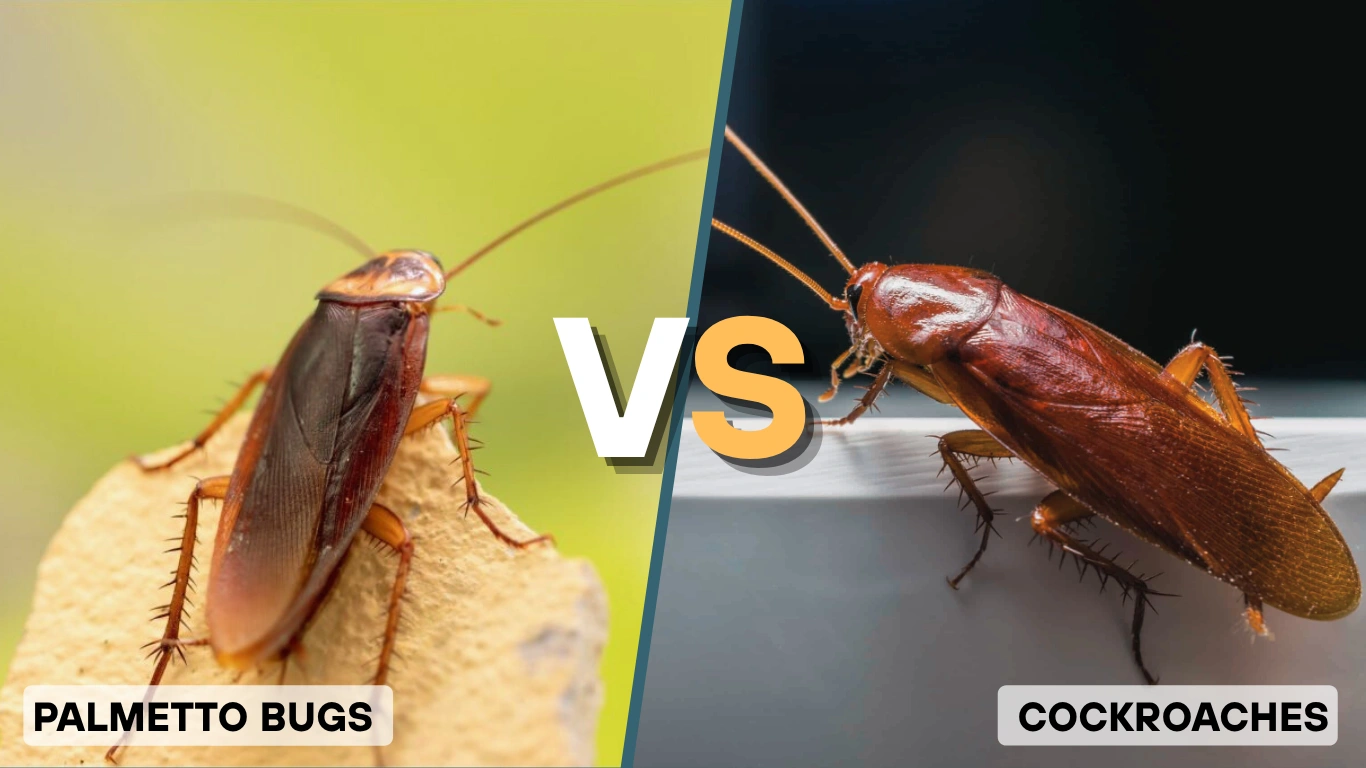
If you’ve seen a big, creepy bug in your kitchen and someone told you, “Oh, that’s just a palmetto bug,” you might’ve breathed a sigh of relief—until you learned it’s actually just a cockroach with a friendlier name. While “palmetto bug” sounds less disgusting, it still belongs to the cockroach family. This article breaks down the differences, similarities, and everything else you need to know to identify and deal with them properly.
What Is a Palmetto Bug?

Common Species Referred to as Palmetto Bugs
The term palmetto bug doesn’t refer to just one insect species. It’s a nickname, mostly used in the southeastern United States, especially in places like Florida, Georgia, and South Carolina. When people say “palmetto bug,” they’re usually talking about either:
- American cockroach (Periplaneta americana)
- Smokybrown cockroach (Periplaneta fuliginosa)
Both of these species are large, reddish-brown, and quite capable of flying—which is often what earns them their notorious reputation.
Why They’re Called “Palmetto Bugs”
This nickname has more to do with regional culture than science. The term originated in the southeastern U.S., where these insects are commonly seen hiding under palmetto leaves or other ground vegetation. Over time, calling them palmetto bugs became a way to soften the fear factor associated with calling them what they really are: giant cockroaches.
For some, it’s easier to say “we have a palmetto bug problem” than “our house is full of roaches.”
Appearance and Size

Palmetto bugs are larger than your typical household cockroach. They can grow up to 1.5 to 2 inches long and have a reddish-brown body with wings that stretch the full length of their bodies.
A few key identifiers:
- Long antennae
- Slightly oily sheen on their back
- Light yellow figure-8 marking behind their head (in the American cockroach)
They’re strong fliers, especially when startled, which can be a shock if one suddenly takes off toward a light.
What Is a Cockroach?

Overview of the Cockroach Family
Cockroaches are one of the oldest insect families on Earth, with over 4,000 known species. Only a handful of these species invade homes, but those that do—like the German, Oriental, and American cockroach—are notorious for being dirty, fast-moving, and incredibly resilient.
The term cockroach covers a wide range of insects, but when we say “palmetto bug,” we’re usually just talking about one of the larger outdoor cockroach species.
General Appearance

Cockroaches have some consistent physical traits:
- Flat, oval-shaped body
- Long antennae
- Six spiny legs
- Reddish-brown, dark brown, or black coloring depending on species
They’re designed to scurry quickly and squeeze through tight cracks, which makes them difficult to catch or kill.
Behavioral Traits
Most cockroaches:
- Are nocturnal—they hide during the day and come out at night.
- Prefer warm, humid, and dark environments.
- Are scavengers that feed on nearly anything, including food scraps, grease, paper, and glue.
They breed quickly and can infest homes silently before you even notice one crawling across the floor.
Key Differences Between Palmetto Bugs and Cockroaches

Scientific Classification
Here’s the truth: palmetto bugs are cockroaches. The term “palmetto bug” is a regional nickname, not a species name. So technically, there’s no scientific difference—only a difference in terminology and perception.
But for clarity, the nickname usually applies to larger, outdoor-dwelling cockroaches like the American cockroach—not the smaller, indoor types like the German cockroach.
Size and Color
- Palmetto bugs: Larger (1.5–2 inches), reddish-brown
- Other cockroaches: Smaller (1/2 to 1 inch), often darker or lighter brown
So, if the roach you see is huge and looks like it could fly, you’re probably dealing with a palmetto bug.
Habitat and Geography
- Palmetto bugs prefer outdoor settings—especially warm, moist areas like mulch beds, sewer drains, and under leaves.
- Indoor cockroaches, like the German cockroach, live inside homes and apartments and breed rapidly indoors.
Palmetto bugs typically enter homes through open windows, drains, or cracks, but they don’t usually set up camp inside unless conditions are ideal.
Behavior and Health Risks

Are Palmetto Bugs Dangerous?
While palmetto bugs might look terrifying, they’re not aggressive and don’t typically bite. However, they can still be problematic. Like other cockroaches, they can carry bacteria, including Salmonella and E. coli, which can contaminate surfaces and food.
They can also trigger allergies and asthma, especially in children or people with respiratory issues. Their droppings, shed skins, and saliva all contain proteins that act as allergens.
Do They Infest Homes?
Palmetto bugs are mostly outdoor dwellers, so they don’t infest homes as aggressively as German or brown-banded cockroaches. However, in hot or rainy weather—or if they find easy food sources—they may enter homes through:
- Open doors or windows
- Bathroom and kitchen drains
- Vents and attic spaces
- Gaps in foundations or walls
Unlike indoor cockroaches, palmetto bugs are solitary invaders—you might spot one or two, but they don’t always indicate a full infestation. That said, repeated sightings may still call for professional help.
Do They Bite or Fly?
Palmetto bugs rarely bite humans, and when they do, it’s usually accidental. Their bite isn’t venomous, but it may cause minor irritation.
Their ability to fly is what surprises most people. They can glide or flutter, especially if disturbed or trying to escape. They’re attracted to light, so they often fly toward lamps or ceiling lights, startling anyone nearby.
How to Identify What You Have at Home
Location and Behavior
To know if you’re dealing with palmetto bugs or other cockroaches, pay attention to where and when you see them:
- Palmetto bugs: Usually seen near drains, basements, laundry rooms, or even around porch lights at night.
- Indoor cockroaches: Often hide in kitchen cabinets, behind fridges, or under sinks.
Droppings, Odor, and Eggs
All cockroaches leave signs behind:
- Droppings: Small, dark pellets or smears
- Egg cases (oothecae): Oval-shaped and brown, sometimes stuck to walls or furniture
- Odor: A strong, musty smell when infestations are severe
These signs help determine whether you’ve got a few outdoor roaches passing through—or a full-blown indoor infestation.
Use of Flashlight or Sticky Traps for Confirmation
At night, use a flashlight to check dark corners, under appliances, and along baseboards. Place sticky traps near problem areas (like under the sink or beside trash bins) to catch and identify the exact species.
How to Get Rid of Them
Prevention Tips
The best defense is keeping your home clean and sealed. Here are key prevention steps:
- Seal cracks and crevices around windows, doors, and pipes
- Keep garbage bins closed and take out trash regularly
- Fix plumbing leaks and reduce indoor moisture
- Clean food crumbs and spills promptly
Natural Repellents
If you want to avoid chemicals, some natural remedies can help repel palmetto bugs:
- Peppermint oil spray: Mix with water and spray around baseboards and doors
- Cedarwood and citrus oils: Roaches dislike these scents
- Diatomaceous earth: A natural powder that dehydrates and kills roaches when they crawl through it
These methods won’t kill large infestations but can deter occasional invaders.
Insecticides and Professional Help
For recurring issues or infestations, use:
- Gel baits: Roaches eat the bait and carry poison back to their nest
- Insect growth regulators (IGRs): Prevent roaches from maturing and reproducing
- Residual sprays: Applied along entry points and baseboards
If DIY solutions don’t work, consider hiring a licensed pest control company—especially for hard-to-reach nesting areas.
FAQs
What’s the fastest way to get rid of palmetto bugs?
A combination of sealing entry points, cleaning up food and moisture sources, and using gel baits or traps usually works best.
Are palmetto bugs harder to kill than regular cockroaches?
They’re larger and more resilient than smaller indoor species, but most roach killers work on them too—just be persistent.
Do palmetto bugs live in palm trees?
Yes, especially the Smokybrown species, which love warm, moist environments like tree bark, mulch, or palmetto leaves.
What attracts palmetto bugs into homes?
Moisture, food scraps, open drains, and cracks in walls can draw them indoors—especially during storms or heatwaves.
Can palmetto bugs fly into your face?
They can fly or glide when startled, and they’re attracted to light—so yes, they might fly near your face by accident.
