
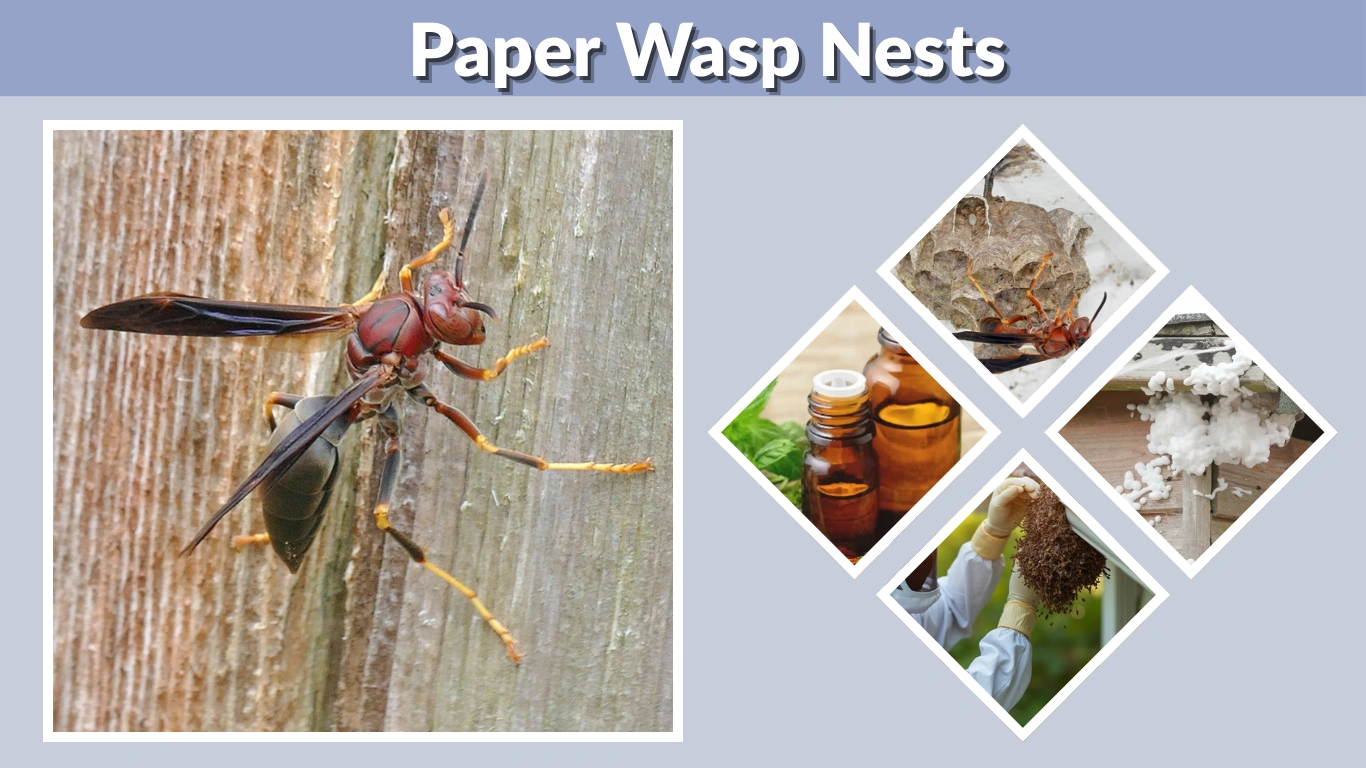
Paper wasp nests are among the most recognizable insect structures found around homes and gardens. Built from a paper-like material made by the wasps themselves, these nests are often suspended from eaves, tree branches, or beams. Understanding their appearance, construction, and behavior is key to managing them safely and preventing infestations in the future.
What Is a Paper Wasp Nest?
A paper wasp nest is a delicate yet durable structure made from chewed wood fibers mixed with saliva, forming a thin, papery material. These nests are typically grayish-brown and have an open, umbrella-like shape with visible hexagonal cells. Paper wasps use them to house their larvae and protect their young throughout the warm months.
Unlike hornets or yellow jackets, paper wasps prefer open nests rather than enclosed spheres. Their nests can contain anywhere from a dozen to several hundred wasps, depending on the colony’s maturity and species.
Appearance and Identification of Paper Wasp Nests

Paper wasp nests are easy to identify if you know what to look for. They are open, exposing the inner comb structure rather than hiding it inside a protective outer shell.
Common features include:
- A gray or brown papery texture made of chewed wood pulp.
- A single layer of hexagonal cells, usually arranged in an umbrella-like form.
- A narrow stalk attaching the nest to surfaces such as eaves, tree limbs, or fence posts.
These nests are often seen in shaded, protected areas. Some wasps, like the European paper wasp, prefer man-made structures, while others, like the northern or red paper wasp, often build in trees or shrubs. The golden paper wasp species, found in warmer climates, creates more rounded and colorful nests.
Paper Wasp Nest vs Other Nests
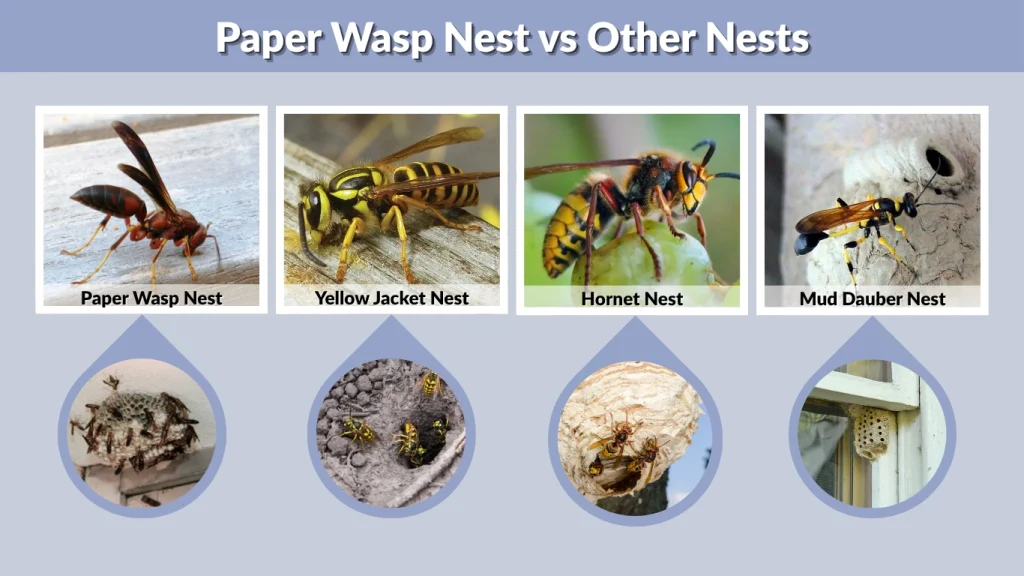
It’s common to confuse paper wasp nests with those of other stinging insects. However, several key differences make identification easier.
Paper Wasp Nest vs Yellow Jacket Nest
A paper wasp nest is open and umbrella-shaped, while a yellow jacket nest is enclosed, often hidden underground or in walls. Yellow jacket nests have thick outer coverings and can host thousands of aggressive wasps, whereas paper wasp colonies are smaller and less defensive.
Paper Wasp Nest vs Hornet Nest
Hornet nests are much larger and fully enclosed, resembling gray footballs made from layered paper pulp. Paper wasps, on the other hand, build open nests with visible cells. Hornets are generally more aggressive when disturbed, while paper wasps are territorial but less likely to attack unless threatened.
Paper Wasp Nest vs Mud Dauber Nest
Mud daubers don’t use paper-like material. Instead, they craft small mud tubes that harden over time. Their nests are solid, cylindrical, and usually attached to walls or ceilings in sheltered areas.
How Paper Wasps Build Their Nests

Paper wasps are natural architects. The nest-building process starts when a fertilized female, known as the queen, chews bits of weathered wood and mixes it with her saliva to form a soft, pulpy paste. She uses this to construct the first few cells and a small stalk to attach the nest to a surface.
Once the queen lays her eggs, worker wasps emerge to expand the nest, collecting more wood fibers and continuously adding layers. Under ideal conditions, a paper wasp nest can be built in just a few days, though larger colonies take weeks to complete.
Each cell in the nest serves as a nursery for larvae, and once the season ends, the entire colony usually abandons the nest as winter approaches.
Where Paper Wasps Build Their Nests
Paper wasps prefer sheltered spots protected from rain and direct sunlight. You can often find their nests in:
- Tree branches or shrubs
- Under eaves, decks, and roof edges
- Inside garages, sheds, or attics
- Light fixtures and fence posts
In some cases, paper wasps even build nests inside wall cavities or under porch ceilings. While rare, they may occasionally create ground-level nests in areas with low vegetation.
Seasonal Behavior and Reuse of Nests
Paper wasps are seasonal insects, most active during spring and summer. The queen starts building in early spring, laying eggs that hatch into larvae within days. As temperatures rise, workers expand the nest and care for the brood.
By late autumn, males and new queens leave the nest to mate, after which most wasps die off with the cold. The new queens seek shelter in bark, soil, or attic spaces to hibernate through winter.
Importantly, paper wasps do not reuse their old nests. Each spring, new queens build fresh structures. However, they may return to the same area if it remains a favorable nesting site.
How to Find and Identify Active Nests
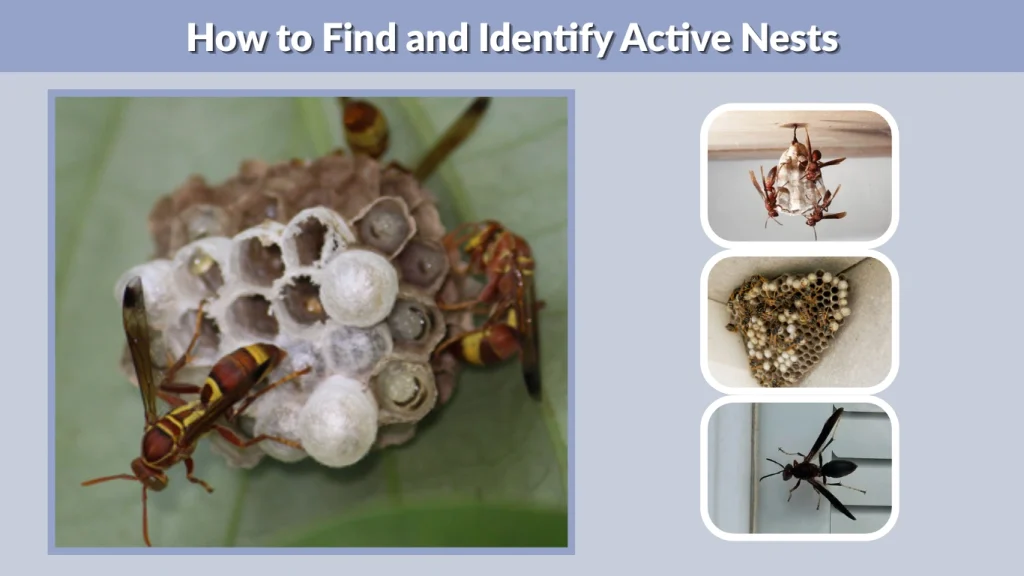
Spotting an active paper wasp nest early can prevent infestations and reduce risks. Look for small gray papery structures forming under overhangs or beams. If you see wasps flying in and out repeatedly, the nest is active.
Signs of activity include:
- Constant wasp movement near one spot.
- Freshly built cells with larvae inside.
- Buzzing sounds near eaves or windows.
Small nests with fewer than 20 cells are usually new and easier to remove. Once they grow, colonies become more defensive, requiring professional assistance.
Dangers of Paper Wasp Nests
While paper wasps play a beneficial role by controlling caterpillars and other pests, their nests near homes can pose safety risks. Disturbing a nest may provoke multiple wasps to attack, leading to painful stings.
For individuals allergic to insect venom, these stings can cause severe reactions. Large nests close to living areas—especially patios or doorways—should always be handled cautiously or removed by professionals to avoid accidents.
How to Get Rid of a Paper Wasp Nest Safely
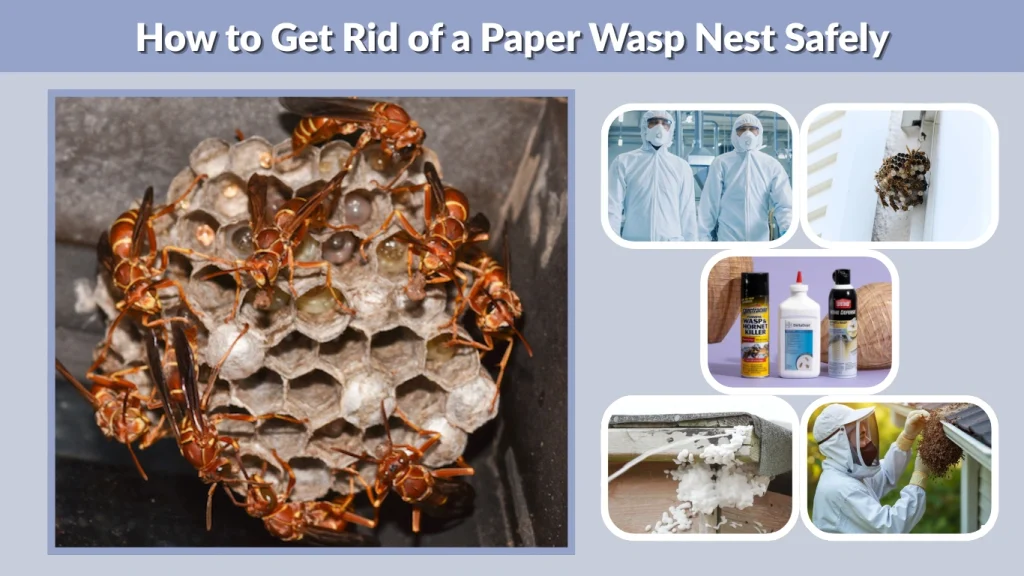
Removing a paper wasp nest requires caution, timing, and the right method. The safest time to do it is after sunset, when wasps are less active and inside the nest. Never attempt removal during the day when they are foraging and defensive.
If the nest is small and within easy reach, you can use a commercial wasp spray from a safe distance. Aim directly at the nest’s opening and saturate it thoroughly. Wait 24 hours before checking again. If movement persists, reapply the spray or contact professionals.
For large or high nests, professional pest control is strongly advised. Experts have protective gear and the right insecticides to eliminate the colony safely.
Professional Paper Wasp Nest Removal Cost
The cost of professional removal typically ranges from $100 to $400, depending on the nest’s size, height, and location. Hidden nests in attics or walls can cost more due to extra labor and safety measures. Many pest control services also offer preventive treatments to keep new nests from forming.
Natural and DIY Paper Wasp Nest Removal Methods
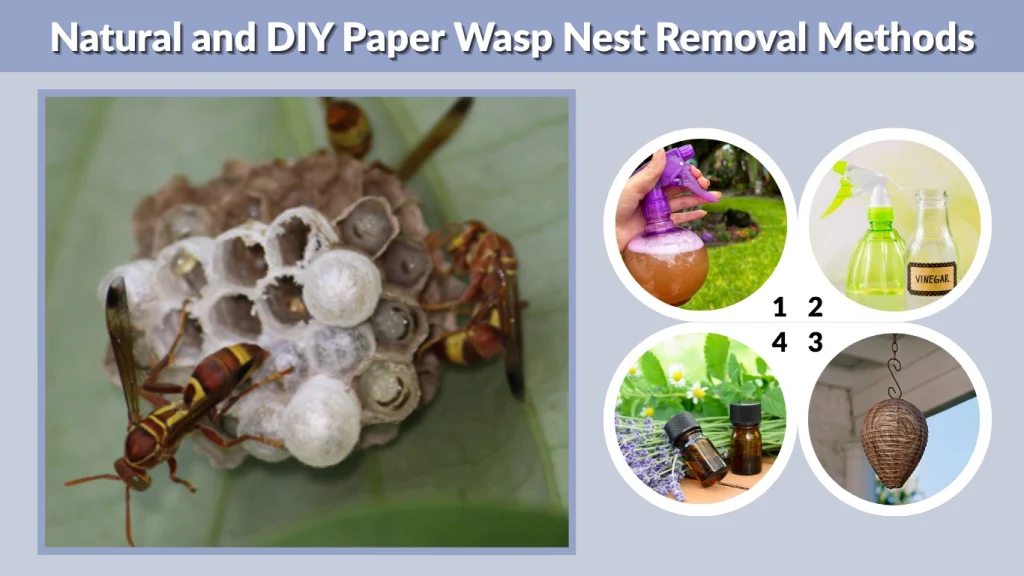
If you prefer chemical-free options, several natural methods can be effective for small nests:
- Soap and Water Solution: Mix two tablespoons of dish soap per liter of water and spray it directly onto the nest. The mixture clogs the wasps’ breathing pores, killing them quickly.
- Vinegar Spray: A blend of vinegar and water (1:1 ratio) works as a natural wasp repellent and can help weaken the nest structure.
- Decoy or Fake Nests: Hanging a paper bag wasp nest or decoy nest in early spring can deter new colonies, as wasps avoid building near other nests.
- Essential Oils: Peppermint or clove oil diluted with water acts as a mild deterrent around eaves and porches.
Always wear protective clothing and ensure an escape route before attempting any removal.
Preventing Paper Wasps from Building Nests
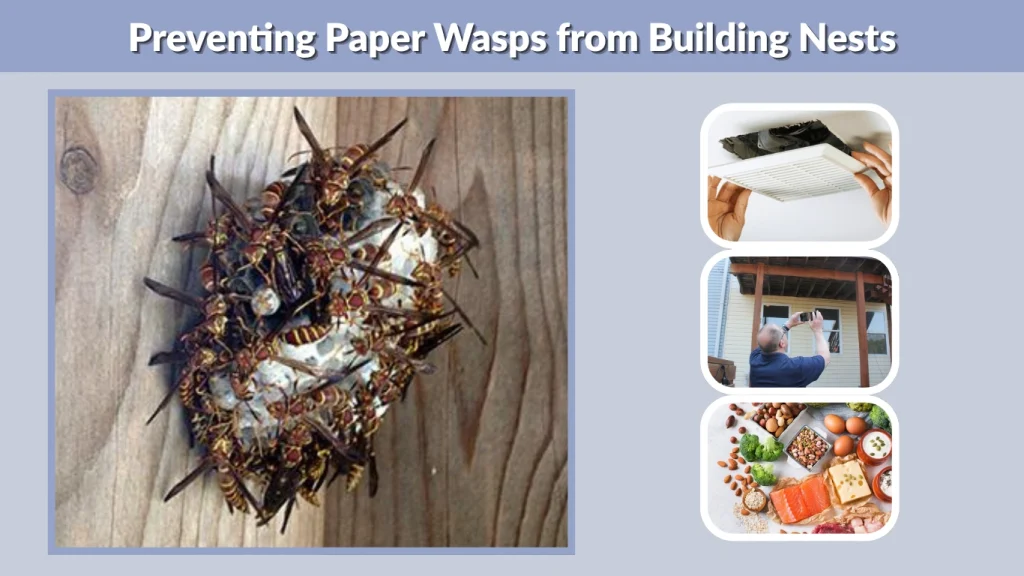
Prevention is the best long-term strategy. Once a nest is gone, take steps to keep wasps from returning:
- Seal Entry Points: Close gaps, vents, and cracks in walls, soffits, or rooflines.
- Regular Inspection: Check under decks, awnings, and light fixtures every few weeks during spring.
- Remove Food Sources: Keep garbage sealed and clean up sugary spills.
- Use Decoy Nests: Hanging brown paper bag decoys discourages new colonies.
- Apply Repellent Sprays: Eco-friendly deterrent sprays around potential nesting areas can prevent wasps from settling.
By maintaining vigilance early in the season, you can stop colonies before they fully establish.
Preserving or Displaying an Empty Nest
Many people find paper wasp nests fascinating and wish to preserve them for educational or decorative purposes. To do this safely:
- Wait until late winter when the nest is inactive.
- Check thoroughly to ensure no live wasps remain inside.
- Detach the nest carefully with a long stick or scraper.
- Spray lightly with insecticide or place it in a sealed bag in the freezer for 48 hours.
- Once confirmed safe, coat it with a clear protective spray to prevent damage.
Preserved nests make excellent teaching tools and display pieces due to their intricate hexagonal design.
Interesting Facts About Paper Wasp Nests
- Colony Size: Most nests contain between 20 and 200 wasps, though larger colonies can reach several hundred.
- Speed of Construction: A small nest can be built in just a few days under warm conditions.
- Material Source: Wasps prefer weathered wood, fence posts, and cardboard for their pulp.
- Lifespan: Nests last only one season, as they are abandoned during winter.
- Record Size: Some giant nests measured over 3 feet wide, housing hundreds of workers.
These details highlight the wasps’ skillful engineering and the short-lived yet complex nature of their colonies.
FAQs
What are paper wasp nests made of?
Paper wasp nests are made from chewed wood fibers mixed with saliva, creating a paper-like material. The wasps collect wood from fences, decks, and trees to form hexagonal cells used to house their larvae. This unique construction gives the nest its lightweight yet durable texture.
Do paper wasps reuse their old nests?
No, paper wasps never reuse old nests. Each spring, new queens emerge from hibernation to build fresh structures. However, they often choose the same sheltered areas if conditions remain favorable. Removing old nests promptly helps discourage future colonies in that location.
How dangerous is it to remove a wasp nest yourself?
DIY removal can be risky, especially for large or active nests. Paper wasps defend their colony when threatened, and multiple stings can cause severe reactions. For high or hidden nests, professional removal is safer, ensuring all wasps and larvae are eliminated properly.
What’s the difference between a paper wasp and a hornet nest?
A paper wasp nest is open with visible cells and an umbrella shape, while a hornet nest is fully enclosed and spherical. Hornet nests are usually larger, housing more aggressive wasps, whereas paper wasp nests are smaller and often found under eaves or in trees.
How much does paper wasp nest removal cost?
The cost varies by nest size and accessibility. Small nests may be removed for around $100, but large or hard-to-reach nests often cost $300–$400. Hiring professionals ensures safe and thorough elimination, reducing the chance of reinfestation or accidental stings.
