
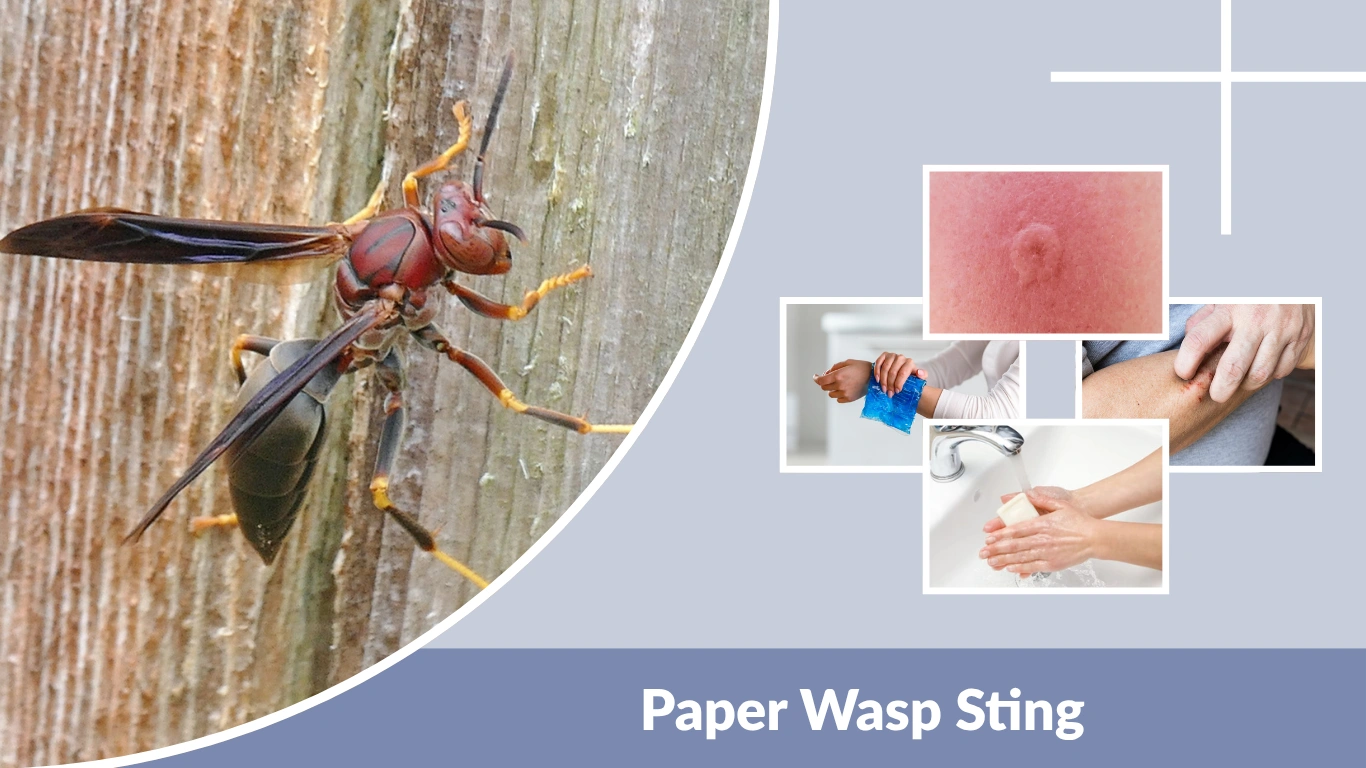
Paper wasps are known for their distinctive, papery nests and slender bodies. While they play an important role as pollinators and natural pest controllers, their sting can be quite painful if you accidentally disturb them. Understanding how paper wasps sting, what it feels like, and how to treat it properly can help you stay safe and avoid complications from allergic reactions.
Do Paper Wasps Sting?
Yes, paper wasps do sting, but they typically do so only when threatened. They are not naturally aggressive and usually avoid confrontation. However, if their nest is approached or disturbed, they will defend it fiercely.
Only female paper wasps can sting because their stinger is a modified egg-laying organ, known as an ovipositor. Male wasps, on the other hand, cannot sting at all. Unlike honeybees, paper wasps do not lose their stinger after attacking, allowing them to sting multiple times if they feel provoked.
Paper wasp stings often occur when people accidentally come too close to nests found under eaves, decks, or tree branches. Even a small vibration near the nest can trigger defensive behavior. Calmly walking away and avoiding sudden movements is the best way to prevent a sting.
What Does a Paper Wasp Sting Feel Like?

A paper wasp sting causes sharp, immediate pain followed by a burning sensation. Many describe it as a mix between a bee sting and a hot needle prick. The pain can last for several minutes before turning into soreness or throbbing.
On the Schmidt Pain Index, which ranks insect stings from 1 to 4, paper wasp stings typically rate around 2 or 3, depending on the species. That places them among the more painful stings, though they rarely cause serious harm to healthy adults.
Different types of paper wasps cause slightly different sting intensities:
- Red paper wasp sting: Very sharp and hot, often lasting 5–10 minutes.
- European paper wasp sting: Quick, intense pain that fades within minutes.
- Black or metric paper wasp sting: Described as a burning sensation similar to a bee sting.
- Northern and brown paper wasp sting: Moderate pain with mild swelling.
The area may swell or redden soon after the sting, but symptoms usually subside within a day.
Symptoms of a Paper Wasp Sting
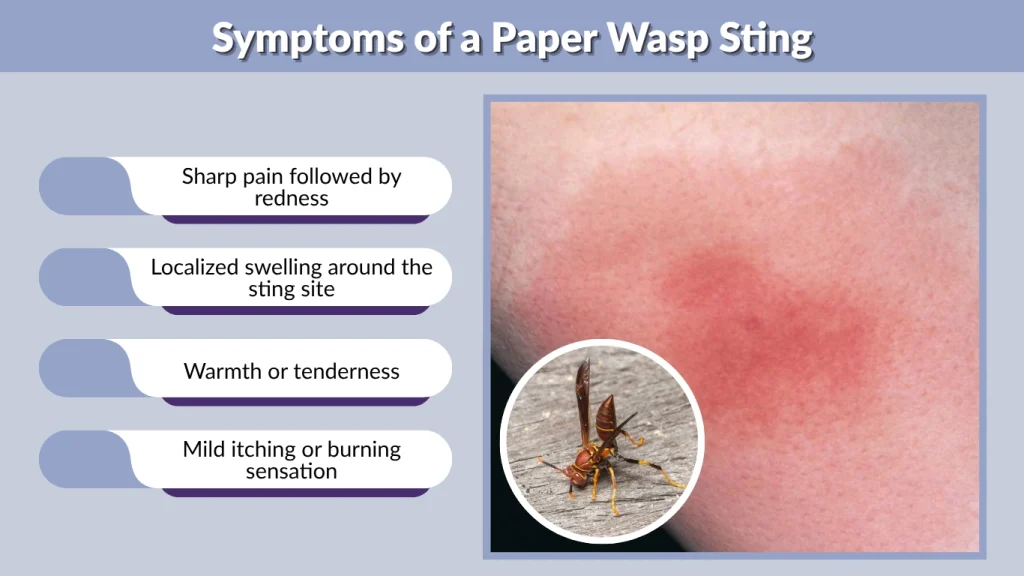
The symptoms of a paper wasp sting vary depending on the person’s sensitivity to venom. Most people experience mild, temporary reactions, while others may have more noticeable swelling or itching.
Mild to Moderate Symptoms
- Sharp pain followed by redness
- Localized swelling around the sting site
- Warmth or tenderness
- Mild itching or burning sensation
These reactions usually appear within minutes and fade after a few hours. Applying ice can help relieve discomfort quickly.
Severe or Allergic Reactions
For some individuals, paper wasp venom can trigger a strong allergic response known as anaphylaxis, which is a medical emergency. Symptoms may include:
- Swelling of the face, tongue, or throat
- Difficulty breathing or dizziness
- Rapid heartbeat or drop in blood pressure
- Widespread hives or rash
If any of these signs occur, seek immediate medical attention. People with known allergies to wasp or bee stings should always carry an epinephrine auto-injector (EpiPen) as a precaution.
Paper Wasp Sting vs. Yellow Jacket Sting

While both insects belong to the wasp family, their stings and behavior differ significantly.
| Feature | Paper Wasp Sting | Yellow Jacket Sting |
| Aggression | Defensive only when threatened | Highly aggressive |
| Pain Level | Sharp, burning pain (moderate to strong) | Intense, prolonged pain |
| Number of Stings | Usually one or few | Multiple stings, often from a swarm |
| Stinger Type | Smooth – can sting repeatedly | Smooth – can sting repeatedly |
| Typical Reaction | Local swelling and pain | Larger swelling, longer pain duration |
Paper wasps usually sting only once before flying away, while yellow jackets may attack multiple times in quick succession. This makes yellow jacket stings more dangerous, though paper wasp venom can still cause discomfort and allergic responses in sensitive individuals.
Paper Wasp Sting Pain Index by Species

Different paper wasp species produce varying levels of pain and reactions. Here’s how they compare:
- Red Paper Wasp (Polistes carolina): Rated 3/4 — strong burning pain, with lingering irritation.
- European Paper Wasp (Polistes dominula): Rated 2/4 — sharp but short-lived sting.
- Northern Paper Wasp (Polistes fuscatus): Rated 2/4 — moderate, bee-like pain.
- Black or Metric Paper Wasp (Polistes metricus): Rated 2.5/4 — quick sting followed by soreness.
- Brown and Yellow Paper Wasps: Rated 2/4 — mild sting with small swelling area.
The red paper wasp sting is often considered the most painful among all, especially in southern regions like Texas and Florida, where they’re more active during warm months.
How to Treat a Paper Wasp Sting

Most paper wasp stings can be treated safely at home if the reaction is mild. Acting quickly reduces pain, swelling, and the risk of infection.
Immediate First-Aid Steps
- Move away from the nest: Wasps release alarm pheromones that can trigger others to attack.
- Clean the sting area: Wash thoroughly with soap and cool water to remove any surface venom or dirt.
- Apply an ice pack: Wrap ice in a cloth and apply for 10–15 minutes to minimize pain and swelling.
- Use an antihistamine or hydrocortisone cream: These help reduce itching and inflammation.
- Avoid scratching: Scratching increases irritation and infection risk.
If swelling worsens after several hours or pain persists beyond 24 hours, consult a doctor for evaluation.
Home Remedies for Paper Wasp Stings

Many home remedies can provide quick relief from paper wasp stings, especially when medical care isn’t immediately available.
- Baking Soda Paste: Mix baking soda with water to form a paste and apply it to the sting area. It helps neutralize venom acidity.
- Apple Cider Vinegar: Dab gently with a cotton ball to relieve pain and disinfect the skin.
- Aloe Vera Gel: Naturally cools and soothes the sting site, reducing inflammation.
- Honey: Has antibacterial properties that prevent infection and calm irritation.
- Toothpaste: The mild alkaline nature can counteract the wasp venom and ease burning sensations.
These remedies should be applied after cleaning the area and can be repeated every few hours for continued relief.
When to Seek Medical Help
Although most paper wasp stings are harmless, medical attention is necessary if:
- Swelling spreads beyond the sting site.
- There is severe pain, dizziness, or nausea.
- Breathing becomes difficult or the throat feels tight.
- Multiple stings occur in a short time.
- Signs of infection appear (pus, redness, fever).
For people with allergic reactions to wasp venom, carrying an EpiPen can be life-saving. Emergency treatment typically includes epinephrine, antihistamines, and corticosteroids to control swelling and allergic symptoms.
Can Paper Wasps Sting Multiple Times?
Yes. Unlike bees, paper wasps can sting multiple times because their stinger is smooth and does not detach from their body. This ability allows them to defend their nest more effectively, but they usually sting only when provoked.
While the pain from a single sting is temporary, repeated stings can cause stronger reactions or even mild systemic symptoms in sensitive individuals.
How Long Does a Paper Wasp Sting Last?
The duration of a sting depends on the person and the severity of the reaction:
- Mild stings: Pain fades within 1–2 hours.
- Swelling and redness: Usually disappear within 24–48 hours.
- Severe reactions: Can last several days and may require medical attention.
Applying ice regularly, staying hydrated, and avoiding scratching help speed recovery. Most people recover completely within a day or two without any lasting effects.
Preventing Paper Wasp Stings
Prevention is the best approach to avoid painful encounters. Paper wasps are not naturally aggressive, so a few careful habits can minimize risks.
Practical Prevention Tips
- Avoid swatting or making sudden movements near wasps.
- Keep trash cans tightly sealed and away from patios.
- Cover food and sweet drinks when outdoors.
- Inspect eaves, sheds, and mailboxes regularly for early nest formation.
- Wear shoes and light-colored clothing when gardening or mowing.
If you discover a nest near your home, contact a pest control expert for safe removal, especially during late spring when colonies are most active.
Paper Wasp Stings vs. Bites
Paper wasps do not bite humans in the same way they sting. They may use their mandibles to grip prey or materials when building nests, but their main defense mechanism is their stinger. Some people mistake the mild pinch of a mandible grip for a bite, but it does not inject venom or cause lasting harm.
FAQs
Do paper wasps sting for no reason?
No. Paper wasps sting only when they feel their nest or themselves are threatened. They usually ignore humans unless provoked.
Do paper wasps die after they sting?
No. Unlike honeybees, paper wasps do not lose their stinger and can sting multiple times.
How painful is a red paper wasp sting?
A red paper wasp sting ranks high on the pain index. It feels hot, sharp, and lasts several minutes. The area can swell and remain tender for a few hours afterward.
Can paper wasps sting through clothing?
Yes, thin fabrics can sometimes be penetrated by their stinger. Wearing thicker clothing or gloves helps when working near possible nests.
How long does a paper wasp sting reaction last?
For most people, redness and pain subside within a few hours. In sensitive individuals, swelling or itching might last up to 48 hours but rarely longer.
